



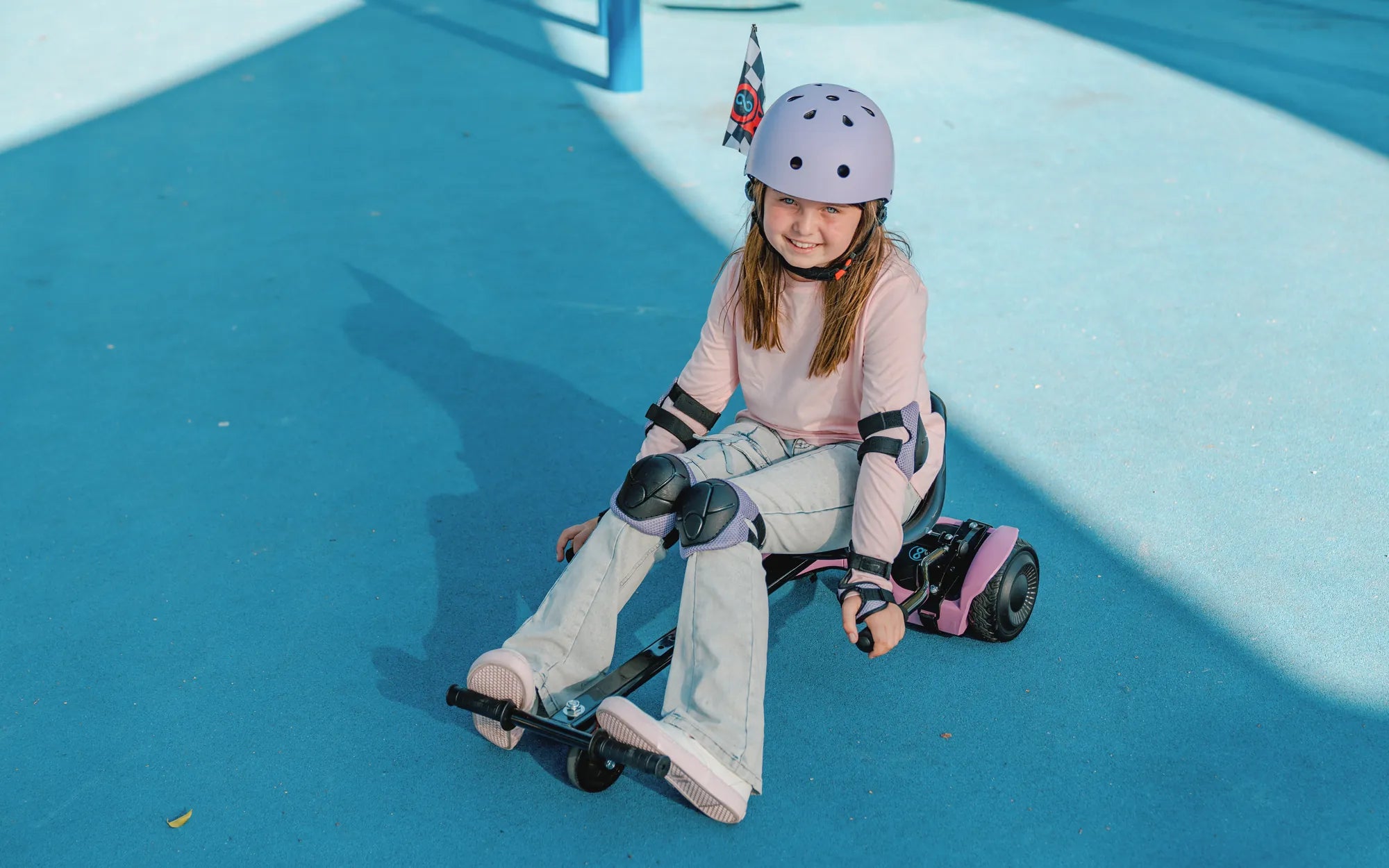
Choosing the right hoverboard in the UK involves more than just picking a cool colour. It's about understanding a unique legal landscape, prioritising critical safety certifications, and selecting a model built to handle British weather. This guide provides the data-driven insights you need to make an informed purchase, learn to ride confidently, and maintain your board for years of reliable, fun mobility. We'll demystify regulations, compare key features, and outline the non-negotiable safety steps every UK rider must take.
Introduction to the Modern Hoverboard
A modern hoverboard, technically a self-balancing scooter, is a two-wheeled, battery-powered personal transporter. Riders control speed and direction by leaning forward, backward, or shifting their weight side-to-side. Far from science fiction, these devices have become a popular sight for urban commuting, leisure in parks, and as a tech-forward transport solution across the UK.
Their appeal lies in their compact size, intuitive controls, and the sheer fun of gliding effortlessly. For brands like Gyroor, a leading electric mobility company trusted by over 100,000 riders, the focus is on engineering these devices with paramount safety, durability, and performance for everyday use.
The UK market offers a wide range, from basic models to advanced options with enhanced features. Understanding the differences is key to a satisfying purchase that aligns with both your ambitions and the law.
Understanding UK Hoverboard Regulations & Safety Standards
Navigating the legal framework is the most critical first step for any prospective UK hoverboard owner. Contrary to some assumptions, these devices are not freely usable on all public paths.
In UK law, hoverboards are classified as Personal Light Electric Vehicles (PLEVs). Currently, it is illegal to use them on public roads and pavements. The Road Traffic Act 1988 and the Highway Code prohibit their use in these spaces due to classifications around construction and use, and insurance requirements.
Their primary legal use is on private land with the landowner's permission. Some may also be used on dedicated cycle tracks, but this depends on local bylaws and should always be checked first. Ignoring these rules can result in fines and the confiscation of the device.
The single most important safety marker is the UKCA or CE mark. This certification indicates the product meets strict EU/UK safety, health, and environmental standards. Never purchase a hoverboard without this visible mark. It is your assurance against substandard, potentially dangerous electronics and batteries.
Key Features to Consider When Buying a Hoverboard in the UK
Beyond legality, performance and durability are dictated by key specifications. Evaluating these will ensure your board matches your intended use and withstands local conditions.
Motor Power & Terrain Performance
Motor power, measured in watts (W), directly impacts torque, hill-climbing ability, and acceleration. Most quality boards feature dual motors, one in each wheel.
For typical urban use on paved surfaces and mild inclines, a configuration of 300W per motor (600W total) is sufficient. For riders anticipating steeper hills, grassy park paths, or carrying more weight, look for 350W or 400W dual motors for assured power and stability.
Higher wattage also contributes to a smoother ride over uneven surfaces like cobblestones or slightly cracked pavements, common in many UK towns and cities.
Battery Life, Range, and Certification
Battery specifications determine how far and how long you can ride. Voltage (V) indicates power, commonly 36V or 42V. Capacity, measured in Amp-hours (Ah) or Watt-hours (Wh), indicates energy storage.
A 36V, 4.4Ah battery typically offers a real-world range of 10-15 km, depending on rider weight, terrain, and speed. For extended use, seek higher capacity batteries (e.g., 36V, 6.5Ah).
Most critically, the battery must be UL-certified. This independent safety certification from Underwriters Laboratories is a benchmark for electrical safety, rigorously testing for overcharge, short-circuit, and thermal stability. Gyroor, for instance, uses UL-certified battery packs tested for 500+ charge cycles, a fundamental safeguard against fire risk.
Build Quality, Weight Limit, and IP Ratings
Wheel size affects comfort and obstacle handling. Standard 6.5-inch wheels are compact but transmit more vibration. Larger 8.5-inch or 10-inch wheels provide better shock absorption for UK's often uneven paths and make navigating kerbs easier.
Always check the maximum load capacity, which typically ranges from 20kg to 120kg. Choosing a board that supports your weight with a margin ensures longevity and optimal performance.
An IPX water-resistance rating is essential for UK weather. A rating of IPX4 means the board is protected against water splashes from any direction. For true peace of mind against wet pavements and light rain, an IPX5 rating (protected against water jets) is highly recommended and a standard feature in Gyroor's robust designs.
Safety Features and Warranty
Essential safety features include bright LED headlights and taillights for visibility, non-slip foot pads for secure footing, and a beginner or training mode that limits speed while learning.
Equally important is the manufacturer's commitment post-purchase. A comprehensive 1-year warranty covering the battery, motors, and frame indicates confidence in product quality and provides essential protection for your investment. Accessible customer support is a key component of this safety net.
Hoverboard Model Comparison for UK Riders
The table below compares key specifications to help you identify the right model for different UK use cases, from casual park riding to more demanding commutes on private paths.
| Intended Use | Recommended Motor | Min. Battery | Ideal Wheel Size | Critical Feature |
|---|---|---|---|---|
| Beginner / Casual (Parks, Private Drives) | Dual 250W | 36V, 4.4Ah (≈12 km) | 6.5" | Training Mode, UKCA Mark |
| Urban & All-Terrain (Grass, Hills, Paths) | Dual 350W+ | 36V, 6.5Ah (≈18 km) | 8.5"+ | IPX5 Rating, UL-Certified Battery |
| Performance & Longer Range | Dual 400W+ | 42V, 6.5Ah+ (≈20+ km) | 10" | High Load Capacity, Advanced BMS* |
*Battery Management System for enhanced protection and battery life.
A Step-by-Step Guide to Learning to Ride Safely
Mastering a hoverboard is straightforward with the right approach and precautions. Safety gear is non-negotiable: always wear a helmet, knee pads, elbow pads, and wrist guards.
Step 1: Mounting. Place the board on flat, level ground. Turn it on. Place one foot firmly on a footpad, keeping your weight centred. Quickly but smoothly step up with your other foot. Use a wall or sturdy railing for support initially.
Step 2: Balancing & Posture. Stand upright with knees slightly bent. Look forward, not down at your feet. The board's gyroscopes will keep you level. Small, subtle weight shifts are key.
Step 3: Moving & Steering. To move forward, lean forward gently from your ankles. To slow down or go backward, lean back slightly. To turn, apply gentle forward pressure with the toes of one foot or the heel of the other.
Step 4: Stopping & Dismounting. Return to an upright, balanced position to stop. To dismount, shift your weight to your dominant foot and step off backwards with the other, following through with your dominant foot. Practice mounting and dismounting repeatedly until it's second nature.
Hoverboard Maintenance and Care for the UK Climate
Proper maintenance ensures safety, extends lifespan, and protects your investment, especially in damp British conditions.
Battery Care: Use only the provided charger. Avoid draining the battery completely; recharge after use. Store the board and battery in a cool, dry place, ideally at a 50-80% charge level if not used for extended periods. Never leave it charging unattended or overnight.
Cleaning: After riding on wet or salty paths (common in winter), wipe down the board with a slightly damp cloth. Never hose it down or submerge it, even with a high IP rating. Ensure the charging port is dry before plugging in.
Tyre & General Checks: Regularly inspect tyre pressure for air-filled models and look for wear or damage. Check for loose screws or casing cracks. Listen for unusual noises from motors or bearings, which could indicate a need for service.
Storage: During off-season or prolonged non-use, store in a dry, temperature-stable environment. Charge the battery to approximately 60% and perform a top-up charge every 2-3 months to maintain battery health.
Frequently Asked Questions (FAQs) for UK Riders
Are hoverboards legal on UK roads?
No. It is currently illegal to ride a hoverboard on public roads, pavements, and cycle lanes in the UK. Their legal use is restricted to private property with the landowner's permission.
What is the best hoverboard for UK weather?
The best models for UK weather feature a high water-resistance rating. Look for a minimum of IPX4, with IPX5 being ideal for reliable operation in damp conditions and on wet surfaces. Robust, larger tyres also help with traction.
Do I need insurance for a hoverboard?
While not a legal requirement for use on private land, it is highly advisable to have third-party liability insurance. This can often be added as an extension to your home contents insurance policy, protecting you in case of accidental damage to property or injury to others while riding.
How do I know if my hoverboard is UK-compliant?
Check for a visible UKCA or CE mark on the board itself and its charger. Purchase from a reputable retailer that provides clear documentation and specifications. Avoid uncertified models from unknown sellers, regardless of price.
What age is suitable for a hoverboard?
Most manufacturers recommend hoverboards for riders aged 8 and above. However, this is highly dependent on the child's coordination, maturity, and weight (meeting the minimum load requirement). Adult supervision, full safety gear, and beginner mode are essential for younger riders.
Can I take my hoverboard on a plane or train?
Airline policies on lithium-ion batteries are extremely strict. Most airlines prohibit hoverboards in both checked and carry-on luggage. For trains, you must check the specific operator's policy, but they are often allowed as luggage if the battery is within specified limits and turned off.
Conclusion: Embracing Smart, Safe Personal Mobility
Choosing and riding a hoverboard in the UK successfully hinges on a triad of priorities: regulatory compliance, certified safety engineering, and rider responsibility. By selecting a UKCA-marked model with a UL-certified battery, a robust IPX5 rating, and a solid warranty, you invest in fun without compromising on security. Pairing that with dedicated practice in safe environments and consistent maintenance will deliver years of enjoyable, innovative transport. For those seeking this balance of performance, safety, and reliability, exploring the engineered solutions from trusted brands is the logical next step.
Ready to find your perfect ride? Browse the full Gyroor collection, featuring UL-certified batteries, IPX5 water-resistant designs, and a reliable 1-year warranty, at gyroorboard.com.
Self Balancing Scooter: The Future of Personal Transportation
Big Christmas Gift Ideas for Girls: The Ultimate Holiday Guide