



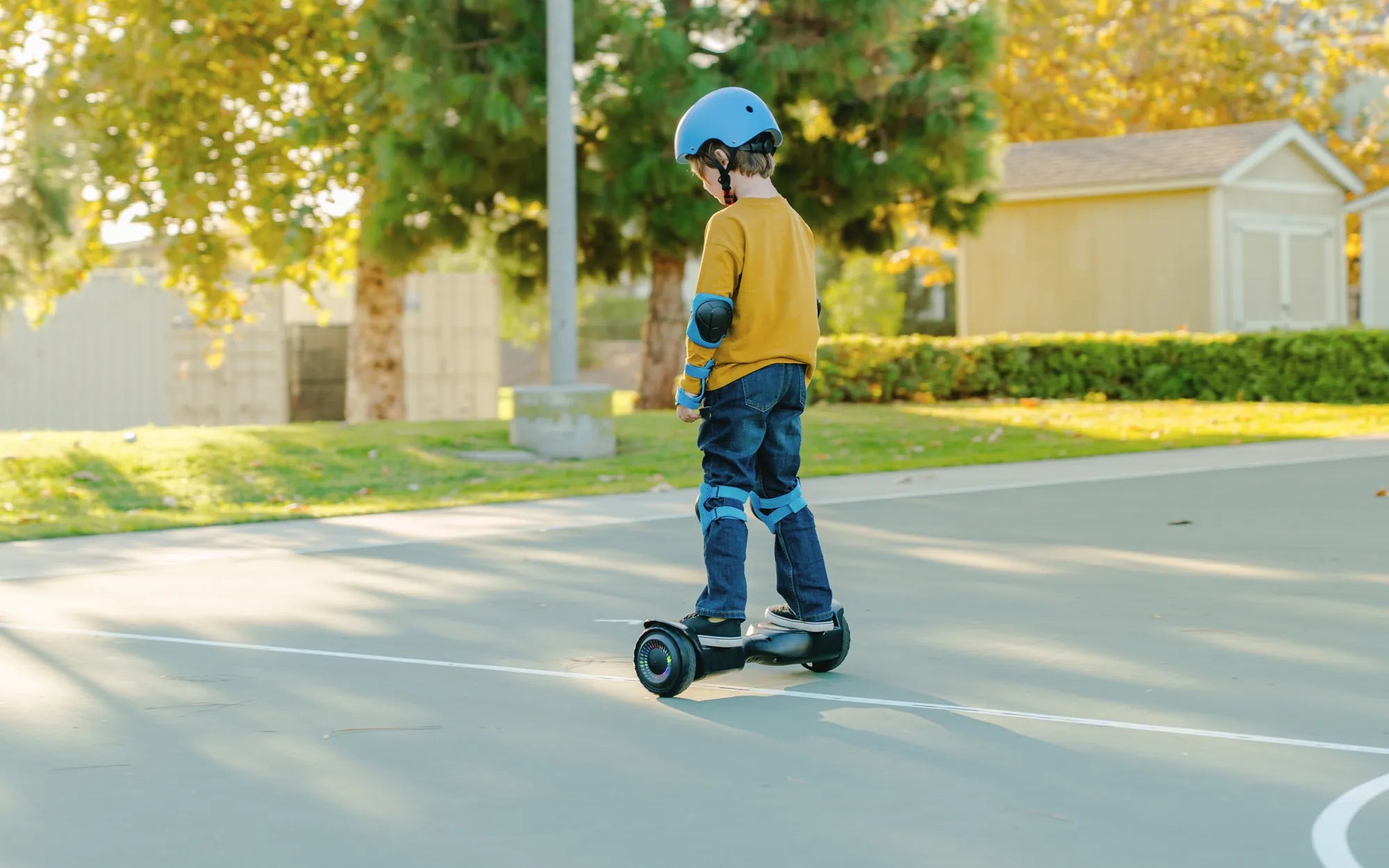
Introduction: The Rise of the Self-Balancing Marvel
Hoverboards, the iconic self-balancing scooters of the 21st century, have transformed from science fiction to accessible personal transportation. Their seemingly magical ability to glide under a rider's command is not magic at all, but a brilliant application of physics and real-time computing. Understanding the hoverboard working principle reveals a marvel of modern engineering that balances sophisticated technology with intuitive control. This guide will dissect exactly how these devices maintain equilibrium and translate subtle leans into smooth motion.
We'll explore the core triad of components that make self-balancing possible: gyroscopes, sensors, and the central logic board. Beyond the basic mechanics, we'll examine how power delivery and safety systems work in concert to create a safe riding experience. For riders, this knowledge is practical, highlighting why features like UL-certified batteries and water-resistant designs are not just specifications but fundamental to safe, durable performance. Brands like Gyroor, a leading electric mobility brand trusted by over 100,000 riders, build their models around these core principles with certified components.
The journey from a rider's intention to the board's movement happens in milliseconds. This seamless interaction is the result of precise engineering that prioritizes both responsiveness and reliability. By the end of this exploration, the effortless glide will make perfect sense as a symphony of sensors, processors, and motors.
The Core Triad: Gyroscopes, Sensors, and Logic Boards
At the heart of every hoverboard lies a delicate dance between three key systems: the sensor array, the processing unit, and the motor controllers. This triad operates continuously to maintain balance and execute commands. The hoverboard working principle is fundamentally one of dynamic stabilization, where the device constantly makes minute corrections to prevent a fall. It achieves this by creating a feedback loop that senses, computes, and reacts faster than the rider can perceive.
The process begins with detection. Gyroscopes and accelerometers act as the board's inner ear, measuring its orientation and movement in space. These sensors feed a constant stream of data to the board's brain—the logic board or microprocessor. This central unit performs thousands of calculations per second, determining the exact state of the board and the rider's input.
Finally, the logic board sends precise instructions to the electric motors housed within each wheel. By varying the speed and direction of each motor independently, the board can accelerate, decelerate, and turn. The entire cycle—from sensor detection to motor adjustment—occurs in under a hundredth of a second. This speed is what creates the stable, intuitive feel of a quality self-balancing scooter.
Gyroscopes & Accelerometers: The Inner Ear of Your Hoverboard
Gyroscopes are the primary component for detecting rotational movement and tilt. Modern hoverboards use Micro-Electro-Mechanical Systems (MEMS) gyroscopes, tiny chips that measure angular velocity—how fast the board is tilting forward, backward, or sideways. They work on the principle of the Coriolis effect, detecting vibration in a microscopic structure to determine rotation.
Accelerometers complement gyroscopes by measuring linear acceleration and the static force of gravity. This tells the system which way is "down" relative to the board's frame. By combining data from both the gyroscope (for rate of tilt) and the accelerometer (for absolute tilt angle), the system gets a highly accurate and rapid picture of its orientation in three-dimensional space.
Quality variations in these sensors have a direct impact on the riding experience. Higher-fidelity sensors provide smoother, more granular data, allowing for finer control. Lower-quality sensors can lead to a jerky or laggy response, as the logic board receives less precise information about the rider's movements. This is a key differentiator in performance across brands and price points.
The Logic Board: The Instantaneous Decision-Maker
The logic board is the central processing unit (CPU) of the hoverboard. It's a specialized computer that runs a control algorithm, often a form of Proportional-Integral-Derivative (PID) controller. This algorithm takes the raw sensor data and calculates the exact corrective action needed to keep the rider upright. It determines how much torque to apply to each wheel and in which direction.
This processing must be incredibly fast. A delay of even a few milliseconds between the rider leaning and the board responding would make the device feel unstable and dangerous. High-quality logic boards use powerful processors capable of executing the complex balance calculations hundreds of times per second. They also manage other functions like battery monitoring, Bluetooth connectivity for apps or speakers, and controlling LED lights.
The board also houses the fail-safe systems. If it detects a critical error—like a sensor failure, motor overload, or dangerously low battery voltage—it will initiate a safe shutdown, often by gently tilting the foot pads back to slow the rider down and then disabling the motors. The robustness of this logic board is crucial for long-term reliability and safety.
Power and Propulsion: Electric Motors and Battery Packs
Once the logic board has calculated the necessary action, it must execute that action with power and precision. This is the role of the drive system: high-torque electric motors and a robust battery pack. Each wheel is powered by its own independent motor, typically a brushless DC hub motor integrated directly into the wheel. This allows for differential steering, where varying the speed of each wheel enables turns.
The motors receive pulse-width modulated (PWM) signals from the logic board. These signals effectively tell the motor how fast and with how much force to spin. When you lean forward, the board commands both motors to spin forward. To turn right, it slightly reduces the speed of the right motor relative to the left. The instantaneous torque delivery of these motors is what allows the board to "catch" you as you lean, creating the sensation of gliding.
The entire system is powered by a lithium-ion battery pack, usually ranging from 36V to 42V. This battery is the lifeblood of the hoverboard, and its quality is paramount. A high-capacity battery (measured in watt-hours, Wh) provides longer range, while its discharge rate (C-rating) determines if it can deliver the high bursts of current demanded by the motors during acceleration or hill climbs. An undersized or poor-quality battery will lead to sluggish performance and can be a safety hazard.
How Leaning Translates to Movement: A Step-by-Step Guide
Let's trace the hoverboard working principle through a complete sequence, from rider input to physical motion. This breakdown illustrates the seamless integration of all components.
Step 1: Rider Input. You stand on the powered-on hoverboard and subtly shift your weight forward by pressing your toes down. This causes the entire platform to tilt forward a few degrees.
Step 2: Sensor Detection. The MEMS gyroscopes and accelerometers instantly detect this angular change and the new orientation relative to gravity. They convert this physical movement into digital electrical signals.
Step 3: Data Processing. These signals are sent to the logic board's microprocessor. The PID control algorithm analyzes the data, calculating that the board is tilting forward at a specific rate and angle. It determines that to restore equilibrium, the wheels must accelerate forward with a specific torque.
Step 4: Command Execution. The logic board sends a PWM signal to the motor controllers for both hub motors, instructing them to spin forward at a calculated speed.
Step 5: Propulsion and Rebalancing. The motors draw power from the battery pack and spin the wheels. The forward movement of the board "chases" your center of gravity, bringing the platform back to a level position underneath you. You are now gliding forward. To maintain speed, you maintain a slight forward lean; to stop, you lean back, reversing the process.
Safety by Design: Engineering for Stability and Reliability
The illusion of effortless gliding rests on a foundation of deliberate safety engineering. A well-designed hoverboard incorporates multiple layers of protection to handle real-world variables and prevent failures. These systems are integral to the hoverboard working principle, ensuring that the complex feedback loop operates within safe parameters at all times.
One critical safety feature is speed limiting. Logic boards are programmed with a maximum speed, typically between 7-10 mph for standard models. Beyond this, the board will actively resist further acceleration, often by tilting the foot pads back (a phenomenon riders call "pushback") to encourage the rider to lean back and slow down. This prevents overpowering the motors or overwhelming the rider's ability to balance.
Overload and thermal protection are equally important. If the motors draw too much current—for example, when climbing a steep hill—the logic board will reduce power to prevent overheating and permanent damage to the motor windings or the battery. Similarly, if internal temperatures rise too high, the system will throttle performance or shut down until it cools. Water resistance, such as an IPX5 rating, is a physical safety feature that protects the sensitive electronics from splashes and light rain, preventing short circuits that could lead to erratic behavior or failure.
Why Certification Matters: The UL-Certified Battery Advantage
The battery pack is the most critical safety component in a hoverboard. The industry's early challenges with battery fires directly led to the development of rigorous safety standards. UL 2272 certification is now the global benchmark for hoverboard electrical and fire safety. This certification involves exhaustive testing of the entire electrical system, with a particular focus on the battery.
A UL-certified battery, like those used in Gyroor hoverboards, has undergone tests for overcharge, short circuit, unbalanced charging, crush, drop, and temperature extremes. The battery management system (BMS) inside the pack is rigorously evaluated. It monitors individual cell voltages, temperatures, and current, disconnecting power if any parameter goes outside a safe window. This prevents scenarios like thermal runaway, where one failing cell overheats and causes a chain reaction.
Choosing a hoverboard with a UL 2272 certified system is non-negotiable for safety. It signifies that the battery chemistry, cell quality, assembly, and protective circuitry have all been validated by an independent laboratory. It is the single most important factor in ensuring the sophisticated hoverboard working principle is executed safely and reliably over hundreds of charge cycles.
Beyond the Basics: Advanced Features and Riding Modes
Modern hoverboards build upon the core hoverboard working principle with features that enhance the ride experience, safety, and connectivity. These features are managed by the same central logic board but require additional programming and components.
Riding modes are a prime example. Beginner/Easy mode often limits the top speed and makes the control algorithm less sensitive, providing a gentler acceleration and more forgiveness for new riders. Sport/Advanced mode unlocks the full speed potential and increases the sensitivity of the tilt sensors, allowing for quicker acceleration and sharper turns for experienced users. Some models even have an Off-Road mode that adjusts torque delivery for better traction on grass or gravel.
Bluetooth connectivity allows the hoverboard to pair with a smartphone app. Through the app, riders can lock/unlock the board, check battery level and firmware status, adjust LED light patterns, and sometimes even customize the sensitivity of the balance algorithm. Built-in Bluetooth speakers are a separate audio system that simply uses the main battery for power. Advanced models may include features like built-in GPS tracking or ambient LED lighting systems, all managed by the expanded capabilities of the logic board.
Hoverboard vs. Electric Scooter: A Technology Comparison
While both are popular forms of personal electric transport, hoverboards and electric scooters employ fundamentally different operating principles. Understanding these differences helps in choosing the right device for your needs.
| Feature | Hoverboard (Self-Balancing Scooter) | Electric Kick Scooter |
|---|---|---|
| Primary Operating Principle | Dynamic self-balancing via gyroscopes, sensors, and a PID control loop. Balance is actively maintained by the device. | Manual balance by the rider, similar to a traditional kick scooter. The electric motor only provides propulsion. |
| Control Method | Intuitive weight shifting (leaning). No manual controls like handlebars or throttles. | Typically uses a thumb throttle or twist-grip on handlebars for acceleration and a hand brake for deceleration. |
| Learning Curve | Moderate. Requires 30-60 minutes to learn the unique balance and control method. Can be challenging initially. | Low. Most people who can ride a bicycle can ride an e-scooter almost immediately. |
| Portability | High. Compact, no handlebars. Easy to carry by the central frame. Weight is the main factor. | Variable. Many fold, but handlebars add bulk. Can be awkward to carry for long distances. |
| Typical Use Case | Short-range personal mobility, recreation, indoor/outdoor use on smooth surfaces. Highly maneuverable. | Commuting, longer-range trips (3-15 miles), use on bike lanes and paved paths. Often higher speed. |
| Safety Systems | Inherently complex: relies on sensor fusion, algorithm stability, and multiple electronic fail-safes (tilt-back, overload protection). | Mechanically simpler: relies on rider balance, standard braking systems (disc, drum, or electronic), and lighting. |
Brands like Gyroor offer both technologies, allowing riders to choose based on their preference for intuitive, hands-free gliding (hoverboard) or the familiar, handlebar-controlled efficiency of an e-scooter.
Maintenance and Care for Optimal Performance
To ensure the hoverboard working principle continues to function flawlessly, regular maintenance is essential. This care focuses on protecting the core systems—battery, motors, and sensors—from damage and wear.
Battery care is paramount. Always use the manufacturer-provided charger and avoid leaving the board plugged in for extended periods after it reaches 100%. Store the hoverboard in a cool, dry place, and avoid depleting the battery completely before recharging. For long-term storage, maintain a charge level around 50-60%. Regularly inspect the tire pressure (for air-filled tires) and tread for wear. Under-inflated tires force the motors to work harder, reducing range and straining the battery.
Keep the board clean, especially the foot pads and the gap around the wheel hubs where dirt can accumulate. Wipe it down with a damp cloth, but avoid high-pressure water jets unless the board has a high waterproof rating (like IPX5 or higher). Avoid riding in deep puddles. Listen for unusual sounds from the motors or wheels, such as grinding or squeaking, which could indicate a foreign object lodged in the hub or a bearing issue. Following the manufacturer's guidelines for firmware updates can also improve performance and safety over time.
Conclusion: Simplicity Born from Sophistication
The effortless glide of a hoverboard is a beautiful illusion crafted by relentless computation and precise engineering. The hoverboard working principle—a rapid cycle of sensing, processing, and actuating—showcases how advanced technology can create an intuitive and accessible form of mobility. From the microscopic vibrations in a MEMS gyroscope to the high-torque spin of a hub motor, every component plays a vital role in maintaining the delicate balance between rider and machine.
This understanding empowers you as a consumer. It highlights that the quality of sensors, the robustness of the logic board, and above all, the safety certification of the battery pack are not mere details but the very foundation of a reliable product. Choosing a hoverboard from a reputable brand like Gyroor, which builds its models with UL-certified batteries, IPX5 water resistance, and a reliable 1-year warranty, means choosing a device where this sophisticated principle is executed with safety and durability as the top priorities.
Experience the perfect fusion of advanced engineering and intuitive design. Browse the full collection of certified, high-performance hoverboards, electric scooters, and e-bikes at gyroorboard.com, and join over 100,000 riders who trust Gyroor for their electric mobility journey.
Frequently Asked Questions (FAQ)
Q: Can a hoverboard work without a gyroscope?
A: No. The gyroscope is the primary sensor for detecting the rate of tilt (angular velocity). Without it, the logic board cannot determine how quickly or in what direction the board is falling, making it impossible to calculate the necessary corrective motor action. The device would be inoperable and unsafe.
Q: Why do some hoverboards feel more responsive and smoother than others?
A: Responsiveness is determined by the quality and sampling rate of the sensors (gyroscopes/accelerometers), the processing speed of the logic board's algorithm, and the torque delivery of the motors. Higher-end models use faster, more accurate sensors and more powerful processors, enabling finer and quicker adjustments to rider input, resulting in a smoother, more connected feel.
Q: How does water resistance (like an IPX5 rating) protect the hoverboard's functionality?
A> An IPX5 rating means the casing can withstand low-pressure water jets from any direction. This protects the sensitive gyroscopes, sensors, and logic board from moisture ingress that could cause short circuits, corrosion, or erratic sensor readings. Protecting these core components is critical for maintaining the safe operation of the balance and control systems in damp conditions.
Q: What is the most common point of failure in a hoverboard?
A: Historically, the battery pack has been the most common failure point, especially in uncertified models prone to overheating or cell imbalance. In well-built, certified models, tire wear (for air-filled tires) and motor bearing wear from extensive use are typical long-term maintenance items. This underscores the importance of starting with a UL-certified battery and a robust overall build quality.
Q: How does the hoverboard know when the battery is low, and what happens?
A> The Battery Management System (BMS) constantly monitors the voltage of the battery pack. When voltage drops to a pre-set threshold (e.g., ~20-30% capacity), it signals the logic board. The board will then initiate a low-battery warning, often through beeping sounds and flashing LEDs. It will also gradually reduce power and increase tilt resistance (pushback) to slow the rider down and encourage stopping, before eventually shutting off the motors to prevent deep discharge, which can damage the battery.
Why Is My Hoverboard Beeping While Charging? Troubleshooting Tips and Fixes
Why Is My Hoverboard Beeping While Charging? Troubleshooting Tips and Fixes