



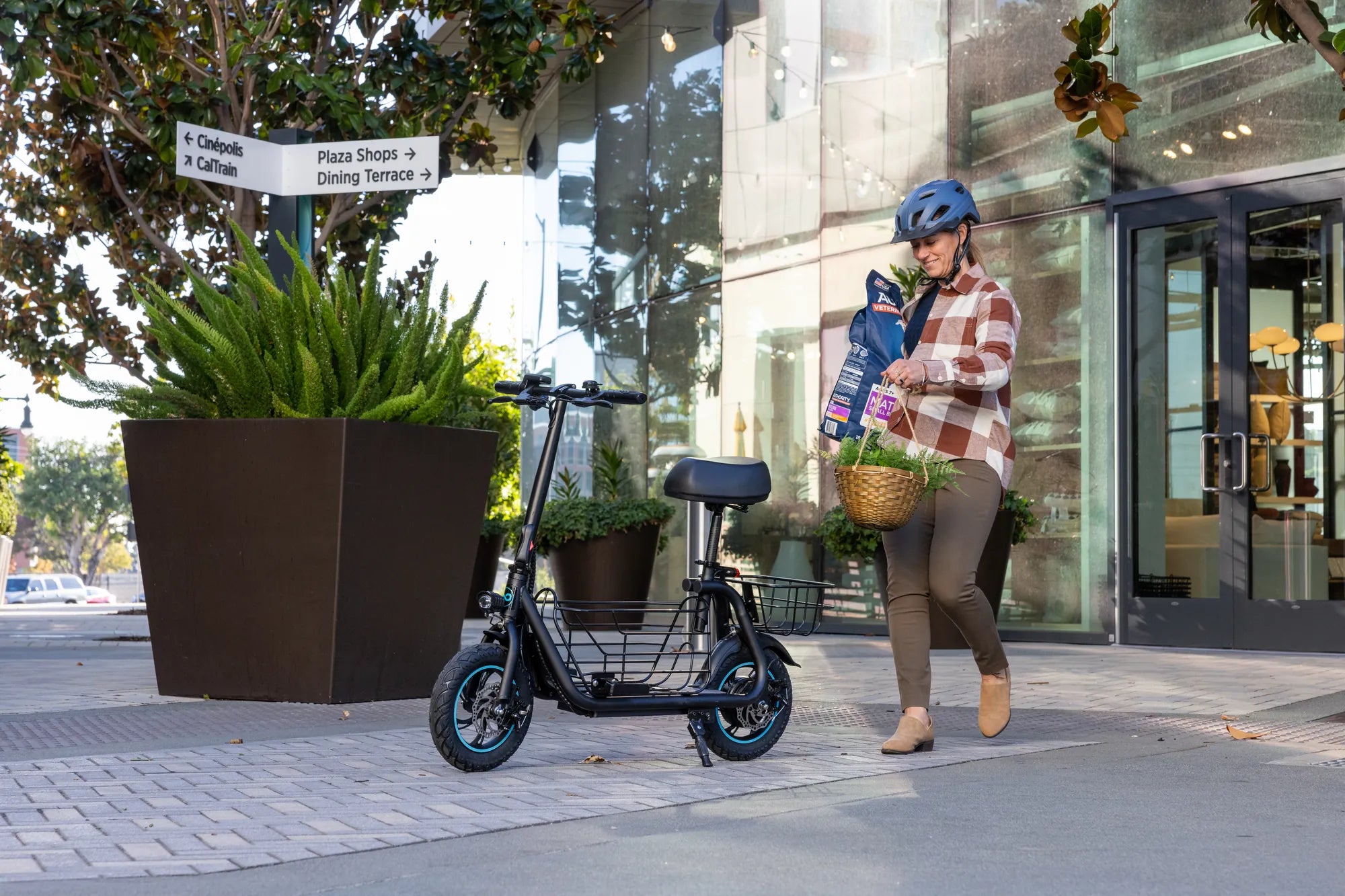
Introduction: Understanding Your E-Scooter’s First Steps
Pressing the power button on an electric scooter initiates a sophisticated electronic sequence, not just a simple connection. Understanding how do electric scooters start is fundamental to safe, reliable operation and long-term performance. This process involves multiple components working in concert, governed by intelligent systems designed to protect both the rider and the machine.
Modern electric scooters from established brands like Gyroor utilize integrated electronic control units to manage this ignition sequence. The start is the first critical handshake between you and the scooter's complex internal systems. This guide will demystify every step, from the initial button press to the smooth engagement of the motor.
You will learn the anatomy of the ignition system, master the universal starting procedure, and understand the safety protocols built into quality models. We'll also provide actionable troubleshooting steps for when things don't go as planned. Knowing how do electric scooters start empowers you to ride with greater confidence and care for your vehicle.
The Anatomy of an Electric Scooter Ignition System
The ignition of an electric scooter is a coordinated event managed by several key components. It's a digital process far removed from the mechanical key-turn of a car. Each part has a specific role in ensuring power is delivered safely and efficiently to the motor only when all conditions are met.
At its core, the system requires a power source, a command input, a processing unit, and an output actuator. Failure or miscommunication at any point will prevent a successful start. This interconnected design is why quality construction and reliable components, as found in brands with rigorous testing, are non-negotiable for consistent performance.
The sequence begins with user input at the power button or throttle, but the decision to start is made by the scooter's internal computer. This system constantly monitors voltage, temperature, and connection integrity. Let's break down the primary components involved in answering the question, how do electric scooters start.
The Central Role of the Battery and BMS
The battery pack is the absolute heart of the ignition system. It provides the necessary voltage to wake up the scooter's electronics and, ultimately, spin the motor. Without a sufficiently charged and healthy battery, the start sequence cannot begin.
More important than the battery itself is the Battery Management System (BMS). This intelligent circuit board is the guardian of the battery pack. Before allowing any power to flow to the controller or motor, the BMS performs critical checks. It monitors individual cell voltages, overall pack temperature, and current draw.
If the BMS detects a fault—such as a cell voltage below a safe threshold, excessive temperature, or a short circuit—it will refuse to close the circuit. This is why a scooter with a physically connected battery might not start; the BMS is preventing potential damage or a safety hazard. This underscores the importance of using scooters with UL-certified battery packs, like those standard across Gyroor models, which are built with robust BMS protection for reliable power delivery from the first start.
From Button Press to Motor Engagement: The Controller’s Job
If the BMS is the guardian, the main controller is the brain. Once the BMS allows power to flow, the controller boots up. Pressing the power button sends a signal to this central processing unit. The controller's first task is to run a system diagnostic.
It checks for signals from critical safety sensors, primarily the brake levers. Most scooters have a safety feature that prevents motor engagement if either brake lever is activated, as a stuck brake sensor is a common failure point. The controller also reads the throttle's neutral position and checks communication with the display.
Only after all these internal checks pass does the controller enter a "ready" state, often indicated by a specific symbol on the display. When you then press the throttle, the controller receives a variable signal (based on how far you press it) and calculates the precise amount of power to send from the battery to the motor. This entire electronic conversation happens in milliseconds, defining the modern experience of how do electric scooters start.
Step-by-Step: How to Start Any Electric Scooter
While internal systems vary, the user's steps to start an electric scooter are remarkably consistent across brands and models. Following a proper sequence ensures safety and prevents strain on the scooter's electrical components. This universal procedure applies to commuter scooters, off-road models, and everything in between.
Always begin by consulting your specific owner's manual, as manufacturers may have unique features or requirements. However, the core steps remain the same: preparation, activation, and engagement. Rushing or skipping steps is a common cause of perceived starting problems. Mastering this routine is the practical answer to how do electric scooters start.
Developing a consistent pre-ride habit not only guarantees a smoother start but also extends the lifespan of your scooter by catching minor issues before they become major problems. Let's walk through the essential stages.
Pre-Ride Safety and System Check
Before you even think about the power button, conduct a brief physical inspection. This 60-second check is your first line of defense. Start with tire pressure; under-inflated tires increase rolling resistance and can strain the motor at startup. Visually inspect for significant cuts or punctures.
Next, test both brake levers. Squeeze them to ensure they engage firmly and the brake calipers or drums respond. A loose or non-responsive brake can be a critical safety failure. For foldable scooters, verify that the folding mechanism (usually at the stem and/or handlebars) is fully locked and secure. A collapsing scooter during startup is extremely dangerous.
Finally, ensure the scooter is on a stable, flat surface. Starting on an incline puts immediate maximum load on the motor and battery. Place the scooter upright, ensuring the kickstand (if present) is retracted. This stable position is crucial for the next steps.
The Standard Starting Sequence
With the pre-ride check complete, you can now initiate the electronic start sequence. The first step is to unlock or power on the scooter. This typically involves holding down a power button for 2-3 seconds until the dashboard display lights up. Some advanced models may use a key lock, a mobile app, or an NFC card for anti-theft purposes, which must be engaged first.
Once the display is active, observe it for any error codes (often represented as "E" followed by a number) or warning icons. A normal display will show battery level, speed (zero), and possibly a ready indicator. The most critical variation in the starting process comes next: kick-start versus zero-start.
Many scooters, including several Gyroor models designed with commuter safety in mind, default to a kick-start mode. This requires the rider to give the scooter a manual push-off (usually to about 3 mph / 5 km/h) before the throttle will engage the motor. This prevents accidental, sudden acceleration from a standstill. Other models feature a zero-start function, allowing you to twist the throttle from a complete stop. Know which mode your scooter uses. Finally, with the scooter "ready" (either after a push or immediately), gently apply the throttle to engage the motor smoothly and begin your ride.
Advanced Starting Features and Safety Protocols
Beyond the basic sequence, modern electric scooters incorporate advanced features that refine the starting experience and enhance safety. These protocols are often key differentiators between basic and premium models. They address real-world riding scenarios, from wet commutes to parking on slopes.
These systems work silently in the background, often going unnoticed until they prevent an accident or component failure. Investing in a scooter with these built-in protections directly contributes to long-term reliability and peace of mind. They represent the engineering depth behind a simple question like how do electric scooters start.
Two of the most significant advancements are robust environmental protection and comprehensive electronic safety nets. These features ensure the ignition system performs consistently regardless of conditions and that the manufacturer stands behind its operation.
The Importance of IPX5 Water Resistance at Startup
Water resistance is not just about riding in the rain; it's critical for reliable ignition. Moisture is the enemy of electrical connections and circuit boards. The start sequence involves low-voltage signals between the button, controller, and sensors; corrosion or a short circuit from water ingress can disrupt these signals.
An IPX5 rating, a standard held by many Gyroor scooters, means the scooter's electrical components are protected against water jets from any direction. This level of sealing safeguards the ignition system's integrity when starting on damp pavement, in light rain, or after riding through a puddle. It prevents condensation from causing erratic behavior at startup, such as the controller misreading throttle input or failing a sensor check.
Without this protection, moisture can seep into throttle housings or deck seams, leading to corrosion on connectors. This often manifests as an intermittent starting problem—the scooter works when dry but fails after exposure to humidity. A strong IP rating ensures the answer to how do electric scooters start remains consistent, day after day, in various weather conditions.
How Your Warranty and Support Back a Reliable Start
A reliable start is backed by more than just hardware; it's supported by the manufacturer's commitment. A comprehensive warranty and accessible customer support are your safety net if the ignition system ever fails. This is where brand reputation becomes tangible.
A strong warranty, such as the 1-year comprehensive coverage offered by Gyroor, specifically covers the core components of the starting system: the battery, controller, and motor. If a defect in materials or workmanship prevents your scooter from starting, the warranty ensures repair or replacement. This protects your investment from costly component failures.
Furthermore, access to knowledgeable, US-based support is invaluable for troubleshooting. A professional can help you diagnose whether a no-start issue is a simple user error (like not disengaging the kickstand sensor), a minor connection problem, or a legitimate component failure. This support structure gives riders confidence that their scooter's first and most important function—starting—is built and backed to last.
Troubleshooting: Why Won’t My E-Scooter Start?
Encountering a scooter that won't start is frustrating, but most issues have logical, often simple, solutions. Systematic troubleshooting can resolve the majority of problems without professional help. Always start with the simplest explanations before assuming major component failure.
The process follows the flow of electricity: from the power source, through the safety switches, to the command input, and finally to the motor. A failure at any point will halt the sequence. Use the following diagnostic steps as a flowchart. Remember, understanding how do electric scooters start is the key to fixing them when they don't.
Before beginning, ensure your scooter is plugged into its charger for at least 15-30 minutes to rule out a completely depleted battery. A deeply drained battery may not even light up the display. If the display shows no signs of life after charging, the issue may be with the charger, the power outlet, or the battery's internal BMS.
- Check the Basics: Is the scooter powered on? Is the battery charge level above 20%? Are both brake levers fully released? Is the scooter in kick-start mode requiring a push?
- Inspect Connections: For scooters with removable batteries, ensure the battery is fully seated and locked. Check that all cable connectors (often under the deck cover) are secure. Look for any obvious loose or pinched wires.
- Decode the Display: An error code is your best clue. Common codes include E-02 (throttle error), E-03 (brake sensor error), or E-04 (motor hall sensor error). Consult your manual for specific code meanings.
- Test the Throttle and Brakes: Listen for a faint click when releasing the brake levers; a missing click can indicate a stuck sensor. Visually inspect the throttle for physical damage or obstruction.
If all else fails, document any error codes and contact the manufacturer's support. Attempting to bypass safety systems or open sealed components can void your warranty and create safety hazards.
Comparing Starting Mechanisms Across Scooter Types
Not all electric scooters start the same way. The ignition mechanism and required user input can vary significantly based on the scooter's design, intended use, and regulatory environment. Understanding these differences helps you choose the right scooter for your needs and operate it correctly.
The primary variables are the start mode (kick vs. zero), the presence of a physical key, and the integration of smart features. Commuter-focused models often prioritize safety features that prevent accidental starts, while performance models may prioritize instant torque from a stop. The following table outlines key differences.
| Scooter Type / Feature | Typical Start Mode | Common Ignition Security | Key Considerations |
|---|---|---|---|
| Basic Commuter | Kick-Start (Push-to-Start) | Power Button Only | Enhances safety, prevents sudden acceleration. May be required by local regulations. |
| Performance / Off-Road | Zero-Start (Instant Torque) | Power Button, Sometimes Key | Allows for quick getaways and hill starts. Requires careful throttle control. |
| Premium / Smart Commuter | Often User-Selectable (Kick/Zero) | App Control, NFC, Fingerprint | Offers flexibility and advanced anti-theft. App may provide start diagnostics. |
| Foldable & Lightweight | Predominantly Kick-Start | Simple Power Button | Focus on simplicity and safety for urban environments. Easy to carry when off. |
For example, many Gyroor urban commuter models utilize kick-start mode as a default safety feature, aligning with best practices for new and experienced riders alike in crowded environments. This table clarifies that the process of how do electric scooters start is not monolithic but a designed feature tailored to the ride's purpose.
Frequently Asked Questions (FAQ)
Q: Do I need to push off to start my electric scooter?
A: It depends entirely on your scooter's start mode. Many models, including several from Gyroor designed for safe commuting, use a "kick-start" or "push-to-start" system. This requires a manual push (typically to about 3 mph) before the motor engages via the throttle. Other models offer "zero-start," allowing immediate throttle response from a standstill. Always check your owner's manual to confirm your scooter's configuration.
Q: Is it bad to start my scooter on a hill?
A: Yes, it is generally not recommended. Starting under the heavy load of an incline forces the motor and battery to deliver maximum current immediately, generating excess heat and strain. This can reduce component lifespan and, in extreme cases, trigger thermal overload protection, shutting the scooter down. For both performance and longevity, always try to start on level ground when possible.
Q: My scooter turns on but doesn’t move when I throttle. What’s wrong?
A> This is a common issue with multiple potential causes. First, confirm your scooter isn't in kick-start mode—give it a gentle push. Second, check your brake levers; a misaligned or stuck brake sensor will tell the controller the brakes are applied, locking out the motor. Release and squeeze the levers a few times. Finally, look for an error code on the display, which will pinpoint the faulty component (e.g., throttle, motor, brake sensor).
Q: How long can I leave my scooter without starting it?
A: For battery health, you should not leave a scooter at full charge or completely discharged for extended periods. If storing for more than a month, charge the battery to approximately 50-60%, turn the scooter completely off, and store it in a cool, dry place. Check and recharge to 50-60% every 2-3 months. This prevents battery degradation that could eventually prevent it from holding enough charge to start.
Q: What does it mean if my scooter starts but then immediately shuts off?
A: This is often a symptom of a failing battery or BMS issue. The battery may have enough voltage to boot the electronics (light the display) but cannot sustain the current draw required by the motor, causing a voltage sag that triggers a shutdown. It can also indicate a loose main power connection that disconnects under vibration. Check all battery connections first, then try a full, uninterrupted charge cycle. If the problem persists, the battery pack may need professional diagnosis.
Conclusion: Mastering a Smooth and Safe Start Every Time
A reliable electric scooter start is the product of quality engineering, proper user procedure, and informed maintenance. It begins with robust components like UL-certified batteries and water-resistant assemblies that ensure consistent power and signal integrity. Understanding the step-by-step sequence—from the pre-ride check to throttle engagement—transforms a routine action into a confident ritual.
When you know the intricate dance between the BMS, controller, and safety sensors, you can better appreciate the technology that delivers a seamless ride. This knowledge also makes you a proficient troubleshooter, capable of diagnosing common issues and knowing when to seek professional support backed by a solid warranty. The answer to how do electric scooters start is a blend of smart design and smart riding.
For a riding experience built on this foundation of reliable ignition and safe operation, explore scooters designed with these principles from the ground up. Discover a range of models featuring kick-start safety, IPX5 water resistance, and UL-certified battery systems engineered for dependable performance from your very first ride. Browse the full Gyroor collection at gyroorboard.com to find the scooter that starts right, every time.
Electric Scooters for Adults USA: The Ultimate Guide to Choosing the Best Ride
Electric Scooters for Adults USA: The Ultimate Guide to Choosing the Best Ride