



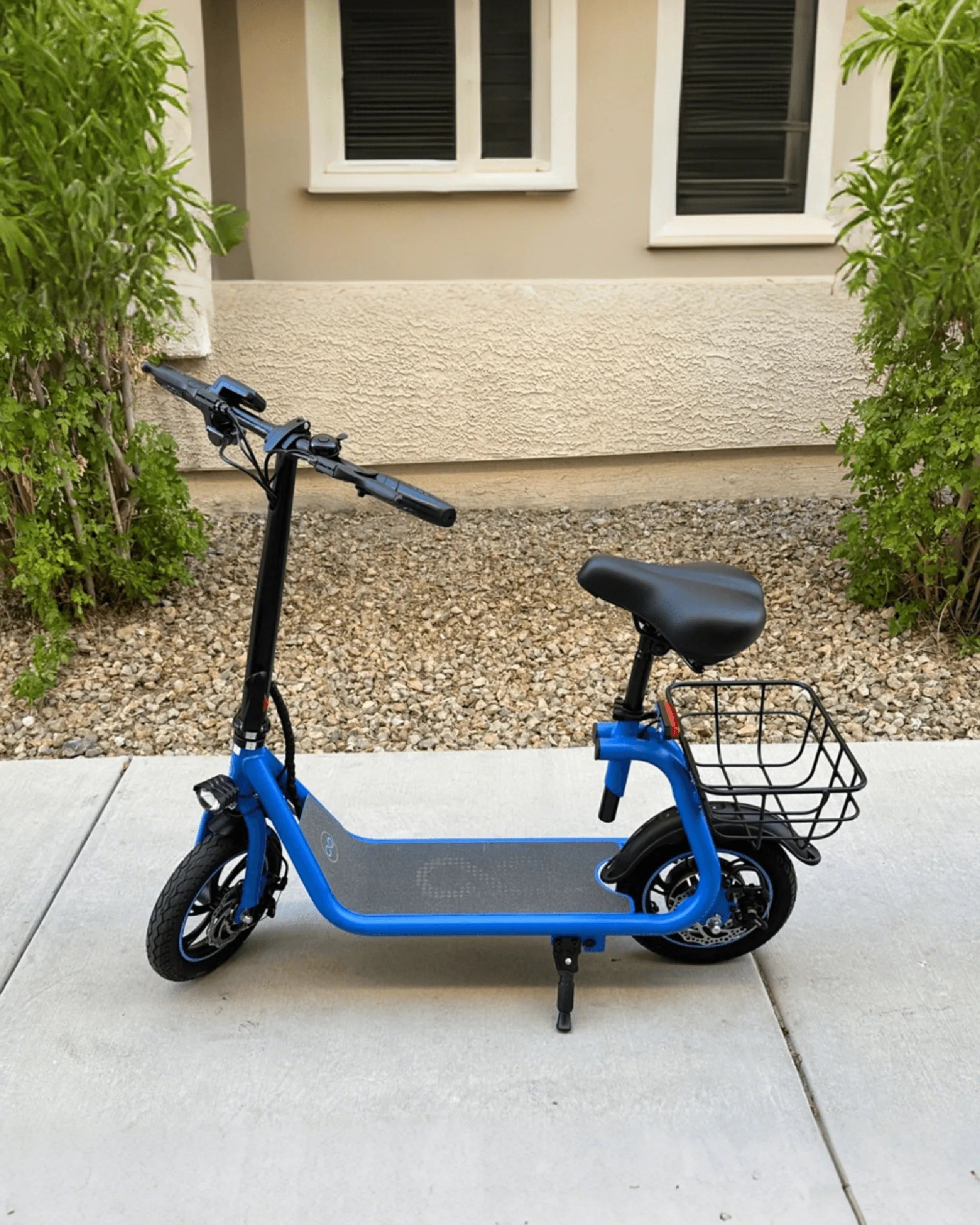
Introduction: The Need for Speed in Personal Mobility
Electric scooters have transformed urban commutes and recreational travel, offering a swift, eco-friendly alternative to cars and public transit. A primary question for any prospective rider is, "How fast are electric scooters?" The answer is more nuanced than a single number. This article, "How Fast Are Electric Scooters: Speed, Safety, and Performance Explained," provides a detailed analysis. We will dissect advertised top speeds, legal restrictions, and the critical factors that determine real-world velocity. More importantly, we'll explore the essential balance between speed, safety, and battery performance to help you make an informed, responsible choice.
Understanding Electric Scooter Speed: Classes and Capabilities
Electric scooters are not a monolith; they are engineered for different purposes, which directly dictates their speed potential. Generally, they fall into three performance classes. Commuter-class scooters are designed for daily urban travel, with typical speeds ranging from 15 to 20 mph (24 to 32 km/h). Performance-class models cater to riders seeking more power and agility, often reaching speeds between 20 and 30 mph (32 to 48 km/h). Off-road or high-performance scooters push beyond 30 mph, but these are typically for private land use due to legal restrictions.
The core hardware defining these classes includes motor wattage, battery voltage, and controller programming. A 350W motor is common for entry-level commuters, while performance models often feature dual 500W or single 1000W+ motors for greater torque and hill-climbing ability. Voltage (commonly 36V, 48V, or 52V) influences the power delivery and efficiency at higher speeds. Brands like Gyroor offer a diverse lineup across these classes, ensuring riders can find a model that matches their speed requirements and local regulations.
Legal Speed Limits and Where You Can Ride
A scooter's mechanical capability is often secondary to the law. Legal speed limits for electric scooters vary dramatically by city, state, and country. In many North American cities, the maximum legal speed on public bike lanes or roads is capped at 15 or 20 mph. Across Europe, a common limit is 25 km/h (about 15.5 mph) for scooters to be used on public infrastructure without registration or insurance.
Riding locations are equally regulated. Most jurisdictions prohibit sidewalk riding for anything but the slowest scooters, directing them to bike lanes or roads with speed limits under 30 mph. It is the rider's absolute responsibility to check local ordinances before purchasing or riding. Choosing a scooter that can be legally limited to your area's maximum speed, a feature available on many Gyroor models, is a prudent first step in responsible ownership.
The Real-World Factors That Affect Your Ride Speed
The advertised "max speed" is a best-case scenario under ideal laboratory conditions. Your actual riding speed is governed by a host of variables. Rider weight is a primary factor; a heavier rider will experience slower acceleration and a lower top speed compared to a lighter rider on the same scooter. Terrain is another critical element. A steep hill can halve your speed, requiring a motor with sufficient wattage and torque to maintain momentum.
Tire pressure and type also play a role. Properly inflated air-filled tires offer less rolling resistance than solid tires, contributing to higher efficiency and speed. Environmental conditions like headwinds and riding surface (smooth asphalt vs. rough concrete) further impact performance. Even battery charge level matters; a scooter often performs at its peak only between 100% and 50% charge, with power tapering off as the battery depletes. Features like an IPX5 water-resistant rating, standard on Gyroor scooters, protect the electrical components from light rain and splashes, ensuring consistent performance in damp conditions, but do not equate to safe high-speed operation through standing water.
Speed vs. Safety: A Data-Driven Balance
Higher speed exponentially increases risk. Kinetic energy increases with the square of velocity, meaning a crash at 25 mph carries over twice the energy of a crash at 15 mph. This makes safety features non-negotiable. A robust, often aluminum alloy, frame is the foundation, providing stability at speed. A dual braking system—combining electronic (regenerative) and mechanical (disc or drum) brakes—is essential for reliable stopping power, as braking distance increases significantly with speed.
Wider decks and quality suspension systems (spring or hydraulic) improve control and comfort, reducing the chance of being thrown by a bump. Front and rear lights, plus reflectors, are critical for visibility. Underpinning all this is battery safety. Intensive, high-speed riding generates heat. A UL-certified battery pack, like those used in all Gyroor models, has undergone rigorous testing for thermal stability, short-circuit protection, and durability over 500+ charge cycles, preventing catastrophic failures that cheaper, uncertified batteries risk.
How Speed Impacts Range and Battery Life
Speed and range have an inverse relationship. Riding consistently at top speed can reduce the manufacturer's advertised range by 30-40% or more. This is due to increased aerodynamic drag and the higher power demand from the motor. Rapid, frequent acceleration from stops also drains the battery much faster than maintaining a steady, moderate pace.
This strain affects long-term battery health. Consistently draining a lithium-ion battery to zero or exposing it to high heat from sustained max-speed operation accelerates capacity degradation. This makes the quality of the battery cells and the intelligence of the Battery Management System (BMS) paramount. Gyroor's UL-certified packs with advanced BMS not only ensure safety but also optimize charge/discharge cycles, protecting your investment and ensuring more consistent performance over the scooter's lifespan, even if you occasionally enjoy its full speed.
Choosing the Right Scooter: Matching Speed to Your Needs
Selecting an electric scooter is about matching its capabilities to your primary use case, local laws, and skill level. For the urban commuter navigating crowded bike lanes, a scooter with a reliable 15-20 mph top speed, good range, and portability (like a folding design) is ideal. It prioritizes safety, legality, and practicality over outright speed.
For riders with longer commutes or who desire more power for varied terrain, a mid-range performance scooter (20-28 mph) with a stronger motor, dual brakes, and suspension offers a versatile balance. High-performance scooters (28+ mph) should only be considered by experienced riders, primarily for use on private property or in areas where such speeds are explicitly legal. They require full protective gear. Regardless of class, a comprehensive warranty and accessible customer support provide essential peace of mind. Gyroor backs its scooters with a reliable 1-year warranty and US-based support, ensuring assistance is available throughout your ownership journey.
Electric Scooter Comparison: Speed, Safety, and Use Case
The table below compares typical scooter categories across key performance and safety metrics to guide your decision.
| Scooter Class | Typical Speed Range | Motor Power | Key Safety Features | Ideal Use Case |
|---|---|---|---|---|
| Commuter / Entry-Level | 15 - 20 mph (24 - 32 km/h) | 250W - 500W | Single brake, basic lights, often solid tires | Short urban trips, last-mile connectivity, beginner riders |
| Performance / Mid-Range | 20 - 28 mph (32 - 45 km/h) | 500W - 1000W (single or dual) | Dual braking, suspension, brighter lights, air-filled tires | Longer commutes, moderate hills, versatile urban/suburban use |
| High-Performance / Off-Road* | 28+ mph (45+ km/h) | 1000W+ (often dual motors) | Advanced dual brakes, full suspension, robust frame, off-road tires | Private property, off-road trails, experienced riders only |
*Note: Use of high-performance scooters on public roads is heavily restricted or illegal in most regions.
Frequently Asked Questions (FAQ)
Q: What is the fastest legal electric scooter speed?
A: There is no universal answer, as legality is defined locally. However, common maximum speed limits for e-scooters on public paths and bike lanes are 15-20 mph in many US municipalities and 25 km/h (15.5 mph) in numerous European countries. Always verify your local regulations.
Q: Can I make my electric scooter go faster?
A: While some scooters can be "derestricted" via software or hardware modifications, doing so almost always voids the manufacturer's warranty (including Gyroor's 1-year comprehensive coverage). It can also disable safety features, overstress components leading to premature failure, and is illegal for use on public roads and paths.
Q: Do I need a helmet or license for a faster scooter?
A> Helmet laws vary, but wearing a certified bicycle or multi-impact helmet is strongly recommended at any speed. For licensing, most regions treat scooters under 20-28 mph as "personal light electric vehicles" not requiring a license. Scooters capable of higher speeds may be classified as mopeds or motorcycles, requiring registration, insurance, and a valid driver's license for road use.
Q: How does rider weight affect speed and range?
A> Rider weight significantly impacts performance. A heavier rider will experience slower acceleration, a lower achievable top speed (especially uphill), and a reduced overall range compared to the manufacturer's specifications, which are often based on a ~165 lb (75 kg) rider.
Q: Are more expensive scooters always faster?
A> Not necessarily. A higher price often reflects better build quality, superior materials (e.g., aerospace-grade aluminum), advanced safety features (UL-certified batteries, dual hydraulic brakes), premium suspension, and longer warranty coverage—not just higher top speed. A well-built 20 mph scooter from a reputable brand can be a far better and safer investment than a faster but poorly constructed model.
Conclusion: Speed with Intelligence and Assurance
Understanding how fast electric scooters are requires looking beyond the spec sheet. True performance is a combination of legal boundaries, engineering quality, and real-world conditions. The pursuit of speed must be tempered by an unwavering commitment to safety—for yourself and others. This means investing in a scooter with proven safety credentials, like UL-certified batteries and robust braking systems, and always wearing appropriate protective gear.
By choosing a scooter whose speed aligns with your needs and local laws from a trusted brand, you ensure a riding experience that is not only thrilling but also reliable and secure. Brands that stand behind their products with strong warranties and support, like Gyroor with its 1-year coverage and IPX5 water-resistant designs, provide the assurance needed to enjoy personal mobility with true confidence. Ready to find the perfect balance of speed, safety, and reliability for your journey? Browse the full Gyroor collection at gyroorboard.com.
Small Electric Scooters for Adults: The Ultimate Urban Commuting Solution
Good Electric Scooters: The Ultimate Guide to Choosing the Best Ride