



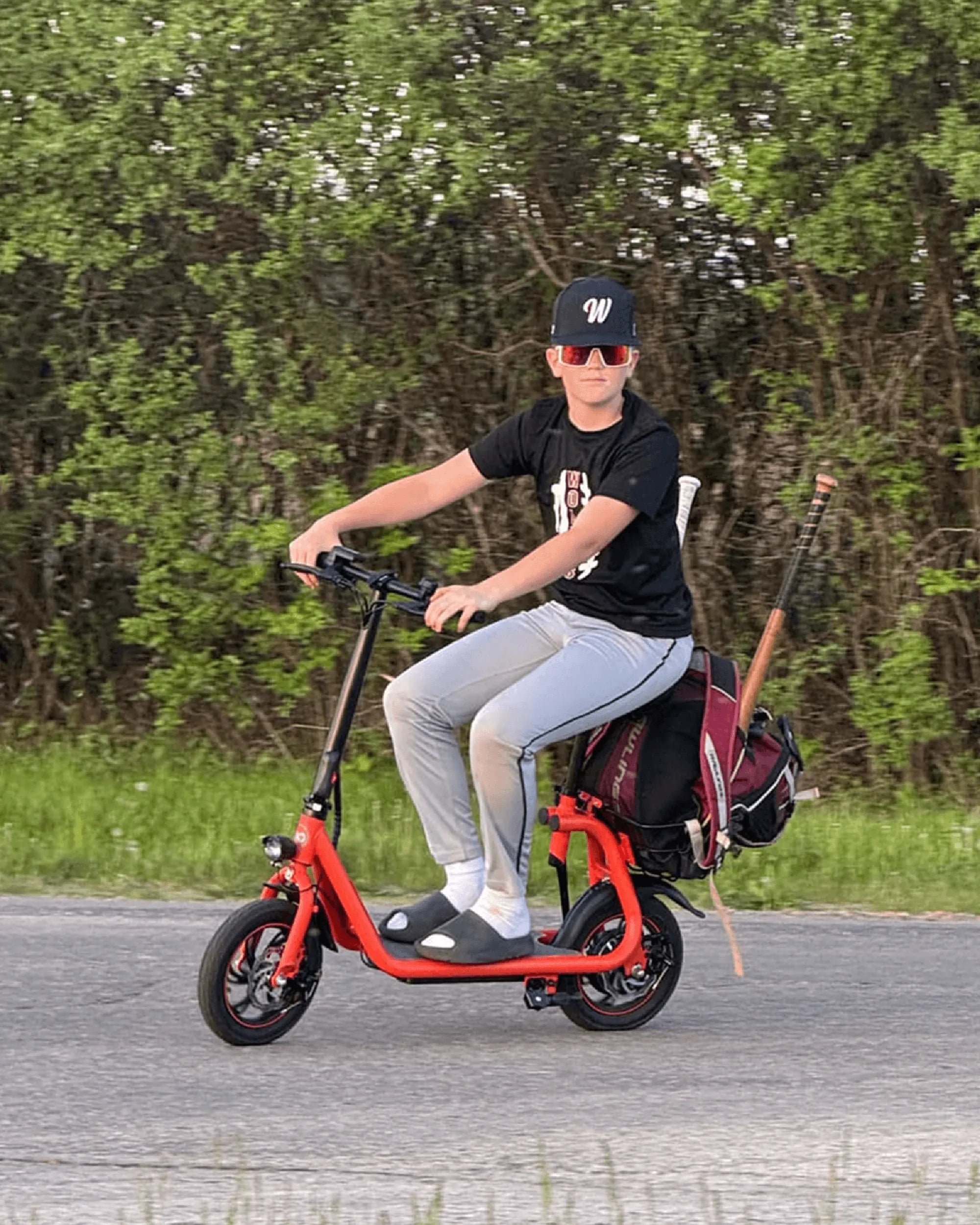
You're considering a powerful e-bike and the key question is: how fast does a 1000 watt ebike go? The short answer is 28-35 mph, but the true speed depends on a complex interplay of engineering, physics, and local law. This isn't just about raw power; it's about understanding how that power translates to real-world riding. We'll provide the data-driven facts on 1000W e-bike performance, the critical factors that determine your top speed, and what you need to know about safety and legality before you ride.
Understanding Electric Bike Power and Speed
Motor wattage, like 1000 watts, is a measure of power output, not a direct speed guarantee. Think of it as the engine's potential capacity. A 1000W motor can deliver substantial torque and sustain higher speeds, especially under load, compared to common 250W or 500W models. However, the actual speed you achieve is the result of this power working against forces like wind resistance, gravity, and rolling friction.
The relationship isn't linear. Doubling the wattage doesn't double the speed due to exponential increases in aerodynamic drag at higher velocities. A 1000W system provides the necessary power to overcome these forces more effectively than lower-wattage motors, pushing into a higher performance tier. It's the foundation for speed, but the final velocity is built upon it by other components.
Key metrics beyond wattage include voltage (V) and amperage (A). Power (Watts) is calculated as Volts x Amps. A 1000W motor can be achieved with different configurations: a 48V system drawing about 20.8A, or a 52V system drawing about 19.2A. The higher-voltage system often operates more efficiently and can potentially enable a higher top speed due to lower current draw and reduced heat.
It's crucial to distinguish between peak power and sustained power. A motor might briefly hit 1000W during hard acceleration or climbing a steep hill, but its continuous rating might be lower. Quality manufacturers, like those building Gyroor e-bikes, design their systems to handle sustained high-power output without overheating, ensuring consistent performance.
How Fast Can a 1000W E-Bike Go? The Real-World Numbers
Under optimal conditions on flat, paved terrain with an average-weight rider, a typical 1000 watt ebike has a top speed range of 28 to 35 miles per hour (45 to 56 kilometers per hour). This is the practical performance envelope for most commercially available models intended for public road or trail use. It represents a significant step up from Class 1-3 e-bikes, which are often limited to 20 mph or 28 mph.
The lower end of this range (28-30 mph) is common for heavier e-bikes, those with smaller battery packs nearing depletion, or when ridden by a heavier rider. The upper end (32-35 mph) is achievable with lightweight designs, fully charged high-voltage batteries (52V), and favorable conditions. Some specially tuned or unrestricted models may briefly exceed this, but 35 mph is a reliable real-world maximum for sustained riding.
It's important to contextualize this speed. Thirty-five mph is faster than the average urban car speed in many cities. It allows for keeping pace with light traffic, dramatically reducing commute times, and providing an exhilarating ride experience. However, it also demands greater rider skill, awareness, and protective gear compared to slower e-bikes.
These speeds are typically governed by the bike's electronic speed controller (ESC). The controller manages power flow from the battery to the motor. Even with a 1000W motor capable of higher speeds, the controller is often programmed with a speed limiter to comply with local regulations or for safety reasons, capping the speed within this 28-35 mph window.
Key Factors That Determine Your 1000W E-Bike's Top Speed
Motor wattage is just the starting point. Your actual top speed is a product of several interacting variables. Understanding these factors helps set realistic expectations and guides you in selecting or optimizing an e-bike for your needs.
Motor Type and Placement: Hub vs. Mid-Drive
The motor's location significantly impacts performance. A 1000W hub motor is located in the center of the front or rear wheel, providing direct drive. It's often simpler and can deliver strong torque off the line, but it can struggle with heat dissipation on long, steep climbs, potentially reducing sustained speed.
A 1000W mid-drive motor is positioned at the bike's crank and drives the chain. It leverages the bicycle's gears, making it more efficient, especially on hills. By staying in an optimal gear, a mid-drive can maintain higher speeds on varied terrain and often feels more natural to ride, though it can be more complex and expensive.
Battery Voltage and Controller Amperage
As mentioned, a 1000W motor is part of a system. A 48V battery system is standard, but a 52V system is a common upgrade for performance. Higher voltage means the motor can achieve the same power (watts) with lower current (amps), reducing heat loss in the wiring and controller. This efficiency often translates to a higher possible top speed and better hill-climbing performance.
The controller's amperage rating is equally critical. A 1000W motor on a 48V system needs a controller rated for at least 25A to deliver peak power (48V * 25A = 1200W). A higher-amp controller can provide more instantaneous power for acceleration, helping you reach top speed quicker, even if the ultimate top speed is capped elsewhere.
Rider and Cargo Weight
Weight is the enemy of acceleration and, to a lesser extent, top speed. Adding 50 lbs of rider or cargo weight requires more energy to accelerate and overcome rolling resistance. While a powerful 1000W motor mitigates this effect better than a 500W motor, a heavily loaded bike will have slower acceleration and may see a reduction of 1-3 mph in its achievable top speed compared to a lightweight setup.
Terrain and Riding Conditions
Flat, smooth asphalt is where you'll hit maximum speed. Even a slight incline will consume power to fight gravity, leaving less for achieving top speed. Aerodynamic drag becomes the dominant force resisting motion above 20 mph. Riding in a tucked position can add several mph to your top speed compared to an upright posture.
Wind is a major factor. A 10 mph headwind can easily cut 5 mph off your top speed and drastically reduce range. Tire pressure and tread also matter; under-inflated or knobby off-road tires create more rolling resistance than smooth, high-pressure street tires.
Local E-Bike Laws and Speed Limiters
This is the most critical non-mechanical factor. In North America and Europe, many jurisdictions define e-bikes by class, with strict speed limits. A Class 3 e-bike is typically limited to 28 mph with motor assistance. A 1000 watt ebike often exceeds these classifications and may be regulated as a moped or motorcycle, requiring registration, insurance, and a helmet.
Most responsible manufacturers, including Gyroor, design their street-legal models to comply with relevant local speed limits through programmable controllers. It is the rider's responsibility to know and obey the laws in their area, as riding an unregistered, overpowered e-bike on public paths can result in fines and liability issues.
Gyroor's Engineering: Balancing 1000W Performance with Safety
Harnessing 1000 watts responsibly requires robust engineering and a commitment to safety. Leading brands like Gyroor integrate performance with features that protect the rider and the investment, ensuring the e-bike remains reliable at high speeds.
UL-Certified Battery Packs for Sustained Power Delivery
A high-speed e-bike demands a high-output battery. Gyroor utilizes UL-certified battery packs, which have undergone rigorous independent testing for safety regarding overcharge, short circuit, and thermal stability. This certification is crucial because a 1000W system draws significant current; a poorly made battery can overheat, degrade quickly, or fail. A UL-certified pack ensures consistent power delivery for both acceleration and top speed throughout its 500+ charge cycle life.
Built for Pace: IPX5 Water-Resistant Design
Riding at 30+ mph means encountering road spray, puddles, and unexpected weather. An IPX5 water-resistance rating means the e-bike's electrical components can withstand low-pressure water jets from any direction. This protection is vital for preventing corrosion, electrical shorts, and motor damage, ensuring the 1000 watt ebike remains operational and safe after riding in wet conditions, thereby enhancing its long-term durability.
Warranty and Support Backed for Performance Riders
Exploring the capabilities of a powerful e-bike should come with peace of mind. Gyroor backs its performance-oriented models with a comprehensive 1-year warranty, covering defects in materials and workmanship. This warranty, supported by accessible customer service, underscores the brand's confidence in the durability of its high-power systems. Over 100,000 riders globally trust this commitment to quality and support.
1000W vs. Other Motor Wattages: A Performance Comparison
Choosing the right wattage depends on your needs. Here’s how a 1000W e-bike compares to other common power levels.
| Motor Wattage | Typical Top Speed | Best Use Case | Hill Climbing Ability | Relative Power |
|---|---|---|---|---|
| 250W (Class 1/2) | 20 mph (32 km/h) | Paved paths, flat commutes | Moderate, with rider pedaling | Baseline |
| 500W | 20-28 mph (32-45 km/h) | Urban commuting, mild hills | Good, better assist | 2x 250W |
| 750W (Common High-Power) | 28-32 mph (45-51 km/h) | Hilly cities, faster commutes | Very Good | 3x 250W |
| 1000W | 28-35 mph (45-56 km/h) | High-speed commuting, off-road, heavy loads | Excellent | 4x 250W |
| 1500W+ | 35+ mph (56+ km/h) | Off-road only, private land | Extreme | 6x+ 250W |
A 500W e-bike is often sufficient for casual riders. The 750W category is a popular performance sweet spot, offering near-1000W capability in many situations with potentially better legality. The 1000 watt ebike is for riders who prioritize maximum assist, need to conquer steep hills regularly, carry cargo, or desire the highest speed legally attainable on their chosen routes.
Is a 1000W E-Bike the Right Choice for You?
Deciding if a 1000W model fits your life requires honest assessment. This power level is ideal if your commute involves significant hills where maintaining 20+ mph is important, or if you need to carry heavy groceries or child seats. It's also the choice for riders seeking a thrilling, motorcycle-like experience on bike-legal paths (where permitted) and for light off-road trail use where extra torque is valuable.
Conversely, a 1000W e-bike may be overkill if you primarily ride on flat bike paths with strict 15-20 mph speed limits, if you are a first-time e-bike rider uncomfortable with higher speeds, or if local laws are restrictive. The extra power, weight, and cost may not provide a tangible benefit for purely recreational, low-speed riding.
Consider the total cost of ownership. Beyond the initial price, a 1000W system may consume battery power more quickly if ridden at top speed often, potentially requiring more frequent charges. Ensure your chosen model has a battery capacity (measured in Watt-hours, Wh) large enough to support your desired range at these power levels.
Test riding different wattages is highly recommended. The feel of a 1000W motor's instant torque is distinct. Brands like Gyroor design their performance models with responsive controls and stable geometry to instill confidence at speed, making the power accessible rather than intimidating.
Essential Safety and Maintenance for High-Speed E-Biking
Operating a vehicle capable of 35 mph demands a heightened safety protocol. A standard bicycle helmet is insufficient; a full-face mountain bike helmet or a certified motorcycle helmet is strongly recommended for head protection at these speeds. Protective gloves, durable clothing, and eyewear are also crucial.
Your e-bike's braking system must be paramount. Mechanical disc brakes are a minimum; hydraulic disc brakes offer superior stopping power and modulation, which is essential for safely controlling high speed. Regularly check brake pad wear and rotor condition. Ensure tires are at the correct pressure and have adequate tread.
High-performance riding increases wear on components. Conduct pre-ride checks of tire pressure, brake function, and bolt tightness. Keep the drivetrain clean and lubricated. Pay special attention to the battery connections and charging port, keeping them free of debris. Store the battery in a cool, dry place to preserve its lifespan.
Ride defensively and predictably. At 30 mph, your stopping distance is much longer. Use lights and high-visibility gear day and night. Signal your intentions clearly. Be acutely aware that drivers may misjudge your speed, expecting a traditional bicycle. Choose your routes wisely, preferring roads with bike lanes or lower traffic speeds when possible.
Frequently Asked Questions (FAQ)
Q: Can I make my 1000W e-bike go faster than 35 mph?
A: Technically, it's sometimes possible by modifying the controller settings or using a higher-voltage battery, a practice known as "tuning" or "derestricting." However, this is strongly discouraged. It voids the warranty, stresses components beyond their design limits (risking motor or battery failure), and almost always makes the vehicle illegal for use on public roads, paths, or trails. The increased speed also exceeds the safety ratings of standard bicycle components like brakes and frames.
Q: Is a 1000W e-bike legal to ride on public roads and bike paths?
A: It depends entirely on local jurisdiction. In many areas, a 1000W e-bike exceeds the legal definition of a "bicycle" (often capped at 750W or 500W in the US, or 250W in Europe). It may be classified as a moped or motorcycle, requiring registration, insurance, a driver's license, and helmet. It is likely prohibited on bicycle-only paths. You must check your state/province and local laws before riding.
Q: How does speed affect the range of a 1000W e-bike?
A> Speed dramatically reduces range. Aerodynamic drag increases with the square of velocity. Riding at 30 mph consumes battery energy roughly twice as fast as riding at 20 mph. While a large-capacity battery (e.g., 48V 20Ah = 960Wh) might provide 40 miles of range at 20 mph, that same battery may only provide 20-25 miles at a consistent 30 mph, depending on conditions.
Q: What safety gear is mandatory for a 1000W e-bike?
A> At a minimum, a DOT-certified bicycle helmet (or full-face helmet), durable gloves, closed-toe shoes, and eye protection are essential. Reflective clothing or vests, front and rear lights (even during the day), and a loud horn or bell are critical for visibility and communication. Consider armored jackets or knee/shin guards for added protection, especially if riding in traffic or off-road.
Q: How does a 1000W e-bike handle hills compared to lower-wattage models?
A> This is where a 1000W motor shines. It provides significantly more torque, allowing you to climb steep hills with minimal pedaling effort and, crucially, while maintaining a higher speed. A 250W bike might slow to 8 mph on a 10% grade, while a 1000 watt ebike could maintain 15-20 mph, making hill climbs faster and less strenuous.
Conclusion: Harnessing Speed with Knowledge and Responsibility
A 1000W e-bike unlocks a thrilling and practical tier of personal electric transportation, capable of speeds between 28 and 35 mph. Achieving this performance consistently relies on a synergy of quality components: a robust motor, a high-voltage UL-certified battery, a capable controller, and a design built for durability, like the IPX5-rated models from Gyroor. Your actual speed will be a personal equation factoring in your weight, terrain, and local regulations.
The power demands responsibility. Prioritize understanding your local laws, investing in proper safety gear, and maintaining your bike meticulously. Choosing a reputable brand with a strong warranty and safety certifications is not an optional extra; it's a fundamental part of the high-speed e-bike ownership experience. This ensures your pursuit of speed is matched by unwavering reliability and support.
If the performance profile of a 1000W e-bike aligns with your need for speed, hill-conquering power, or heavy-load capacity, it represents a compelling investment in transforming your commute and adventures. Explore engineering that balances this exhilarating performance with essential safety and durability. Browse the full Gyroor collection at gyroorboard.com to discover models built to deliver power you can trust.
How Can I Make My Ebike Go Faster: Safe Upgrades & Technical Insights
Blue Mini Dirt Bike: Ultimate Guide to Features, Safety & Choosing Right