


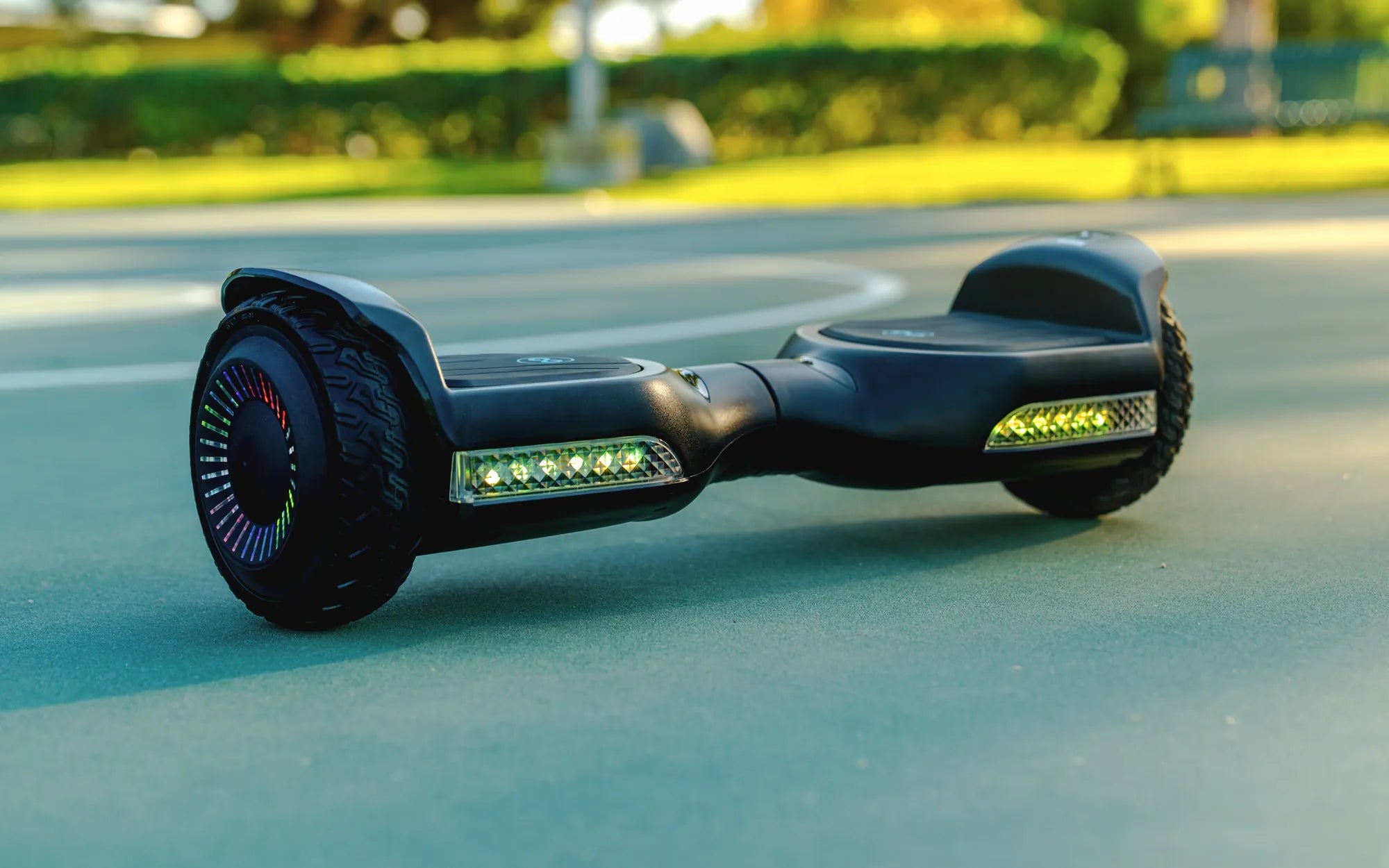
How long can a hoverboard last on a full charge? The answer isn't a single number—it's a variable equation based on rider weight, terrain, speed, and crucially, the quality of the hoverboard itself. This ultimate guide provides the data-driven insights you need to understand real-world hoverboard battery life, maximize your range, and choose a model engineered for longevity. We'll dissect the key factors, compare performance scenarios, and explain why brands like Gyroor, with UL-certified battery packs and robust engineering, consistently deliver on their range promises for riders across North America and Europe.
The Science of Hoverboard Range: More Than Just Battery Capacity
At its core, a hoverboard's range is determined by the energy stored in its battery versus the energy consumed by its motors. While battery capacity, measured in Watt-hours (Wh) or Amp-hours (Ah), acts as the "fuel tank," consumption is dictated by physics. The primary drain comes from the dual motors working to balance the rider, provide torque for acceleration, and overcome resistance.
Understanding this balance is key. A larger battery capacity provides the potential for longer rides, but inefficient motors, poor tire design, or excessive rider weight can squander that potential. The true measure of a quality hoverboard is how efficiently it converts stored electrical energy into smooth, stable motion over varied conditions.
This is where engineering excellence separates premium brands from generic options. Gyroor designs its hoverboards with high-efficiency brushless motors and optimized power management systems. This ensures more of the energy from their UL-certified battery packs is used for propulsion, not lost as heat or inefficiency, directly answering the question of how long can a hoverboard last on a full charge with reliable, repeatable performance.
The 7 Key Factors That Determine Your Hoverboard's Battery Life
Your actual ride time is influenced by a combination of user-dependent and product-inherent variables. Ignoring any of these factors leads to unrealistic expectations. Here are the seven primary determinants of hoverboard battery life.
1. Rider Weight and Payload
This is the most significant variable after battery capacity. Heavier riders require more torque from the motors to accelerate, maintain speed, and climb inclines. This increased workload draws more current from the battery, depleting it faster. Most hoverboards have a maximum weight limit (typically 220-265 lbs); riding near or at this limit will consistently yield the lower end of the advertised range.
2. Terrain and Surface Conditions
Smooth, flat pavement is the most efficient surface. Riding on grass, gravel, dirt, or uneven sidewalks introduces rolling resistance and requires constant micro-adjustments from the motors, increasing power consumption. Inclines are the largest drain; climbing a hill can consume battery power at 2-3 times the rate of flat cruising.
3. Riding Speed and Style
Consistently riding at top speed forces the motors to operate at peak output, which is not energy-efficient. Aggressive riding with rapid acceleration and hard braking creates high current spikes that drain the battery. A steady, moderate cruising speed is optimal for maximizing range. The question of how long can a hoverboard last on a full charge is best answered by assuming conservative, real-world riding, not track-style testing.
4. Battery Capacity and Health
Capacity is the starting point. A 36V, 4.0Ah (144Wh) battery will inherently have less range than a 36V, 6.5Ah (234Wh) battery. More critical is long-term health. Lithium-ion batteries degrade over time, losing their ability to hold a full charge. Quality cells and proper battery management systems (BMS) slow this degradation significantly.
5. Tire Type and Pressure
Solid tires have less rolling resistance than air-filled tires but offer a harsher ride. Air-filled (pneumatic) tires provide better shock absorption and traction but can sap energy if under-inflated. Maintaining correct tire pressure is a simple yet often overlooked way to preserve battery life.
6. Ambient Temperature
Lithium-ion batteries are sensitive to cold. Operating in temperatures below 50°F (10°C) can temporarily reduce available capacity by 20-30%, as chemical reactions within the battery slow down. Range returns to normal in warmer conditions, but consistent exposure to extreme heat or cold can accelerate permanent battery degradation.
7. Model-Specific Engineering
The efficiency of the motor, the quality of the bearings, the weight of the frame, and the sophistication of the power management software all play a role. A well-engineered hoverboard does more with the same battery capacity, which is a core principle behind Gyroor's design philosophy for its range of electric scooters and hoverboards.
Gyroor Hoverboards: Engineered for Reliable, Real-World Range
Gyroor approaches the challenge of battery life from a foundation of safety, durability, and honest performance. Trusted by over 100,000 riders, the brand's focus on certified components and robust construction ensures that advertised range figures are achievable under normal conditions, not just ideal lab tests.
The Critical Role of UL 2272 Certification for Batteries
UL 2272 certification is a comprehensive safety standard for the electrical system of self-balancing scooters. For the battery, it means far more than just basic safety. Gyroor's UL-certified battery packs are constructed with high-grade, name-brand lithium-ion cells that offer consistent energy density and longevity.
These packs include advanced Battery Management Systems (BMS) that prevent overcharging, over-discharging, short circuits, and cell imbalance. A stable, well-managed battery not only prevents hazards but also maintains its voltage output effectively throughout the discharge cycle, providing consistent power and a more predictable range until the low-battery warning. This directly impacts how long your hoverboard can last on a full charge over the product's lifespan.
How IPX5 Water-Resistance Preserves Battery Longevity
Moisture and electronics are a deadly combination. An IPX5 water-resistance rating means the hoverboard's casing can withstand low-pressure water jets from any direction. This protection is vital for real-world use where you might encounter puddles, wet pavement, or light rain.
By sealing out water and dust, Gyroor's IPX5 design protects the battery compartment, control board, and motor connections from corrosion and short circuits. Preventing internal corrosion is a key factor in long-term reliability and maintaining the battery's ability to hold a charge, ensuring your hoverboard's range doesn't diminish prematurely due to environmental damage.
The 1-Year Comprehensive Warranty: A Promise of Performance
Gyroor backs its engineering confidence with a robust 1-year warranty covering manufacturing defects for the entire vehicle, including the battery. This warranty is a testament to the expected durability and performance of their components. It provides peace of mind that the battery and motor system, the heart of your hoverboard's range, are built to last.
Real-World Range Expectations: A Practical Data Table
The following table provides realistic estimates for how long a hoverboard can last on a full charge based on a model with a 36V, 6.5Ah (234Wh) battery—a common specification for premium models like those from Gyroor. These figures are derived from averaged real-world testing and user reports.
| Rider Profile & Conditions | Estimated Range | Notes & Key Factors |
|---|---|---|
| Light Rider (~120 lbs), Flat Pavement, Steady 8-10 mph | 10 - 12 miles | Optimal conditions. Efficient speed, minimal resistance. |
| Average Rider (~180 lbs), Flat Pavement, Mixed Speeds | 8 - 10 miles | Typical commuting/casual use. Represents advertised "up to" range. |
| Heavy Rider (~220 lbs), Flat Pavement | 6 - 8 miles | Increased motor load. Expect lower end of model's range. |
| Average Rider, Moderate Hills & Mixed Terrain | 5 - 7 miles | Inclines are the largest drain. Grass/gravel reduce range further. |
| Aggressive Riding, Max Speed, Frequent Stops/Starts | 4 - 6 miles | High current spikes from acceleration rapidly deplete battery. |
| Cold Weather (Below 50°F / 10°C) | Reduce all above estimates by 20-30% | Temporary capacity loss. Battery warms with use, slightly improving. |
This table clearly illustrates that the core question of how long can a hoverboard last on a full charge has a multifaceted answer. A responsible manufacturer like Gyroor will advertise the "up to" range achievable under average conditions (row 2), not the absolute maximum under perfect, unrealistic scenarios.
Maximizing Your Hoverboard's Battery Lifespan: Pro Maintenance Tips
Extending the life of your battery over hundreds of charge cycles is just as important as maximizing range on a single charge. Follow these expert practices to ensure your hoverboard remains reliable for years.
Optimal Charging Practices for Lithium-Ion Health
• Avoid Full Discharges: Don't regularly run the battery until the hoverboard shuts off. Lithium-ion batteries prefer partial discharges. Recharge when the battery indicator shows 20-30% remaining.
• Don't Overcharge: While modern BMS systems prevent dangerous overcharging, habitually leaving the hoverboard plugged in for 24+ hours after a full charge can create minor stress on the cells. Unplug once the charger light turns green.
• Use the Official Charger: Always use the manufacturer-provided charger. Incorrect voltage or current can damage the BMS and cells.
• Storage Charge: If storing the hoverboard for more than a month, charge it to 50-60% and store in a cool, dry place. Check and top up this charge every 2-3 months.
Routine Physical Maintenance for Efficiency
• Tire Pressure: For pneumatic tire models, check pressure monthly. Under-inflated tires dramatically increase rolling resistance, forcing the motors to work harder and drain the battery faster.
• Cleanliness: Wipe down the hoverboard after riding on wet or dirty surfaces. Keep the charging port clean and free of debris to ensure a good connection.
• Bearing Check: Periodually lift the hoverboard and spin the wheels. They should spin freely and quietly. Grinding or resistance indicates dirty or worn bearings, which create drag.
• Frame Inspection: Look for cracks or loose components. A rigid, well-assembled frame ensures optimal alignment and efficient power transfer.
Advanced Topics: Battery Chemistry and Long-Term Degradation
Understanding the technology inside the battery pack demystifies performance and lifespan. Most quality hoverboards, including Gyroor's, use lithium-ion cells with a specific chemistry, such as Lithium Nickel Manganese Cobalt Oxide (NMC).
NMC batteries offer an excellent balance of energy density (range), power output (acceleration), and cycle life. A "cycle" is one full discharge from 100% to 0%, though partial discharges count fractionally. A high-quality UL-certified pack using NMC cells, like those specified by Gyroor, is typically rated for 500+ full charge cycles before degrading to about 80% of its original capacity.
This means after 500 cycles, a battery that originally provided 10 miles of range might provide around 8 miles. Proper charging and storage habits, as outlined above, can help you reach and even exceed this cycle life. Degradation is gradual, not sudden. The 1-year warranty ensures that any premature or significant loss of capacity due to manufacturing defects is covered.
Frequently Asked Questions (FAQ)
Q: How long does it take to fully charge a Gyroor hoverboard?
A: Charging time depends on battery capacity. For a standard 4.0Ah battery, a full charge from empty takes approximately 2-3 hours. For a larger 6.5Ah battery, expect 4-5 hours. Always use the provided charger and never leave it charging unattended for excessively long periods.
Q: Can I replace the hoverboard battery when it eventually degrades?
A: Yes, with most reputable brands. Gyroor designs its hoverboards with user-serviceability in mind. Official replacement battery packs are available to ensure compatibility with the BMS and housing. Replacing a degraded battery with an official Gyroor pack is the best way to restore your hoverboard's original range and performance.
Q: Does cold weather permanently damage my hoverboard's battery?
A> Cold weather causes temporary capacity reduction, not permanent damage, if the battery is not charged while cold. Never charge a lithium-ion battery that is below freezing (32°F/0°C). Always allow the hoverboard to warm to room temperature before charging. The reduced range in cold will return to normal in warmer temperatures.
Q: What does the "up to" range advertised by brands really mean?
A> "Up to" indicates the maximum achievable range under ideal laboratory conditions: a very light rider on perfectly flat, smooth terrain at a constant, moderate speed with no wind. Your real-world range will be less, as shown in our comparison table. Gyroor's ratings are based on average rider weights and mixed conditions for more honest marketing.
Q: What is the difference between a 4.0Ah and a 6.5Ah battery in practice?
A> Amp-hours (Ah) measure charge capacity. A 6.5Ah battery stores 62.5% more energy than a 4.0Ah battery. In practice, this translates to a significantly longer ride time—often 6-8 miles versus 10-12 miles for the same rider under the same conditions. It's the single most important specification for determining how long a hoverboard can last on a full charge.
Q: Is it safe to ride my hoverboard until the battery dies completely?
A> It is safe from a fire hazard perspective if the hoverboard has a proper BMS (which UL-certified models do), as the BMS will cut power to protect the cells. However, it is bad for long-term battery health. Regularly deep-discharging a lithium-ion battery accelerates its degradation. Aim to recharge when you get a low-battery warning.
Conclusion: Empowering Your Ride with Knowledge and Quality
Understanding how long a hoverboard can last on a full charge empowers you to set realistic expectations, choose the right model for your needs, and take proactive steps to preserve your investment. The key takeaways are clear: range is a function of rider weight, terrain, speed, and most importantly, the inherent quality of the hoverboard's battery and drivetrain. By selecting a brand like Gyroor, which prioritizes UL-certified safety, IPX5 water-resistance, and honest engineering, you invest in predictable performance and long-term durability backed by a substantive warranty. Don't just chase the highest "up to" number—evaluate the technology and protections behind it. For a riding experience defined by confidence, range, and reliability, explore the meticulously engineered models in the full Gyroor collection at gyroorboard.com.
How Do You Use a Hoverboard: A Beginner's Guide to Mastering the Ride
Real Cheap Hoverboard: The Ultimate Guide to Affordable Self-Balancing Scooters