



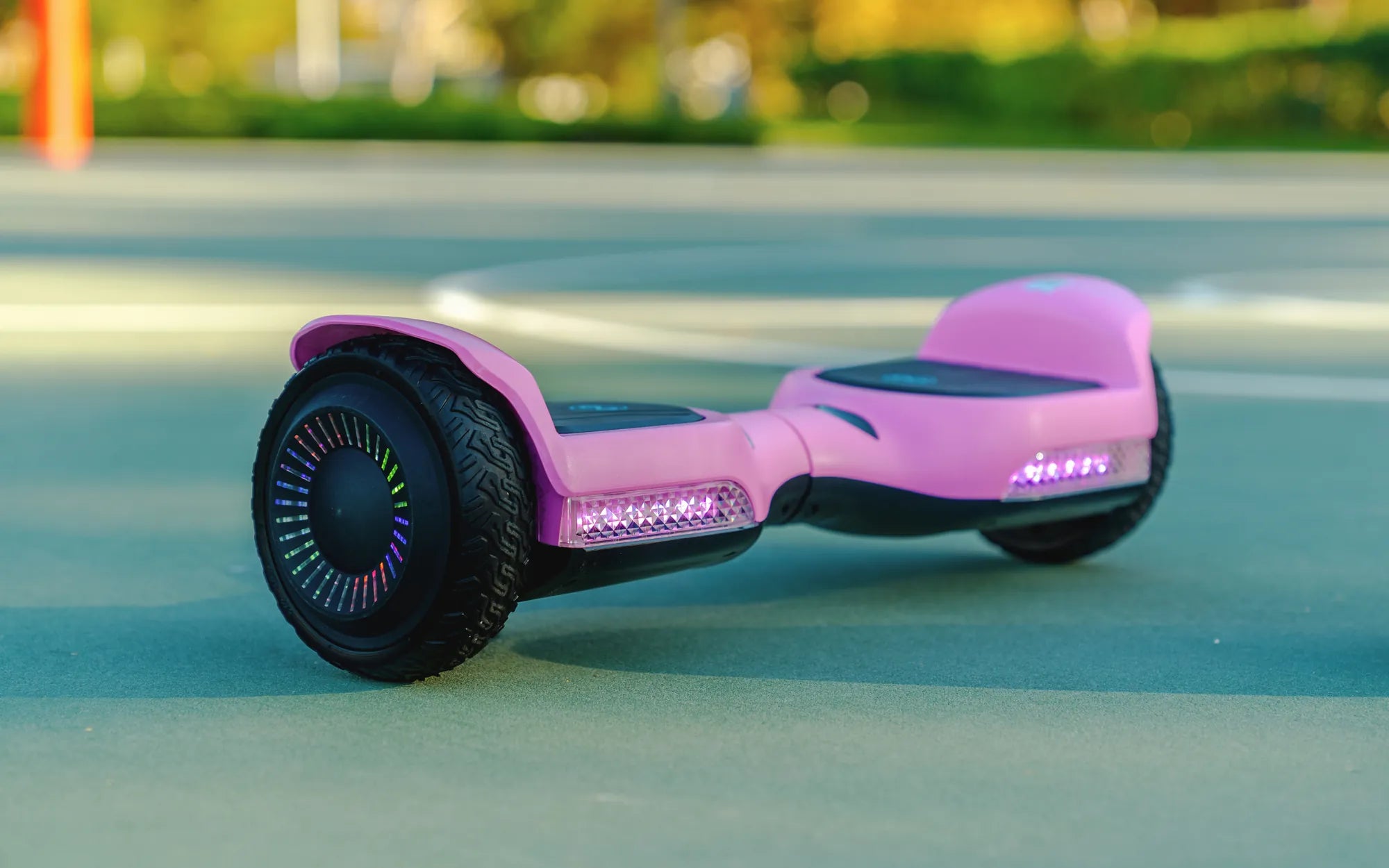
Understanding Your Hoverboard's Power Source: The Battery Core
Knowing how long to charge a hoverboard starts with understanding its heart: the lithium-ion battery. Charging time is not arbitrary; it's a precise function of battery chemistry, capacity, and electrical engineering. A proper charge cycle ensures maximum range, safety, and longevity for your investment.
Modern hoverboards, like those from leading brands, utilize advanced lithium-ion cells grouped into packs. These packs are managed by a sophisticated Battery Management System (BMS) that regulates charging and discharging. The BMS is crucial for safety, preventing overcharging, overheating, and deep discharge that can permanently damage cells.
Gyroor hoverboards, trusted by over 100,000 riders, use UL-certified lithium-ion battery packs tested for 500+ charge cycles. This certification is a benchmark for safety and quality, ensuring the battery meets stringent electrical and fire-safety standards. Starting with a quality battery fundamentally influences both charging time and long-term reliability.
This guide will provide specific timeframes, but more importantly, it will explain the why behind them. You'll learn to optimize charging for your specific model and usage patterns, transforming from a casual user into an informed owner who maximizes performance and battery health.
The Core Factors That Determine Charging Time
Charging duration is not a single number. It's a variable calculated from three primary components: the battery's capacity, the charger's power, and the battery's current state. Understanding these factors allows you to predict and manage charging times accurately.
Ignoring these variables can lead to frustration—waiting longer than necessary or, worse, using an incompatible charger that risks damage. By mastering these fundamentals, you ensure every charging session is efficient and safe.
Battery Capacity (Measured in Watt-hours - Wh)
Capacity is the battery's "fuel tank," measured in Watt-hours (Wh). It's often listed as Voltage (V) and Amp-hours (Ah). For example, a common 36V 4.0Ah battery has a capacity of approximately 144Wh (36V * 4Ah). A larger capacity, like a 36V 6.0Ah pack (216Wh), stores more energy.
A larger capacity battery provides a longer riding range but requires more time to refill from empty. It's the single biggest determinant of total charging time. High-performance or all-terrain models often feature these larger packs for extended adventure.
Charger Output (Measured in Amps - A)
The charger is the "fuel pump." Its output current, measured in Amps (A), dictates how quickly energy flows into the battery. A standard charger might be 1.5A, while a faster one could be 2.0A. Using a 2.0A charger on a compatible battery can reduce total charge time by 25% or more compared to a 1.5A unit.
Critical Warning: Always use the charger specified for your model. A charger with too high an amperage can overwhelm the BMS and damage cells, while one with too low an amperage will take excessively long. Gyroor provides optimized chargers designed to work in harmony with their battery's BMS for safe, efficient charging.
Battery Depletion Level & Age
Charging from 0% to 100% takes the full cycle time. However, a partial top-up from 50% will take roughly half that time. The BMS typically slows the charging rate as the battery approaches full (a "trickle charge") to protect the cells, so the last 10-20% takes longer proportionally.
All batteries degrade with time and use. After hundreds of cycles, a battery's maximum capacity diminishes. An older battery might still report "100% charged" faster, but that 100% represents a smaller total capacity, leading to shorter ride times. Proper care, as outlined below, dramatically slows this aging process.
Standard Hoverboard Charging Times: A Practical Breakdown
Here are realistic charging time estimates based on common battery and charger configurations. These times assume charging from a fully depleted state (0%) to 100% at room temperature using the correct, official charger.
| Battery Configuration | Charger Output | Estimated Full Charge Time | Typical Model Type |
|---|---|---|---|
| 36V 4.0Ah (~144Wh) | 1.5A Standard Charger | 3 to 4 hours | Standard City/Commuter |
| 36V 4.0Ah (~144Wh) | 2.0A Fast Charger | 2 to 3 hours | Standard Models (with fast-charge support) |
| 36V 6.0Ah (~216Wh) | 2.0A Fast Charger | 4 to 5.5 hours | High-Performance / All-Terrain |
| 42V+ Large Capacity | 2.0A+ Charger | 5 to 7 hours | Premium Long-Range Models |
For Gyroor's standard models with a 36V 4.0Ah battery and a 1.5A charger, plan for a 3 to 4 hour full charge. Their performance models with larger 6.0Ah batteries, even with a 2.0A charger, will require 4 to 5.5 hours for a complete cycle due to the significantly larger energy capacity.
Remember, these are maximum times. If you're only topping up from 50%, you can halve these estimates. The charging indicator light on your board or charger will typically turn green or switch off when the cycle is complete.
Best Practices for Charging and Maximizing Battery Life
How you charge is as important as how long you charge. Proper habits can double the functional lifespan of your battery, saving money and ensuring consistent performance. These practices leverage the built-in protections of quality hardware like Gyroor's UL-certified packs.
The 80/20 Rule for Daily Use
Lithium-ion batteries experience the most stress at the extreme ends of their charge spectrum. For daily use, avoid routinely draining to 0% or charging to 100%. Instead, aim to keep the battery between 20% and 80% charge.
This practice minimizes degradation per cycle. Reserve full 0-100% charges for when you need the maximum range for a long planned ride. This simple habit is the most effective way to preserve your battery's health over years of use.
Using the Right Charger & Monitoring the Process
This cannot be overstated: use only the official charger provided with your hoverboard. Third-party or generic chargers may not communicate correctly with the BMS, leading to improper charging, cell damage, or fire risk. Gyroor's chargers are specifically engineered to match their battery packs' voltage and current requirements.
Charge in a cool, dry place away from direct sunlight and flammable materials. The IPX5 water-resistant design of Gyroor boards adds a layer of durability, but the charging port itself should always be dry before connecting. While the BMS should prevent overcharging, it's good practice not to leave the board plugged in for days unattended.
Storage and Long-Term Care
If you won't use your hoverboard for several weeks or months, proper storage is key. Do not store it fully charged or completely empty. The ideal storage charge is approximately 50-60%.
Store the board in a cool, dry environment with a moderate temperature (ideally between 10°C and 25°C / 50°F and 77°F). Check the charge level every 2-3 months and give it a top-up back to 50-60% if it has dropped significantly. This maintains cell health during inactivity.
Troubleshooting: When Charging Doesn't Go as Planned
Even with quality products, occasional issues can arise. Here’s a systematic approach to diagnosing common charging problems before seeking service.
Hoverboard Not Charging or Charger Light Stays Green
If the charger light stays green when plugged into the board (indicating no draw), or the board shows no sign of charging, follow this checklist. First, verify the wall outlet is working by plugging in another device. Second, inspect the charger cable and the board's charging port for any visible damage, debris, or bent pins.
Ensure the connections are fully seated. If the board was fully depleted, leave it plugged in for 30 minutes; some BMS systems require a minimal "wake-up" charge before normal operation resumes. If problems persist, contact the manufacturer's support. Gyroor's US-based support team can help diagnose issues covered under their 1-year comprehensive warranty.
Battery Draining Too Quickly
A sudden drop in range can be alarming. First, consider external factors: cold weather temporarily reduces battery performance, riding on rough terrain or uphill consumes more power, and higher rider weight decreases range. If runtime is consistently less than 50% of its original duration despite a full charge, the battery may be aging.
Perform a diagnostic: charge fully, ride on a flat, smooth surface at a moderate speed, and note the distance. Compare it to the advertised range for your model (adjusting for weight). A significant, consistent shortfall may indicate it's time for a battery replacement. Always refer to your warranty for potential coverage.
Advanced Charging Insights and Technology
The future of hoverboard batteries and charging is focused on increased energy density, faster safe charging, and smarter management. Understanding these trends helps you appreciate the technology in your board and make informed future purchases.
Newer battery chemistries, like Lithium Iron Phosphate (LiFePO4), offer even greater thermal stability and cycle life (often 2000+ cycles) but are currently heavier and more expensive. Advanced BMS units now feature Bluetooth connectivity, allowing users to monitor individual cell health, track cycle counts, and receive maintenance alerts via a smartphone app.
Fast-charging technology is evolving, but it requires a holistic design—from the wall outlet to the battery cells—to be safe. It's not just a more powerful charger; it requires batteries with specific chemistry and robust cooling. Gyroor's focus on UL-certified packs ensures that any advancement in charge speed is balanced with paramount safety standards.
Regenerative braking, a feature on some advanced models, recaptures a small amount of energy during braking or downhill coasting, feeding it back to the battery. While it won't drastically change how long you need to charge a hoverboard from the wall, it can extend your range by 5-10%, effectively making each charge last longer.
Frequently Asked Questions (FAQ)
Q: Can I leave my hoverboard charging overnight?
A: While modern hoverboards like Gyroor's have a BMS to prevent overcharging, it is not recommended as a regular habit. For optimal battery longevity and general safety best practices, unplug the board once the indicator shows a full charge, typically after 3-5 hours.
Q: Does fast charging damage the battery?
A: Using the manufacturer's designated "fast" charger (e.g., a 2.0A for a compatible model) is safe. Damage occurs when using an unauthorized, higher-amp charger that the battery's BMS is not designed to handle. This can cause overheating, reduce lifespan, and void the warranty.
Q: How do I know when my hoverboard battery needs replacing?
A: Clear signs include: 1) Drastically reduced range (less than 50% of the original distance on a full charge), 2) The board failing to hold a charge for more than a day or two while powered off, 3) The battery indicator showing erratic levels during use. Check your 1-year warranty for coverage first.
Q: Is it bad to charge the hoverboard after every short ride?
A> No, frequent partial charges are actually better for lithium-ion batteries than deep discharge cycles. Topping up from 60% to 80% is a low-stress event for the cells. Just avoid keeping it at 100% charge constantly.
Q: What does the UL certification on a battery mean for charging?
A: UL (Underwriters Laboratories) certification means the battery pack has passed rigorous independent tests for electrical and fire safety. This includes safe operation during charging and discharging. A UL-certified pack, like those from Gyroor, significantly reduces risks associated with charging, giving you peace of mind.
Charge Smart, Ride Longer: The Final Verdict
So, how long do you charge a hoverboard? For most standard models, the answer is 3 to 4 hours for a full cycle, with high-performance models requiring 4 to 5.5 hours. But the true answer is more nuanced: charge until full using the correct charger, and do so in a way that prioritizes long-term battery health.
By understanding the factors of capacity and charger output, adopting the 80/20 rule for daily use, and following proper storage guidelines, you transform charging from a mundane task into a strategic practice that extends the life and joy of your hoverboard. Quality engineering is your foundation—features like Gyroor's UL-certified battery packs, IPX5 water resistance, and robust BMS exist to deliver reliable performance when coupled with informed user care.
Your hoverboard is an investment in fun and mobility. Protect that investment by charging it wisely. The few minutes of attention to these details pay dividends in years of dependable rides, maximum range, and safety. Now you're equipped not just with a time estimate, but with the knowledge to be a master of your board's power.
Ready for a hoverboard built with these principles in mind? Explore the full range of high-performance, safety-focused models designed for longevity. Browse the full Gyroor collection at gyroorboard.com and find the perfect ride backed by advanced UL-certified batteries and comprehensive customer support.
Hoverboard Tire 200x90: The Ultimate Guide to Performance and Maintenance
Scooter for Kids Boys: The Ultimate Guide to Choosing the Perfect Ride