

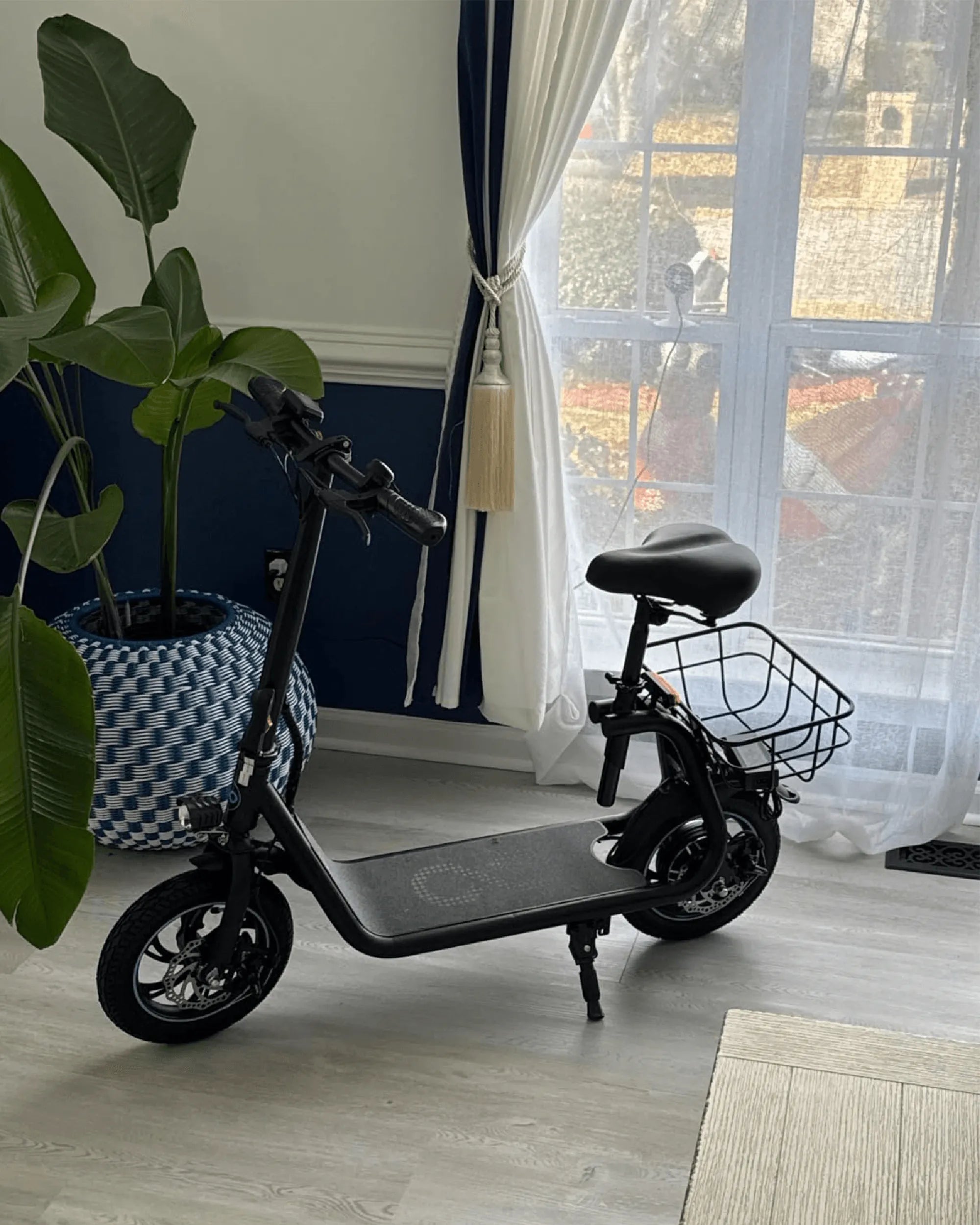
Understanding Mobility Scooter Charging Times
How long does it take to charge a mobility scooter? This is one of the most practical questions for any new or prospective scooter owner. The answer isn't a single number—charging time is a variable equation influenced by your specific battery, charger, and usage habits. For riders relying on their scooters for daily independence, understanding this process is crucial for planning and peace of mind.
At Gyroor, a leading electric scooter and e-bike brand trusted by over 100,000 riders, we engineer our mobility solutions with clarity and safety at the forefront. Our focus on UL-certified battery technology and efficient charging systems ensures you get reliable performance. This guide will demystify charging times, providing you with the data-driven knowledge to power your freedom confidently.
We'll break down the science into simple terms, explore real-world scenarios, and provide actionable best practices. By the end, you'll know not just how long a charge might take, but how to optimize the entire process for safety, battery health, and convenience. Let's plug into the details.
The Key Factors That Determine Your Charge Time
Three primary variables dictate how long you'll wait for a full battery: the battery's capacity, the charger's power output, and the battery's starting charge level. Think of it like filling a pool. The size of the pool (battery capacity), the speed of the water hose (charger output), and how empty the pool is to start (state of charge) all change the total time required.
Ignoring any one of these factors leads to inaccurate estimates. A common mistake is assuming all scooters charge at the same rate. In reality, a compact travel scooter and a heavy-duty, long-range model have fundamentally different power systems. Understanding your own equipment's specifications is the first step to accurate planning.
Environmental conditions like temperature also play a secondary role. Lithium-ion batteries, which power most modern mobility scooters including Gyroor models, charge most efficiently at room temperature. Extremely cold or hot environments can slow the charging process slightly and, over time, impact overall battery health. Always charge in a cool, dry place.
Battery Capacity (Ah): The Fuel Tank Size
Battery capacity is measured in Amp-hours (Ah). This number represents the energy storage capacity, analogous to the size of your car's gas tank. A higher Ah rating means a larger "tank" and, consequently, a longer potential range per charge. For example, a scooter with a 30Ah battery has a larger capacity than one with a 15Ah battery.
This capacity is the most significant factor in total charging time. A larger battery simply requires more energy to fill from empty to full. If all other factors are equal, a 30Ah battery will take roughly twice as long to charge as a 15Ah battery. When purchasing a scooter, consider that models designed for all-day use or longer distances will have larger batteries and thus longer charge times.
Gyroor scooters utilize high-quality, UL-certified lithium-ion battery packs with capacities tailored to different use cases. Our commuter models might feature a 15-20Ah battery for daily errands, while our premium long-range models can be equipped with 30Ah+ batteries for extended adventures, reflecting this direct trade-off between range and charge duration.
Charger Output (Amps): The Flow Rate
If the battery is the tank, the charger is the hose. Charger output is measured in Amps (A). A standard charger might be 2A, while a fast charger could be 5A or 8A. The amperage rating indicates how much electrical current the charger can deliver to the battery per hour. A higher-amp charger "fills the tank" faster.
The relationship is direct: doubling the charger amperage roughly halves the charge time, assuming the battery can accept that rate. It's critical to use only the charger provided by the manufacturer or a compatible, approved replacement. Using an incorrect, higher-amp charger can overwhelm the battery's management system, leading to overheating, reduced lifespan, or safety hazards.
Gyroor provides optimized chargers with our scooters. Our standard chargers offer safe, reliable overnight charging, while optional fast chargers are available for models where quicker turnaround is needed. All are designed to work in harmony with our battery management systems (BMS) to ensure efficient and safe power delivery.
Battery State of Charge: Starting from Empty vs. Topping Up
You don't always charge from 0%. The starting point of your charge cycle dramatically affects the time required. A completely depleted battery will require the full, maximum charge time. However, a common practice is to "top up" the battery from 50% to 80%, which can be significantly faster.
This is due to the charging profile of lithium-ion batteries. They charge in phases: a constant current phase (fast filling) and a constant voltage/trickle charge phase (slower, precision topping off). The final 10-20% of the charge cycle is slower as the system carefully balances the cells. Therefore, a charge from 20% to 80% will be much quicker than from 0% to 100%.
For daily use, you rarely need to perform a full 0-100% cycle. Adopting a habit of partial, more frequent charges is not only more convenient but is also better for long-term battery health, a concept we'll explore in the best practices section.
A Practical Guide: Gyroor Scooter Charging Scenarios
Let's apply the theory with concrete examples. The table below outlines estimated charge times for common Gyroor scooter configurations. These are realistic approximations for charging from a fully depleted state to 100% in room temperature conditions, including the final trickle/balance phase.
| Scenario | Battery Capacity | Charger Output | Estimated Full Charge Time | Best Use Case |
|---|---|---|---|---|
| Standard Overnight Charge | 15 Ah | 2 A Standard Charger | 7 - 9 hours | Light daily use, plug in overnight. |
| Standard Overnight Charge | 20 Ah | 2 A Standard Charger | 10 - 12 hours | Moderate daily commuting. |
| Fast Daytime Charge | 20 Ah | 5 A Fast Charger | 4 - 5 hours | Midday top-up for extended errands. |
| Long-Range Fast Charge | 30 Ah | 5 A Fast Charger | 6 - 7 hours | Recharging a high-capacity battery efficiently. |
| Ultra-Fast Charge* | 15 Ah | 8 A Fast Charger | ~2 hours | Quick turnaround for travel scooters. |
*Note: Ultra-fast charging requires specific battery and BMS support. Always check your model's specifications.
These times are for a full cycle. As mentioned, topping up from 50% will take a fraction of this time. For instance, charging a 20Ah battery from 50% to 100% with a 5A charger might take only 2-3 hours, as it bypasses much of the slow final trickle phase if you unplug at 80-90%.
Remember, these are estimates. Actual times can vary slightly based on battery age, ambient temperature, and the specific charging algorithm. The Gyroor smart charger and BMS work together to manage this process safely, switching to a maintenance mode once full to prevent overcharging, which allows for safe overnight charging.
Best Practices for Safe and Efficient Charging
Knowing how long does it take to charge a mobility scooter is one thing; knowing how to charge it correctly is another. Proper charging habits protect your investment, ensure safety, and maximize the lifespan of your battery, saving you money and hassle in the long run.
Adopting these practices turns charging from a mundane task into a routine that actively cares for your scooter. Given that the battery is often the most expensive single component, this care is financially savvy. Let's explore the core principles endorsed by battery experts and Gyroor engineers.
Use the Right Charger (Gyroor's UL-Certified Solution)
This cannot be overstated: always use the charger provided with your Gyroor scooter or a direct, manufacturer-approved replacement. Our chargers are precisely engineered to match the voltage and amperage requirements of our UL-certified battery packs. They incorporate safety features like automatic shut-off and surge protection.
Using a generic or incompatible charger risks severe damage. It can fry the Battery Management System (BMS), the brain that protects against overcharging and overheating. This voids the 1-year warranty and can create a fire risk. The convenience of a slightly faster, off-brand charger is never worth compromising the safety of your home and scooter.
The 20-80 Rule for Battery Longevity
For optimal lithium-ion battery health, avoid regularly draining to 0% or charging to 100%. The sweet spot is to keep the battery between 20% and 80% charge for daily use. This reduces stress on the battery cells, slowing chemical degradation and significantly extending the total number of charge cycles the battery can handle.
You don't need to be perfect. If you need the full range for a long trip, by all means, charge to 100%. But for daily home-to-store trips, unplugging once the charger light indicates ~80% (often a solid green light) is a excellent habit. Similarly, try to recharge before the battery indicator drops into the red zone (below 20%). This practice can double or triple the functional lifespan of your battery.
Charging in a Safe, Dry Environment
Always charge your scooter in a dry, well-ventilated area at room temperature, away from direct sunlight, flammable materials (like curtains or paper), and moisture. Never charge in a freezing garage or a hot shed. The built-in durability of Gyroor's IPX5 water-resistant designs protects the scooter from rain during use, but the charging port and electronics should be kept dry during the charging process itself.
Plug the charger directly into a wall outlet, not an extension cord or power strip, to ensure a stable power connection. Before plugging in, visually inspect the charger cable, plug, and scooter's charging port for any signs of damage, fraying, or debris. A minute of inspection can prevent major issues.
Extending Your Scooter's Range and Battery Life
Efficiency doesn't stop at the charger. How you ride and maintain your scooter directly impacts how often you need to charge and how long your battery lasts over the years. These proactive tips help you get the maximum value from every charge cycle.
Maintain Proper Tire Pressure: Under-inflated tires create significant rolling resistance, forcing the motor to work harder and drain the battery faster. Check your tire pressure monthly and inflate to the PSI listed on the tire sidewall. This simple act can improve range by 10% or more.
Adopt Smooth Riding Habits: Avoid constant full-throttle starts from a standstill. Accelerate gradually. Use the scooter's momentum when going downhill. Plan your routes to minimize steep, long hills where possible. Aggressive riding consumes a disproportionate amount of energy.
Mind the Weight Load: Every scooter has a maximum weight capacity. Consistently riding at or near this maximum will reduce range and strain the motor and battery. Carry only what you need for your journey.
Store in Moderate Temperatures: If storing the scooter for an extended period (e.g., over winter), follow storage guidelines. For lithium-ion batteries, the ideal storage charge is around 50-60%. Store the scooter (or at least remove the battery) in a cool, dry place, away from temperature extremes. Never store a fully depleted battery.
Frequently Asked Questions (FAQ)
Q: Can I leave my mobility scooter charging overnight?
A: Yes, with a Gyroor scooter using its included smart charger, overnight charging is safe and designed for convenience. The charger and the scooter's Battery Management System (BMS) communicate to prevent overcharging. Once the battery reaches 100%, the system switches to a maintenance or "trickle" mode that monitors voltage and provides tiny pulses of power only as needed to keep it full. You can safely plug it in before bed and unplug it in the morning.
Q: What happens if I use a faster, non-Gyroor charger?
A: We strongly advise against it. Using an incompatible, higher-amp charger can force too much current into the battery too quickly. This can cause overheating, damage the delicate battery cells, and corrupt the BMS. This damage is often irreversible, voids your 1-year warranty, and poses a serious fire risk. The cost of a proper replacement charger is always less than the cost of a new battery or the potential danger.
Q: How will I know when the battery is fully charged?
A: Gyroor chargers use an intuitive LED indicator system. Typically, a red light means the battery is actively charging. A green light indicates the charge cycle is complete and the battery is full. Some models may have a multi-light system showing progress. Always consult your specific Gyroor user manual for the exact indicator meanings for your model.
Q: How long should a mobility scooter battery last before replacement?
A: A quality lithium-ion battery, like those in Gyroor scooters, is rated for 500+ full charge cycles while maintaining good capacity. With proper care (following the 20-80 rule, avoiding extreme temperatures), you can expect 3-5 years of daily use before noticing a significant reduction in range. Heavy use or poor charging habits can shorten this to 1-2 years. The battery's lifespan is measured in cycles, not just calendar time.
Q: Can I charge my scooter after every short trip, or should I wait until it's low?
A: For lithium-ion batteries, frequent partial charges are better than deep discharges. There's no "memory effect." Feel free to top up your scooter after a short trip. In fact, keeping it between 20% and 80% with regular top-ups is the ideal practice for long-term battery health. Don't feel you need to run it down before plugging in.
Conclusion: Powering Your Freedom with Confidence
So, how long does it take to charge a mobility scooter? As we've explored, the answer hinges on your specific battery capacity, charger speed, and charging habits. A standard overnight charge of 8-12 hours is common, but with the right equipment and knowledge, you can achieve much faster turnarounds for daily needs. The key is understanding the variables you control: using the correct charger, adopting the 20-80 rule, and maintaining your scooter properly.
This knowledge empowers you to integrate your scooter seamlessly into your life without range anxiety. You can plan your trips, manage your charging schedule, and most importantly, trust in the reliability of your ride. At Gyroor, we build this trust into every product—from our UL-certified battery packs and IPX5 water-resistant designs to our robust 1-year warranty and commitment to rider safety.
Your mobility scooter is a gateway to independence. By charging it wisely, you're not just filling a battery; you're fueling your freedom to explore, connect, and live life on your own terms. Take control of your charge, and ride with confidence.
Ready to find a mobility scooter with the perfect balance of range, charge time, and reliable performance? Browse the full Gyroor collection, featuring detailed specifications and compatible fast-charge options, at gyroorboard.com. Our team is here to help you choose the model that powers your lifestyle.
Vertical Aluminum Bike 21 Speed: The Ultimate Guide to Versatile Cycling
Fully Enclosed Scooter: The Ultimate All-Weather Personal Commuter