



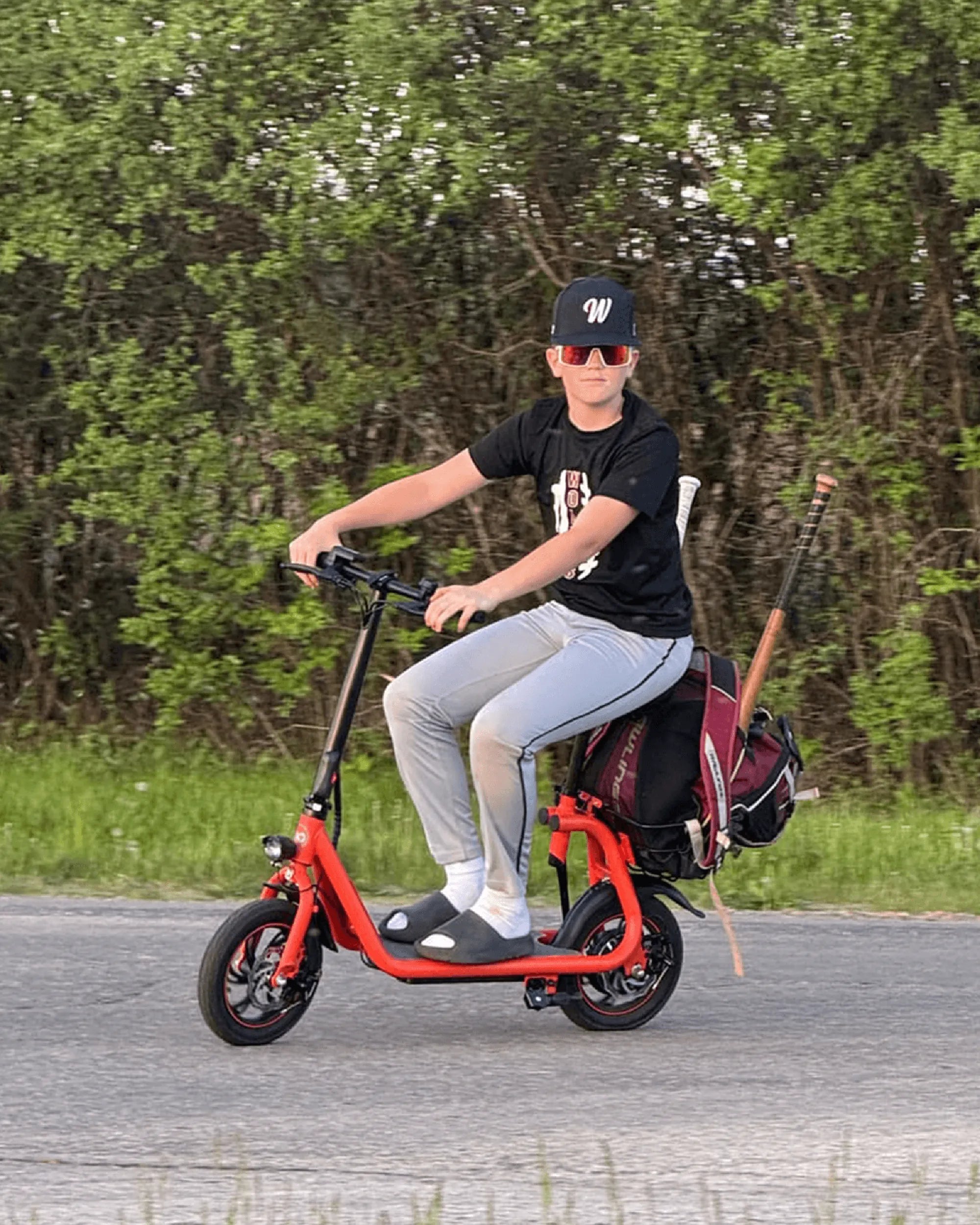
Understanding Your Scooter Battery: The Core of Charging Time
To answer "how long to charge a scooter battery," you must first understand the components involved. The charging duration is not a universal number but a result of a specific equation. The primary variables are the battery's energy capacity, measured in watt-hours (Wh) or amp-hours (Ah), and the charger's power output, measured in watts (W).
Modern electric scooters predominantly use lithium-ion batteries due to their high energy density, lighter weight, and longer lifespan. Older or budget models might use sealed lead-acid batteries, which are heavier and charge more slowly. The chemistry dictates not only the charge time but also the recommended charging patterns for longevity.
Think of the battery as a water tank and the charger as a hose. The size of the tank is the battery capacity. The water pressure from the hose is the charger's amperage or wattage. Filling a large tank with a thin hose takes a long time. Using a wider hose fills it faster. This fundamental relationship is key to predicting your scooter's charge time.
Other critical factors include the battery's state of health, ambient temperature, and the starting charge level. A brand-new, half-discharged battery in a room-temperature environment will charge at the optimal rate. An older, deeply discharged battery in a cold garage will take significantly longer.
The Standard Charging Timeline for Most E-Scooters
For the vast majority of commuter and recreational electric scooters, a full charge from empty typically takes between 3 to 8 hours. This range accommodates the most common battery capacities found in popular models, from compact last-mile solutions to more powerful commuter vehicles.
Lightweight, portable scooters designed for short trips often have batteries in the 150Wh to 250Wh range. These models usually charge fully in 3 to 5 hours. For example, a scooter with a 7.8Ah, 36V battery (approximately 280Wh) using a standard 2A charger will take about 4 hours for a full charge.
Mid-range and performance commuter scooters feature larger batteries, from 350Wh to 750Wh, to support longer ranges and higher speeds. Charging these can take 5 to 8 hours with the included standard charger. The charging time scales almost linearly with capacity when using the same charger specification.
It's crucial to consult your specific model's manual. Reputable brands like Gyroor provide clear specifications. For instance, the Gyroor F1 Pro commuter scooter features a 10.4Ah battery and includes a standard charger that achieves a full charge in approximately 5-6 hours, balancing speed with battery care.
Key Factors That Speed Up or Slow Down Charging
Charger output is the most direct variable under your control. A standard charger might output 1.5A or 2A. A fast charger provided by the manufacturer could output 3A, 4A, or more. Doubling the amperage can nearly halve the charge time, but it must be compatible with the battery's management system.
Battery health degrades over time. A new battery accepts charge efficiently. After hundreds of cycles, internal resistance increases, which can slow down the charging process, especially the final "trickle charge" phase where the battery management system carefully tops off the cells. This is a normal sign of aging.
Temperature has a profound impact. Lithium-ion batteries charge most efficiently at room temperature (around 20°C or 68°F). Charging in a cold environment (below 10°C/50°F) can be very slow and may harm the cells. Charging in extreme heat can be dangerous and lead to reduced battery life or failure.
The depth of discharge also matters. Charging from 50% to 100% is much faster than charging from 5% to 100%. The first 80% of capacity typically charges at a faster, constant current rate. The final 20% uses a slower, constant voltage trickle charge to protect cell health, which takes a disproportionate amount of the total time.
The Gyroor Advantage: Built for Efficiency and Safety
Gyroor designs its charging ecosystem with efficiency and long-term reliability as priorities. Every Gyroor electric scooter is powered by a UL-certified battery pack. This certification is a critical safety benchmark, ensuring the battery cells and protection circuits meet rigorous standards for stability during charging and discharging.
This engineering focus directly influences charging. UL-certified batteries paired with their matched OEM chargers ensure a stable, communication-controlled charge cycle. This prevents overcharging, manages heat, and optimizes the charge curve for both speed and longevity, reliably delivering the 500+ charge cycles the batteries are tested for.
Furthermore, Gyroor's IPX5 water-resistant construction protects critical components. While you should never charge a wet scooter, this built-in resilience guards against ambient moisture and minor splashes during use, preventing corrosion that could eventually interfere with charging ports or battery connections over time.
The combination of certified batteries, matched chargers, and robust build quality means Gyroor riders get predictable, safe charging times and a comprehensive 1-year warranty for peace of mind. This investment in quality components pays off in consistent performance day after day.
Best Practices for Charging Your Scooter Battery
Always use the charger provided by the scooter manufacturer. Third-party or generic chargers may have the wrong voltage, amperage, or lack proper communication protocols with the Battery Management System (BMS). Using an incorrect charger is the fastest way to damage your battery or create a safety hazard.
Charge in a cool, dry, well-ventilated area. Avoid direct sunlight, hot garages, or freezing temperatures. The ideal ambient temperature is between 10°C and 30°C (50°F to 86°F). Never charge the battery immediately after a ride if the battery pack itself is hot; let it cool to room temperature first.
For maximum battery lifespan, follow the 80/20 rule when possible. Avoid regularly draining the battery to 0% and try not to leave it plugged in at 100% for extended periods (days or weeks). Instead, charge it to around 80-90% for daily use, and do a full 100% charge only before a planned long trip.
When storing your scooter for more than a few weeks, do not store it with a fully charged or fully depleted battery. The ideal storage charge state is between 40% and 60%. Store it in a temperature-controlled environment and check the charge level every 1-2 months, topping it up to the 40-60% range if needed.
Charging Time vs. Riding Range: What to Expect
Understanding the relationship between charging time and real-world range helps with trip planning. A simple rule of thumb is that for most efficient commuter scooters, one hour of charging typically provides 5 to 10 miles of real-world range, depending on the scooter's efficiency, rider weight, terrain, and speed.
This ratio is derived from the average energy consumption. A scooter that uses 15 watt-hours per mile (Wh/mi) with a 150-watt charger adds 150 Wh of energy per hour. Dividing the charger's wattage by the scooter's consumption gives a rough range-per-hour estimate: 150 Wh / 15 Wh/mi = ~10 miles of range per charging hour.
The table below provides estimated data for common scenarios using Gyroor models as benchmarks. These figures assume use of the standard charger, a rider weight of ~160 lbs, and mixed urban riding conditions.
| Scooter Type / Battery Size | Standard Charge Time | Estimated Range per Hour of Charge | Best Use Case |
|---|---|---|---|
| Lightweight / 7.8Ah (280Wh) | 4-5 hours | 6-8 miles | Last-mile commute, campus travel |
| Commuter / 10.4Ah (374Wh) | 5-6 hours | 7-9 miles | Daily urban commute (5-10 miles) |
| Performance / 15Ah+ (540Wh+) | 7-9 hours | 8-12 miles | Longer commutes, hilly areas |
For a daily commuter, this means plugging in your scooter during the workday or overnight is more than sufficient to replenish the miles used. Planning for a full charge cycle as part of your routine eliminates range anxiety and ensures your scooter is always ready to go.
Comparing Charging Profiles: Standard vs. Fast Charging
The choice between standard and fast charging is a trade-off between convenience and long-term battery health. A standard charger (e.g., 1.5A-2A) delivers a gentler, cooler charge. It places less stress on the battery cells, which can help maximize the total number of charge cycles over the battery's lifetime.
A manufacturer-approved fast charger (e.g., 3A-4A) can reduce charge time by 30-50%. However, it forces more current into the cells, generating more heat. While a quality BMS manages this, repeated fast charging can accelerate the gradual degradation of battery capacity compared to standard charging.
Most users benefit from a hybrid approach. Use the standard charger for your overnight or daily top-up charges. Reserve the use of a manufacturer-approved fast charger for situations where you need a quick boost in a pinch. This strategy balances everyday battery care with occasional convenience.
It is strongly advised to never use a third-party "super fast" charger not specified for your model. These can bypass or confuse the BMS, leading to overcharging, excessive heat, cell damage, and serious safety risks like thermal runaway. It will also void your warranty.
Frequently Asked Questions on Scooter Battery Charging
Can I use a fast charger on my scooter?
Only if it is an official fast charger sold or recommended by the scooter manufacturer for your specific model. Using a non-OEM fast charger risks damaging the battery's BMS, causing overheating, and will void the warranty. Brands like Gyroor design their chargers to communicate safely with their UL-certified battery packs.
Is it bad to charge my scooter after every ride?
No, it's actually beneficial for modern lithium-ion batteries. Unlike old nickel-cadmium batteries, lithium-ion cells have no "memory effect." Frequent partial charges are better than consistently running the battery down to very low levels. Topping off after a ride is a good habit, just avoid leaving it plugged in at 100% for days on end.
How long will the battery itself last before needing replacement?
A quality lithium-ion battery, like the UL-certified packs in Gyroor scooters, is typically rated for 500 to 800 full charge cycles before its capacity reduces to about 80% of its original state. For a daily commuter, this translates to 2-3 years of reliable use before noticeable range reduction. With careful charging habits, you can often extend this lifespan further.
What should I do if my scooter is charging much slower than usual?
First, run a basic checklist: ensure the wall outlet is working, check all cable connections for debris or damage, and verify the charging environment is at room temperature. If these are fine, the issue could be a failing charger, a degraded battery, or a BMS fault. Contact the manufacturer's support—if under warranty, like Gyroor's 1-year coverage, they can diagnose and assist.
Can I leave my scooter charging overnight?
While it is generally safe with a high-quality scooter that has a proper BMS (like Gyroor models), it is not the best practice for long-term battery health. The BMS will stop charging at 100%, but the battery will remain at a high voltage stress state. For optimal longevity, try to unplug it once the charge indicator shows full, or use a smart plug timer.
Conclusion: Maximizing Your Ride Starts with Smart Charging
Knowing how long to charge a scooter battery empowers you to integrate electric mobility seamlessly into your life. The answer hinges on your specific battery's capacity and your charger's output, but falls within a predictable 3-8 hour window for most models. By understanding the factors at play—from charger specs to ambient temperature—you can set accurate expectations.
More importantly, adopting smart charging habits is an investment in your scooter's longevity and safety. Using the official charger, avoiding temperature extremes, and following the 80/20 rule when possible will help ensure your battery delivers its full rated lifespan of hundreds of cycles. This care protects your investment and guarantees reliable performance.
The foundation for a good charging experience is a well-engineered scooter. Choosing a brand that prioritizes certified battery safety, like Gyroor with its UL-certified packs and IPX5 water-resistant design, provides inherent reliability and peace of mind backed by a strong warranty.
Ready to find an electric scooter with reliable, predictable performance and a battery built to last? Explore the full range of high-performance, durability-focused models designed for real commuters. Browse the full Gyroor collection at gyroorboard.com and discover the perfect ride for your journey.
Lightest Motor Scooter: The Ultimate Guide to Ultra-Portable Commuting
49cc Scooter Battery Size: The Complete Specs & Upgrade Guide