


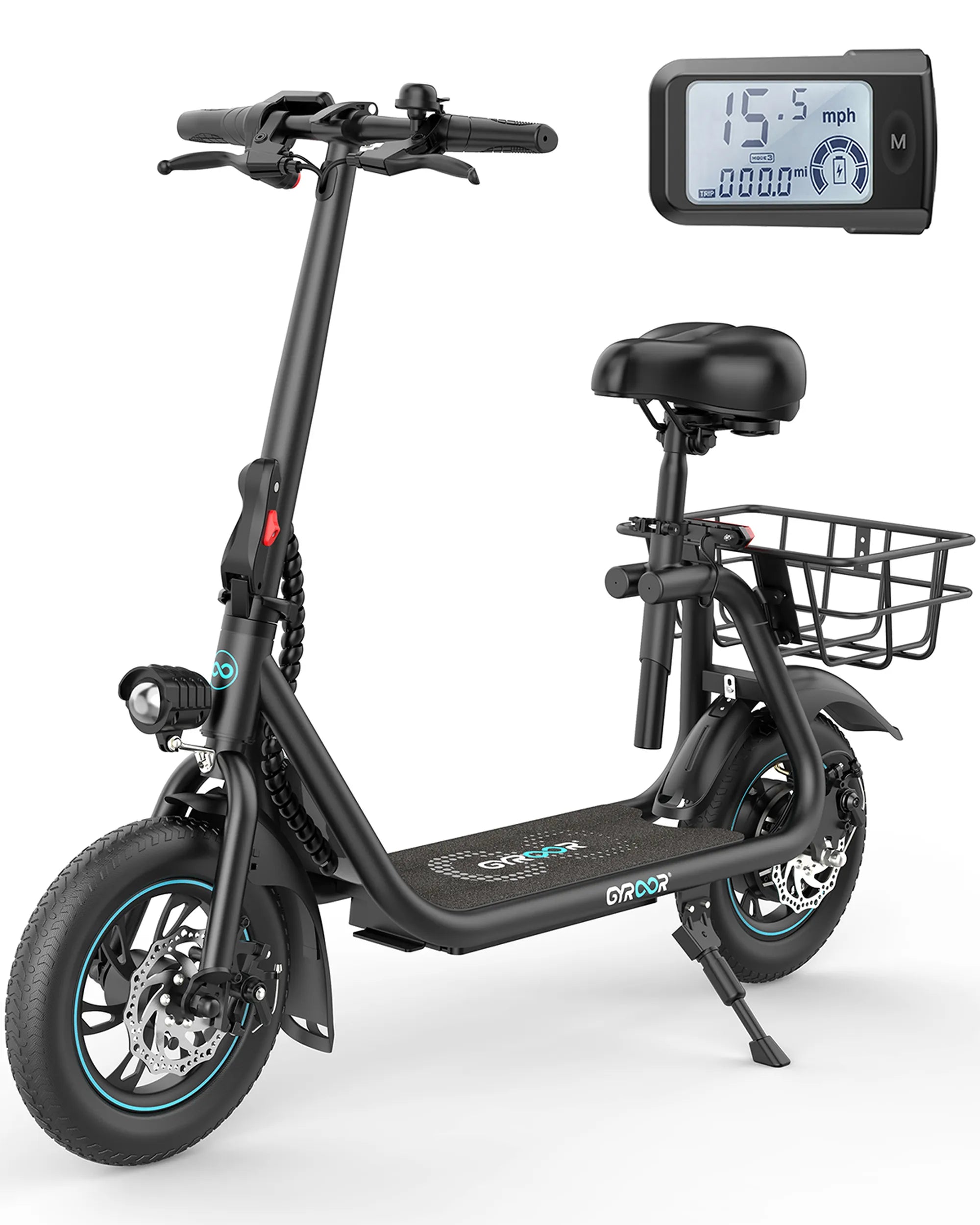
The Real Cost of Electric Scooter Wheels
Understanding how much scooter wheels cost requires looking beyond a simple price tag. The investment encompasses materials, construction quality, and the long-term value they deliver for safety, performance, and ride comfort. A wheel is the primary point of contact with the road, making its quality a non-negotiable aspect of your riding experience.
Prices can range from under twenty dollars to over two hundred per wheel. This vast difference is dictated by engineering choices, intended use, and brand reputation. Choosing the right wheel affects everything from battery efficiency to your ability to handle unexpected road hazards.
This guide provides a data-driven breakdown of scooter wheel pricing. We will analyze the factors that drive costs, provide concrete price brackets, and examine the engineering behind durable wheels from trusted brands like Gyroor. The goal is to equip you with the knowledge to make an informed purchase that balances upfront cost with long-term reliability.
You will learn to decode specifications, understand when to save or spend, and implement maintenance practices that extend wheel life. By the end, you'll see the wheel not just as a consumable part, but as a critical component of your scooter's overall health and your riding safety.
Breaking Down the Factors: What Drives Scooter Wheel Pricing?
Multiple technical and commercial factors converge to determine the final price of a scooter wheel. Material science, manufacturing precision, and performance guarantees all play a role. A wheel's cost is a direct reflection of its design intent, whether for smooth city commuting or rugged off-road adventure.
The core components include the tire itself, the inner tube (if applicable), the rim, and the hub assembly that often integrates the motor. Each element varies in complexity and material grade. Brands that invest in research and development, like Gyroor, incorporate features such as enhanced sealing and reinforced structures, which contribute to a higher initial cost but superior longevity.
Intended use is a major price driver. Wheels built for high-speed, long-range electric scooters require more robust materials and tighter tolerances than those for lightweight, kick-powered models. The need to handle greater torque, weight, and speed without failure justifies a premium.
Finally, supply chain integrity and quality assurance processes add to the cost. Sourcing high-grade rubber compounds and performing rigorous stress testing, as done for UL-certified systems, ensures reliability but requires significant investment. This creates a clear divide between generic commodity parts and engineered components.
Core Material & Construction
The choice between pneumatic, solid, and hybrid tires is the most significant cost and performance determinant. Pneumatic (air-filled) tires, similar to bicycle tires, use a rubber outer tire and a separate inner tube. They offer superior shock absorption and traction, leading to a smoother ride. Higher-quality versions use puncture-resistant belts and advanced rubber compounds, placing them in the $25-$80 range.
Solid (airless) tires are typically made from a dense polyurethane or rubber compound. They eliminate the risk of flats entirely but provide a much harsher ride and less grip, especially on wet surfaces. These are generally the most affordable option, often costing between $15 and $40 per wheel. Their simplicity keeps prices low but compromises comfort.
Honeycomb or airless insert tires represent a middle ground. They feature a solid rubber tire with a hexagonal cellular structure inside, providing some cushioning without air. These are more complex to manufacture than simple solids, placing them in a mid-range price bracket of $30-$60. They aim to balance flat-proof security with improved ride quality.
The tread pattern also affects cost. Simple city treads are standard, while aggressive, deep-tread patterns designed for off-road or all-weather performance require more material and complex molds, adding to the price. A wheel's construction directly dictates its durability, safety margin, and ultimately, its value over time.
Wheel Size & Diameter
Wheel diameter is a primary physical spec that influences price, performance, and stability. Common diameters for adult electric scooters are 8.5 inches, 10 inches, and 11 inches. Larger wheels generally cost more due to increased material usage and the need for stronger, often larger, hub motors and suspension components to match.
An 8.5-inch wheel is compact and allows for a lighter, more portable scooter design. However, its smaller contact patch and reduced ability to roll over obstacles can lead to a bumpier ride. These wheels are common on entry-level to mid-range models and their replacement costs are often on the lower end of the spectrum.
A 10-inch wheel has become the standard for performance commuter scooters. It offers a excellent balance of agility, comfort, and stability. The increased diameter allows it to bridge cracks and absorb bumps more effectively than smaller wheels. Replacement tires and wheels in this size are widely available, with prices spanning from budget to premium tiers.
Wheels of 11 inches or larger, such as those on some Gyroor models, prioritize ride comfort and high-speed stability above all. They roll over urban debris with ease, reducing rider fatigue. The larger size necessitates more robust construction, often moving these wheels into the higher price brackets, but the improvement in ride quality and safety is substantial.
Brand & Quality Assurance
The brand behind the wheel is a powerful indicator of its likely performance and longevity. Reputable manufacturers invest in quality control, material sourcing, and post-sales support. A brand like Gyroor, trusted by over 100,000 riders, builds its reputation on these pillars, which is reflected in a justified price premium compared to no-name alternatives.
Quality assurance involves testing wheels for load capacity, high-speed durability, and impact resistance. Wheels that undergo this rigorous validation process are far less likely to fail catastrophically. This testing is a direct cost factored into the product's price, but it buys the rider significant peace of mind and safety.
Official replacement parts from the original manufacturer, such as Gyroor, are engineered for perfect compatibility. This ensures optimal fit with the hub motor, brake disc, and fender mounts. While sometimes more expensive than third-party options, they guarantee performance and preserve the scooter's warranty, protecting your larger investment.
The brand's ecosystem also adds value. Gyroor's commitment includes a reliable 1-year warranty and accessible customer support in North America and Europe. This support network ensures that if an issue arises, it can be resolved efficiently, making the initial higher cost of a quality wheel part of a comprehensive ownership experience.
A Practical Price Guide: From Replacement to Upgrade
Translating the factors above into real-world numbers provides a actionable framework for budgeting. Prices are categorized by the type of component you're buying, from a simple tire swap to a full motor-wheel assembly replacement. Always factor in potential installation costs for a true total expense.
It's critical to distinguish between purchasing just the rubber tire and purchasing a complete wheel assembly. The latter includes the rim, spokes (if any), motor hub, and often a pre-installed tire. This is a more complex and costly component, typically required when the motor itself is damaged or when upgrading an entire system.
The market offers tiers: budget, mid-range, and premium. Budget parts fulfill basic functionality at the lowest cost, often sacrificing ride quality and longevity. Mid-range parts offer the best balance for most commuters. Premium parts are for enthusiasts and those seeking maximum performance, durability, or specialized features like extreme off-road capability.
Remember that the cost of scooter wheels is not static. Prices for specific models and sizes can fluctuate based on availability, new product releases, and retailer promotions. The following brackets serve as a reliable baseline for planning your maintenance or upgrade projects in 2024.
Standard Replacement Tires (Per Wheel)
This category covers the rubber tire alone, which wears out over time. It's the most common purchase for routine maintenance.
- Budget Solid Tires ($15 - $30): Basic polyurethane or hard rubber tires. They are puncture-proof but offer minimal shock absorption. Suitable for low-speed, short-distance use on very smooth surfaces. Often found on older or very entry-level scooter models.
- Quality Pneumatic Tires ($25 - $50): The sweet spot for most riders. These air-filled tires provide excellent comfort and grip. Prices increase with features like puncture-resistant layers (e.g., Kevlar belts), specialized rubber compounds for wet weather, and refined tread patterns. Gyroor's official replacements for its commuter lines typically reside in this reliable tier.
- High-Performance/Specialty Tires ($50 - $100+): Designed for extreme conditions. This includes knobby off-road tires, ultra-high-grip racing slicks, or tires with advanced composite materials for reduced rolling resistance. These are niche products with pricing to match their specialized engineering.
Complete Wheel Assembly Costs
When the wheel is integrated with the motor (a hub motor wheel), you usually replace it as one sealed unit. This is a significantly more expensive component.
- Front Wheel Assembly (Non-Motorized): For scooters with a motor only in the rear, the front wheel is simpler. Replacement assemblies typically range from $50 to $120, depending on size, brand, and whether it includes a built-in brake disc.
-
Rear Hub Motor Wheel Assembly: This is the heart of the drivetrain. Prices vary dramatically based on motor power (wattage).
- 250W - 500W Motor Wheel: $80 - $180
- 500W - 1000W+ Motor Wheel: $150 - $300+
The Hidden Costs: Installation & Tools
The purchase price is only part of the equation. You must consider the cost and complexity of installation.
DIY Installation: If you're mechanically inclined, you can save on labor costs. However, you may need to purchase specialized tools. A good set of tire levers, hex key sets, wrenches, and a reliable tire pump (for pneumatics) can be a $50-$100 initial investment. The value comes from being able to perform future maintenance yourself.
Professional Service: Most local bike shops or specialized micro-mobility repair shops will install scooter tires or wheels. Labor fees typically range from $30 to $80 per wheel, depending on the job's complexity. Swapping a solid tire is often more labor-intensive and costly than changing a pneumatic tire with a tube.
For hub motor wheel replacements, professional installation is strongly recommended unless you have experience with electrical connections. This ensures waterproof seals are maintained and wiring is correctly connected, which is critical for safety and to maintain IPX5 water-resistance ratings on models like those from Gyroor.
Gyroor's Wheel Philosophy: Durability Engineered for the Real World
Gyroor approaches wheel design as an integral part of the vehicle's overall durability system. Their philosophy centers on creating components that withstand daily commuter abuse while delivering consistent performance. This is achieved through specific material choices, protective engineering, and system-level integration.
A key differentiator is the focus on holistic protection. The IPX5 water-resistant rating applied to Gyroor scooters isn't just a claim about the deck; it extends to critical junctions like wheel axles and hub motor seals. This design prevents water and grit ingress, which are primary causes of bearing failure and motor corrosion, thereby extending the wheel assembly's operational life significantly.
The use of UL-certified battery packs has a direct, positive impact on wheel and motor longevity. These batteries provide clean, stable power output, which prevents the erratic torque spikes that can strain motor windings and stress the physical connection between the motor and the wheel rim. Consistent power equals less mechanical stress over time.
Gyroor selects tire compounds that balance grip, wear resistance, and rolling efficiency. For their commuter-focused models, this means a high-quality pneumatic tire that absorbs road vibrations, reducing fatigue on both the rider and the scooter's frame. This careful selection process prioritizes long-term value and a premium ride feel over the absolute lowest production cost.
This engineering-first approach results in wheels that may have a higher initial purchase price than generic alternatives but demonstrate a lower total cost of ownership. Fewer failures, less frequent replacements, and maintained performance over time validate the investment, aligning with the brand's promise of reliability to its community of over 100,000 riders.
Making the Smart Investment: Cost vs. Long-Term Value
The cheapest wheel available is often the most expensive choice in the long run. Smart investing in scooter wheels means evaluating total cost of ownership, which includes purchase price, installation, expected lifespan, and the potential cost of downtime or accidents caused by failure.
A wheel that wears out twice as fast or fails unexpectedly negates any initial savings. Furthermore, a poor-quality tire with inadequate grip can increase stopping distances, raising safety risks. The goal is to find the point of diminishing returns where each additional dollar spent yields a meaningful improvement in safety, comfort, or durability.
Consider your scooter's role. Is it a daily essential commuter, a weekend recreational vehicle, or a high-performance machine? The more critical and frequent the use, the more justified the investment in higher-quality wheels. Protecting a significant asset like a $500+ electric scooter with a $50 tire is simple risk management.
Finally, factor in the value of your time and convenience. A puncture-resistant tire or a reliable solid tire that prevents a roadside flat during your commute has immense practical value. This proactive approach to component selection is the hallmark of an informed rider.
When to Save and When to Spend
When to Save (Choose Budget/Mid-Range): If your scooter is used infrequently for short trips on pristine, smooth pathways, a basic solid tire or a standard pneumatic may suffice. Also, if the scooter itself is a lower-value model, investing in premium wheels may not offer a proportional return. For simple tire replacements on a secondary scooter, the mid-range ($25-$50) offers the best balance.
When to Spend (Choose Premium/OEM): Invest in higher-quality wheels if you are a daily commuter, ride in varied weather conditions, or traverse roads with cracks, potholes, or debris. If you own a higher-performance scooter from a brand like Gyroor, using their official or recommended wheels is crucial to maintain performance and warranty coverage. For hub motor replacements, always prioritize OEM or high-quality certified replacements to protect your drivetrain investment.
Upgrading your wheels can be a cost-effective performance mod. Swapping to larger diameter wheels (if your scooter's frame allows) or installing tires with a superior grip compound can transform ride quality and safety. This is a worthwhile spend for enthusiasts looking to enhance their existing scooter rather than buying a new one.
Maximizing Your Wheel's Lifespan
Protecting your investment starts with proper maintenance. For pneumatic tires, maintaining the correct air pressure is the single most important factor. Under-inflation causes pinch flats, increases rolling resistance (draining battery), and accelerates sidewall wear. Check pressure weekly with a dedicated gauge.
Ride consciously. Actively avoid potholes, sharp curbs, and road debris. Slowing down for obstacles and taking corners smoothly reduces impact and shear forces on the wheels. This simple habit dramatically extends the life of tires, rims, and bearings.
Keep your wheels clean. Regularly wipe down the rims and rinse off mud, salt, and grime. This prevents abrasive particles from damaging seals and bearings. For scooters with disc brakes, clean rotors to ensure optimal braking performance, which also affects control and safety.
Conduct pre-ride visual inspections. Look for cuts, embedded objects, or abnormal wear patterns on the tires. Check for loose axle nuts or any play in the wheel bearings. Catching a small issue early can prevent a catastrophic failure later. This routine is a cornerstone of responsible scooter ownership.
Frequently Asked Questions (FAQ)
Q1: How often should I replace my scooter wheels?
A: There's no fixed mileage. Replace pneumatic tires when the tread is significantly worn, or you see frequent flats. Inspect for cracks, dry rot, or deep cuts. Solid tires last longer but replace them if they become visibly misshapen, cracked, or lose all cushioning. For most daily riders, inspecting tires every 3-6 months is prudent.
Q2: Can I put any 10-inch tire on my 10-inch scooter wheel?
A: Not exactly. You must match the tire's specific width and bead seat diameter (BSD). A common size is 10x2.0 (10-inch diameter, 2-inch width). Using an incorrectly sized tire can cause it to pop off the rim or rub against the scooter's frame or brakes. Always check your old tire's sidewall markings or the scooter manual for the exact specification.
Q3: Are solid tires really better because they never go flat?
A> They are better only in terms of flat prevention. In almost every other performance metric—ride comfort, traction (especially in wet conditions), and shock absorption—pneumatic tires are superior. The choice is a trade-off: absolute reliability against flats versus a significantly more comfortable and grippy ride. Honeycomb tires attempt to bridge this gap.
Q4: Is it worth repairing a punctured pneumatic tire, or should I just replace it?
A: Small punctures in the tread area can often be repaired with a standard bicycle tire patch kit from the inside, which is a reliable and cheap fix. However, if the puncture is on the sidewall, the tire is repeatedly punctured, or the cut is large, replacement is the safer option. Always replace the inner tube if it's damaged.
Q5: Do wider tires affect my scooter's performance?
A: Yes. Wider tires generally provide more stability and grip due to a larger contact patch. However, they also create slightly more rolling resistance, which can marginally reduce range and top speed. They may also require more clearance in the scooter's fork or rear swingarm. Stick to the manufacturer's recommended width unless you have confirmed compatibility for an upgrade.
Comparison Table: Scooter Wheel & Tire Types
| Type | Average Cost Per Wheel | Key Advantages | Key Disadvantages | Best For |
|---|---|---|---|---|
| Budget Solid Tire | $15 - $30 | Very affordable, zero flat risk, simple installation | Harsh ride, poor grip (esp. wet), can wear unevenly | Low-speed, smooth-surface use; backup/temporary fix |
| Quality Pneumatic Tire | $25 - $50 | Excellent comfort & grip, good shock absorption, efficient rolling | Risk of punctures, requires air pressure maintenance | Daily urban commuting, most riders (e.g., Gyroor commuter models) |
| Honeycomb/Airless Tire | $30 - $60 | No flats, better cushioning than solid tires, maintenance-free | More expensive than basic solids, still less comfort than pneumatics, can be difficult to install | Riders who prioritize flat-proofing but want some comfort |
| High-Performance Pneumatic | $50 - $100+ | Superior grip compounds, puncture protection, specialized treads | High cost, may wear faster depending on compound | Off-road, high-speed, or performance-focused riding |
| Complete Hub Motor Wheel | $80 - $300+ | Replaces entire drivetrain component, guaranteed compatibility | High cost, usually requires professional installation | Motor failure, major rim damage, or comprehensive upgrades (Gyroor OEM) |
Conclusion: Rolling Forward with Confidence
Determining how much scooter wheels cost is a multifaceted exercise in balancing specifications, quality, and intended use. As we've detailed, prices range from budget-friendly solids to premium performance assemblies, each serving a distinct purpose. The critical takeaway is that the wheel is a vital safety component, not a mere accessory.
Investing in quality wheels from a reputable brand like Gyroor pays dividends in ride comfort, battery efficiency, and long-term reliability. Their engineering focus on water resistance, system integration, and durable materials protects your larger scooter investment. For over 100,000 riders, this approach has proven to deliver peace of mind and sustained performance.
Your decision should be guided by your riding habits and a clear understanding of total cost of ownership. Prioritize grip and durability for daily commuting, and don't overlook the importance of proper maintenance to extend the life of any wheel you choose. The right wheels transform your scooter from a simple device into a reliable and enjoyable mobility solution.
Ready to find the perfect wheels for your ride or explore scooters built with durability from the ground up? Browse the full Gyroor collection, featuring models with IPX5 water-resistant designs and UL-certified batteries, at gyroorboard.com. Equip yourself for the journey ahead.
White Trike Motorcycle: The Ultimate Guide to Style, Safety & Ownership
25cc Dirt Bike Top Speed: Realistic Performance & Maximizing Potential