



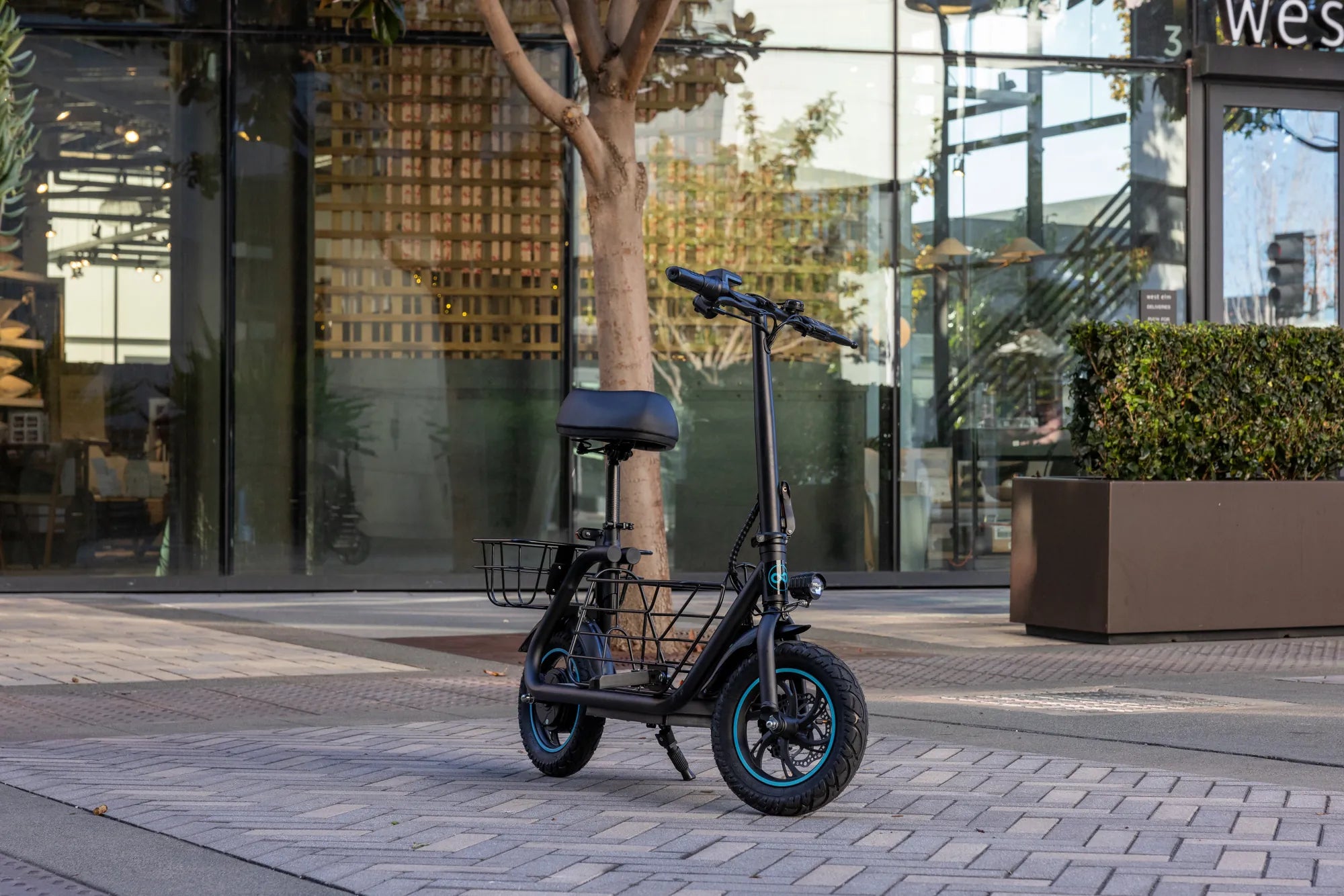
You see them on every corner, but the price tag is rarely clear until you finish your ride. Understanding how much public electric scooters cost is essential for anyone navigating modern cities. This guide will demystify the pricing structures of major operators, expose hidden fees, and provide actionable strategies to save money. You'll learn the true cost per mile, compare shared services side-by-side, and evaluate whether frequent riding justifies investing in your own reliable e-scooter from a brand like Gyroor, known for UL-certified safety and robust warranties.
Navigating the Cost of Shared E-Scooters
Public electric scooter services have transformed urban mobility in hundreds of cities worldwide. Their appeal lies in instant accessibility via a smartphone app, eliminating concerns about storage, maintenance, or theft that come with personal ownership. However, this convenience comes with a pricing model that can confuse both first-time and regular users.
The cost is rarely a simple flat rate. Instead, it's a dynamic calculation based on time, location, and rider behavior. While companies like Gyroor focus on manufacturing high-quality personal electric scooters and e-bikes, understanding the economics of shared fleets is crucial for making informed transportation choices. This guide provides the transparency riders need.
Prices fluctuate based on city regulations, local competition, and operational costs. A ride in Denver will not cost the same as a ride in Miami. Furthermore, promotions and subscription plans add layers of complexity to the basic fee structure. We will dissect all these elements to give you a complete financial picture.
The Standard Pricing Model: Unlocking the Rate Structure
Nearly all major shared scooter operators use a two-part pricing model. This consists of a fixed unlock fee and a variable per-minute rate. The unlock fee is charged immediately upon scanning the QR code to start your ride, regardless of trip duration. It covers the operational cost of accessing the vehicle.
The per-minute rate then ticks up for the duration of your journey, from the moment you kick off to when you properly end the ride in the app. A typical trip might cost $1.15 to unlock plus $0.39 per minute. A 10-minute ride would therefore total $1.15 + (10 * $0.39) = $5.05.
This time-based model incentivizes shorter, more efficient trips. It differs from ride-hailing services that charge primarily by distance. Your speed impacts the cost-per-mile, meaning a slower ride through crowded sidewalks is less economical than a swift trip on a bike lane. Understanding this is key to budgeting your commute.
Some operators have experimented with hybrid models, including small per-minute rates with larger unlock fees, or vice-versa. The fundamental principle remains: you pay for access and time. Always check the specific rates in your city's app before you unlock, as they can change with little notice.
Beyond the Base Rate: Understanding Additional Fees
The advertised unlock and per-minute rates are just the beginning. Several additional fees can significantly inflate your final charge. The most common is the out-of-geofence or improper parking fee. If you end your ride outside the operator's designated service area or outside a specific parking corral in regulated cities, you may incur a penalty ranging from $5 to $25.
Some apps now implement "premium parking" fees in high-demand, low-availability zones. Ending your ride in these hotspots for convenience can add an extra $2 to $5. Conversely, you may receive a credit for parking in a designated low-availability zone that needs more scooters.
Other penalties include riding on prohibited sidewalks (detected via accelerometer data), failing to properly lock the scooter, or leaving it in a hazardous location. These fees can be $25 or more. In rare cases, if a scooter is reported damaged or stolen after your ride, you could be held liable for the full recovery cost, often hundreds of dollars.
Cost Comparison: Major Shared Scooter Operators Side-by-Side
Pricing is highly localized, but the following table provides a snapshot of standard rates in major U.S. metropolitan areas as of recent data. These figures are illustrative and subject to change. Always verify in your local app.
| Operator | Typical Unlock Fee | Typical Per-Minute Rate | Key Notes & Plans |
|---|---|---|---|
| Lime | $1.15 | $0.39 - $0.49 | Offers "Lime Pass" subscriptions for frequent riders (e.g., $9.99 for 3 unlocks/day). Variable pricing based on zone. |
| Bird | $1.15 - $1.25 | $0.39 - $0.49 | Bird Ride Pass available (e.g., $9.99 for 5 discounted 30-minute rides). Often has city-specific pricing tiers. |
| Spin (owned by Tier) | $1.00 | $0.39 | Frequently integrates with city transit apps. Emphasizes fixed corral parking to avoid fees. |
| Superpedestrian (LINK) | $1.00 | $0.39 - $0.49 | Known for robust vehicle diagnostics and geofencing. Often has partnership discounts. |
| Lyft Scooters | Varies by city | Varies by city | Integrated into the Lyft app. Sometimes offers combined ride credits with car rides. |
Data aggregated from official operator pricing pages in cities like New York, Los Angeles, Chicago, and Washington D.C. reveals a trend toward convergence, with unlock fees typically between $1.00 and $1.25 and per-minute rates hovering around $0.39 to $0.49. However, surge pricing during high-demand periods (like weekend nights) can temporarily increase per-minute costs.
How to Ride for Less: Pro Tips for Saving Money
Smart riders can drastically reduce their per-trip costs with a few strategic habits. First, always use the operator's app to compare prices on nearby scooters before unlocking. Rates can vary between individual vehicles, even from the same company, based on battery level and location.
For regular commuters, subscription plans or "ride passes" are the most effective way to save. Plans like Lime Pass or Bird Ride Pass offer a set number of unlocks or discounted minutes for a flat weekly or monthly fee. If you ride more than three times a week, these passes almost always pay for themselves.
Plan your route before you start. A direct, efficient path reduces time spent idling at lights or navigating poorly. Use bike lanes where safe and legal to maintain a higher average speed, lowering your cost-per-mile. Always end your ride in a designated parking corral or a clearly legal spot to avoid penalties.
Finally, keep an eye out for promotional codes, especially for new users or during city-wide events. Some operators partner with local businesses or universities to offer discounted rates for students or employees. Signing up for promotional emails can yield valuable credit offers.
The Long-Term Math: Shared Scooters vs. Owning Your Own
For frequent riders, the economics of shared scooters quickly become unfavorable. Let's run the numbers. Assume a conservative average shared scooter cost of $5 per 15-minute commute trip. If you take 5 such trips per week for a year (260 working days), your annual spend would be 5 trips/week * $5/trip * 52 weeks = $1,300.
Contrast this with the one-time investment in a personal commuter e-scooter. A reliable, feature-rich model from a brand like Gyroor, with a UL-certified battery, IPX5 water resistance, and a 1-year warranty, typically ranges from $500 to $1,200. The break-even point can be as short as 4 to 9 months of equivalent shared riding.
Ownership eliminates unlock fees and per-minute anxiety. Your scooter is always available, charged, and configured to your preferences. You also gain the benefits of a vehicle built for durability rather than fleet turnover, with superior safety features. Brands like Gyroor design for the individual rider, offering models with longer ranges, more powerful motors, and enhanced suspension that shared fleets rarely provide.
When you factor in the consistency, safety, and lack of hidden fees, owning a personal e-scooter is not only more economical for regular use but also a more predictable and enjoyable riding experience. It transforms the scooter from a last-mile solution into a primary commuting vehicle.
Regional Variations and City-Specific Regulations
The cost of public electric scooters is not uniform across the globe or even within a single country. City governments play a massive role in shaping pricing through permits, taxes, and operational rules. In some European cities, per-minute rates can be higher due to stricter regulations and higher insurance costs for operators.
For example, cities like Paris and London have implemented stringent parking rules, leading to higher potential penalty fees for non-compliance. Conversely, some Asian markets may have lower base rates due to different competitive landscapes and operating costs, but may include mandatory helmet rental fees.
In the U.S., cities like Portland and Austin have competitive permit processes that can keep prices in check, while New York City's rigorous safety and insurance requirements contribute to its rates being on the higher end of the spectrum. Always research local rules; some cities mandate that scooters be locked to fixed objects, which can add time (and therefore cost) to your ride if not planned for.
These regional factors mean a pricing guide must be a framework, not a fixed list. The principles of unlock fees, time charges, and penalties remain, but the specific dollar amounts are a local equation. Your city's transportation department website is often the best source for the latest regulations.
Frequently Asked Questions (FAQ) on Public Scooter Pricing
Q: Do I pay for time when the scooter is stopped at a red light?
A: Yes. The per-minute rate charges for the entire time the ride is active in the app, including stops. To minimize cost, plan routes with fewer stops and use dedicated bike/pedestrian paths where possible.
Q: What happens if the scooter runs out of battery mid-ride?
A: You are responsible for ending the ride properly. Most apps will allow you to end the ride even without moving. You will be charged for the time up to that point. You should then park it legally and report the low battery in the app. Do not leave it blocking a pathway.
Q: Are there discounts for students or low-income riders?
A: Several operators, including Lime and Bird, offer community pricing or discounted plans for qualifying riders in certain cities. These programs typically require verification through a partner platform like ID.me. Check the "Help" or "Community" section of your local operator's app for details.
Q: How do I avoid unexpected surge pricing?
A> Surge pricing often occurs during peak commute hours or in high-demand areas like event venues. To avoid it, try walking a block or two away from the busiest corners to find a scooter in a lower-demand zone. Using the app to view prices before unlocking is crucial.
Q: Is insurance included in the ride cost?
A> Operators typically provide limited liability insurance that may cover third-party injury or property damage in the event of an accident caused by scooter malfunction. It rarely covers rider injury. For personal protection, you should rely on your own health insurance and consider a personal accident policy. This is another area where owning a scooter from a brand with a strong safety focus, like Gyroor, which uses UL-certified batteries, provides inherent risk mitigation.
Smart Riding for Your Wallet and the City
Navigating the pricing of public electric scooters requires understanding a dynamic system of access fees, time charges, and behavioral penalties. For occasional, spontaneous trips, shared scooters offer unbeatable convenience. By using apps to compare prices, leveraging subscription passes, and parking correctly, you can keep these costs manageable.
However, the financial analysis is clear: if you ride more than a few times a week, the investment in a personal electric scooter quickly pays for itself. Beyond savings, ownership delivers consistency, performance, and safety features tailored to you. You escape the hunt for a charged scooter and the worry of hidden fees.
For those ready to transition from renter to owner, choosing a reputable brand is paramount. Gyroor electric scooters, trusted by over 100,000 riders, are engineered for daily commuting with UL-certified battery safety, IPX5 water-resistant designs, and a reliable 1-year warranty. This commitment to quality ensures your investment is protected and your rides are secure.
Take control of your urban mobility and your transportation budget. Explore the difference a purpose-built, personally owned e-scooter can make for your commute. Browse the full Gyroor collection, featuring models for every need and terrain, at gyroorboard.com.
Stylish and Comfortable Electric Scooters for Seniors: The Ultimate Guide
Electric Scooters 100 mph: The Future of High-Speed Urban Mobility