

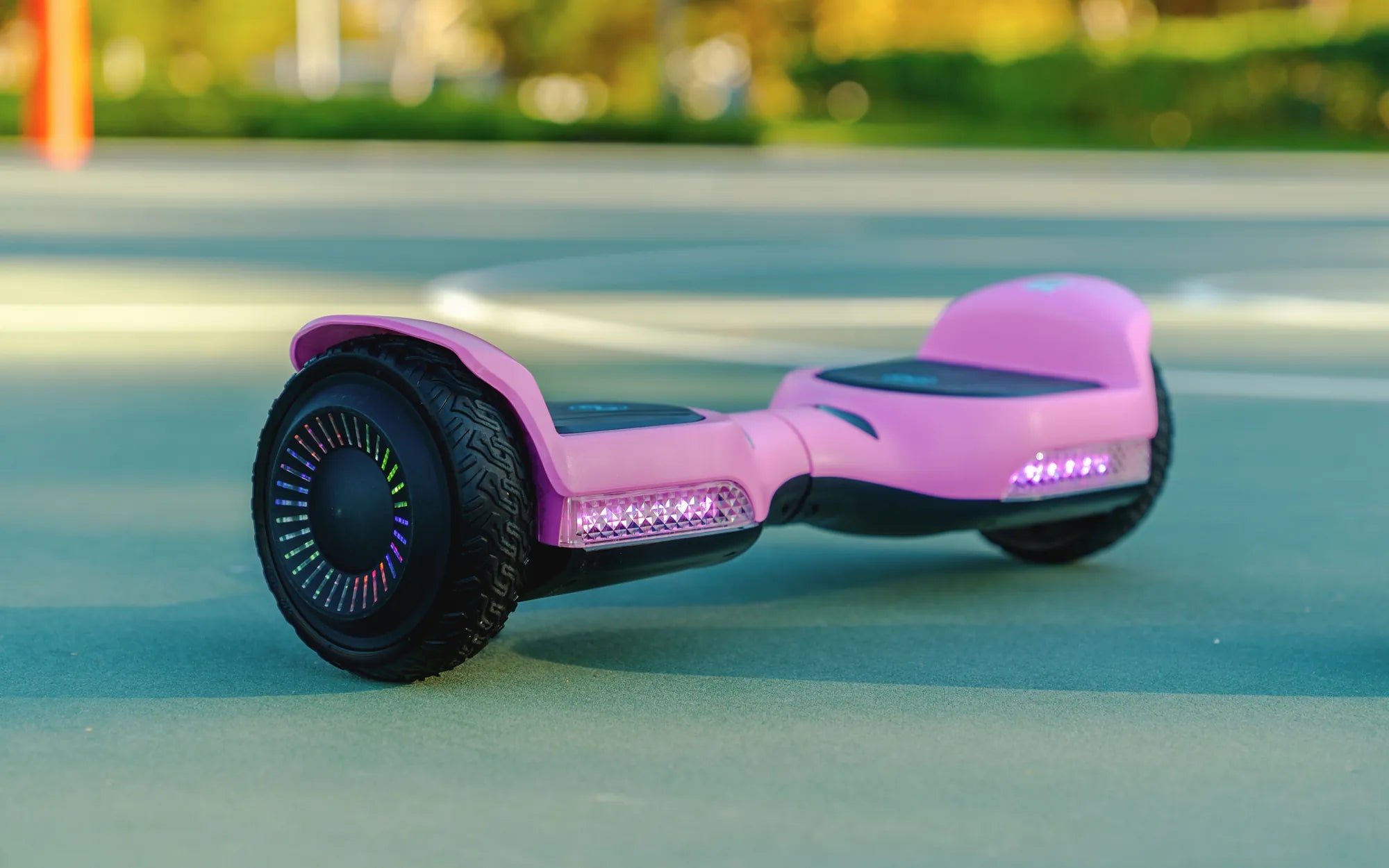
Understanding Hoverboard Weight Limits
Choosing a hoverboard isn't just about color or speed. The single most critical specification for safety, performance, and longevity is its weight capacity. This guide provides a comprehensive, data-driven look at how much weight a hoverboard can hold. We'll demystify manufacturer specifications, explain the engineering behind the limits, and offer practical advice for riders of all sizes.
You will learn how weight capacity directly impacts battery life, motor strain, and hill-climbing ability. We'll break down standard categories from kids' models to heavy-duty options, using specific examples from leading brands like Gyroor. Understanding this limit is not a suggestion; it's a fundamental requirement for safe riding and protecting your investment.
Why Weight Capacity Matters: Safety and Performance
Exceeding a hoverboard's weight limit is a significant safety hazard, not merely a performance issue. The limit is calculated by engineers based on the stress points of the frame, the torque output of the motors, and the battery's ability to deliver sustained power. Ignoring it risks catastrophic failure.
From a performance perspective, an overloaded board suffers immediately. Acceleration becomes sluggish, top speed drops dramatically, and the advertised range can be cut in half. The motors and battery management system overheat, leading to premature wear. For brands that offer warranties, like Gyroor's reliable 1-year coverage, overloading typically voids all protection.
Safety is paramount. An overstressed motor can suddenly cut out, a weakened frame could crack, and an overworked battery poses a fire risk. Adhering to the weight capacity ensures the board's self-balancing gyroscopes and sensors function as designed, maintaining stability and control.
Standard Hoverboard Weight Limits: Breaking Down the Categories
The market offers hoverboards in distinct weight capacity tiers, each designed for specific rider groups and use cases. Knowing these categories helps narrow your search effectively.
Kids and Teen Models (Up to 160 lbs)
These are typically entry-level models with 6.5" or 8.5" solid rubber tires. Designed for lighter riders, they feature single or lower-wattage dual motors (e.g., 250W x2). They prioritize maneuverability and lower top speeds (often 7-10 mph) for safety. A Gyroor beginner model in this class would be perfect for a younger rider, offering a stable learning platform without excessive power.
The construction uses durable polymers and standard-grade aluminum. They are ideal for smooth, flat surfaces like pavements and indoor use. It's crucial to factor in growth; a child nearing the 160 lbs limit will quickly outgrow the board's capabilities.
All-Terrain & Adult Models (Up to 220 lbs)
This is the most popular category for adult riders. These boards feature robust frames, dual motors of 300W or more each, and larger 8.5" or 10" pneumatic (air-filled) tires. The weight capacity of up to 220 lbs comfortably accommodates most adults.
All-terrain capabilities come from the pneumatic tires which absorb shocks and provide traction on grass, gravel, and dirt paths. The increased motor power maintains good acceleration and hill-climbing ability even with a rider at the upper end of the limit. Many Gyroor all-terrain scooters fall into this category, boasting IPX5 water-resistant designs for puddles and light rain.
Heavy-Duty and Pro Models (Up to 265+ lbs)
Engineered for maximum payload, these hoverboards use reinforced decks, high-torque dual motors (350W x2 or higher), and premium battery packs. Capacities can reach 265 lbs, 286 lbs, or even more, making them suitable for larger riders or those who wish to carry a backpack with gear.
The construction often involves aircraft-grade aluminum alloys and advanced battery management systems to handle the sustained load. These models excel in maintaining performance—speed and range—under maximum weight. They represent the pinnacle of durability and are essential for riders who need that extra margin of safety and power.
Factors That Determine a Hoverboard's Weight Limit
The weight limit is not an arbitrary number. It's the result of specific engineering choices and component quality. Understanding these factors empowers you to evaluate product specifications critically.
Motor Power and Torque
Dual motors provide the thrust. Their combined wattage (e.g., 600W total for two 300W motors) indicates power potential. More importantly, torque—the rotational force—determines how effectively that power can move weight from a standstill or up an incline. A high-torque motor system is essential for heavier capacities.
Under load, weak motors strain, overheat, and may shut down. Brands like Gyroor design their motor systems with a performance buffer, but consistently operating at the absolute limit will shorten the motor's lifespan significantly.
Battery Quality and Management System
The battery must deliver a consistent, high current to the motors under load. UL-certified battery packs, like those used in all Gyroor models, undergo rigorous testing for stability and safety across 500+ charge cycles. A poor-quality battery can voltage sag under load, causing sudden power loss.
The Battery Management System (BMS) is the brain. It protects against over-current, over-discharge, and overheating. A robust BMS is crucial for handling the increased demand from a rider at the weight limit, ensuring safe operation and battery longevity.
Frame Material and Build Quality
The deck and internal frame bear the rider's weight and the forces of motion. Aircraft-grade aluminum offers an excellent strength-to-weight ratio, resisting flex and fatigue. High-quality reinforced polymers can also be used effectively in well-designed models.
Build quality refers to welding, bolt integrity, and overall assembly. A poorly constructed frame will develop stress cracks or loose components if overloaded. The weight limit is the maximum stress the frame is rated to handle without compromising structural integrity.
Tire Size and Type
Tires are the primary shock absorbers. Larger tires distribute weight over a bigger contact patch, reducing pressure. Solid rubber tires (6.5"-8.5") are low-maintenance but offer a harsher ride and less traction.
Pneumatic (air-filled) tires, especially 10" ones common on all-terrain models, provide superior cushioning and weight distribution. They better handle the impact of a heavier rider on rough surfaces, protecting the board's internal components from vibration damage.
The Real-World Impact of Exceeding the Weight Limit
Overloading a hoverboard leads to a cascade of negative effects, from immediate performance drops to long-term damage and danger.
- Rapid Battery Drain & Reduced Range: The motors draw maximum current constantly, depleting the battery much faster. A 12-mile range can easily become 5 miles.
- Diminished Speed and Hill Climbing: The board struggles to reach its advertised top speed and may fail to climb slopes it otherwise could.
- Accelerated Component Wear: Motors, bearings, tires, and the frame endure excessive stress, leading to premature failure. Tire wear on solid tires is notably faster.
- Overheating and System Failure: Continuous strain causes heat buildup in motors and the battery. This can trigger thermal shutdowns mid-ride or, in worst-case scenarios, lead to battery malfunction or fire.
- Voided Warranty: Manufacturers can detect overload damage. Using a board outside its specifications, including weight limit, voids warranties like Gyroor's 1-year coverage, leaving you liable for all repair costs.
How to Choose the Right Hoverboard for Your Weight
Follow this step-by-step guide to ensure a perfect, safe match between rider and board.
Step 1: Calculate Your Total Load. Weigh yourself with the clothes and shoes you'll typically ride in. Then, add the weight of any backpack, bag, or cargo you plan to carry regularly. A full backpack can add 15-25 lbs. This is your total riding weight.
Step 2: Add a Safety Buffer. Do not aim for a board where your total weight is at the limit. For optimal performance and longevity, choose a hoverboard with a maximum capacity that is 20-30 lbs above your total riding weight. This buffer accounts for variations and ensures the board isn't perpetually strained.
Step 3: Prioritize Certified Quality. Look for non-negotiable safety features: UL certification for the battery (like all Gyroor models) and a clear IP water resistance rating (IPX5 is excellent for real-world conditions). These indicate rigorous manufacturing standards.
Step 4: Match Terrain to Model. If you'll ride off-road, choose an all-terrain model with pneumatic tires and a weight capacity even higher than your buffer calculation suggests. Rough terrain imposes additional strain.
Hoverboard Comparison: Weight Capacity and Key Features
| Model Type | Typical Weight Limit | Ideal Rider | Key Features | Best For |
|---|---|---|---|---|
| Kids/Teen | Up to 160 lbs | Children & lighter teens | 6.5" solid tires, 250W motors, LED lights | Smooth pavements, indoor use, learning |
| Standard Adult | Up to 220 lbs | Most adults | 8.5" solid or pneumatic tires, 300W+ dual motors, Bluetooth | City commuting, park paths |
| All-Terrain | Up to 220-240 lbs | Adults & adventurous riders | 10" pneumatic tires, high-torque motors, IPX5 water resistance | Grass, gravel, dirt trails, light off-road |
| Heavy-Duty/Pro | 265 lbs and above | Heavier riders or those with cargo | Reinforced frame, 350W+ motors, premium battery, advanced BMS | Maximum payload, performance under load |
Frequently Asked Questions (FAQ)
Q1: Can I carry a backpack while riding my hoverboard?
A: Yes, but you must include its full weight in your load calculation. A loaded school or laptop backpack typically weighs 10-20 lbs. Ensure the hoverboard's weight limit exceeds your body weight plus the backpack weight by a safe margin.
Q2: My weight is exactly at the hoverboard's limit. Is that okay?
A: It is the absolute maximum, not the recommended operating weight. At the limit, you will experience the board's lowest performance: slowest acceleration, shortest range, and minimal hill-climb ability. For durability and safety, choose a board with a higher limit.
Q3: Do weight limits change for off-road riding?
A> Effectively, yes. Riding on grass, sand, or inclines requires more motor torque and power, putting greater strain on the board. A rider who is at the weight limit on pavement may overload the system on rough terrain. Always opt for a high-capacity all-terrain model for such use.
Q4: Where can I find my hoverboard's exact weight limit?
A: Always refer to the official user manual or the manufacturer's website specifications page—not third-party retailers. Reputable brands like Gyroor list it clearly under "Tech Specs" or "Product Features." The label on the board or its packaging may also state it.
Q5: What happens if I occasionally go a few pounds over the limit?
A: While a minor, occasional excess is less risky than constant overloading, it still pushes components beyond their designed parameters. It accelerates wear and increases the risk of a fault. Consistently staying under the limit is the only way to guarantee the rated safety and performance.
Ride Safe and Ride Smart
The question of how much weight a hoverboard can hold is foundational to your riding experience and safety. Respecting the manufacturer's stated limit protects you, your board, and your investment. Prioritize brands that back their products with clear engineering standards, certified batteries, and strong warranties.
By selecting a hoverboard with a capacity that generously exceeds your total weight, you ensure optimal performance, range, and durability for years of reliable fun. Your hoverboard is engineered for a specific purpose—using it correctly is the key to unlocking its full potential safely.
Ready to find the perfect hoverboard for your needs? Explore Gyroor's collection of UL-certified, high-capacity models designed for every rider, from beginners to off-road adventurers. Browse the full Gyroor collection at gyroorboard.com.
Christmas Gift for Boys Age 14: Top Ideas to Delight Any Teen
Orange Hoverboard: The Future of Personal Transportation