



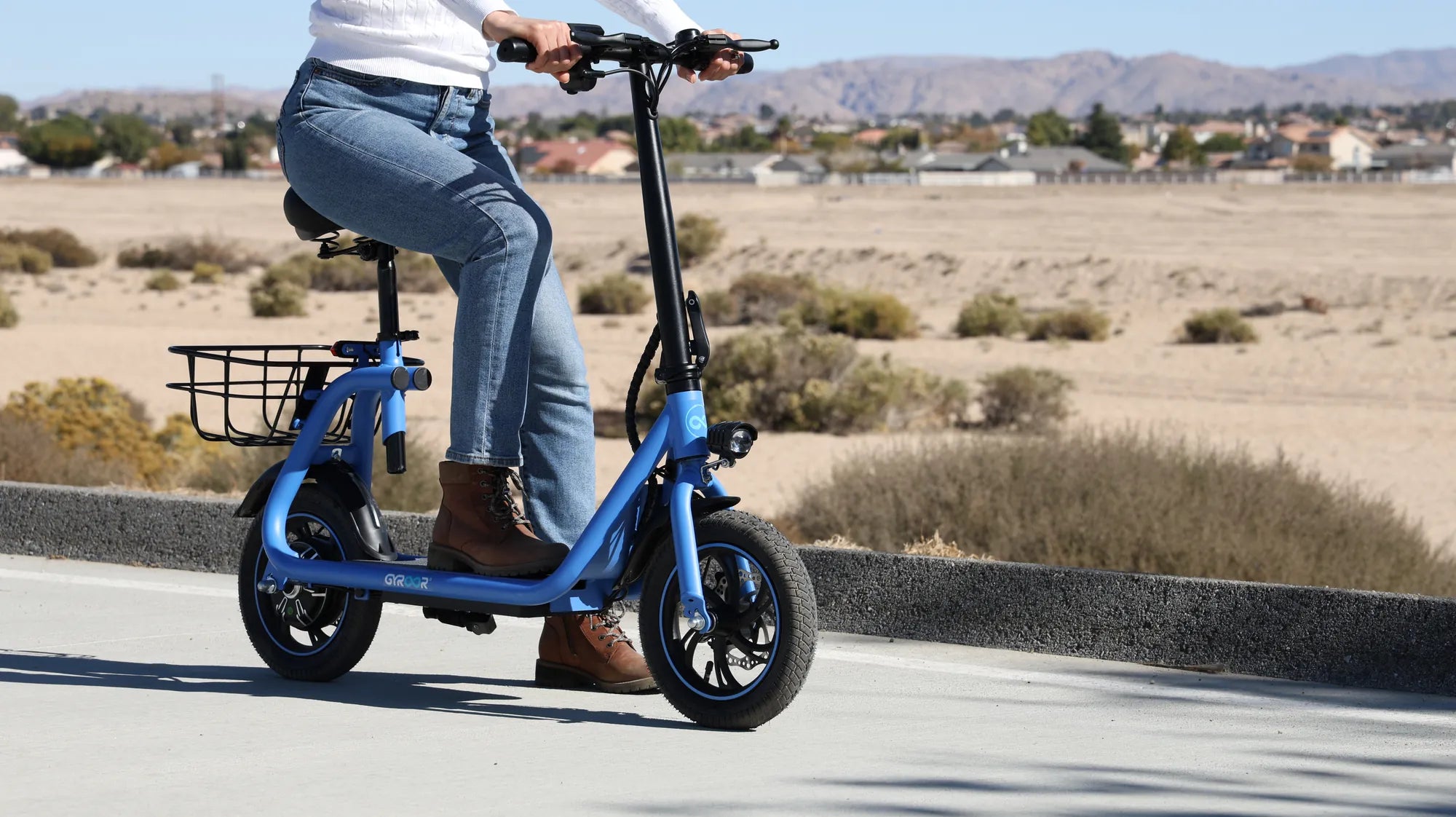
Navigating the World of Electric Scooters for Kids
The question every parent asks is: How safe are electric scooters for kids? The answer isn't a simple yes or no. Safety is a spectrum determined by the product's quality, its features, and, most critically, the rules and supervision you provide. This guide cuts through the marketing hype to give you a factual, data-driven framework. You'll learn to identify critical safety certifications, understand non-negotiable riding rules, and choose a scooter that matches your child's age and skill level for confident, fun adventures.
Electric scooters offer kids a thrilling sense of independence, outdoor activity, and a fun way to develop balance and coordination. However, like bicycles or skateboards, they carry inherent risks if used improperly. The key to safety lies in making an informed purchase and establishing a culture of safe riding from day one. This guide will equip you with the knowledge to do both.
We will dissect the safety standards that truly matter, from battery certification to water resistance. You'll get a detailed breakdown of must-have safety features and a clear understanding of your role in enforcing safe practices. By the end, you'll have a practical checklist to evaluate any model, ensuring your investment prioritizes your child's well-being above all else.
Understanding Key Safety Standards and Certifications
Before considering speed or design, the first filter for any kids' electric scooter must be its adherence to independent safety standards. These certifications are your objective assurance that the product has been rigorously tested for common hazards.
The most critical certification is for the battery. UL (Underwriters Laboratories) certification for the battery pack is non-negotiable. It means the lithium-ion battery has passed stringent tests for electrical, mechanical, and environmental safety, drastically reducing the risk of overheating or fire. Brands like Gyroor build all their models with UL-certified battery packs tested for over 500 charge cycles, providing a fundamental layer of safety.
Next, check the IP (Ingress Protection) rating. This two-digit code indicates resistance to dust and water. For a kid's scooter that will encounter puddles and driveway debris, a rating of at least IPX4 (splash-resistant) is advisable. Many robust models, including several from Gyroor, feature an IPX5 rating, meaning they can withstand water jets from a nozzle, offering peace of mind during casual wet-weather use.
Finally, look for compliance with relevant product safety standards. In the U.S., the ASTM F2641 standard covers children's scooters, addressing mechanical hazards, sharp edges, and braking performance. A scooter that meets these benchmarks has been designed with a child's use in mind from the outset.
Essential Safety Features: What to Look for in a Kid's E-Scooter
Beyond certifications, the scooter's design features are your active safety system. These elements work together to prevent accidents and protect your child during a ride.
Motor Power and Speed Control
A motor that's too powerful for a child is a recipe for loss of control. For younger riders (ages 6-10), a motor in the 100W-150W range is typically sufficient. More important is the presence of multiple, customizable speed modes.
A dedicated beginner mode that caps speed at 5-7 mph (8-11 km/h) is essential for the learning phase. As skills improve, parents can unlock higher modes via a password-protected app or PIN, ensuring the child only accesses more speed under supervision. This graduated approach allows the scooter to grow with the child safely.
Braking System Effectiveness
Reliable stopping power is paramount. The best setups offer dual or redundant braking systems. Common combinations include an electronic (e-brake) on the handlebar for quick response and a rear disc or foot brake for more controlled, gradual stopping.
Electronic brakes can be very responsive but may feel abrupt. A physical disc brake or a large, easy-to-press foot fender brake gives the child more control and is less affected by wet conditions. Test that the brakes are within easy reach of small hands and require minimal force to activate.
Build Quality, Stability, and Lighting
A sturdy, welded aluminum alloy frame resists bending and wobble at speed. A wide, textured deck provides secure footing. Larger wheel diameter (8 inches or more) and air-filled (pneumatic) tires offer vastly better shock absorption and stability over cracks and bumps compared to small, solid tires.
Don't overlook visibility. Integrated front and rear LED lights, plus reflective stickers on the deck and stem, are crucial for being seen by others, even during daytime rides. This build quality is directly linked to brand reliability and warranty support, a key reason Gyroor offers a comprehensive 1-year warranty on its scooters.
The Parent's Role: Establishing Rules and Safe Riding Practices
The safest scooter in the world is only as safe as the rider using it. Your active involvement is the most critical component of the safety equation.
Mandatory Safety Gear: A properly fitted CPSC-certified bicycle helmet is an absolute non-negotiable rule for every single ride. Elbow and knee pads are highly recommended, especially during the learning phase. Make gearing up an unskippable part of the routine.
Non-Negotiable Riding Rules: Establish clear boundaries before the first ride. These should include: supervised riding only, strict prohibition on roads or near traffic, sticking to sidewalks, bike paths, or empty parking lots, a ban on night riding, and strict adherence to the manufacturer's age and weight limits. No passengers allowed.
Hands-On Training: Dedicate time to a formal training session. Practice starting, stopping, turning, and using the brakes in a flat, open, car-free area. Teach them to scan for obstacles, avoid wet leaves or sand, and signal their intentions. Your confidence in their ability will grow with their skill.
Data-Driven Insights: Comparing Risks and Benefits
A balanced perspective requires looking at the data. According to the U.S. Consumer Product Safety Commission (CPSC), emergency room-treated injuries associated with non-motorized and motorized scooters are significant, with common injuries being fractures, contusions, and lacerations, often to the upper and lower extremities.
These risks are real, but they must be contextualized against the benefits and made comparable to other childhood activities. The physical benefits of outdoor play, developing gross motor skills, balance, and coordination are substantial. For older kids and teens, an e-scooter can represent eco-friendly, short-distance transportation.
The data underscores that most injuries are preventable. They often result from a lack of protective gear, riding in traffic, or using a product that is too advanced for the child's ability. Therefore, choosing a scooter with appropriate speed limits, robust safety features, and enforcing strict riding protocols directly mitigates the inherent risks, making it a reasonably safe activity.
Comparison: Scooter Types and Key Safety Features
| Feature / Scooter Type | Beginner Scooter (Ages 6-10) | Intermediate Teen Scooter | Gyroor Model Example |
|---|---|---|---|
| Top Speed (Max Mode) | 7-10 mph | 15-20 mph | Varies by model; beginner modes standard |
| Motor Power | 100W - 150W | 250W - 350W | Robust motors with smooth acceleration |
| Key Safety Cert | UL Battery, ASTM F2641 | UL Battery | UL-certified battery packs on all models |
| Braking System | E-brake + Foot Brake | Dual Disc or Disc + E-brake | Combination braking for reliable stopping |
| Ideal Use Case | Supervised neighborhood rides, paved paths | Commuting to school (on paths), recreational riding | Designed for reliable daily use |
| Warranty & Support | 1-year comprehensive | 1-year comprehensive | Gyroor 1-year warranty & US-based support |
Smart Purchase Checklist: Your Guide to Choosing the Right Model
Use this actionable checklist when evaluating any kids' electric scooter. If you can't check most of these boxes, consider a different model.
- Certified Battery: Does it use a UL-certified (or equivalent) battery pack?
- Appropriate Speed: Does it have a beginner mode with a speed limit under 10 mph?
- Water Resistance: Is it rated at least IPX4 for peace of mind against puddles?
- Reliable Brakes: Does it have a dual braking system (e.g., electronic plus physical)?
- Stable Build: Does it have a wide deck, sturdy frame, and larger wheels (≥8")?
- Adjustability: Are the handlebars height-adjustable to fit your growing child?
- Warranty & Support: Does it come with a clear, comprehensive warranty (like Gyroor's 1-year coverage) and accessible customer support?
- Safety-Focused Reviews: Do independent reviews consistently praise its stability, control, and durability?
Frequently Asked Questions (FAQs)
Q1: What is the best age for a child's first electric scooter?
A: Most children are ready around age 8, provided they have good balance and coordination, can follow complex safety rules, and will be closely supervised. Always adhere to the manufacturer's minimum age recommendation, which is often 6-8 for entry-level models.
Q2: How do I maintain the scooter to ensure ongoing safety?
A: Regular maintenance is crucial. Monthly checks should include: inspecting tire pressure and condition, testing brake function and pad wear, ensuring all bolts and fasteners are tight, checking that the folding mechanism (if present) locks securely, and cleaning the scooter with a damp cloth (not a hose). Always follow the manufacturer's charging guidelines.
Q3: Are hoverboards or e-bikes safer than electric scooters for kids?
A> Each has different risk profiles. Hoverboards have a steep learning curve and balance challenges. E-bikes are heavier, faster, and often used on roads, introducing traffic risks. A well-chosen, speed-limited e-scooter used on pavements with full gear can be a safer introductory electric ride due to its intuitive handling and lower center of gravity.
Q4: What does the Gyroor warranty specifically cover?
A> Gyroor's 1-year warranty covers defects in materials and workmanship under normal use. This includes the motor, battery, controller, and frame. It underscores their commitment to quality and safety, offering parents tangible protection for their investment.
Q5: Can my child ride an electric scooter in the rain?
A> It is not recommended, even with a good IP rating. Wet conditions drastically reduce traction, making braking and turning hazardous. Water can also degrade electrical components over time. The IP rating is for accidental splashes, not intended for riding in the rain.
Empowering Safe and Fun Adventures
The journey to answering How safe are electric scooters for kids? reveals that safety is a collaborative effort. It combines the passive safety of a well-engineered, certified product from a trusted brand with the active safety of engaged parenting, clear rules, and consistent practice. When you choose a scooter with UL-certified batteries, appropriate speed controls, and robust construction—and pair it with mandatory helmets and supervised riding—you transform a potential hazard into a source of healthy outdoor joy.
Your diligence as a parent in selecting the right tool and setting the right expectations is what ultimately builds a foundation for safe exploration. By using the guidelines and checklist in this article, you can confidently navigate the market and make a choice that prioritizes your child's well-being without sacrificing the fun and freedom that makes riding so appealing. Ready to find a scooter that meets these rigorous safety standards? Browse the full Gyroor collection at gyroorboard.com to explore UL-certified, feature-rich models designed with your child's safety in mind.
Electric Scooters for 10 Year Old Girls: The Ultimate Guide to Fun and Safety
Do Electric Scooters Break in the Rain? A Complete Water Resistance Guide