


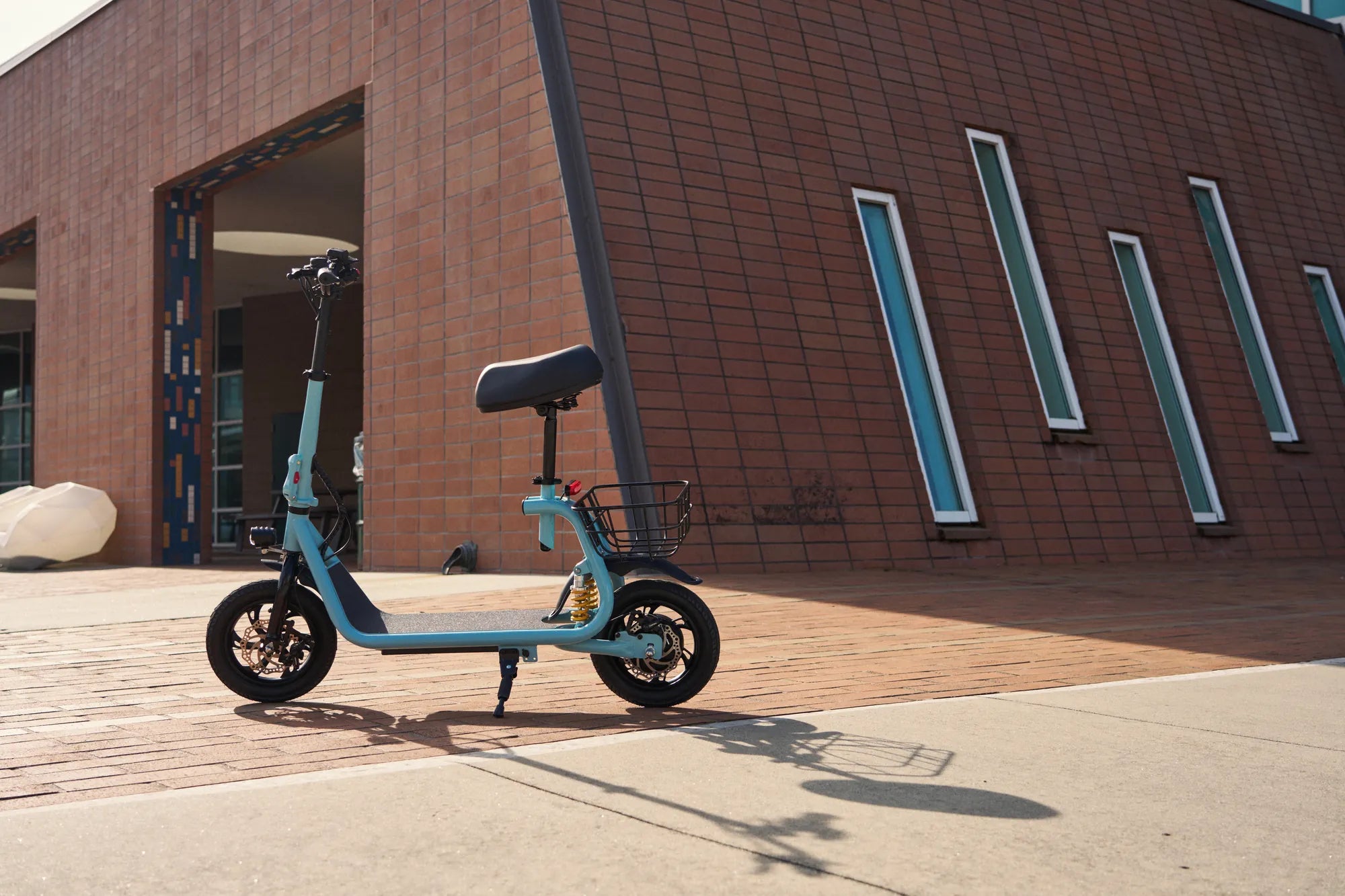
Introduction: Why Scooter Height is the Foundation of a Great Ride
Choosing an electric scooter often focuses on speed, range, or price. Yet, the most critical factor for safety, control, and long-term comfort is one many overlook: proper rider-to-scooter fit. The question of how tall should a scooter be is not about the scooter's literal height, but about how its key dimensions align with your body. An ill-fitting scooter compromises posture, destabilizes your center of gravity, and reduces reaction time. This guide provides a definitive, data-backed framework to help you find a scooter where the deck, handlebars, and stem work in harmony with your stature, transforming your ride from a chore into a seamless extension of your movement.
We will break down the biomechanics of riding, provide a clear height-based selection guide, and explain the engineering principles behind a perfect fit. Understanding how tall should a scooter be for you is the first step toward unlocking a safer, more enjoyable, and more efficient riding experience. Whether you're commuting daily or enjoying weekend adventures, the right fit is non-negotiable.
The Science of Fit: How Your Height Affects Scooter Performance
Riding an electric scooter is a dynamic activity requiring balance, control, and constant micro-adjustments. Your height directly influences three core performance areas: posture, center of gravity, and control interface reach. A scooter that is too tall forces you to over-extend your arms, leading to shoulder and upper back strain. Conversely, a scooter that is too short causes a hunched, cramped posture that stresses the knees and lower back, especially during longer rides.
Your center of gravity—the point where your body's mass is balanced—is crucial for stability. On a correctly sized scooter, your center of gravity aligns optimally with the scooter's axle points. This alignment provides confidence during acceleration, braking, and cornering. A mismatch, such as a tall rider on a short scooter, can create a top-heavy feeling, making the scooter feel twitchy and less planted, particularly at higher speeds or on uneven surfaces.
Finally, control reach encompasses the distance from the deck to the handlebars. This measurement determines how naturally you can operate the throttle, brakes, and steering. Proper reach allows for a slight bend in the elbows, enabling quick steering inputs and absorbing vibrations from the road before they travel up to your shoulders. It's the ergonomic cornerstone that answers the fundamental question: how tall should a scooter be for my specific body proportions?
Key Measurements to Understand: Deck-to-Handlebar & Deck-to-Ground
To objectively assess fit, focus on two specific measurements. The deck-to-handlebar height is the vertical distance from the standing platform to the grips. This is the primary determinant of riding posture. For most comfortable ergonomics, this height should fall between your hip and lower rib cage when you are standing on the deck.
The deck-to-ground clearance is the space between the bottom of the deck and the pavement. This measurement is critical for practical riding. It determines the scooter's ability to clear curbs, speed bumps, and road debris without scraping or causing a sudden stop. Higher clearance, typically above 3.5 inches, is essential for riders who encounter varied urban terrain. Both metrics are essential for defining how tall should a scooter be in a functional sense, beyond just the handlebar height.
Finding Your Perfect Match: A Height-Based Scooter Selection Guide
The most practical approach to sizing is to use your height as the primary filter. The following table provides a clear starting point, matching rider height to general scooter characteristics and examples from Gyroor's engineered lineup. This data-driven guide helps narrow your search before considering other features like motor power or battery range.
| Rider Height Range | Ideal Scooter Profile | Key Gyroor Model Examples | Priority Features |
|---|---|---|---|
| Under 5'4" (Under 163 cm) | Compact frame, lower deck height, narrower handlebar span, lighter weight. | Gyroor Z10, Gyroor H30 | Low standover, easy portability, manageable power. |
| 5'4" to 6' (163 cm to 183 cm) | Standard adult frame, balanced deck length, moderate handlebar height. | Gyroor S90, Gyroor X8 Pro | Versatility, comfort, optimal balance of power and range. |
| Over 6' (Over 183 cm) | Extended or adjustable stem, longer deck, reinforced frame, higher weight capacity. | Gyroor GX1, Gyroor FX1 | Stability at speed, durable construction, ample foot space. |
This framework addresses the core ergonomic need. A rider who is 5'2" will have a profoundly different experience on a scooter designed for a 6'2" rider, even if both scooters have the same top speed. The guide to how tall should a scooter be must be personalized, and this table is the essential first step.
For Riders Under 5'4" (163 cm): Prioritizing Low Standover and Manageable Weight
For shorter riders, the primary challenges are mounting/dismounting ease and maintaining confident control. A scooter with a high deck can make starting and stopping awkward. Models like the Gyroor Z10 are designed with a lower deck-to-ground clearance, making it easy to push off and plant a foot at stops. A narrower handlebar span allows for a more natural arm position without over-extension, improving steering precision.
Weight is also a significant factor. Lighter, more compact scooters are easier to maneuver at low speeds, carry up stairs, or store. While power is still important, a ultra-torquey motor on a scooter that's too physically large can be intimidating and harder to control for a smaller-framed rider. The goal is a confident, planted feel where the scooter feels like an agile tool, not a bulky machine.
For Riders 5'4" to 6' (163-183 cm): The Sweet Spot for Versatility
This height range represents the design sweet spot for most standard adult electric scooters. Riders here have the widest selection, as most models are built with this demographic in mind. The focus shifts from basic fit to optimizing performance and comfort features. You can prioritize aspects like dual suspension for a smoother ride, larger batteries for extended range, or more powerful motors for hill climbing.
Models like the Gyroor S90 exemplify this balance, offering a robust frame, comfortable deck space for varied foot positions, and handlebar height that suits the majority. This is the zone where answering how tall should a scooter be allows you to explore advanced features without compromising on fundamental ergonomics, ensuring a ride that is both capable and comfortable for commutes or recreation.
For Riders Over 6' (183 cm): Seeking Extended Reach and High Load Capacity
Taller riders need to pay special attention to the scooter's stem length and deck dimensions. A short stem forces a pronounced crouch, leading to back fatigue. Look for models with an extended or uniquely tall stem, or those featuring telescopic adjustable handlebars. The deck length is equally important; ample space allows for a natural, staggered foot stance which greatly improves balance and control, especially during braking.
Furthermore, taller riders often have a higher body weight, making the scooter's official weight capacity a critical spec. Choosing a model like the Gyroor GX1, with its reinforced frame and high load rating, ensures the suspension and frame maintain their integrity and the ride height doesn't sag excessively under load. This preserves ground clearance and handling characteristics, making the scooter safe and durable for long-term use. For a tall rider, understanding how tall should a scooter be is fundamentally about stability and structural integrity.
Beyond Height: Other Critical Factors for a Custom Fit
While height is the primary driver, a perfect fit requires fine-tuning. Your individual proportions—such as inseam length versus torso length—and riding style can be accommodated through adjustable components and setup choices. A rider with a longer torso may need a different handlebar reach than someone of the same height with longer legs, even if the deck height is perfect.
Your intended use also plays a role. An aggressive, sporty riding style might favor a slightly shorter reach for more direct steering input, while a leisurely commuter might prefer a more upright, relaxed posture. These nuances are why the best scooters offer some level of adjustability or come in specific models tailored to different riding philosophies, going beyond the basic question of how tall should a scooter be.
The Role of Adjustable Handlebars and Stem Length
Adjustable handlebars are a game-changer for achieving a custom fit. Telescopic stems, found on models like the Gyroor FX1, allow you to raise or lower the handlebar height by several inches. This lets multiple riders of different heights share a scooter comfortably, or lets a single rider fine-tune their posture. For taller riders, this feature can be the difference between an acceptable fit and an excellent one.
Even without telescopic adjustment, some scooters feature a foldable stem mechanism that can be set at a fixed angle, subtly changing the reach. When evaluating scooters, check for these adjustment capabilities. They provide the flexibility to answer how tall should a scooter be not just for your static height, but for your unique body geometry and comfort preference.
Weight Capacity and Its Impact on Ride Height
The manufacturer's stated weight capacity is not just a limit—it's a performance guideline. As a scooter is loaded, its suspension compresses, reducing the effective deck-to-ground clearance. A rider who is at or near the maximum weight limit will experience a lower ride height, which increases the risk of deck strikes on obstacles. More importantly, consistently operating at the limit stresses motors, brakes, and the frame itself.
For optimal performance and safety, choose a scooter with a weight capacity that exceeds your body weight by a comfortable margin (e.g., 20-30%). This ensures the scooter maintains its intended geometry, suspension travel, and braking performance. It's a crucial aspect of fit that directly impacts the functional answer to how tall should a scooter be when it's actually under your weight and in motion.
Gyroor's Engineering Edge: Built for Real-World Riders
Gyroor designs its scooters with a rider-first philosophy, ensuring that ergonomics and safety are integrated from the initial blueprint. This means frame geometry is carefully calculated to provide stable, comfortable riding positions across different model lines. The brand's commitment extends beyond just dimensions to the core components that guarantee reliability for every rider, regardless of which model they choose based on their answer to how tall should a scooter be.
With over 100,000 riders across North America and Europe, Gyroor's designs are refined based on real-world feedback. This iterative process ensures that handlebar positions, deck textures, and control layouts are intuitive and reduce fatigue. When you select a Gyroor scooter sized for your height, you're also getting a product built with proven, rider-validated engineering.
UL-Certified Batteries: Safety at Every Size
A proper fit enhances control, but true safety is holistic. Every Gyroor scooter is powered by a UL-certified battery pack. This independent certification is the gold standard for electrical safety, verifying the battery has passed rigorous tests for overheating, short-circuiting, and electrical hazards. Whether you're on a compact Z10 or a long-range GX1, you have the same assurance of battery safety and reliability.
These batteries are engineered for over 500 charge cycles while maintaining significant capacity, meaning your scooter's range remains consistent for years. This reliability is integral to the fit equation—a scooter that fits well is one you'll ride often, and it must have a power source you can trust completely.
IPX5 Water Resistance: Confidence for All Commutes
Ergonomics matter in all conditions. Gyroor scooters feature IPX5-rated water resistance, meaning they can withstand water jets from any direction. This allows you to ride confidently in light rain or through wet streets without worrying about damage to the scooter's critical electronics, controller, or battery compartment.
This feature is vital for commuters. A scooter that fits perfectly encourages daily use, and daily use means encountering unpredictable weather. IPX5 protection ensures that a sudden downpour doesn't end your ride or damage your investment, making your perfectly fitted scooter a truly all-weather companion.
1-Year Warranty & US Support: Your Fit is Guaranteed
Gyroor backs its ergonomic and safety engineering with a comprehensive 1-year warranty and responsive US-based customer support. This warranty covers defects in materials and workmanship, including components related to frame integrity and stem construction—the very parts that ensure your scooter remains the correct height and stable over time.
This support network provides peace of mind. If any issue arises that affects the fit or function of your scooter, help is readily available. It's a guarantee that your investment in a correctly sized, high-quality scooter is protected, allowing you to focus on the ride itself.
FAQ: Your Top Questions on Scooter Sizing, Answered
Q1: Can I share a scooter with someone of a very different height?
A: It is challenging if the height difference is significant (over 6 inches). While adjustable handlebars can help, the deck size and overall scooter geometry will still favor one rider's proportions. For frequent sharing, consider a model with a wide telescopic adjustment range, but expect some compromise in optimal fit for one or both riders.
Q2: Is it bad if my scooter is slightly too small or too large?
A: Yes, even a slight mismatch can cause issues. A scooter that's too small leads to a cramped, unstable posture and quicker fatigue. One that's too large can be harder to control at low speeds and may compromise your ability to plant your feet securely. Always aim for the best possible fit within your height range.
Q3: How can I test the fit before buying online?
A> While physical testing is ideal, use the detailed geometry specs. Compare the deck-to-handlebar height to your body (hip to rib cage). Read reviews that mention the rider's height. Look for video reviews where you can visually assess the rider's posture. Gyroor's detailed spec sheets and customer reviews are invaluable for this virtual fitting.
Q4: Do taller riders need more powerful motors?
A> Not necessarily because of height alone, but often due to correlated factors. Taller riders frequently weigh more, and a higher total load (rider + backpack) requires more torque for acceleration and hill climbing. Therefore, taller riders should prioritize models with higher weight capacities and robust motors (e.g., 500W+ continuous) to maintain performance.
Q5: Does tire size affect how tall a scooter feels?
A> Absolutely. Larger diameter tires (10-inch vs. 8-inch) increase the overall deck-to-ground clearance, effectively making the scooter "taller." They also provide a smoother ride over bumps. However, they also raise the deck height, which can be a consideration for shorter riders during mounting. Tire size is a key part of the overall geometry puzzle.
Conclusion: The Right Height for Endless Rides
Determining how tall should a scooter be is the most important decision you'll make when choosing your ride. It is the foundation upon which safety, comfort, and performance are built. A scooter that fits your body correctly will feel like a natural extension of your movement, boosting your confidence on every journey. It reduces fatigue, enhances control in unexpected situations, and ultimately makes riding a pure pleasure rather than a balancing act.
Use the height-based guidelines and measurements outlined here as your roadmap. Consider your individual proportions and riding needs. Then, explore the Gyroor lineup, where thoughtful engineering, UL-certified safety, and durable construction meet these ergonomic principles. The perfect scooter isn't just about specs on a page; it's about how those specs come together underneath you. Find your fit, and unlock the true freedom of electric mobility.
Ready to find the scooter engineered for your height? Browse the full Gyroor collection at gyroorboard.com and use our detailed spec sheets to match your perfect ride.
125cc Scooter Bike: The Ultimate Urban Commuter Guide
Your Scooter: The Ultimate Owner's Guide to Safety, Performance & Longevity