



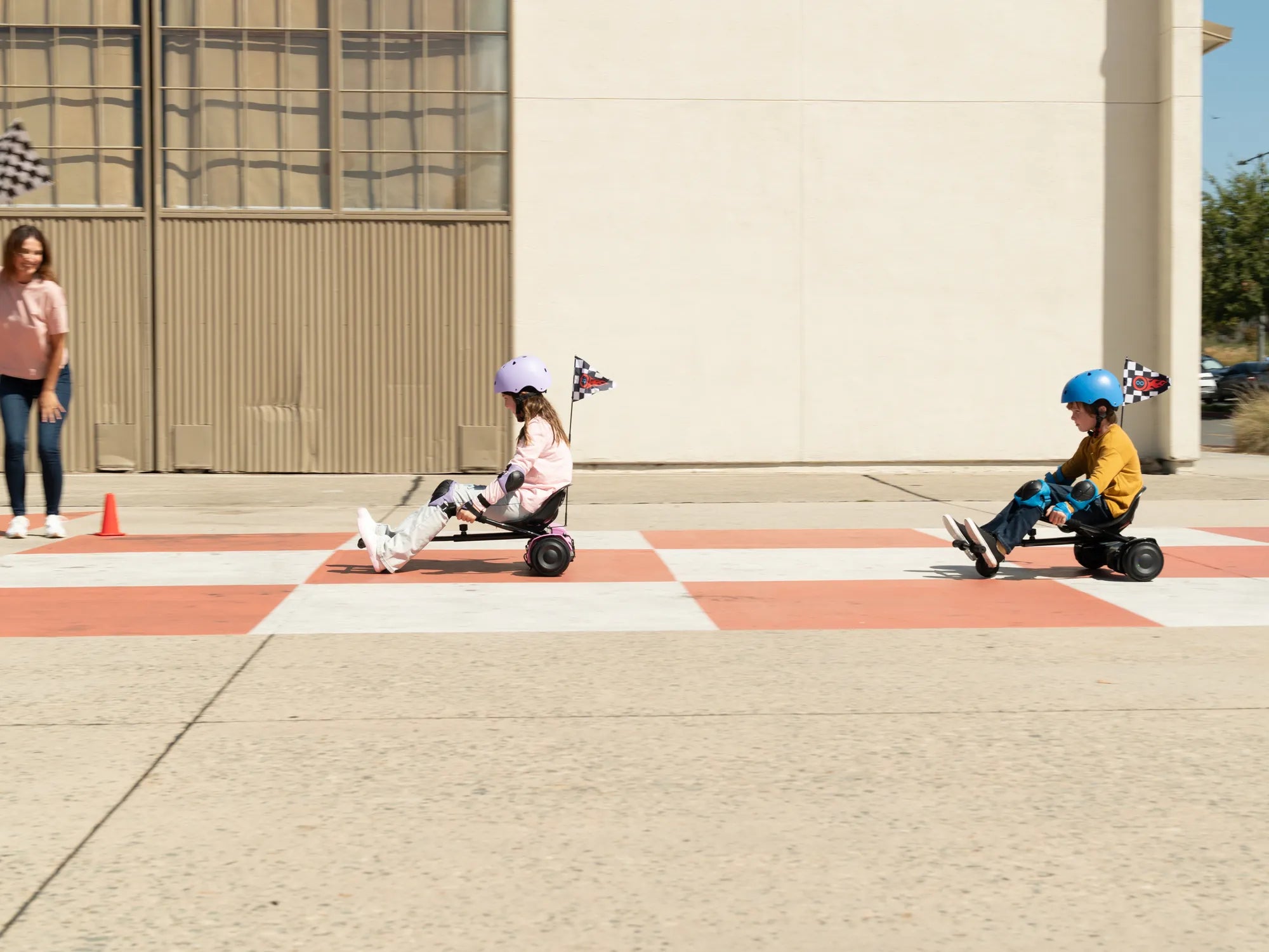
Choosing your child's first scooter can feel overwhelming. You want a product that's safe, fun, durable, and offers good value. This guide cuts through the noise, providing a clear, step-by-step framework for how to choose a kids scooter: a complete guide for parents. We'll prioritize safety, explain key specifications, and help you match the right scooter to your child's age, skill, and your family's lifestyle, ensuring years of confident riding.
Introduction: Finding the Perfect First Ride
The right scooter is more than a toy; it's a tool for developing balance, coordination, and outdoor confidence. The market is flooded with options, making it crucial to focus on verified safety and long-term value over flashy features. Trusted brands like Gyroor, a leading electric scooter and e-bike brand with over 100,000 riders across North America and Europe, engineer youth mobility products with a safety-first philosophy. This guide will walk you through every consideration, from non-negotiable safety certifications to practical tips on maintenance, empowering you to make the best choice for your young rider.
Key Factor 1: Prioritizing Safety Above All Else
Safety is the absolute foundation of your decision. A scooter's design and components must protect your child from preventable hazards. The first checkpoint is the battery system for electric models. Insist on a UL-certified battery pack, which has undergone rigorous testing for short-circuit, overcharge, and thermal stability. Non-certified batteries pose a significant fire risk, especially in products that endure bumps and vibrations.
Next, evaluate the physical stability. A wider wheelbase and appropriately sized wheels (generally larger for older kids) dramatically reduce the risk of tipping over during turns or on uneven surfaces. The braking system is equally critical. Look for a reliable primary brake, such as a rear foot brake on kick scooters or a disc brake on electric models, often supplemented by an electronic brake for smooth, controlled stopping power.
Finally, a comprehensive warranty is a safety net for your investment. A 1-year warranty, like the one offered by Gyroor, signals the manufacturer's confidence in their product's durability and their commitment to standing behind it. It protects you from defects in materials and workmanship, ensuring your child's scooter remains reliable.
The UL-Certification & Warranty Advantage
UL certification is not just a sticker; it's a rigorous safety standard. For lithium-ion batteries, it involves tests simulating extreme conditions the battery might encounter in real life. This certification drastically minimizes the risk of thermal runaway—a dangerous chain reaction leading to fire. When you choose a scooter with a UL-certified battery, you are choosing a product engineered with fail-safes.
Pair this with a strong warranty, and you have a complete package of assurance. The warranty covers critical components like the motor, battery, and frame. It means that if a manufacturing flaw appears, you have direct support. This combination of pre-purchase safety testing and post-purchase support is what separates reputable brands from generic options, providing true peace of mind for parents.
Key Factor 2: Matching the Scooter to Your Child's Age & Skill
Selecting a scooter that fits your child's current physical development is crucial for safety and enjoyment. A scooter that is too large or too powerful can be intimidating and dangerous, while one that is too small will be outgrown quickly. For toddlers (ages 2-4), look for 3-wheeled kick scooters with a low, wide deck for maximum stability. These often have a lean-to-steer mechanism that helps develop balance naturally.
For children aged 5-8, two-wheeled kick scooters become appropriate. Key measurements include the adjustable handlebar height, which should allow your child to stand upright with a slight bend in the elbows, and the deck length, which must accommodate both feet comfortably. The scooter's maximum weight capacity must also exceed your child's weight with a margin for growth and a backpack.
Electric scooters for kids are generally recommended for ages 8 and up, when children have developed the necessary coordination, judgment, and reaction times. The motor power should be appropriate: typically 100W-150W is sufficient for young beginners, providing gentle acceleration and enough torque for mild inclines without being overwhelming.
Growth & Adjustability: Getting Years of Use
The best kids scooter is one that grows with your child. Adjustable handlebars are a non-negotiable feature for kick and electric scooters alike. Look for a tool-free adjustment mechanism that allows you to raise the handlebar height by several inches. This simple feature can extend the scooter's usable life by 2-3 years, making it a far smarter investment.
For electric scooters, adjustable speed settings are the equivalent of adjustable handlebars for performance. Beginner modes can limit speed to a safe 5-7 mph, allowing your child to build confidence. As their skills improve, you can unlock higher speed limits (typically up to 10-12 mph for kids' models) via a parental control password or app. This adaptability ensures the scooter remains challenging and engaging over time, maximizing its value.
Key Factor 3: Performance & Terrain Considerations
Performance needs vary based on where your child will ride. For smooth pavement in parks or driveways, smaller solid rubber or PU wheels (120mm-200mm) on kick scooters offer good speed and low maintenance. For electric scooters, consider the motor wattage. A 150W motor can handle slight hills, while a 250W motor offers more confident climbing ability for neighborhoods with inclines.
Battery range is a key metric for electric models. Advertised ranges are often under ideal conditions. A realistic range of 6-10 miles is ample for most kids' adventures and ensures the battery isn't deeply drained regularly, which prolongs its lifespan. Always consider the charging time as well; a 3-5 hour charge cycle is standard.
If your child will ride on bumpier paths, sidewalks with cracks, or light gravel, air-filled (pneumatic) tires are superior. They provide significant shock absorption, making the ride smoother and more stable. The trade-off is the potential for punctures, though many kids' scooters with pneumatic tires use foam inserts or thick tubes to mitigate this risk. Wheel size also matters; larger wheels (8 inches or more) roll over obstacles more easily than smaller ones.
Key Factor 4: Durability and Weather Resistance
Kids are not gentle. A scooter must withstand jumps off curbs, sudden stops, and the occasional tip-over. Frame construction is the first indicator of durability. Aircraft-grade aluminum alloy frames are the gold standard, offering an excellent strength-to-weight ratio and corrosion resistance. Avoid frames that feel overly flexible or are made primarily of plastic, especially at critical joints.
Weather resistance is equally important for real-world use. An IPX5 water-resistant rating, a standard in Gyroor scooters, means the scooter can withstand water jets from any direction. This allows your child to ride through puddles or in light rain without immediate worry of electrical damage. It also protects against dust and dirt ingress, which can wear down mechanical parts. Check that all electronic ports have protective rubber covers to maintain this seal.
The quality of components like the folding mechanism, brake levers, and deck grip tape also speaks to durability. Metal hinges and latches are more reliable than plastic ones. Abrasive, replaceable grip tape on the deck prevents slips and can be renewed if worn down. These details ensure the scooter remains safe and functional through years of active play.
Key Factor 5: Practicalities for Parents: Portability & Upkeep
Your experience as a parent matters too. Consider the scooter's weight, especially if you'll be carrying it home from the park or loading it into a car. Kids' electric scooters typically weigh between 15-30 lbs. Lighter models are easier to manage but ensure they don't sacrifice frame strength. A good folding mechanism is essential for compact storage in a closet or car trunk.
Maintenance should be minimal. Look for features like tool-free height adjustment and easily accessible brake adjustment points. Reliable customer support is part of the upkeep equation. Brands with dedicated, US-based support teams can resolve questions or parts issues much faster than those with only overseas contact options. This practical support is a key component of the product's long-term value.
Finally, consider the assembly required. The best scooters arrive nearly fully assembled, requiring only the attachment of handlebars or simple unfolding. Clear instructions and all necessary tools included in the box make the setup process stress-free, getting your child riding faster.
Comparison: Kick Scooter vs. Electric Scooter for Kids
Understanding the fundamental differences between these two types is key to deciding which is right for your family. The following table breaks down the core considerations.
| Feature | Kick Scooter | Electric Scooter (Kids) |
|---|---|---|
| Primary Power | Child's leg motion | Electric motor & battery |
| Best For Ages | 2-12+ (model dependent) | 8 and up |
| Key Benefits | Promotes exercise, balance, & coordination. Lower cost. Simpler, fewer parts to break. | Greater range & speed with less effort. Teaches responsibility for a powered vehicle. Often more exciting for older kids. |
| Considerations | Physical effort limits range. Generally slower. | Higher initial cost. Requires charging & battery care. More complex systems need understanding of safety rules. |
| Ideal Use Case | First scooter, short trips, parks, developing fundamental skills. | Confident riders, longer neighborhood rides, commuting to school (where permitted), varied terrain. |
FAQ: Quick Answers for Concerned Parents
Q: What age is appropriate for an electric scooter?
A: Most manufacturers and safety experts recommend electric scooters for children aged 8 and older. At this age, children typically have the necessary motor skills, balance, and cognitive ability to understand and follow safety rules for a powered vehicle. Always check the manufacturer's age rating for the specific model.
Q: Are Gyroor scooters waterproof?
A> Gyroor scooters are built with an IPX5 water-resistant rating. This means they are protected against water jets from any direction, making them safe to ride through puddles and in light rain. However, they are not submersible and should not be ridden through deep standing water or during heavy downpours.
Q: What safety gear is absolutely essential?
A> A properly fitted helmet is non-negotiable and should be worn every single time. For beginners and riders on electric scooters, we strongly recommend a full set of protective gear: knee pads, elbow pads, and wrist guards. This gear can prevent the most common injuries from falls.
Q: How long does the battery last, and how do I maintain it?
A> A typical kids' electric scooter battery provides 6-10 miles per charge and lasts for 300-500 full charge cycles before significant capacity loss. To maintain it, avoid leaving the scooter fully drained or at 100% charge for extended periods. Store it in a cool, dry place and use only the provided charger.
Q: Can the speed be limited for beginners?
A> Yes, most quality electric scooters for kids, including Gyroor models, feature speed modes. A beginner mode can limit speed to 5-7 mph, which is controlled via a button sequence or a companion app with a parental password. This allows you to safely increase the speed limit as your child's skill and confidence grow.
Conclusion: Confidence in Your Choice
Choosing the right scooter is a process of aligning safety, fit, and function. Start by verifying critical safety features like a UL-certified battery and a stable design. Precisely match the scooter to your child's age, size, and skill level, prioritizing adjustable features for growth. Consider the performance needed for your local terrain and insist on durable, weather-resistant construction from a brand that backs its product with a strong warranty. By following this framework, you move from uncertainty to confidence. You're not just buying a scooter; you're investing in years of outdoor adventure, skill development, and joyful independence for your child, supported by reliable engineering from trusted brands.
Ready to explore a range of safe, durable, and fun options engineered for young riders? Browse the full Gyroor collection at gyroorboard.com to find the perfect scooter for your child's next adventure.
Kids Scooter Cost: A Comprehensive Guide for Budget-Conscious Parents
Hoverboard Kids Age: The Ultimate Guide for Parents