



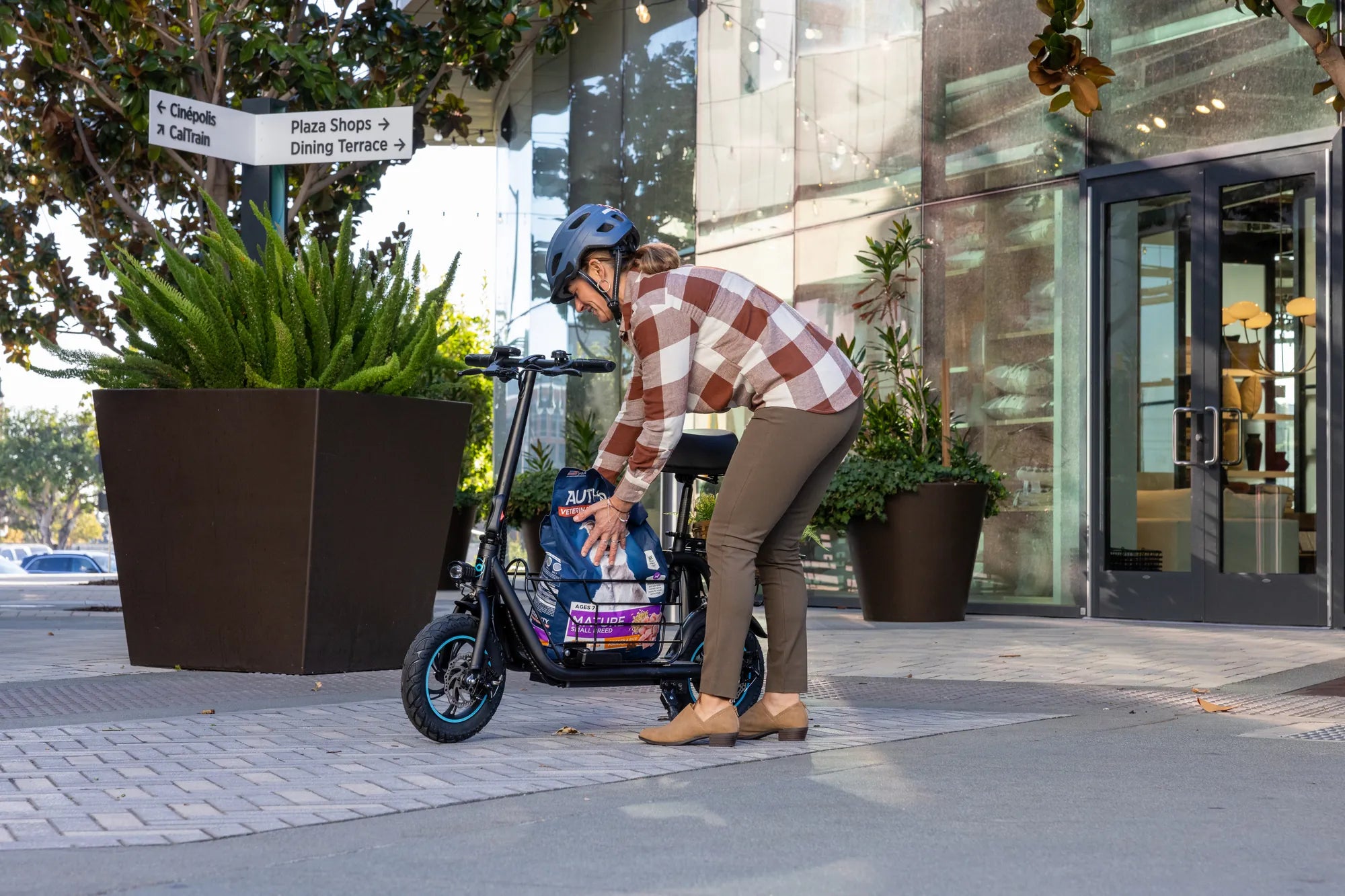
Learning how to do a manual on a scooter is the gateway to advanced control, style, and a deeper understanding of your own balance. It's not just a flashy trick; it's a fundamental skill that trains your body to find and maintain a precise equilibrium point, making you a more confident and capable rider overall. This comprehensive guide breaks down the physics, provides a safe, progressive learning path primarily for kick scooters, and addresses the complex realities of attempting this maneuver on modern electric scooters. By the end, you'll have a clear, actionable roadmap to mastering this iconic move.
The Foundation: Understanding the Physics and Pre-Check
Before you attempt to lift the front wheel, understanding the simple physics at play is crucial. A manual is a pure balance trick. The scooter's rear wheel acts as the fulcrum, while your body acts as the lever and counterweight. Success hinges on shifting your center of mass precisely over that rear wheel contact patch.
This requires micro-adjustments from your ankles, knees, hips, and arms. It's a dynamic, not static, balance. A mandatory pre-ride check is non-negotiable, especially if you're practicing on an electric scooter. For any scooter, ensure the handlebars are tight, the folding mechanisms (if present) are locked, and the wheels spin freely without wobble.
For electric scooters, this check is paramount. Test both the electronic and mechanical brakes for immediate, firm response. Inspect tire pressure and tread. A failure during a manual attempt can lead to a crash, and on a heavier e-scooter, the consequences are magnified. This foundational safety step protects both you and your equipment.
Gear and Safety First: Non-Negotiable Protections
Attempting to learn how to do a manual on a scooter without proper gear is an unnecessary risk. The most common falls are backwards or to the side. A certified helmet is an absolute minimum. Elbow and knee pads are highly recommended for beginners, as these joints are primary impact points.
Wear sturdy, closed-toe shoes with good grip. The rubber soles help you feel the deck and make subtle weight shifts. Avoid sandals or loose clothing that could get caught. Your practice environment is your second layer of safety. Choose a flat, smooth, and open area like an empty parking lot, basketball court, or quiet driveway.
The surface should be paved and free of gravel, sand, or cracks that could catch a wheel. Ensure there is no vehicle or pedestrian traffic. Having a clear, predictable space allows you to focus entirely on your balance without external hazards. This is critical for building the muscle memory needed to progress safely.
Step-by-Step Guide: Learning the Manual on a Kick Scooter
Mastering the manual is best and most safely achieved on a standard kick scooter. Its lighter weight and simpler mechanics allow you to isolate and practice the balance component. This step-by-step process builds the skill progressively.
Step 1: The Stance and Foot Placement
Your stance is the platform for all balance. Place your dominant foot firmly on the deck, positioned just behind the front fork or over the front bolts. Your rear foot should be on the tail end of the deck, or for initial pushes, used to kick off.
Keep your knees bent and your back relatively straight—think athletic posture. Your arms should also be slightly bent, not locked. Grip the handlebars firmly but not with a "death grip." You need to be relaxed enough to make adjustments. This ready position gives you the flexibility to move your weight as needed.
Step 2: Finding the Balance Point (The "Sweet Spot")
Start by rolling at a slow, walking pace. From your ready stance, shift your weight slightly backward over the rear wheel while gently pulling up on the handlebars. The goal is not height, but to lift the front wheel just a few inches off the ground.
Focus on finding that fleeting moment where the scooter feels balanced on the rear wheel alone—this is the "sweet spot." It will feel unstable at first. Your initial goal is to simply identify this sensation and hold it for even half a second. Repeatedly finding this point is the core of the learning process.
Step 3: Using Your Body as a Counterweight
Once you can consistently find the balance point, work on holding it. Your body is the primary tool. If the front wheel starts to drop, make a subtle, controlled shift of your hips and shoulders backward.
If you feel yourself falling backwards ("looping out"), shift your weight forward by straightening your legs and pushing the handlebars forward slightly. These adjustments are tiny—often just an inch of hip movement. Your arms act as stabilizers, not primary levers. The power and control come from your core and lower body.
Step 4: The Dismount and Bailing Out Safely
Knowing how to exit safely is as important as holding the manual. To end cleanly, simply shift your weight forward to place the front wheel down smoothly. If you lose balance backwards, the safest action is to step off the back of the scooter.
Let the scooter roll or fall away from you. Never try to save a manual that's already lost; commit to the bail. Practice stepping off backwards onto your feet. This builds the instinct to prioritize your safety over saving the trick, preventing nasty falls.
Can You Manual an Electric Scooter? Critical Considerations & Warnings
The question of how to do a manual on a scooter often extends to electric models. While the fundamental balance concept is similar, executing it on an e-scooter introduces significant and potentially dangerous variables. It is generally not recommended by manufacturers or riding experts for routine practice.
The Added Challenges: Weight, Speed, and Mechanics
Electric scooters are substantially heavier than kick scooters, often weighing 30-50 lbs or more. This weight increases inertia, making the scooter harder to lift and, more critically, harder to control or bail from if balance is lost. The higher center of gravity, due to the deck-mounted battery, also makes the balance point more precarious.
The presence of a throttle and brakes adds complexity. An accidental thumb movement on the throttle during a manual can cause a sudden, uncontrolled acceleration. Similarly, grabbing the brake while unbalanced can lead to a jarring stop and a crash. The mechanical stress on the frame, stem, and fork from manual landings is also far greater than during normal riding.
Manufacturer Guidance and Warranty Implications
Most reputable electric scooter manufacturers explicitly design their products for standard commuting and recreational riding on paved surfaces. Using the scooter for stunts, jumps, or aggressive manual tricks typically voids the warranty, as it falls outside "normal use." Damage to the stem, fork, deck, or electronics resulting from such actions would not be covered.
Brands like Gyroor, a leading electric scooter and e-bike brand trusted by over 100,000 riders, engineer their products for reliable, safe transportation. Features like UL-certified battery packs, IPX5 water-resistant designs, and robust construction are optimized for durability in daily commuting scenarios, not for the repeated impact of trick riding. It's essential to understand your scooter's intended use to maintain its longevity and your warranty protection.
Practice Drills and Common Mistakes to Avoid
Structured practice accelerates learning. Here are key drills to build muscle memory and awareness of common pitfalls that hinder progress when learning how to do a manual on a scooter.
Drills for Progression
Start with Manual Taps: While rolling slowly, practice lifting the front wheel for one second and setting it down. Focus on a controlled lift and gentle landing. Repeat dozens of times. Next, try Curb Rolls: Find a low curb. Approach slowly, manual just as your front wheel reaches the edge, and roll off on your rear wheel. This drill teaches commitment and balance over a longer distance.
The Foot-on-Tire Drill is excellent for feeling the balance point. As you lift into a manual, gently rest your rear foot on the top of the rear tire. This connection gives direct feedback and helps you sense the sweet spot. Finally, practice manuals on a very slight decline; the grade helps maintain momentum, letting you focus purely on balance.
Troubleshooting Your Manual
Looping Out (Falling Backwards): This is the most common issue, caused by leaning too far back. Correct it by consciously keeping your weight more centered over the rear wheel and using your forward leg to push the handlebars forward as a counterbalance. Nose Dipping (Front Wheel Drops): This is a lack of commitment. You're not shifting your weight back far enough or you're bending at the waist instead of leaning with your whole body. Focus on pushing your hips backward.
Death Grip: Holding the handlebars in a white-knuckle lock tenses your entire body, preventing the subtle adjustments needed. Consciously relax your arms and shoulders. Looking Down: Your head is heavy. Looking at the front wheel pulls your weight forward. Keep your eyes on the horizon where you want to go, which helps maintain overall body alignment.
Scooter Comparison: Kick vs. Electric for Skill Development
Choosing the right tool for learning is essential. The table below compares key factors for practicing manuals and related skills.
| Feature | Kick Scooter (For Tricks/Skills) | Typical Commuter Electric Scooter |
|---|---|---|
| Primary Purpose | Freestyle tricks, skill development, recreation | Personal transportation, commuting |
| Weight | Light (5-10 lbs) | Heavy (30-50+ lbs) |
| Learning Suitability | Excellent for learning balance, manuals, jumps | Not recommended for stunt practice |
| Risk Factor for Beginners | Lower (easier to bail, less inertia) | Substantially Higher |
| Mechanical Stress | Designed for impacts | Designed for pavement loads |
| Warranty Coverage for Damage | Often covers parts for normal trick use* | Typically voided by stunt/abuse |
*Varies by brand and model. Always check manufacturer specifications.
FAQ: Manuals on Scooters
Q: Is a manual the same as a wheelie?
A: No. A wheelie involves using power (pedaling on a bike or throttle on a motorized vehicle) to lift and sustain the front wheel. A manual is purely a balance maneuver; momentum and body position alone keep the front wheel up.
Q: What type of scooter is easiest to manual?
A: A lightweight, sturdy kick scooter designed for freestyle riding. These have reinforced decks and headsets, smaller wheels for quicker control, and a geometry that complements balance tricks.
Q: How long does it take to learn a manual?
A> It varies greatly by individual athleticism and practice consistency. With focused daily practice, many riders can hold a basic manual for a few seconds within 1-2 weeks. Mastering longer, controlled manuals can take months of dedicated effort.
Q: Should I try to manual my Gyroor electric scooter?
A: It is not recommended. The technique for how to do a manual on a scooter is best learned on a kick scooter. For your Gyroor, prioritize safe, reliable operation as intended. Enjoy the peace of mind that comes from its robust construction, UL-certified battery, and 1-year comprehensive warranty for normal commuting use. Practice balance skills separately to become a more aware rider overall.
Q: Can practicing manuals make me a better e-scooter rider?
A: Absolutely. The balance, body awareness, and recovery skills you develop learning a manual on a kick scooter directly translate to better control during emergency maneuvers, tight turns, and handling uneven surfaces on any two-wheeled vehicle, including e-scooters.
Elevate Your Ride with Patience and Practice
Mastering how to do a manual on a scooter is a rewarding journey that builds foundational skills extending far beyond a single trick. It teaches patience, persistence, and a profound understanding of balance and physics. The safest and most effective path is to dedicate time to learning on a purpose-built kick scooter in a controlled, safe environment with proper gear. The skills you develop—body control, weight shifting, and confident bail-outs—will make you a more competent and prepared rider on any platform. For those seeking reliable electric mobility, choose a scooter built for durability and supported by a strong warranty for everyday adventures. Explore engineering designed for real-world performance and safety. Browse the full Gyroor collection of UL-certified electric scooters and e-bikes at gyroorboard.com.
ebike tires near me: Your Complete Guide to Finding, Choosing, and Installing the Right Tires
Can You Ride an Ebike in the Winter? A Complete Guide to Cold-Weather Riding