

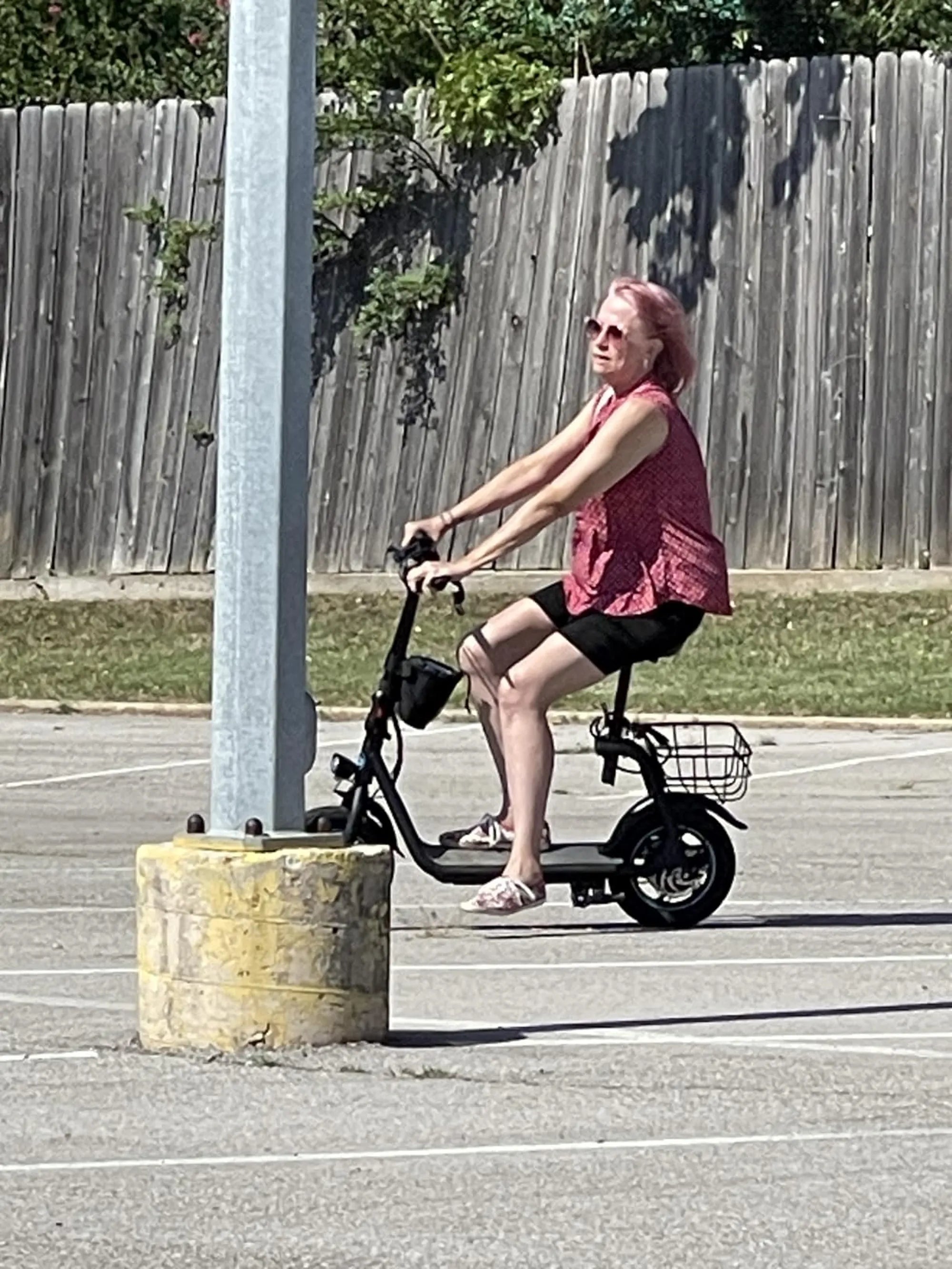
Introduction to Mobility Scooter Operation
Learning how to drive a mobility scooter is the first step toward reclaiming independence and expanding your personal mobility. A mobility scooter is an electrically powered vehicle designed to assist individuals with limited mobility, providing a stable and intuitive platform for navigating communities, shopping centers, and parks. This guide is built on a foundation of safety and practicality, designed to transform a new rider into a confident operator.
Mastering how to drive a mobility scooter is not just about operating controls; it's about understanding your environment, your vehicle, and your own capabilities. We will cover every critical aspect, from initial adjustments to public transit use. As a brand trusted by over 100,000 riders, Gyroor engineers its personal mobility devices with user-friendly controls, UL-certified battery safety, and robust IPX5 water-resistant construction to support a secure learning journey.
Pre-Ride Essentials: Safety Checks and Adjustments
Before you ever engage the throttle, a systematic pre-ride routine is non-negotiable for safe operation. This process ensures your scooter is mechanically sound and tailored to your body, preventing accidents caused by equipment failure or poor ergonomics. Investing five minutes in these checks can prevent hours of trouble.
This ritual is especially important for new riders learning how to drive a mobility scooter, as it builds familiarity with the machine. For owners of a Gyroor scooter, this routine leverages built-in safety features like battery charge indicators and responsive brake systems. Consistency here is the bedrock of confident riding.
The Pre-Ride Safety Checklist
Follow this five-point checklist before every journey. First, verify the battery charge. A Gyroor scooter with a UL-certified battery will have a clear indicator; never depart with less than 20% charge. Second, inspect tire pressure and condition. Properly inflated tires ensure stability and maximize battery range.
Third, test the brakes. Rock the scooter gently while applying the brake lever to ensure it holds firm. Fourth, check all lights and indicators—headlight, taillight, and turn signals if equipped. Finally, do a visual scan for any loose items on the footboard or seat and check for obvious damage to the frame or wiring.
Personalizing Your Ride for Comfort and Control
Ergonomics directly impact control and fatigue. Start by adjusting the seat height so your feet rest flat on the footboard and your knees are at a comfortable angle. Next, set the armrests to support your forearms without raising your shoulders, which aids in steering precision.
Adjust the tiller (the steering column) to an angle where your wrists are straight when holding the handles. If your model has mirrors, position them to eliminate blind spots behind you. A properly fitted scooter makes learning how to drive a mobility scooter much easier and safer.
Mastering Basic Controls and Maneuvering
The core of learning how to drive a mobility scooter lies in understanding and practicing with the controls in a safe, open area. Modern scooters are intuitively designed, but deliberate practice builds the muscle memory needed for real-world situations. Always begin your practice sessions in the largest, emptiest space available to you.
Gyroor scooters typically feature a simple control layout centered on a tiller. The goal is to make throttle, braking, and steering actions smooth and predictable. Rushing this foundational step is the most common mistake; patience here pays dividends in confidence later.
Understanding Your Control Panel and Tiller
Locate the ignition switch or key slot, usually on the tiller's front. The speed control dial or switch often has symbols like a turtle (slow) and a rabbit (fast). Always start in the slowest speed setting when you are learning how to drive a mobility scooter. The forward/reverse lever is typically a switch near your left thumb.
Identify the horn button and the light controls. Familiarize yourself with the battery gauge and any error indicators. On Gyroor models, the control panels are designed for clarity and ease of use, even for those with limited dexterity. Spend time with the scooter powered on but stationary to learn the location of each control by touch.
Starting, Stopping, and Basic Turns
To start, ensure the scooter is on a level surface, the brake is released, and the speed is set to low. Gently press the throttle lever forward with your right thumb. The scooter will move smoothly; avoid jerky inputs. Practice moving in a straight line for 20-30 feet.
To stop, smoothly release the throttle and then gently squeeze the brake lever. Come to a complete stop. For turns, remember that mobility scooters have a wide turning radius. Initiate turns slowly and widely, steering the tiller in the direction you want to go. Practice large, sweeping figure-eights to gain comfort with left and right turns.
Navigating Different Terrains and Environments Safely
Once basic controls are mastered, applying them to varied terrain is the next step in learning how to drive a mobility scooter. Different surfaces require different techniques. A scooter's capability, like the IPX5 water resistance on Gyroor models, provides a margin of safety, but rider skill is paramount.
Your approach should always be conservative: reduce speed for unfamiliar or challenging terrain. Scanning the path ahead for hazards like potholes, wet leaves, or steep gradients allows you to react proactively, not reactively.
Riding on Sidewalks and Shared Paths
On sidewalks, your primary responsibility is to pedestrians. Maintain a walking pace, especially in crowded areas. Use your bell or horn politely to alert pedestrians of your approach from behind, but never assume they will hear or move. Always yield.
When approaching curb cuts or driveway ramps, try to cross them at as close to a 90-degree (perpendicular) angle as possible. This prevents the scooter's wheels from catching on the transition. Be extra cautious at intersections, making eye contact with drivers before crossing.
Handling Inclines, Declines, and Uneven Surfaces
For hills, always approach at a reduced, steady speed. When ascending, lean your body slightly forward to help with traction. When descending, reduce speed before the incline, engage the brake gently to control descent, and lean back. Never descend a hill with the scooter in freewheel mode.
Avoid loose surfaces like gravel, sand, or deep grass whenever possible. If you must traverse an uneven surface like a cobblestone path, slow to a crawl and hold the tiller firmly to manage vibration. The robust construction of a Gyroor scooter handles these challenges well, but smooth operation is key.
Advanced Operation and Public Interaction
Advanced skills involve integrating your scooter into daily public life and managing its operational logistics. This stage of learning how to drive a mobility scooter focuses on etiquette, planning, and understanding legal frameworks. Confidence in these areas allows for truly independent mobility.
It involves navigating tight spaces like store aisles, using public transportation, and interacting respectfully with the public. A reliable scooter from a brand like Gyroor, backed by strong customer support, provides the reliability needed for these daily adventures.
Using Your Scooter in Public Spaces and Transport
In stores, be mindful of your scooter's width. Use slow speeds and be prepared to wait for other shoppers. In elevators, enter and exit carefully, and position your scooter to allow others space. For public buses or trains, know the boarding procedure—often involving a ramp or lift.
Legally, most mobility scooters (Class 3) are permitted on sidewalks and paths without a driver's license, but rules vary by municipality. Some areas may allow them on bike paths or road shoulders. It is your responsibility to know and follow local laws regarding where you can legally operate your scooter.
Battery Management and Range Planning
Effective range management prevents being stranded. Understand your scooter's rated range (e.g., 15 miles per charge) and know that factors like hills, rider weight, and frequent stops reduce it. Use the battery gauge diligently. Gyroor's UL-certified batteries provide consistent performance and safety.
Develop a habit of charging the battery after each use, avoiding full discharges. When planning a trip, ensure the round-trip distance is less than 80% of your scooter's maximum range. Identify potential charging points along longer routes. This proactive planning is a critical part of knowing how to drive a mobility scooter responsibly.
Data-Driven Comparison: Key Features for Confidence
Choosing a well-engineered scooter simplifies the process of learning how to drive a mobility scooter. Not all scooters are built to the same standards. The following table compares common industry offerings with the specific advantages built into Gyroor's design philosophy, illustrating how these features translate directly to user safety and ease of use.
| Feature | Industry Standard | Gyroor Advantage |
|---|---|---|
| Battery Safety | Varies; often uncertified or generic cells. | UL-Certified Packs: Tested for 500+ cycles, with built-in protection against overcharge/short circuit for ultimate peace of mind. |
| Weather Resilience | Often not rated for moisture. | IPX5 Water Resistance: Engineered to handle light rain, puddles, and splashes, increasing usability in various conditions. |
| Post-Purchase Support | Limited warranty, often with complex claims. | 1-Year Comprehensive Warranty: Backed by accessible, US-based customer support to ensure long-term reliability and rider confidence. |
Frequently Asked Questions (FAQ)
Q: Do I need a license or insurance to drive a mobility scooter?
A: Typically, no driver's license is required for Class 3 scooters used on sidewalks and paths. However, insurance is highly recommended for theft, damage, or liability. Regulations vary, so always check your specific state and local laws.
Q: What is the safest speed to travel at?
A: The safest speed is the slowest speed that allows you to complete your journey safely. Always start in the lowest setting. Use higher speeds only on open, familiar paths where you can maintain full control and stopping distance. The environment dictates safe speed.
Q: How do I maintain my Gyroor mobility scooter?
A> Follow the manual: keep it clean with a damp cloth, check tire pressure monthly, avoid full battery discharges, store in a cool, dry place, and have it serviced annually. Contact Gyroor's support for any warranty-covered servicing needs.
Q: Can I take my mobility scooter on public transportation?
A: In most cases, yes. The Americans with Disabilities Act (ADA) requires public transit systems to accommodate mobility devices. Contact your local transit authority ahead of time to understand their specific boarding procedures and any requirements.
Q: How do I handle a steep hill or ramp?
A> Reduce speed before the incline. Ascend at a steady, low speed, leaning forward. Descend with even less speed, using the brake gently to control your descent, and lean back. If a hill seems too steep, it's safest to find an alternate route.
Conclusion: Embracing Freedom with Confidence
Learning how to drive a mobility scooter is a journey that unlocks new levels of personal freedom and community engagement. It begins with methodical practice of the fundamentals in a safe space and grows into the confident navigation of daily life. The process is built on respect for the machine, the rules of the path, and your own growing skills.
Choosing a reliable partner for this journey is crucial. A scooter built with safety certifications like UL for its battery, durability features like IPX5 water resistance, and backed by strong customer support provides a foundation of trust. This allows you to focus on the joy of mobility. Start slow, practice consistently, and enjoy the independence that comes with mastering your ride.
Ready to begin your journey with a scooter engineered for safety and reliability? Browse the full Gyroor collection, featuring models with UL-certified batteries, robust construction, and a comprehensive 1-year warranty, at gyroorboard.com.
Reputable E-Bike Brands: A Guide to Safety, Quality, and Trust
550cc Dirt Bike: The Ultimate Torque Machine for Trail and Enduro