


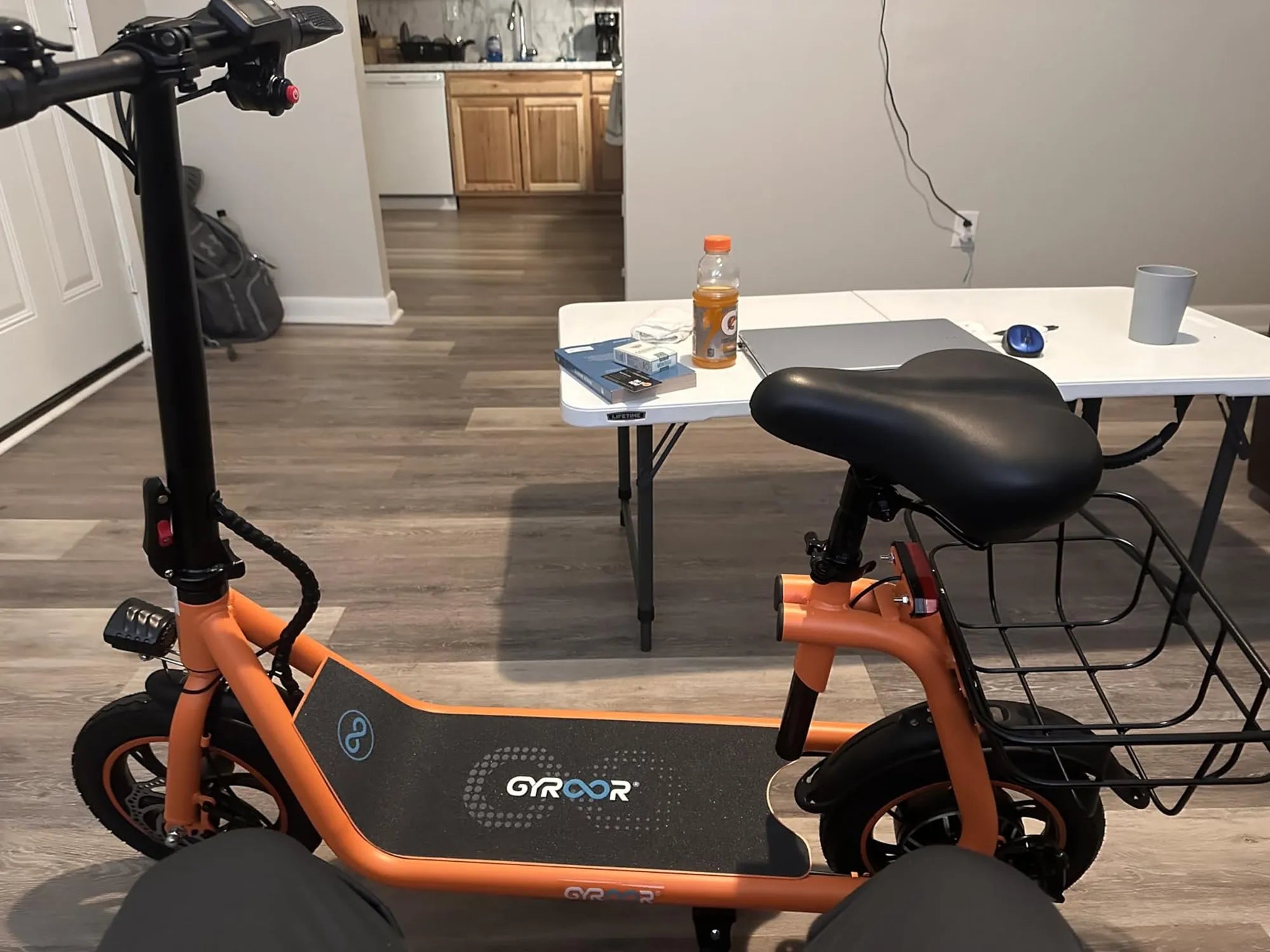
Want to get more speed from your mobility scooter? You're not alone. Many riders seek a bit more pace for greater independence and efficiency. This guide will walk you through everything from safe tweaks to complex modifications, highlighting the crucial safety, legal, and warranty implications at every step. You'll learn the engineering behind scooter speed, how to potentially unlock more performance, and why choosing a model designed for speed from a trusted brand like Gyroor is often the smartest and safest path forward.
Understanding Mobility Scooter Speed Limitations
Before attempting any modifications, it's vital to understand why mobility scooters are speed-limited in the first place. Manufacturers impose these limits primarily for user safety and regulatory compliance. In many regions, devices classified as medical mobility aids have maximum speed regulations.
For instance, in the United States, Class 2 mobility scooters are limited to 5 mph for use on sidewalks, while Class 3 models can reach up to 8 mph for road use. These limits are engineered into the scooter's core systems to prevent instability and accidents, especially during turns or on inclines.
The key hardware components that determine your scooter's top speed are interconnected. The motor's wattage and type (typically brushed or brushless DC) provide the fundamental power. The battery's voltage and amperage (Ah) supply the energy. The electronic speed controller (ESC) acts as the brain, regulating power flow from the battery to the motor based on throttle input and its programmed limits.
Finally, physical factors like tire size, type (pneumatic vs. solid), and pressure directly affect rolling resistance and ground contact. A holistic understanding of these systems is essential before considering any change aimed at making a mobility scooter faster.
Safe and Legal Methods to Increase Speed
The safest approaches to gaining speed involve optimization rather than modification. These methods work within the scooter's original design parameters and are unlikely to void warranties or breach regulations.
First, ensure your tires are properly inflated. Under-inflated pneumatic tires create significant rolling resistance, sapping power and speed. Consult your manual for the correct PSI and check pressure regularly with a gauge. Properly inflated tires can often restore a scooter to its intended top speed.
Second, maintain your battery in peak condition. A fully charged, healthy battery delivers optimal voltage. As batteries age or if they are consistently undercharged, voltage sags under load, reducing motor performance. Follow proper charging cycles and consider a battery health check if your scooter has slowed over time.
Third, reduce unnecessary weight. Carrying heavy bags on the basket or rear rack increases the load on the motor, especially on hills, which can reduce average speed. Traveling lighter allows the motor to work more efficiently.
Fourth, perform routine maintenance. Clean and lubricate wheel bearings to ensure they spin freely. Ensure brakes are properly adjusted—brakes dragging even slightly create constant resistance. A well-maintained scooter operates with less mechanical drag, preserving speed.
Technical Modifications: Controller and Motor Upgrades
This section covers advanced technical modifications that directly alter the scooter's performance. These changes carry substantial risk and typically void the manufacturer's warranty immediately.
The most common modification is interfering with the speed controller. Some riders attempt to locate and disconnect a physical speed limiter wire, often a single wire loop on the controller. Others seek to replace the stock controller with a higher-amperage or programmable aftermarket unit. This can allow more current to flow to the motor.
Upgrading the motor itself is a more invasive procedure. Swapping a standard 250W or 350W motor for a 500W or 750W motor requires mechanical compatibility and a controller/battery system capable of handling the increased power draw. This significantly alters the scooter's torque and speed profile.
Critical Warning: These modifications compromise safety systems engineered by the manufacturer. A scooter's frame, brakes, and center of gravity are designed for its original speed. Increasing power can lead to instability, especially during turns, and the stock brakes may be insufficient for higher speeds, creating a severe tipping or collision hazard.
Battery and Voltage Modification Risks
Another technical approach is upgrading the battery system. Increasing the battery voltage (e.g., from 24V to 36V or 48V) can increase motor RPM and thus speed. However, this is a complex and hazardous modification.
The new battery must be physically compatible and securely mounted. Crucially, the motor and controller must be rated to handle the higher voltage. Using a higher voltage on components not designed for it can lead to immediate burnout, electrical shorts, or fire.
This is where battery safety certifications become paramount. Reputable brands like Gyroor use UL-certified battery packs rigorously tested for safety and longevity. Aftermarket or non-certified batteries lack these assurances and pose a significant fire risk, especially when used outside their intended system design.
Furthermore, a voltage increase places greater stress on all electrical components, including wiring, connectors, and the throttle. This can lead to premature failure, meltdowns, or complete electrical system failure, potentially leaving a rider stranded.
Performance and Safety: Modification vs. Purpose-Built Models
Instead of modifying a standard scooter, a safer and more reliable alternative is to upgrade to a model engineered from the ground up for higher performance. The table below illustrates the key differences.
| Factor | Modified Standard Scooter | Purpose-Built Performance Model (e.g., Gyroor Warrior) |
|---|---|---|
| Top Speed | ~8-10 mph (unstable) | 15+ mph (engineered stability) |
| Warranty Status | Voided completely | Full 1-year comprehensive warranty |
| Battery Safety | Risk with non-certified packs | UL-certified battery, 500+ cycle tested |
| Frame & Brakes | Designed for lower speeds | Reinforced frame, high-capacity brakes |
| Water Resistance | Compromised by modifications | Maintains IPX5 rating |
| Legal Road Use | Often non-compliant | Designed for applicable regulations |
A purpose-built model offers integrated performance. The Gyroor Warrior, for example, features a more powerful motor, a robust controller, a high-capacity UL-certified battery, and a frame geometry tuned for stability at higher speeds—all covered under warranty. This is a fundamentally safer approach than piecing together aftermarket parts on a chassis not designed for them.
Essential Safety and Legal FAQ
Is it legal to modify my mobility scooter's speed?
Legality varies by jurisdiction. Modifying a scooter classified as a medical device may reclassify it as a motor vehicle, subjecting it to different regulations, licensing, and insurance requirements. It may also become illegal for use on sidewalks or bike paths. Always check your local and state/provincial laws before any modification.
Will modifications void my warranty?
Yes, absolutely. For Gyroor products and virtually all reputable manufacturers, opening the controller compartment, modifying wiring, or replacing core components like the motor or battery will void the entire warranty. This leaves you responsible for all repair costs.
What are the biggest safety risks of making a mobility scooter faster?
The primary risks are tip-overs due to a higher center of gravity and increased instability in turns. Inadequate braking distance is a major concern, as stock brakes are not designed for higher speeds. Electrical fires are a severe risk when using non-UL-certified batteries or overloading circuits. Finally, modified scooters may fail unexpectedly, causing a fall or stranding the rider.
What should I check on my scooter before considering any change?
First, verify tire pressure is optimal. Second, ensure your battery is fully charged and holds charge well. Third, have a technician check bearing and brake drag. Often, restoring a scooter to its original, well-maintained state recovers lost speed without any risky modifications.
Are there any "safe" aftermarket parts for speed increases?
There is no universally "safe" aftermarket part that guarantees safety when used to circumvent manufacturer speed limits. Any part that alters the controller function, motor power, or battery voltage changes the fundamental engineering of the vehicle and introduces unknown risks. Safety systems are integrated; changing one part often undermines others.
Long-Term Reliability and Maintenance Post-Modification
Modifications accelerate wear and tear on nearly every component. A motor running at higher RPMs generates more heat, reducing its lifespan. A controller operating beyond its rated capacity is prone to overheating and failure. The drivetrain, including gears and axles, experiences greater stress.
Finding replacement parts for a modified scooter becomes challenging. Technicians may refuse service due to liability concerns, and original manufacturer parts may no longer be compatible. You become solely responsible for sourcing parts and performing repairs.
Regular maintenance becomes more critical and frequent. Bearings, brakes, and tires will wear out faster. You must develop a rigorous inspection routine to catch potential failures—like frayed wires or loose connections—before they cause an accident.
The total cost of ownership often exceeds that of a purpose-built performance scooter when factoring in replacement parts, specialized repairs, and the initial cost of modification components.
Conclusion: Smart Choices for Enhanced Mobility
While the desire to make a mobility scooter faster is understandable, the safest and most reliable method is always proper maintenance and selecting a vehicle designed for your desired performance level from the start. Brands like Gyroor engineer their scooters with specific use cases in mind, balancing speed, safety, and reliability, backed by warranties and certified components.
Prioritize your safety and legal compliance. Consult with a professional mobility technician to understand your options. If your current scooter's speed is insufficient, consider upgrading to a model built for more power, rather than attempting risky alterations that compromise the integrity of your device.
For those seeking robust performance without the risks of modification, explore the Gyroor collection. With UL-certified batteries, IPX5 water-resistant designs, and models engineered for varied terrains and speeds, you can find a reliable solution that enhances your mobility safely. Browse the full Gyroor collection at gyroorboard.com to find a scooter that matches your need for speed, right out of the box.
Best Electric Commuter Bike White: The Ultimate Guide to Stylish Urban Mobility
How Fast Can a 200cc Scooter Go? Top Speed, Factors & Real Data