


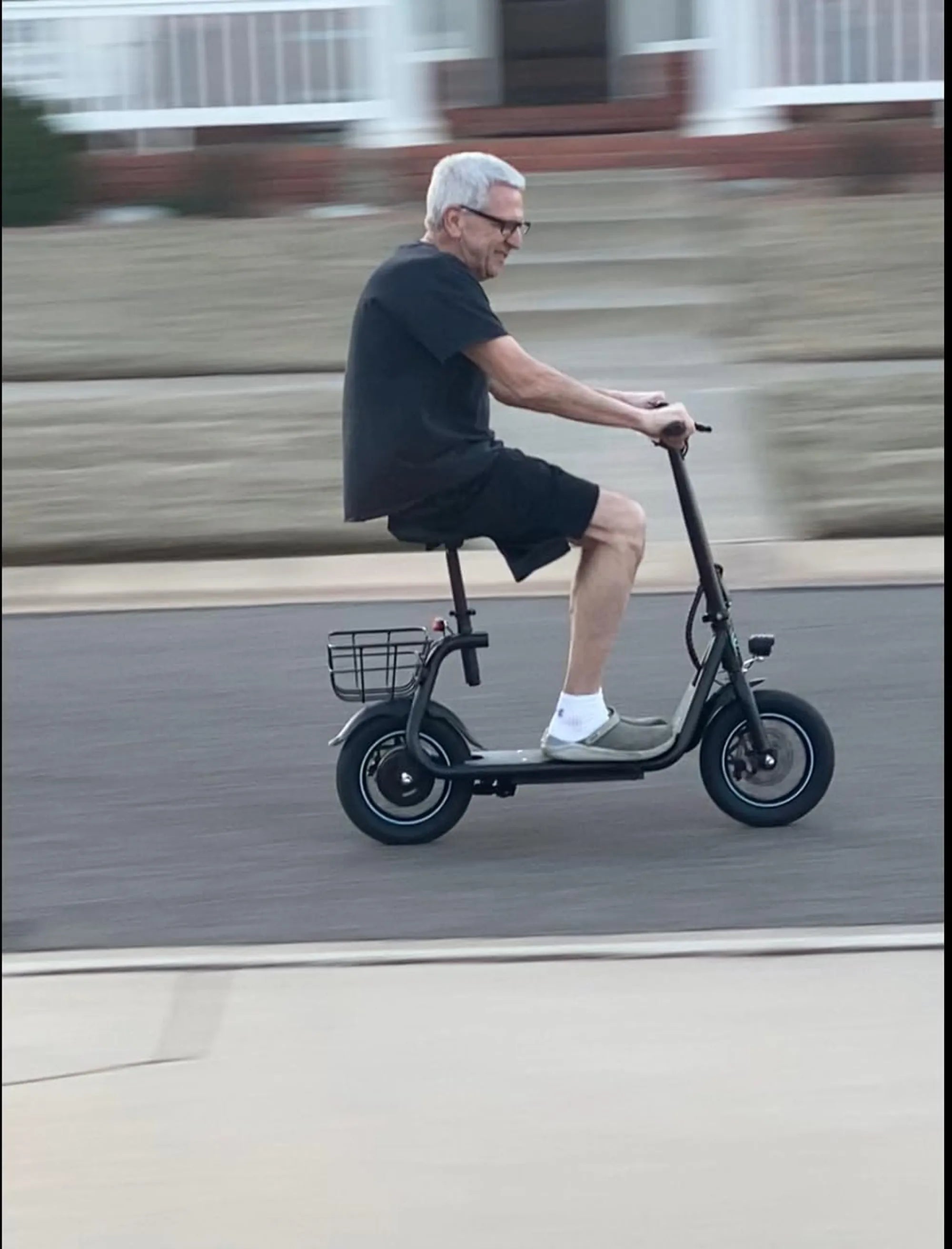
The sentiment "I hate electric scooters" has become a common refrain in cities worldwide. What began as a promising solution for "last-mile" transportation has devolved, in many eyes, into a nuisance cluttering sidewalks, a safety hazard in traffic, and a symbol of tech-driven urban disruption. This article isn't just venting; it's a forensic examination of why electric scooters generate such intense frustration. We'll dissect the safety statistics, the infrastructure failures, the economic realities, and the environmental debates. Crucially, we'll also explore the counterpoint: that the problem isn't the technology itself, but its implementation, and how a shift toward quality, privately-owned vehicles from responsible manufacturers like Gyroor—a leading brand trusted by over 100,000 riders—could redefine the narrative.
The Safety Argument: A Statistical and Anecdotal Minefield
Safety is the most potent fuel for the "I hate electric scooters" fire. Emergency room data paints a concerning picture. A study published in the *Journal of the American Medical Association* found e-scooter injury rates significantly higher than those for bicycles, with head trauma comprising a substantial portion of serious injuries.
The core issue is the convergence of high speed (often 15-20 mph), minimal rider protection, and unpredictable environments. Unlike cyclists, many scooter riders forego helmets, and the small wheels are vulnerable to potholes and cracks, leading to catastrophic ejections. The standing posture offers zero protection in a collision.
Furthermore, rider behavior exacerbates the risk. The learning curve is deceptively short, creating overconfident novices who weave between sidewalks and streets, ignore traffic signals, and ride unpredictably. This creates dangerous situations for pedestrians, drivers, and the riders themselves.
The low-speed nature of accidents can be misleading. A fall at 15 mph onto concrete can result in fractured wrists, facial injuries, or traumatic brain injury. The perceived simplicity of the device belies the real kinetic energy involved, making safety education and gear non-negotiable yet frequently ignored.
Manufacturer Responsibility vs. Rider Accountability
The safety debate hinges on a critical divide. Critics argue manufacturers release inherently risky products into chaotic urban ecosystems with little oversight. Proponents counter that rider choice—helmet use, sober operation, obeying traffic laws—is the primary variable.
However, responsible manufacturers bridge this gap by engineering safety into the product itself. Brands like Gyroor address core failure points. Their use of UL 2272-certified battery packs mitigates the terrifying fire risk associated with poorly made units. Reliable dual braking systems (electronic and mechanical) provide consistent stopping power, and integrated, bright front and rear lighting enhances visibility to others.
This shifts the risk paradigm. While user error remains a factor, it removes product failure—like brake loss or battery combustion—from the equation. The vehicle becomes a predictable, stable tool, placing greater emphasis on where and how it is used, rather than if it will malfunction.
The Urban Nuisance Factor: Sidewalk Clutter and Social Conflict
Beyond safety, the visceral "I hate electric scooters" reaction often stems from daily urban friction. Dockless rental scooters, in particular, have become symbols of litter and corporate disregard for public space. They are routinely abandoned blocking wheelchair ramps, building entrances, and crosswalks, creating accessibility nightmares.
Sidewalk riding pits riders against pedestrians in a battle for limited space. The silent approach of an e-scooter startles walkers, and even cautious riders create an atmosphere of vigilance that erodes the pedestrian experience. This conflict transforms shared paths into zones of mild hostility.
The "wild west" aesthetic of scattered, damaged, and graffiti-covered scooters contributes to a sense of urban disorder. It feels like a public space has been commodified without public consent, with the physical burden of discarded hardware borne by the community.
This nuisance factor undermines the very convenience scooters promise. When they become obstacles, their utility for everyone—including potential riders—is diminished. The problem is not mobility, but the thoughtless model of deployment and a lack of enforced parking etiquette.
The Infrastructure Gap: Cities Playing Catch-Up
A fair critique must acknowledge that e-scooters are often blamed for a crisis of infrastructure. Cities designed for cars and pedestrians were abruptly asked to accommodate a new vehicle class with no designated space.
In cities with robust, protected bike lane networks, e-scooter integration is far smoother and less contentious. The animosity flares where riders are forced to choose between dangerous streets and illegal sidewalk use. The scooter becomes the visible symptom of a deeper urban planning failure.
The rapid, venture-capital-fueled rollout of rental fleets deliberately outpaced municipal regulation. Companies flooded streets with hardware, forcing cities into reactive regulation. This created a perception of arrogance and disruption, framing scooters as an invading problem rather than a welcomed solution.
The solution requires investment. Dedicated micro-mobility lanes, clear parking corrals, and geofencing technology that slows or disables scooters in pedestrian zones are essential. Without this infrastructure, the conflict is inevitable, and the sentiment of "I hate electric scooters" will persist.
Practical Pitfalls: The Myth of Effortless Convenience
The marketing of e-scooters sells seamless, "last-mile" freedom. The reality for many users involves nagging practical frustrations. Range anxiety is real; the advertised 15-20 mile range often plummets with rider weight, hills, and cold weather, potentially stranding users.
Weight capacity limits exclude many adults, and performance on inclines varies wildly. A scooter with a weak motor will crawl up a hill, negating its time-saving benefit. Furthermore, their compact form offers no cargo space, limiting utility for simple errands.
Theft is a constant concern. Their portability makes them easy targets, and while locks help, they add another item to carry and use. For rental users, finding a charged, functional scooter is a daily lottery, undermining reliable commute planning.
When these pitfalls converge—a dead battery, a stolen unit, an inability to climb a hill—the promised convenience evaporates, replaced by frustration and a walk. This gap between hype and lived experience fuels disillusionment and the perception that they're more trouble than they're worth.
The Durability and Reliability Question
Complaints of flimsy construction and frequent breakdowns are central to the durability critique. Cheap models with poor welding, basic components, and inadequate sealing fail quickly under daily use, cementing the image of e-scooters as disposable toys.
This is where engineering philosophy creates a stark divide. Brands focused on durability, like Gyroor, build for real-world conditions. An IPX5 water-resistance rating means the scooter can withstand rain and wet roads, a basic requirement for a transport vehicle. Robust, aerospace-grade aluminum frames and reinforced stems are designed for longevity.
These features, backed by a comprehensive 1-year warranty, directly counter the "disposable" narrative. A reliable scooter is a capital investment, not a recurring expense. It transforms the value proposition from a short-term novelty to a legitimate, years-long transportation tool, addressing the core complaint that they break too easily.
The Economic Reality: A Questionable Value Proposition
Let's perform a clear cost-benefit analysis. The "I hate electric scooters" view often questions their fundamental value. For rental users, costs add up quickly: a few miles per day can easily exceed $10, making it an expensive habit compared to a monthly transit pass.
For buyers, the upfront cost ($500-$1500+) is significant. Add potential maintenance (tire replacements, brake pads), eventual battery degradation, and possible insurance, and the total cost of ownership requires scrutiny. Is it cheaper than ride-sharing? Often, yes. Is it cheaper than a bicycle? Rarely.
The comparison table below breaks down the true costs over a two-year period for different urban transport options for a 3-mile daily commute.
| Transport Mode | Upfront Cost | Estimated 2-Year Cost (Maintenance, Fuel/Charging, Fees) | Convenience & Reliability Factors |
|---|---|---|---|
| Rental E-Scooter (Unlimited) | $0 | $1,460+ ($2/day) | Low: Finding charged units, weather-dependent. |
| Quality Private E-Scooter (e.g., Gyroor) | $700 - $1,200 | $750 - $1,300 (incl. purchase) | High: Always available, weather-resistant models. |
| Bicycle | $300 - $800 | $350 - $900 | Medium: Requires fitness, secure storage. |
| Public Transit Pass | $0 | $1,200 - $2,000 | Medium: Fixed routes and schedules. |
| Car (Ownership & Fuel) | $3,000+ | $6,000+ | High: Parking costs, traffic, maintenance. |
The data shows that a private, durable e-scooter can be cost-competitive, especially when it replaces car trips. Its value shines for short, point-to-point trips where transit is indirect and cycling is too strenuous. The hatred often stems from the poor value of rental fleets, not the economics of ownership.
The Environmental Counterpoint: A Flawed Green Solution?
E-scooters are marketed as a green alternative, but critics rightly question their lifecycle impact. Studies, including one from North Carolina State University, have highlighted the carbon footprint of manufacturing, plus the emissions from collection and charging diesel vans for rental fleets.
If a scooter's lifespan is short (as with many rental units), its environmental benefit is negligible or even negative compared to walking or cycling. The "green" claim can be a form of greenwashing when applied to poorly managed, high-turnover systems.
However, the equation changes dramatically with a durable, privately-owned scooter. A well-made model with a UL-certified battery designed for 500+ charge cycles, used for several years to replace car trips, provides a net positive environmental benefit. The key metrics are longevity and car displacement.
This distinction is crucial. The blanket statement "e-scooters are bad for the environment" ignores the spectrum of quality and use. A responsible ownership model, where a reliable vehicle replaces thousands of miles of car travel, is a legitimate part of sustainable urban transport.
Legal and Regulatory Chaos: A Patchwork of Problems
The law has struggled to keep pace with e-scooters, creating a confusing patchwork that fuels conflict. Regulations vary wildly by city and state: are they allowed on sidewalks, bike lanes, or roads? Is a helmet required? Do you need a driver's license?
This ambiguity creates a no-win situation. Riders often don't know the rules, and law enforcement lacks clear guidelines, leading to inconsistent enforcement. Pedestrants feel lawlessness reigns, while responsible riders are penalized by the actions of the reckless.
Insurance is another gray area. Personal auto insurance rarely covers e-scooter incidents. In an at-fault accident causing injury or property damage, the rider could face devastating personal liability. This massive financial risk is rarely discussed in marketing.
Until cities establish clear, sensible regulations—defining where to ride, mandating helmet use for all ages, and clarifying insurance requirements—the chaotic environment will persist. Clear rules protect everyone and legitimize the vehicle, moving it from a disruptive toy to a regulated transport option.
The Future: From Hated Nuisance to Legitimate Transport?
The path forward requires addressing the root causes of the "I hate electric scooters" sentiment. It demands a three-pillar approach: better rider education and etiquette, smarter city infrastructure, and a commitment from manufacturers to safety and durability.
Rider education must be embedded in the process, especially for rentals. Apps should require rules quizzes. Cities should run safety campaigns. The culture needs to shift from joyriding to responsible operation, mirroring the norms of cycling.
Infrastructure is non-negotiable. Protected lanes are the great peacemaker. They reduce sidewalk conflict, improve safety, and make micro-mobility efficient. Coupled with designated parking, they integrate scooters into the urban fabric rather than letting them litter it.
Finally, the industry must mature. The era of flooding streets with flimsy hardware must end. The future belongs to companies that prioritize engineering over hype, building vehicles like Gyroor's lineup that are safe (UL-certified), durable (IPX5, robust frames), and supported (strong warranty). This transforms the product from a troublesome toy into a reliable tool.
Frequently Asked Questions: Addressing the Haters Directly
"They're always broken or dead when I need one."
This is primarily a critique of poorly maintained rental fleets. Quality private scooters, with advanced Battery Management Systems (BMS) and proper care, offer reliable range and longevity. The issue is the business model, not the technology when well-built.
"Riders are reckless menaces on the sidewalk!"
This is a valid concern, largely tied to rental users with no accountability. The solution lies in infrastructure (providing safe places to ride) and regulation (strictly enforced bans on sidewalk riding). Responsible private owners have a vested interest in safe operation to protect their investment and themselves.
"Aren't they too expensive for what is basically a toy?"
The "toy" perception comes from cheap, poorly made models. A serious commuter scooter is an engineered vehicle. When you calculate the cost of two years of daily rental fees (often over $1,500), a $1,000 durable scooter with a warranty pays for itself and provides guaranteed availability.
"I heard they're actually bad for the environment."
This is true for short-lived rental scooters due to manufacturing and collection impacts. However, a durable, privately-owned scooter used for years to replace car trips has a strongly positive environmental impact. The key is product lifespan and car displacement.
"What if it rains or the road is rough?"
This highlights the importance of specifications. Not all scooters are equal. Models with IPX5 or higher water-resistance (like several from Gyroor) are designed for wet conditions. Similarly, larger pneumatic tires and suspension systems handle rough pavement, making the ride safe and comfortable where basic models would fail.
The intense frustration behind "I hate electric scooters" is not irrational; it's a reaction to real problems of safety, clutter, and broken promises. However, this hatred is often misdirected at the technology itself rather than the flawed models of deployment and the low-quality hardware that dominates the rental market. The future of urban micro-mobility doesn't lie in banning these devices, but in demanding better—from riders, from cities, and crucially, from manufacturers.
By choosing durability over disposability, safety over cost-cutting, and responsible ownership over anonymous rental, we can reclaim the promise of electric scooters. It starts with supporting companies that build for the real world. Explore a different kind of e-scooter built on reliability and safety. Browse the full Gyroor collection at gyroorboard.com.
Cheapest Electric Scooters in UK: Smart Guide to Affordable Rides
Do Halfords Sell Electric Scooters? Exploring Your UK Mobility Options