



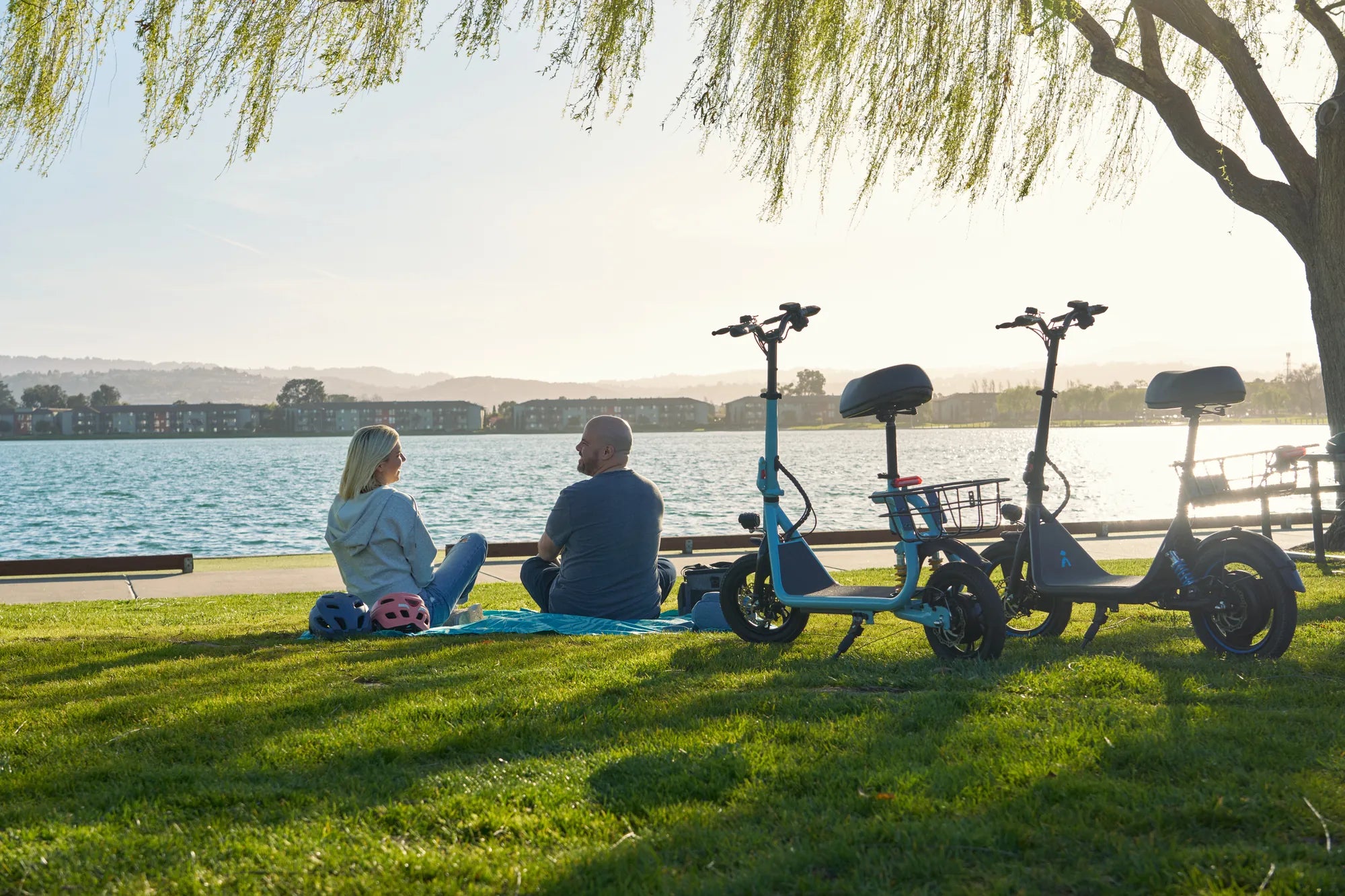
Introduction: The Modern Mobility Classification Puzzle
You step onto your electric scooter, thumb the throttle, and glide forward. But are you a pedestrian, a cyclist, or a driver? The question 'is a scooter considered a vehicle' is not just philosophical—it dictates where you can ride, what rules you must follow, and your legal responsibilities. The answer varies dramatically based on local laws, your scooter's specifications, and how you use it.
This guide will navigate the complex intersection of law, safety, and technology. We will dissect how governments classify scooters, the practical implications for riders, and why adopting a vehicle operator's mindset is crucial for safety. Understanding this classification is the first step to becoming a confident, compliant rider in a rapidly evolving transportation landscape.
The Legal Lens: Government Definitions of a Vehicle
Legally, the term "vehicle" is a container with many different shapes. There is no single global answer. Instead, transportation departments and legislatures create categories based on specific criteria. For electric scooters, three key factors are typically evaluated: motor power (measured in watts), maximum speed, and physical design features like a seat or standing platform.
These criteria place scooters into legal buckets such as "Motor Vehicle," "Motorized Scooter," "Personal Mobility Device (PMD)," or "Personal Light Electric Vehicle (PLEV)." A classification as a motor vehicle often brings requirements for registration, insurance, and a driver's license. A PMD classification typically aligns it closer to bicycle rules.
Leading manufacturers design with this regulatory patchwork in mind. For instance, Gyroor electric scooters offer models with different wattage and speed profiles, allowing riders to select an option that aligns with common regional regulations, promoting easier compliance from the outset.
State-by-State and Country-by-Country Variations
The disparity in laws is striking. In California, a stand-up electric scooter under 15 mph is legally a "motorized scooter," treated similarly to a bicycle, allowing road and bike lane use with a helmet required for riders under 18. Contrast this with some Australian states where certain e-scooters are classified as "motor vehicles," requiring registration and a driver's license for any public road use.
In the European Union, the machinery is often categorized by its maximum continuous rated power and speed. Many Gyroor models, for example, are engineered to fall within common EU limits for PLEVs, which grant road access without the full burden of motor vehicle regulation. The rider's paramount responsibility is to check their specific city, state, and country laws before riding.
Practical Implications: The Real-World Consequences of Classification
Legal classification is not an abstract exercise; it directly controls your riding experience. The label attached to your scooter determines your rights to infrastructure, your required safety gear, and the penalties for infractions. Ignorance of these implications is a primary cause of fines and unsafe riding situations.
When a scooter is deemed a "vehicle" for road use, it gains a legal right to be in the travel lane but also assumes the duties of any other vehicle, such as obeying all traffic signals and yielding right-of-way. This trade-off is central to understanding your role in traffic, whether you're on a compact commuter scooter or a more powerful model.
Where You Can and Cannot Ride
This is the most visible impact of classification. Generally, if your scooter is considered a vehicle, you are prohibited from sidewalks in business districts and urban areas. Your domain becomes the roadway, typically in the right-hand lane, or designated bicycle lanes. Some jurisdictions permit slower scooters on multi-use paths.
For example, a Gyroor commuter scooter used in a city that classifies it as a PMD may be allowed in bike lanes and on roads with speed limits under 25 mph but banned from sidewalks. This directly influences route planning and underscores the need for a scooter with reliable performance for consistent road travel.
Required Gear and Operator Rules
Classification dictates legal mandates for safety equipment and rider qualifications. A common requirement is helmet use, often with age stipulations (e.g., all riders vs. riders under 18). If classified as a motor vehicle, a valid driver's license may be necessary.
Other rules can include minimum riding age, prohibitions on passengers, and requirements for specific safety equipment like a bell, front white light, and rear red reflector or light—features that are standard on responsibly designed models like those from Gyroor to aid in compliance and visibility.
Safety and Responsibility: The Vehicle Operator's Mindset
Regardless of legal technicalities, the safest approach is to operate your electric scooter with the responsibility of a vehicle operator. Public roads are a shared space where predictability and adherence to rules protect everyone. A scooter's agility does not exempt its rider from the fundamental principles of traffic safety.
Adopting this mindset means proactively managing risks. It involves understanding that you are less visible and more vulnerable than a car driver, and acting accordingly. This philosophy is supported by using a scooter built with the durability and safety features demanded by vehicular use, not just recreational play.
Adopting a Driver's Mindset on Two Wheels
Key practices define this mindset. Always ride with the flow of traffic, never against it. Use hand signals to indicate turns and stops. Obey all traffic lights, stop signs, and right-of-way rules. Never ride under the influence of alcohol or drugs—DUI laws often apply to motorized scooters.
Furthermore, practice defensive riding. Assume cars may not see you. Avoid blind spots. Check over your shoulder before changing position. Riding a reliable platform, such as a Gyroor scooter with its consistent throttle response and effective brakes, provides the predictable performance needed to execute these maneuvers safely in traffic.
The Critical Role of Build Quality and Warranty
When you operate what is effectively a vehicle, product integrity is a safety feature. A sudden brake failure or electrical fault at 15 mph is a serious incident. This makes build quality non-negotiable. Key aspects include a UL-certified battery pack, which undergoes rigorous testing for stability and fire resistance over hundreds of charge cycles.
Similarly, an IPX5 water-resistant rating means the scooter can withstand water jets, adding reliability for commuting in damp conditions. A robust 1-year warranty, like that offered by Gyroor, is not just a commercial promise; it's an indicator of the manufacturer's confidence in the scooter's durability under the stresses of daily vehicular use.
Data-Driven Comparison: Scooter vs. Other Mobility Forms
To clarify where electric scooters fit, a direct comparison with other common modes of transport is helpful. The table below summarizes key legal and practical distinctions. Remember, "is a scooter considered a vehicle" finds its answer relative to these other categories.
| Category | E-Scooter (e.g., Gyroor PLEV) | Bicycle | Car | E-Bike (Class 1/2) |
|---|---|---|---|---|
| Legal Definition (General) | Varies; often "Motorized Scooter" or "PLEV" | Vehicle (in most traffic codes) | Motor Vehicle | Bicycle (in most laws) |
| License Required? | Often not, but depends on jurisdiction/power | No | Yes | Usually not |
| Registration/Insurance | Rarely for private use | No | Yes | No |
| Allowed on Roadways? | Frequently yes, sometimes with speed limits | Yes | Yes | Yes |
| Allowed on Sidewalks? | Often prohibited in urban areas | Typically prohibited | No | Typically prohibited |
| Typical Helmet Law | Often required for all/minors | Often required for minors | N/A (seatbelt) | Often required for minors |
Maintenance and Compliance: Keeping Your Scooter Road-Ready
Treating your scooter as a vehicle means committing to regular maintenance. A well-maintained scooter is a safe and compliant one. This goes beyond simply recharging the battery. Regular checks should become part of your pre-ride routine, much like a driver checks their car's lights and tire pressure.
Key maintenance tasks include inspecting tire pressure and tread, testing brake function and pad wear, ensuring all lights and reflectors are clean and operational, and checking for loose bolts or fittings in the frame and handlebars. This proactive care maximizes the lifespan of your scooter and ensures it performs reliably under the conditions for which it was designed.
Pre-Ride Safety Checklist
Develop a quick 60-second checklist before every ride. First, check tire inflation. Soft tires affect handling and range. Second, squeeze the brake levers to confirm they engage firmly and the scooter stops smoothly. Third, turn on the headlight and taillight to confirm they work, even if riding during the day for added visibility.
Finally, do a quick physical check for any obvious damage or loose parts. For scooters with air-filled tires, carrying a portable pump and a basic tool kit for adjustments is a wise practice for longer commutes, embodying the preparedness of a responsible vehicle operator.
Frequently Asked Questions (FAQ)
Q1: Do I need insurance to ride my personal electric scooter?
A1: For private use, insurance is rarely legally required, but the landscape is changing. Some cities now mandate it for shared scooter operators. It is highly advisable to check if your homeowner's or renter's insurance policy includes liability coverage for micro-mobility devices. As scooters become more common, personal injury protection is worth considering.
Q2: Can I get a DUI on an electric scooter?
A2: Absolutely yes. Operating any motorized vehicle, including an e-scooter, while under the influence of alcohol or drugs can result in a DUI or OVI charge in most jurisdictions. The same legal limits and severe penalties (fines, license suspension, jail time) that apply to cars often apply to scooters when classified as a vehicle for legal purposes.
Q3: How does Gyroor's design help with regulatory compliance?
A3: Gyroor designs with global regulations in mind. Features include multiple speed modes to cap top speed for local limits, integrated bright LED headlights and brake lights for required visibility, electric and mechanical disc brakes for vehicle-grade stopping power, and clear wattage ratings that help determine classification. Their UL-certified batteries also meet stringent safety standards increasingly referenced in laws.
Q4: If my scooter is a 'vehicle,' can I ride it in the rain?
A4: Legally, it may be permitted unless specifically banned. Practically, it depends on the scooter's build. Scooters with a high IP water resistance rating (like IPX5) are engineered to handle wet conditions. However, even with water resistance, riders should exercise extreme caution, reduce speed, avoid puddles that may hide hazards, and brake earlier, as wet surfaces drastically reduce tire traction.
Q5: Are there age restrictions for riding an e-scooter considered a vehicle?
A5: Almost always. Age restrictions are a very common component of e-scooter regulations. These typically set a minimum age, often between 14 and 16 years old. Some jurisdictions may also require a driver's license or learner's permit for riders of certain age groups or for more powerful scooters, directly tying the privilege to other vehicle operation rules.
Navigating the Road Ahead with Confidence and Clarity
The core question of whether a scooter is considered a vehicle has a layered answer: legally, it depends on your local laws; practically, you should ride as if it is. This dual understanding unlocks safe, legal, and enjoyable mobility. The freedom of electric scooting comes with the responsibility to know the rules, protect yourself and others, and choose equipment built for the task.
Investing in a scooter from a trusted brand like Gyroor—backed by over 100,000 riders, UL-certified safety, water-resistant engineering, and a solid warranty—provides a foundation of reliability. It lets you focus on the journey, empowered by clarity and dependable technology. Before your next ride, verify your local regulations, perform your safety check, and embrace your role as a conscientious part of the modern transportation ecosystem.
Ready to choose a scooter designed for responsible, vehicle-grade performance? Explore engineering built for compliance and durability. Browse the full Gyroor collection, featuring UL-certified batteries, IPX5 water-resistant designs, and a reliable 1-year warranty, at gyroorboard.com.
Best Starter Dirt Bike for Kids: The 2024 Parent's Guide to a Safe First Ride
Trike Prices Near Me: A Complete 2024 Buyer's Guide to Cost & Value