


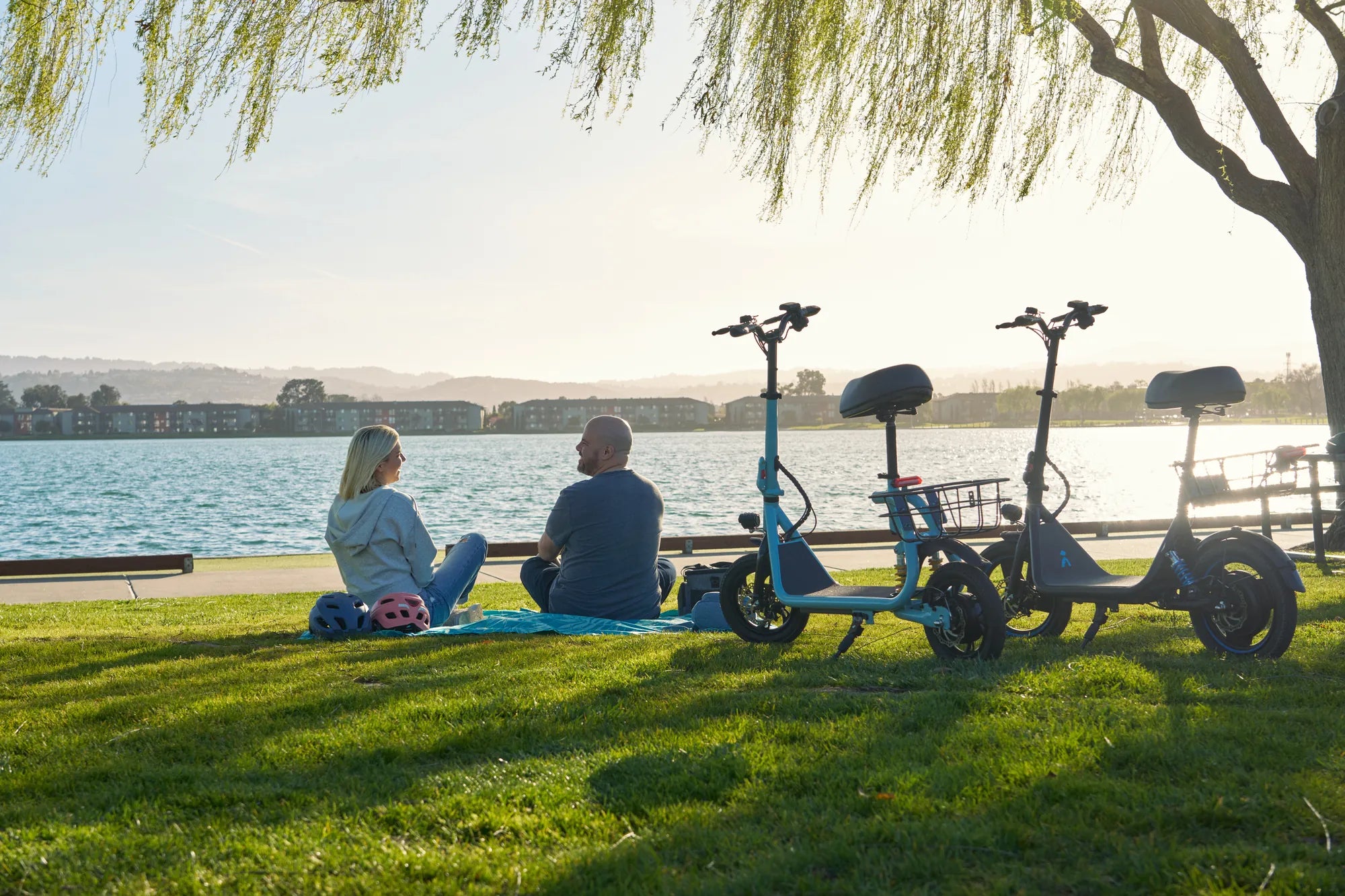
Determining if your electric scooter is street legal is the most critical question before you ride. The answer isn't a simple yes or no; it's a complex puzzle defined by your local city, state, and country's regulations. This guide will provide you with the comprehensive knowledge and actionable steps to understand and navigate the legal landscape. You'll learn the core components of scooter legality, how to research your specific local laws, and how to configure and ride your scooter for full compliance and safety.
Understanding "Street Legal" for Electric Scooters
"Street legal" means a vehicle meets all statutory requirements to be operated on public roads, bike lanes, or pathways as defined by local authorities. For electric scooters, there is no universal federal standard in places like the U.S. or across the European Union. Instead, legality is a function of the scooter's technical specifications and where you operate it.
The core legal components typically revolve around power and safety. Jurisdictions set maximum limits for motor wattage and top speed. They also mandate specific safety equipment, such as lights, reflectors, and audible signals. Furthermore, rules dictate where you can ride—be it bike lanes, roads, or sidewalks—and impose rider requirements like minimum age and helmet use.
Manufacturers like Gyroor design models to meet common regulatory frameworks, but the ultimate responsibility for legal operation falls on the rider. A scooter that is perfectly legal in one city may be prohibited just across the municipal border. Understanding this localized, specification-based framework is the first step to compliant riding.
Key Factors That Determine Scooter Legality
Several technical and operational factors converge to determine if a scooter is street legal in your area. These factors are the benchmarks used by lawmakers to classify micro-mobility devices.
Speed and Motor Power Limits
Speed is the most common regulatory metric. Many jurisdictions in North America and Europe set a maximum assisted speed of 20 mph (32 km/h) for scooters to be used in bike lanes or on roads. Some areas, particularly for sidewalk-adjacent use, may limit speeds to 15 mph (25 km/h). The motor power, often capped at 750 watts in many U.S. states and 250 watts in the EU, directly influences achievable speed.
Gyroor scooters, for instance, often feature multiple speed modes. This allows a rider to select a compliant mode (e.g., capping speed at 15.5 mph) for legal street use, while a higher mode may be reserved for private property. Exceeding these power and speed thresholds can reclassify the scooter as a motor vehicle, subjecting it to licensing, registration, and insurance requirements.
Required Safety Equipment
Mandatory safety features are non-negotiable for street legality. A front headlight and a rear taillight or brake light are almost universally required for riding at dusk, dawn, or night. Reflectors on the front, rear, and sides are also common mandates.
An audible bell or horn is necessary to alert pedestrians and other vehicles. A functional braking system, typically both front and rear, is essential. Some regions may also require specific tire sizes or types. Ensuring your scooter is equipped with and maintains this equipment is as important as its factory specifications.
Rider Regulations and Where to Ride
The law also governs the rider and the riding location. Minimum age requirements are frequent, often set at 16 years old. Helmet laws vary widely; some areas mandate them for all riders, others only for minors, and some have no requirement—though safety always dictates wearing one.
Permitted riding areas are crucial. Riding on sidewalks is prohibited in most major cities due to pedestrian safety concerns. Typically, scooters are directed to bike lanes or roads with speed limits at or below 25-35 mph. Knowing the designated zones in your community is a fundamental part of legal operation.
The Critical Role of Local Jurisdiction
Local jurisdiction is the absolute king in determining scooter legality. Laws can differ dramatically between a country, a state, a city, and even specific districts or parks within a city.
In the United States, states like California have permissive frameworks that cities follow, while others like Pennsylvania historically treated scooters as motor vehicles until recent legislation. Cities like New York City, Austin, and Seattle have their own detailed ordinances covering everything from parking to geofenced no-ride zones. In Europe, national laws set the baseline, but municipal authorities often have enforcement discretion.
The most critical step any rider must take is to consult their local transportation or public works department website. Checking the official city code or contacting local police for non-emergency clarification provides authoritative guidance. Never assume state law is the final word; always verify at the city level.
How Safety Certifications Impact Legality and Trust
Beyond basic features, product safety certifications are becoming intertwined with legality and are paramount for consumer trust. Underwriters Laboratories (UL) certification for electrical systems, especially batteries, is a gold standard.
UL 2272 certification for the scooter's electrical system and UL 2849 for the drive train system ensure rigorous safety testing for fire and electrical hazards. Some jurisdictions are beginning to require such certifications for rental fleets, and it's a leading indicator for future private rider regulations. Gyroor's use of UL-certified battery packs tested for 500+ charge cycles directly addresses these safety and potential compliance concerns.
Similarly, an Ingress Protection (IP) rating like IPX5 indicates a scooter's resistance to water jets from any direction. This isn't typically a legal requirement but speaks directly to the vehicle's reliability and safety in real-world conditions like wet roads. A reliable scooter that won't fail unexpectedly is inherently safer and less likely to cause an incident that could lead to legal scrutiny.
A Step-by-Step Guide to Ensuring Your Scooter is Legal
Follow this actionable process to verify and maintain your scooter's street legal status.
1. Conduct Thorough Local Research
Start with a web search for "[Your City Name] electric scooter laws." Visit your city government's official website, focusing on transportation or police departments. Review your state's vehicle code (often Title 75 or similar) for "electric scooter," "motorized scooter," or "micro-mobility device" definitions. Reputable advocacy groups like PeopleForBikes also maintain updated law databases.
2. Configure Your Scooter for Compliance
Once you know the limits, configure your scooter accordingly. Use the settings on your Gyroor scooter to activate a speed mode that does not exceed local limits. Perform a pre-ride check: ensure headlights, taillights, and brakes are fully functional. Attach any missing reflectors. This proactive configuration turns a compliant-capable scooter into a compliant-in-practice vehicle.
3. Adopt Safe and Legal Riding Habits
Legality extends to operation. Always ride in designated areas (bike lanes over sidewalks where prohibited). Yield to pedestrians, signal your turns, and do not ride under the influence. Wear a helmet and consider additional safety gear regardless of local mandates. Responsible riding minimizes accidents and negative interactions with law enforcement.
Comparing Scooter Classes and Legal Status
Not all scooters are designed with the same legal framework in mind. The table below contrasts common scooter classes against typical legal benchmarks.
| Scooter Class | Typical Specs (Motor/Speed) | Primary Design Purpose | Typical Legal Status |
|---|---|---|---|
| Commuter / Last-Mile | 250W-500W, up to 20 mph | Urban commuting, bike lane use | Designed for street legality in most jurisdictions; may require mode adjustment. |
| Performance / Off-Road | 1000W+, 25-40+ mph | Off-road trails, private property | Often exceeds public road/bike lane limits; generally not street legal. |
| Rental-Share Models | Geofenced to 15-18 mph | Public sharing programs | Legally permitted under specific city contracts and geofencing rules. |
Most Gyroor models fall into the Commuter/Last-Mile category, engineered with common speed and power limits in mind. This makes them an ideal starting point for riders seeking a street-legal personal vehicle. High-performance models serve a different purpose and are best enjoyed on private land.
Frequently Asked Questions (FAQ)
Q1: Do I need a license, registration, or insurance for my electric scooter?
A: In the vast majority of jurisdictions, for scooters meeting local definitions (e.g., under 20 mph, under 750W), you do not need a driver's license, vehicle registration, or insurance. However, if your scooter exceeds those limits, it may be classified as a moped or motorcycle, requiring all three. Always check local laws.
Q2: Can I ride my electric scooter on the sidewalk?
A: Most cities prohibit riding on sidewalks to ensure pedestrian safety. The standard rule is: if a bike lane is present, use it. If not, ride on the right side of the road, following traffic laws. Sidewalk riding is often a primary cause of citations.
Q3: What happens if I'm stopped while riding a non-compliant scooter?
A: Consequences vary but can include fines, impoundment of the scooter, and a citation. In areas where a non-compliant scooter is classified as an unregistered motor vehicle, penalties can be more severe. It's always best to know and follow the law.
Q4: Are electric scooters allowed on public transit?
A: Policies are set by individual transit authorities. Many buses and trains allow folded electric scooters, similar to bicycles, during non-peak hours. Check the specific rules of your local bus, subway, or rail service before boarding.
Q5: How does Gyroor ensure its scooters are compliant?
A> Gyroor designs its core commuter models around widely accepted regulatory parameters for speed and power. Furthermore, by prioritizing UL-certified batteries and robust safety features like lights and reliable brakes, Gyroor builds scooters that meet the foundational safety expectations of most laws, placing the rider in a strong position to achieve full compliance through proper configuration and operation.
Final Verdict on Street Legality
Determining if a scooter is street legal requires a two-part verification: first, assessing the scooter's specifications against local codes, and second, committing to legal and safe riding practices. The scooter itself is just one part of the equation. A model designed for compliance, like many from Gyroor's trusted lineup, provides the essential foundation.
Your responsibility is to be an informed rider. Invest time in researching your city's ordinances, configure your scooter's settings to stay within limits, and always prioritize safety with gear and etiquette. This partnership between responsible manufacturing and informed ridership is the key to enjoying the freedom and convenience of electric scooters without legal concerns.
Ready to find a reliable, well-built scooter designed with real-world commuting and common legal frameworks in mind? Explore the full range of UL-certified, feature-rich electric scooters and e-bikes engineered for performance and peace of mind. Browse the full Gyroor collection at gyroorboard.com.
Purple Trike: The Ultimate Guide to Stable, Stylish Electric Mobility
Can You Drive a Mobility Scooter on the Road? The Definitive Guide