



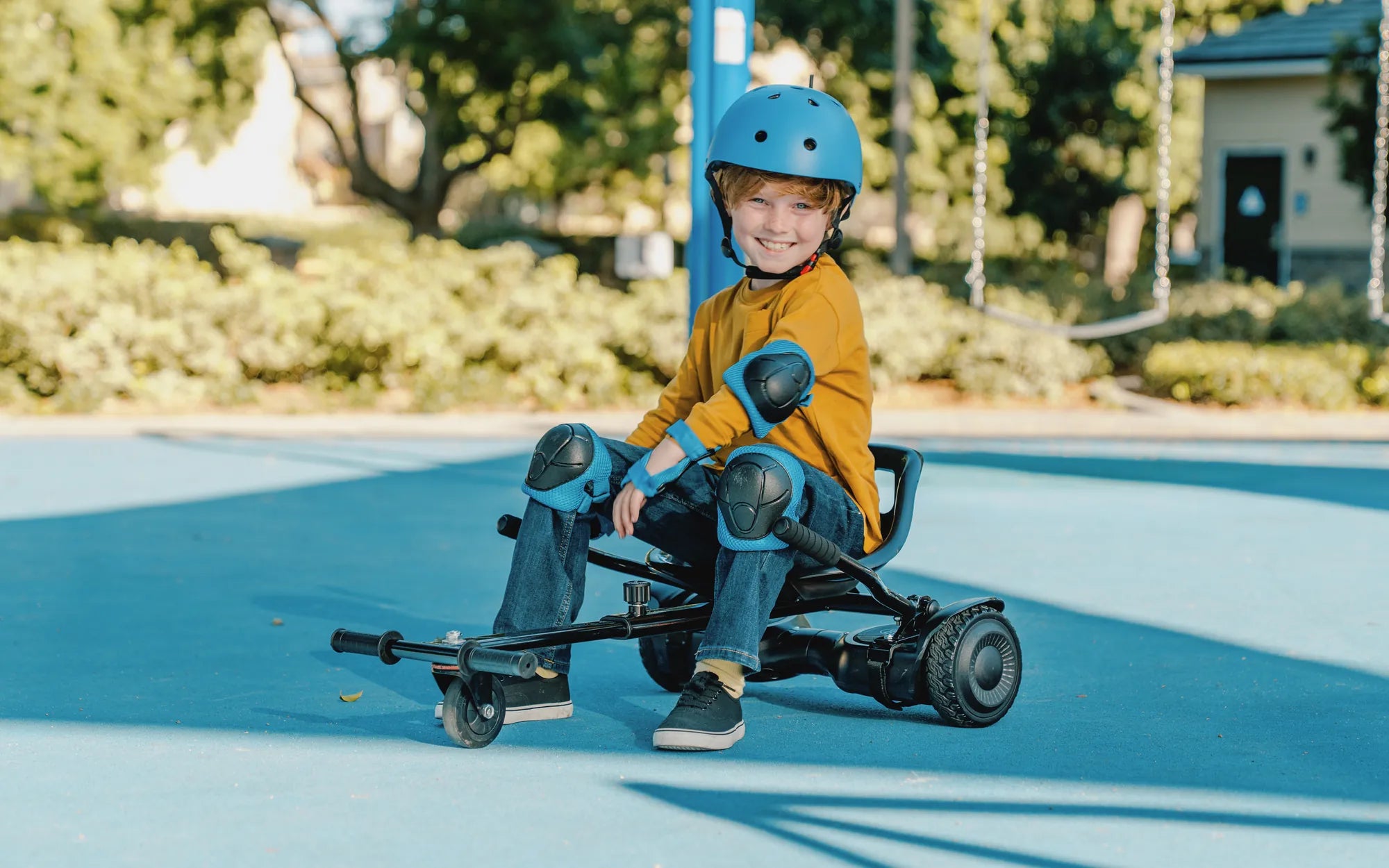
Finding the Perfect First Wheels for Your 6-Year-Old
Selecting a kids scooter for a 6 year old represents a significant milestone in childhood development. This first "real" set of wheels is more than a toy; it's a tool that fosters independence, refines coordination, and encourages crucial outdoor physical activity. The right scooter can build confidence that lasts a lifetime, while the wrong choice can lead to frustration or, worse, safety issues.
This guide serves as your comprehensive, data-driven resource to navigate the crowded market. We move beyond marketing claims to focus on the precise engineering, safety standards, and ergonomic specifications that matter for a child in this specific age group. Your goal isn't just to buy a scooter—it's to invest in a platform for growth, adventure, and safe fun.
We will dissect everything from braking systems and deck geometry to optimal weight and wheel bearings. You'll learn why certain features are non-negotiable and how to match a scooter's capabilities to your child's environment and personality. By the end, you'll possess the knowledge to make an informed decision that prioritizes safety without sacrificing the sheer joy of the ride.
Let's begin by understanding why a scooter is such a powerful developmental tool at this age. The journey to finding the perfect kids scooter for a 6 year old starts with recognizing its multifaceted benefits.
Why a Scooter is a Great Choice for 6-Year-Olds
At six years old, children experience rapid development in gross motor skills, balance, and proprioception—their sense of body position. A scooter directly engages these systems in a controlled, repeatable manner. The act of kicking, balancing, and steering requires coordinated effort from core muscles, legs, and arms, providing a full-body workout that is inherently playful.
Psychologically, mastering a scooter delivers an immense confidence boost. The progression from wobbly first pushes to smooth, controlled gliding teaches perseverance and rewards practice. This tangible achievement builds self-esteem. Furthermore, scootering is a social activity; it gets children outside, interacting with peers, and exploring their neighborhood, providing a healthy counterbalance to sedentary screen time.
From a skill-development perspective, scootering is an excellent precursor to cycling. It teaches dynamic balance and steering control without the complexity of pedals and chain drives. Many children who are apprehensive about a bicycle find success on a scooter first, transferring their learned balance skills seamlessly when they're ready for two-wheeled bikes.
The portability and simplicity of a scooter also make it a practical choice for families. It's easier to transport than a bike, can be used in a wider variety of spaces (from driveways to paved trails), and generally requires less maintenance. For a 6-year-old, it represents a key step towards independent mobility.
Key Safety Features You Cannot Compromise On
Safety is the paramount concern when selecting any riding toy, and for a 6-year-old, certain features are absolutely non-negotiable. These elements are grounded in injury prevention data and product safety standards, forming the critical foundation of your purchasing decision.
A scooter lacking in these areas is not a bargain—it's a liability. We will break down the three most critical safety subsystems: braking, stability, and control interfaces. Understanding these will allow you to quickly filter out unsuitable models and focus on those engineered for real-world use by young children.
Braking Systems: Hand Brakes vs. Foot Brakes
The braking system is your child's primary means of controlling speed and stopping safely. There are two main types: hand-operated (usually a lever on the handlebar that engages a brake on the rear wheel) and foot-operated (a fender or pad over the rear wheel that the rider steps on).
For a 6-year-old, a reliable hand brake is highly recommended. It offers more modulated, controlled stopping power. Learning to use a hand brake develops fine motor skills and provides a direct transferable skill to bicycle riding. The brake lever should be sized for small hands and require minimal effort to engage. A foot brake, while simple, can be less effective, especially if the wheel is wet or the child is wearing soft-soled shoes, and it doesn't teach the same coordinated control.
Regardless of type, the brake must bring the scooter to a smooth, predictable stop without locking the wheel and causing a skid. Test reviews and manufacturer specifications should confirm the brake's effectiveness. This is one area where premium components make a tangible difference in safety.
Deck Design and Wheel Stability
The deck and wheels form the scooter's platform, directly influencing stability and control. A deck for a 6-year-old must be wide enough for both feet to stand comfortably side-by-side or in a slight staggered stance, typically 4 to 5 inches wide. It must also feature a pronounced, non-slip surface—often a gritty grip tape or raised rubber patterns—to prevent feet from slipping during kicks or turns.
Wheel size and material are equally critical. Larger diameter wheels (generally 120mm to 150mm) roll over sidewalk cracks, pebbles, and minor debris more smoothly, providing a stable ride and reducing the chance of a sudden stop that could throw the rider. Wheels made of high-rebound polyurethane (PU) offer the best combination of grip, durability, and smooth roll. The wheelbase (distance between axles) also contributes to stability; a longer wheelbase is more stable at speed, while a shorter one is more maneuverable.
Handlebar Adjustability and Grips
Proper riding posture is essential for control and comfort. Handlebar height should be easily adjustable, ideally without tools, to match your child's specific height. At a proper height, the handles should be around hip to waist level when the child is standing on the deck, allowing for a slight bend in the elbows. This position affords maximum leverage for steering without causing hunching.
The grips themselves must be soft, ergonomic, and securely attached with end caps to prevent the handlebars from causing injury in a fall. Non-slip, textured rubber grips ensure small hands can maintain a firm hold even when sweaty. Avoid hard plastic grips, as they offer poor shock absorption and can lead to hand fatigue, reducing control.
Essential Scooter Specifications for Age 6
Beyond safety features, specific technical specifications ensure the scooter is appropriately sized and performant for a typical 6-year-old. These metrics translate engineering into practical parenting advice, providing clear benchmarks for your search.
Adhering to these guidelines ensures the scooter is neither too intimidatingly large nor a toy they will outgrow in a single season. It's about finding the "Goldilocks zone" of children's mobility products—just right for their current physical capabilities.
Optimal Weight and Portability
The total weight of the scooter is a crucial but often overlooked spec. A scooter that is too heavy will be difficult for a 6-year-old to maneuver, lift over curbs, or carry when needed. It can also make learning more frustrating. The ideal weight range is between 5 and 7 pounds (2.3 to 3.2 kg).
This lightweight target is most often achieved with aluminum alloy frames, which provide an excellent strength-to-weight ratio. Portability is also enhanced by a folding mechanism. A safe, secure, and easy-to-operate folding latch allows the scooter to be compactly stored in a car trunk or a closet, but ensure the mechanism is robust and doesn't introduce wobble or play when locked open.
The Right Size: Deck Length & Handlebar Height
Specific measurements matter. A deck length of 12 to 15 inches provides ample room for foot placement and shifting weight during kicks and turns. The deck should also be low to the ground, lowering the center of gravity and making the scooter feel more stable, especially for beginners.
Handlebar adjustability is key, but the range must be correct. For a child approximately 42 to 48 inches tall (the average range for 6-year-olds), the handlebar should adjust from about 24 inches to 32 inches from the deck. This allows you to fine-tune the fit as your child grows, potentially extending the scooter's useful life by a full year or more.
Wheel Material and Bearing Quality (ABEC Rating)
As mentioned, high-rebound PU wheels are the industry standard for good reason. They offer durability, good traction, and a quiet, smooth ride. Softer PU wheels (lower durometer rating) provide more grip but may wear faster; harder wheels roll faster but offer less shock absorption.
The smoothness and efficiency of the roll are governed by the wheel bearings. Bearings are rated on the ABEC scale (1, 3, 5, 7, 9). For a kids' scooter, ABEC-5 or ABEC-7 bearings are ideal. They are precisely manufactured to reduce friction, meaning your child expends less energy to maintain speed and enjoys a quieter, smoother ride. Higher ABEC-rated bearings are a mark of a quality scooter designed for performance, not just basic function.
Top Scooter Types for 6-Year-Olds: A Comparative Analysis
Not all scooters are created equal. The market segments into distinct types, each with advantages and ideal use cases. Matching the scooter type to your child's personality, skill level, and the primary riding environment is essential for long-term satisfaction and safety.
The following table provides a clear, data-driven comparison of the three main categories to help you narrow your focus.
| Type | Best For | Key Advantages | Considerations | Avg. Weight | Avg. Price Range |
|---|---|---|---|---|---|
| Classic Kick Scooter | All-around learning, sidewalks, parks | Simplicity, durability, best for developing fundamental skills, lightweight, affordable. | Requires physical effort, limited range. | 5-7 lbs | $70 - $150 |
| Electric Scooter | Mature riders, longer paved paths | Extended range, less physical exertion, high fun factor. | Requires charging, higher cost, stricter safety gear needed, speed must be limited (<10 mph). | 15-25 lbs | $200 - $400+ |
| Off-Road/All-Terrain | Trails, grass, gravel, uneven pavement | Superior stability on rough surfaces, air-filled tires absorb shocks. | Heavier, less agile, slower on smooth pavement. | 10-15 lbs | $100 - $250 |
Classic Kick Scooters: The Standard for Learning
The traditional two or three-wheeled kick scooter remains the gold standard for a reason. It is the purest tool for learning balance, coordination, and propulsion. With no battery or motor, it's mechanically simple, highly durable, and requires virtually no maintenance beyond occasional wheel and bearing checks.
For the vast majority of 6-year-olds, this is the recommended starting point. It builds foundational skills through physical effort, provides excellent exercise, and is the most cost-effective option. A high-quality kick scooter from a reputable brand can withstand years of use and may even be passed down to a sibling.
Electric Scooters for Kids: Are They Suitable?
Electric scooters introduce motorized propulsion, which brings a new set of considerations. For a mature and responsible 6-year-old, under strict parental supervision, a specifically designed kids' electric model can be an option. However, they are generally better suited for children aged 7-8 and up.
Critical requirements for any kids' electric scooter include: a strict speed limit (maximum 10 mph, with a beginner mode as low as 5 mph), reliable dual braking systems (electronic and mechanical), a robust parental control app or key lock, and a low deck for stability. The increased weight and speed make a CPSC-certified helmet, knee pads, and elbow pads non-negotiable. Brands like Gyroor engineer their youth models with these precise safety parameters in mind, featuring UL-certified batteries and governed speed controls.
Off-Road/All-Terrain Models for Adventurous Riders
Does your child want to ride on park paths, packed dirt trails, or even across grassy fields? An all-terrain scooter, characterized by larger (often 8-10 inch) air-filled pneumatic tires and sometimes a front suspension, is the tool for the job. These tires absorb bumps and provide traction on loose surfaces where standard PU wheels would sink or slip.
The trade-off is weight and agility. These scooters are significantly heavier and less suited for tricks or quick maneuvers on smooth pavement. They are a specialized tool for a specific environment. If your primary riding surface is the sidewalk, a classic scooter is a better choice. If adventures off the beaten path are the main goal, this category excels.
The Gyroor Advantage: Engineered for Young Riders
When evaluating brands, it's essential to look beyond marketing and examine the engineering principles and quality assurances that directly impact your child's safety and your long-term satisfaction. Gyroor, a leading electric scooter and e-bike brand trusted by over 100,000 riders across North America and Europe, builds its reputation on foundational pillars that align perfectly with the needs of young riders and concerned parents.
For any electric model, the battery is the most critical safety component. Every Gyroor scooter uses UL-certified lithium-ion battery packs, tested for over 500 charge cycles. This certification from a globally recognized safety laboratory is not merely a feature—it's a guarantee of rigorous testing for overcharge protection, short-circuit prevention, and thermal stability, providing unparalleled peace of mind against potential fire hazards.
Childhood adventures are messy. Rides don't stop at the sight of a puddle. Gyroor's IPX5 water-resistant rating means the scooter's electrical components are protected against low-pressure water jets from any direction. This real-world durability ensures that splashing through sidewalk puddles or getting caught in a light rain won't damage the scooter, making it a resilient companion for daily play.
Finally, investment protection matters. Gyroor backs its products with a comprehensive 1-year warranty and responsive, US-based customer support. This commitment signals confidence in their manufacturing quality and ensures you have direct assistance should any issue arise, transforming the purchase from a seasonal toy into a reliable, long-term investment in fun.
Parent's Checklist: 5 Must-Do's Before You Buy
Before making your final decision, run through this actionable checklist. It consolidates the key lessons from this guide into a quick pre-purchase audit.
1. Measure Your Child: Know their current height and inseam. Compare this to the scooter's adjustable handlebar range and deck height. The scooter should fit them now, not just "eventually."
2. Check the Weight Limit: Every scooter has a maximum rider weight rating. Ensure this rating is at least 20-30 pounds above your child's current weight to provide a safety margin and account for growth and the weight of a backpack.
3. Research Verified Reviews: Look for long-term durability feedback from other parents. Pay special attention to comments about brake performance, bearing smoothness over time, and the sturdiness of folding mechanisms and welds.
4. Verify Safety Features: Confirm the presence of a reliable hand brake, a wide non-slip deck, large PU wheels (120mm+), and adjustable handlebars with soft grips. For electric models, ensure speed limiters and parental controls are present.
5. Match Type to Environment: Be honest about where the scooter will be used 80% of the time. Smooth sidewalks and driveways call for a classic kick scooter. For rugged terrain, an all-terrain model is necessary. Reserve electric models for mature riders on safe, paved paths.
Frequently Asked Questions (FAQs)
Q: Is a 2-wheel or 3-wheel scooter better for a 6-year-old?
A: Most 6-year-olds are ready for and will benefit more from a standard 2-wheel scooter. It is the best tool for developing dynamic balance and coordination. A 3-wheel scooter (typically two wheels in front) offers more initial stability for a very tentative beginner but can feel less maneuverable and is often outgrown quickly as skills develop.
Q: What safety gear is absolutely necessary?
A: A properly fitted, CPSC-certified bicycle helmet is non-negotiable for every single ride. We strongly recommend a full set of knee pads and elbow pads, especially during the learning phase. For electric scooters, this protective gear is mandatory due to the higher speeds and weights involved.
Q: How much should I expect to spend on a quality scooter?
A> For a durable, safe, and performance-oriented kick scooter from a reputable brand, expect to invest between $70 and $150. This price point typically ensures quality materials (aluminum frame, ABEC-7 bearings, good brakes). Electric models with appropriate safety features start around $200 and can exceed $400. All-terrain models generally range from $100 to $250.
Q: Can the scooter grow with my child?
A> To an extent, yes. The key feature is a wide range of tool-free handlebar height adjustment. A scooter that adjusts from 24" to 32" can typically accommodate a child from about 42" to 52" tall, potentially covering ages 5 through 8. However, deck length and wheel size are fixed, so there will be a natural point where they are ready for a larger, more advanced model.
Q: Are electric scooters safe for a 6-year-old?
A> They can be, but only under strict conditions. The scooter must be specifically designed for children, with a maximum speed limited to 10 mph (or less), have a robust braking system, and include parental controls. The child must be mature enough to understand and follow safety rules, and must always wear full protective gear. For many 6-year-olds, mastering a kick scooter first is a safer and more skill-appropriate path.
Confidence on Two Wheels Starts Here
Choosing the right kids scooter for a 6 year old is a decision that pays dividends in laughter, outdoor activity, and developmental growth. The perfect ride is a harmonious blend of uncompromising safety features, ergonomically appropriate sizing, and durable construction that can withstand the rigors of childhood enthusiasm. It empowers a child with a newfound sense of freedom and capability.
By prioritizing a reliable braking system, a stable deck, adjustable components, and quality bearings, you invest in countless hours of safe, rewarding play. Whether you select a classic kick scooter to build foundational skills or a responsibly engineered electric model for supervised adventures, the principles of safety and fit remain constant.
Trusted brands like Gyroor embody these principles through UL-certified batteries, water-resistant design, and strong warranty support, offering peace of mind alongside performance. Use the knowledge and checklist in this guide to move forward with confidence. You are now equipped to select a scooter that will not only be the highlight of your child's day but also a trusted companion on their journey to greater independence and skill.
Ready to find the perfect scooter for your young rider? Browse the full Gyroor collection, featuring UL-certified, age-appropriate models designed for safety and fun, at gyroorboard.com.
Kids Scooter 7 Year Old: The Ultimate Guide to Choosing the Perfect Ride
20 mph Hoverboard: The Ultimate Guide to Speed, Safety, and Fun