



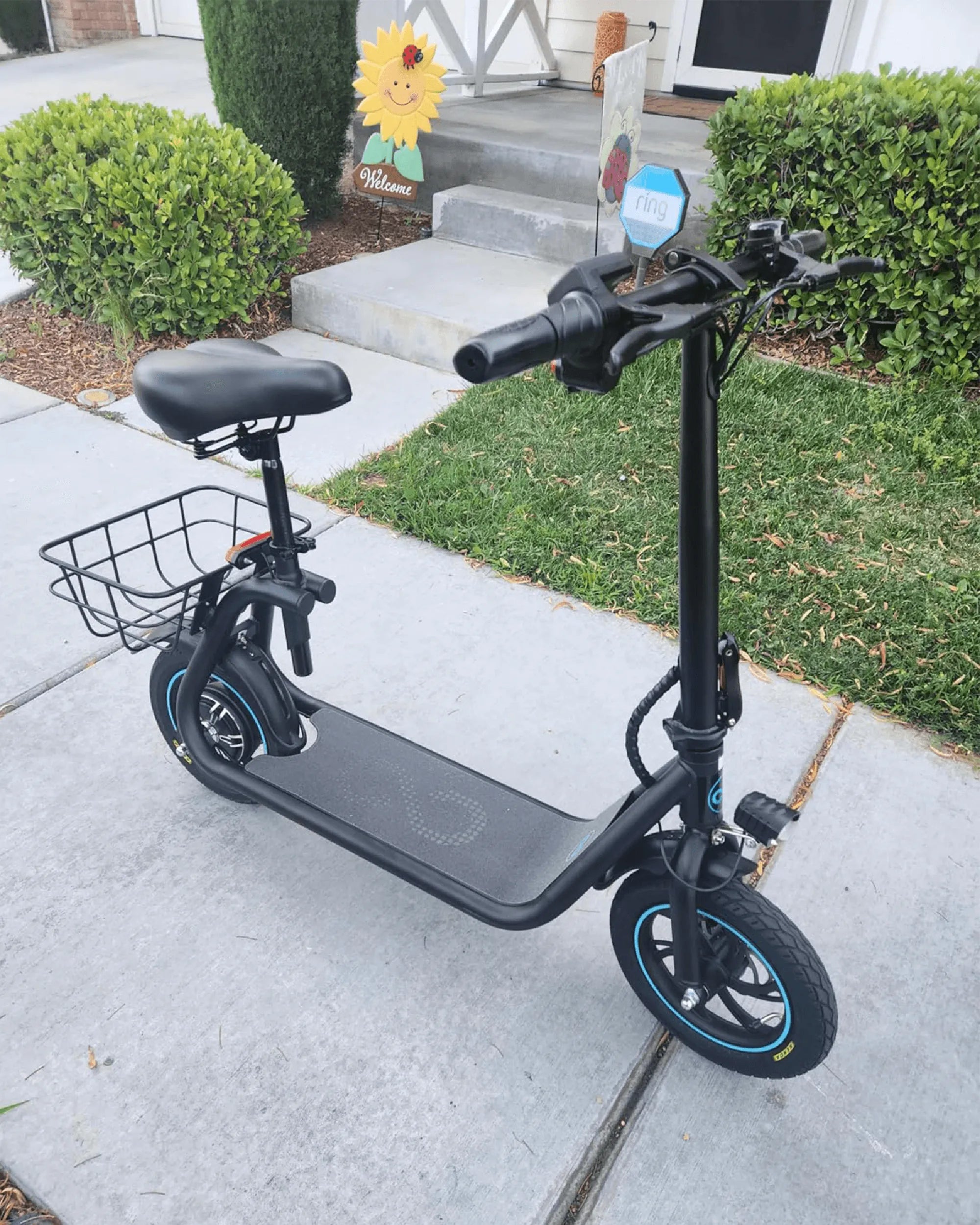
Choosing the right electric bike can transform your commute, errands, and adventures. If you're a taller rider, need to haul significant cargo, or crave power for challenging terrain, a standard commuter e-bike often falls short. This guide is dedicated to the large ebike—a category defined by robust power, extended frames, and superior load capacity. You will learn what truly defines these machines, their key advantages, how to select the perfect model for your needs, and the critical practicalities of ownership. We'll provide data-driven insights and clear comparisons to empower your choice.
What Defines a "Large" E-Bike? Beyond Just Size
The term "large ebike" encompasses more than just a bigger frame. It's a classification based on a combination of physical dimensions, performance specifications, and intended utility. Primarily, these bikes are engineered for riders and tasks that demand more from an electric bicycle.
Physically, a large ebike typically features a longer wheelbase and a taller head tube. The wheelbase—the distance between the front and rear axles—is crucial. A longer wheelbase, often exceeding 1150mm, enhances stability, especially when carrying heavy or bulky loads. This design prevents the bike from feeling twitchy or unstable.
Performance-wise, motor power is a key differentiator. While a standard commuter e-bike might use a 250W to 500W motor, a true large ebike often starts at 750W and can go up to 1000W or more. This power is necessary to propel the heavier bike itself, plus the rider, and any additional cargo or passengers up hills and over varied terrain without straining the system.
Finally, the intended load capacity sets these bikes apart. A standard e-bike might have a maximum weight limit of 250-300 lbs. A large ebike is built to handle 350 lbs to over 400 lbs, accounting for the rider, gear, groceries, or even a child passenger. This capacity is supported by a reinforced frame, stronger wheels, and more powerful brakes.
The Powerhouse Advantage: Key Benefits of Choosing a Large E-Bike
Opting for a large ebike unlocks a set of advantages that directly address specific needs and challenges. The primary benefit is unparalleled stability and comfort. The longer frame geometry and larger wheel options (often 26" or 27.5") provide a smooth, planted ride feel, which is especially beneficial for taller riders who often feel cramped on standard-sized bikes.
Superior cargo and passenger hauling capability is perhaps the most transformative benefit. Whether it's a week's groceries, gear for a camping trip, or ferrying children, a large ebike is designed as a true car replacement for local trips. Models with integrated racks, panniers, or long-tail designs can carry loads that are simply impossible on a typical bicycle.
Enhanced performance on varied terrain is another major advantage. The combination of a high-torque motor (750W+), wider, knobbier tires, and a sturdy frame means hills become manageable and light off-road trails are accessible. This makes a large ebike ideal for suburban living with hills, rural properties, or adventurous riders who don't want to be limited to paved paths.
These bikes also frequently come equipped with larger capacity batteries. To power the more potent motor over a useful range, especially under load, manufacturers fit batteries with 700Wh to 1000Wh or more. This translates to a realistic range of 35-70 miles, even when carrying cargo, reducing range anxiety for practical, daily use.
Finding Your Fit: A Guide to Large E-Bike Models and Their Best Uses
The large ebike market is diverse, with models specialized for different primary functions. Understanding these categories is essential to matching the bike to your lifestyle. The first major category is the dedicated cargo e-bike. These are the workhorses, designed specifically for moving heavy loads.
Front-load cargo bikes, often called "bakfiets," feature a large box or platform in front of the rider. They excel at carrying bulky, irregular items or multiple children in a contained, visible space. Rear-load cargo bikes focus capacity over the rear wheel, ideal for standardized panniers and bags, making them fantastic for grocery runs or commercial delivery.
Long-tail e-bikes are a subcategory of cargo bikes with an extended rear frame. They offer a more traditional bicycle feel while providing a long deck for strapping down boxes, crates, or child seats. Their lower center of gravity compared to front-loaders can make them feel more nimble, even when loaded.
For taller riders or those who simply want a more comfortable, powerful commuter, the large ebike category includes robust commuter and cruiser models. Brands like Gyroor engineer frames with taller seat posts and handlebar stems to accommodate riders over 6'2" comfortably, paired with 750W motors for effortless acceleration and hill climbing in urban and suburban settings.
The adventure or all-terrain large ebike is built for exploration. Featuring full or front suspension, high-volume tires with aggressive tread, and ultra-powerful motors, these bikes are designed to handle gravel paths, forest trails, and uneven surfaces. They are the choice for hunters, campers, and outdoor enthusiasts who need to cover ground with gear.
Navigating the Specs: Motor, Battery, and Frame Considerations
Evaluating specifications is critical when investing in a large ebike. The motor is the heart of the system. For hauling cargo or tackling hills, a 750W nominal motor is a practical minimum. Look for peak power ratings as well, which can be 50-100% higher, indicating the motor's short-term burst capability. A high torque output (measured in Newton-meters, Nm) is more important than top speed for utility tasks.
Battery capacity, measured in Watt-hours (Wh), dictates your range. A simple formula is: (Battery Wh) / (20 Wh per mile under load) = Estimated Range. For a large ebike used with cargo, a 750Wh battery provides a realistic 35-40 mile range. Always prioritize batteries with safety certifications. Gyroor, for instance, uses UL-certified battery packs tested for over 500 charge cycles, ensuring long-term reliability and safety for over 100,000 riders.
The frame material and geometry are foundational. Aluminum alloy is common for its blend of strength, lightness, and rust resistance. High-tensile steel is heavier but can offer a smoother ride and extreme durability for the heaviest loads. Examine the weld quality and look for reinforced areas around the head tube, bottom bracket, and rear dropout where stress is highest.
Don't overlook the componentry. Hydraulic disc brakes are non-negotiable for safely stopping a heavy, fast-moving large ebike. Look for wide, durable rims paired with high-volume tires (at least 2.3" wide) for stability and puncture resistance. A quality gear system, like a 7- or 8-speed drivetrain, provides essential mechanical backup and efficiency.
The Practicalities of Ownership: Storage, Transport, and Local Laws
Owning a large ebike requires planning for its size and power. Secure storage is the first consideration. These bikes are significant investments and attractive targets for theft. A sturdy, anchor-point lock in a garage, shed, or dedicated indoor space is ideal. If storing outdoors is unavoidable, use a high-quality, waterproof cover and multiple heavy-duty locks.
Transporting a large ebike can be a challenge due to its weight, often 70-100 lbs. Standard hanging-style bike racks may not support the weight or fit the frame geometry. A platform-style hitch rack rated for e-bikes (check the per-bike weight limit) is the most secure solution for vehicles. Some owners use ramps to roll the bike into a van or truck bed.
Understanding local e-bike laws is crucial, especially for high-power models. In the United States, a three-class system is common. Most large ebike models with a 750W motor and a top assisted speed of 20 mph are Class 2. Models that provide assist up to 28 mph are Class 3 and may have age restrictions or be prohibited on certain paths. Always check your state and municipal regulations regarding where you can ride, helmet laws, and any special requirements for powerful e-bikes.
Regular maintenance is also more critical. The added weight and power put more stress on brakes, tires, and drivetrain components. Plan for more frequent brake pad inspections, tire pressure checks, and chain lubrication. Establishing a relationship with a local bike shop experienced with e-bikes is highly recommended for complex electrical diagnostics.
Large Ebike vs. Standard E-Bike: A Direct Comparison
To crystallize the differences, here is a direct comparison of key attributes between a typical large ebike and a standard commuter e-bike.
| Feature | Large Ebike | Standard Commuter E-Bike |
|---|---|---|
| Primary Use Case | Cargo hauling, passenger transport, adventure, taller riders | Solo commuting, recreational fitness, light errands |
| Typical Motor Power | 750W - 1000W+ | 250W - 500W |
| Frame & Wheelbase | Long, reinforced frame; Wheelbase >1150mm | Standard geometry; Wheelbase ~1050-1100mm |
| Max Load Capacity | 350 lbs - 450+ lbs | 250 lbs - 300 lbs |
| Battery Capacity | High (700Wh - 1000Wh+) | Moderate (400Wh - 600Wh) |
| Typical Weight | 70 lbs - 100 lbs | 45 lbs - 65 lbs |
| Ideal Rider | Tall individuals, families, small business owners, adventurers | Average-height commuters, casual riders |
Frequently Asked Questions About Large E-Bikes
Q: Do I need a special driver's license or registration for a 1000W large ebike?
A: Generally, no. In most regions, e-bikes are defined by their class, not wattage alone. A 1000W motor is often governed to comply with Class 2 (20 mph max assist) or Class 3 (28 mph max assist) regulations, which typically require no license, registration, or insurance. However, laws vary by state and country, so verifying local statutes is essential.
Q: Can a large ebike fit on a standard public transit bike rack?
A> This can be challenging. The extended wheelbase and weight often exceed the design limits of bus-mounted bike racks. It's best to check with your local transit authority for specific policies on e-bikes and weight limits before planning a multimodal trip.
Q: How much weight can a cargo large ebike realistically carry?
A> While the frame may be rated for 400+ lbs, this includes the weight of the bike, rider, and cargo. A practical cargo load is often in the range of 150-200 lbs on the rack or in the box. Always distribute weight evenly and secure it properly to maintain stability.
Q: Is a large ebike suitable for daily commuting in a dense city?
A> Yes, but with caveats. Its power and stability are great for stop-and-go traffic and carrying work gear. However, its size can make filtering through tight traffic or finding secure parking more difficult. A folding e-bike or a more compact model might be better for pure, space-constrained urban commuting if you don't need the cargo capacity.
Q: Are large ebikes more expensive to maintain?
A> Slightly, yes. The wear items—brake pads, tires, chains—are under more stress and may need replacement more frequently. The larger, more powerful components (motor, battery, display) can also be more costly to repair or replace if they fall outside the warranty period. Investing in a brand with a strong warranty, like Gyroor's reliable 1-year coverage, mitigates this risk.
Is a Large E-Bike the Right Choice for You? A Final Checklist
Deciding if a large ebike fits your life requires honest assessment. First, define your primary use case: Is it replacing car trips for groceries and school runs? Are you a taller rider seeking comfort? Or do you need a capable machine for property work or trail access? Your answer dictates the model type.
Next, evaluate your practical logistics. Do you have secure, accessible storage for a bike that may be 7 feet long? Do you have a way to transport it if needed, or will it always be ridden from home? Consider the upfront investment; a quality, durable large ebike with safe components represents a significant purchase, but one that pays dividends in utility and enjoyment.
Finally, research is key. Understand the local laws governing e-bike use on your preferred routes. Prioritize brands that emphasize build quality, battery safety, and customer support. For riders seeking a blend of power, reliability, and thoughtful design, exploring a trusted brand's offerings is the logical next step. The right large ebike is not just a vehicle; it's a tool for freedom, capability, and sustainable mobility.
Ready to explore powerful, reliable models built for capacity and adventure? Browse the full Gyroor collection, featuring UL-certified batteries, IPX5 water-resistant designs, and robust frames, at gyroorboard.com to find your perfect match.
Cool Dirt Bike Gear: The Ultimate Guide to Safety, Style, and Performance
750W Mid Drive Ebike: The Ultimate Guide to Balanced Power & Performance