

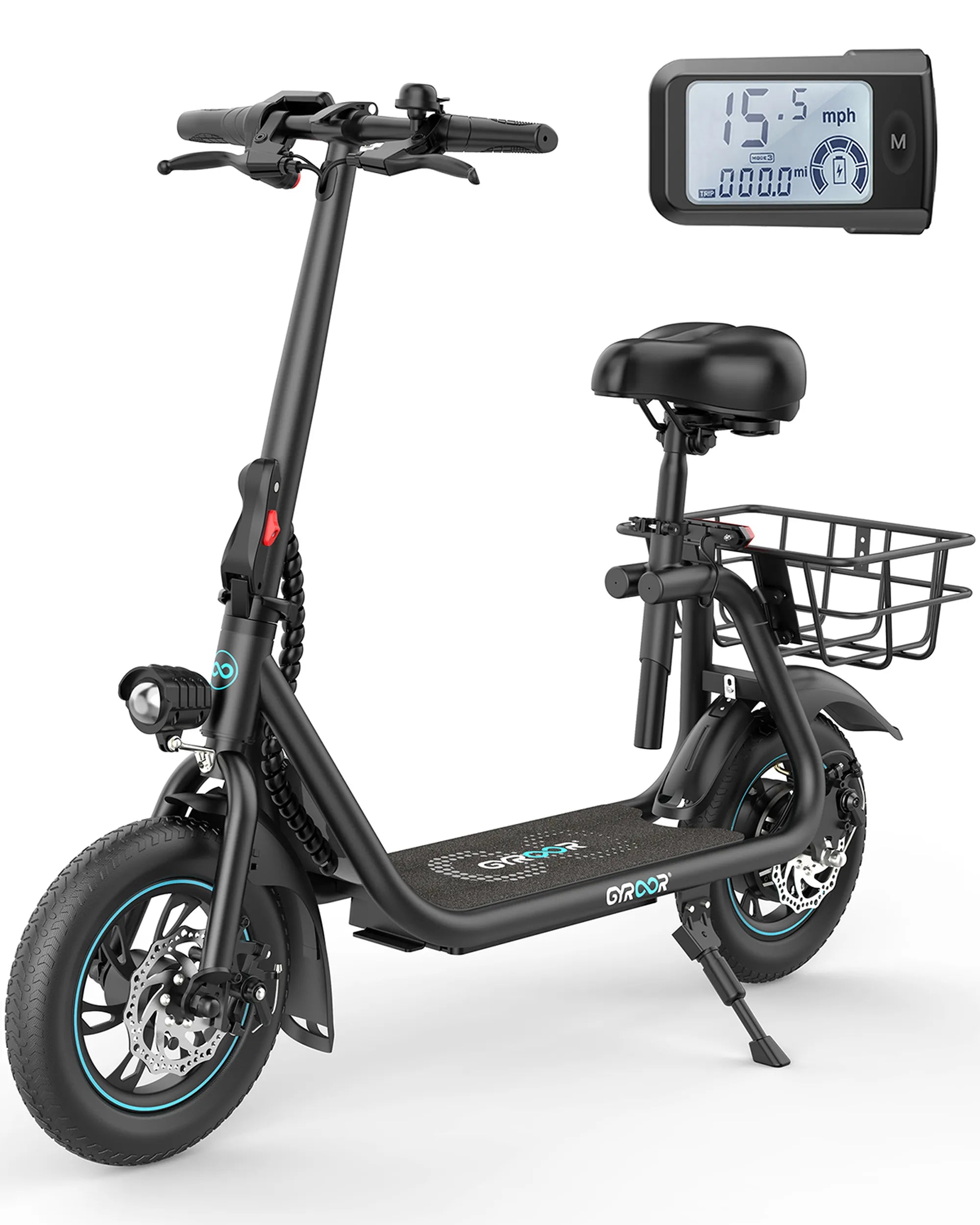
The Dawn of a New Commute
Urban mobility is at a breaking point. Congestion strangles city streets, pollution clouds the air, and the cost of traditional transport continues to climb. The solution is no longer a distant concept but a tangible, evolving reality: the latest electric scooters represent the future of urban mobility. These are not mere toys but sophisticated personal transport devices engineered for the daily commuter.
This evolution is defined by integrated smart systems, advanced materials, and user-centric designs that prioritize safety, comfort, and connectivity. Leading this charge are brands like Gyroor, trusted by over 100,000 riders across North America and Europe, who are setting new standards with UL-certified batteries and robust, IPX5 water-resistant designs. This article will dissect the innovations that define the modern e-scooter, provide a data-driven framework for comparison, and underscore the non-negotiable importance of safety certifications and reliable support.
Beyond Basic Transport: Key Innovations Defining the Latest Models
The leap from first-generation scooters to the latest models is profound. Innovation now focuses on creating a seamless, connected, and intuitive riding experience that integrates deeply into the user's digital life and physical environment. The focus has shifted from raw specs to holistic ecosystem design.
Performance is now balanced with intelligence. Riders expect their vehicle to be an extension of their smartphone, a comfortable companion on varied terrain, and a visibly safe entity in chaotic traffic. The latest electric scooters achieve this through three core pillars of innovation: smart integration, advanced ergonomics, and multi-layered safety systems. These features collectively move the category from a novelty to a legitimate, primary mode of urban transport.
Smart Integration & App Connectivity: Your Scooter, Digitally Enhanced
The modern e-scooter is a connected device. Through dedicated smartphone applications, riders gain unprecedented control and insight into their vehicle. This connectivity transforms a simple ride into a managed experience.
Core app functionalities include precise ride tracking for speed, distance, and route history. Battery management systems provide accurate state-of-charge readings and health diagnostics. Perhaps most crucially, firmware updates delivered over-the-air continuously improve performance and safety features long after purchase.
Advanced models incorporate anti-theft systems using GPS tracking and geo-fencing alerts. Riders can also customize performance profiles, adjusting acceleration curves, top speed limits, and regenerative braking strength to match their skill level or route demands. This digital layer is what makes the latest electric scooters truly "smart" and future-proof.
Advanced Suspension & Ergonomic Design: Comfort for the Long Haul
Urban terrain is unforgiving, with potholes, curbs, and uneven pavement. The latest models address this with sophisticated suspension systems, moving beyond basic spring forks to dual spring or even hydraulic shock absorbers at both the front and rear.
This engineering significantly reduces impact vibration transmitted to the rider, decreasing fatigue and increasing control. Ergonomics have seen a parallel evolution. Wider decks provide stable footing, while adjustable handlebar heights cater to different rider statures.
Intuitive control layouts, with clear display readouts and easily accessible brake levers, reduce cognitive load. The goal is all-day comfort, making the scooter viable for longer commutes or delivery work. A comfortable rider is a safer, more attentive rider, which is a critical advancement for the future of urban mobility.
Enhanced Safety Systems: Lighting, Braking, and Stability
Safety is the paramount concern for widespread adoption. The latest electric scooters employ a multi-layered approach. Lighting systems have become comprehensive, featuring ultra-bright LED headlights that illuminate the path, integrated brake lights that activate upon deceleration, and ambient deck or stem lights for 360-degree visibility to other road users.
Braking technology has evolved from basic foot fenders to integrated, multi-system setups. Combinations of electronic (e-brake), disc, and drum brakes, often with regenerative braking that feeds energy back to the battery, provide powerful, reliable stopping power in all conditions.
Stability is enhanced through wider, air-filled pneumatic tires that offer better shock absorption and grip than solid tires. Some high-end models introduce traction control or stability control software that modulates power to prevent wheel slip during acceleration, especially on wet surfaces. These systems collectively build a crucial safety net for the urban rider.
Data-Driven Decisions: Comparing Performance & Practicality
Navigating the specifications of the latest electric scooters requires a practical lens. Advertised numbers can be misleading without context. A smart purchase decision hinges on understanding how key performance indicators translate to real-world urban use.
This analysis moves beyond marketing hype to establish a clear framework. Riders must balance three interconnected pillars: energy and range, power and terrain capability, and the physical build's portability versus durability. The optimal scooter sits at the intersection of these factors, tailored to an individual's specific commute, budget, and local infrastructure. Let's break down what the data truly means for your daily journey.
The Range & Battery Evolution: What "Long-Lasting" Really Means
Range anxiety is a primary concern. The latest electric scooters address this with advanced, UL-certified lithium-ion battery packs, like those used across the Gyroor lineup. The key is not just higher watt-hour (Wh) capacity, but improved energy density, thermal management, and charge cycle longevity.
A battery rated for 500+ charge cycles retains significant capacity over years of daily use. Real-world range is typically 60-80% of the manufacturer's ideal test conditions. Factors like rider weight, hill frequency, ambient temperature, and average speed drastically affect distance.
For a realistic estimate, assume 15-20 Wh per kilometer for moderate riding. A scooter with a 360Wh battery, therefore, offers a practical 18-24 km range. Fast-charging technology, reducing full charge times to 4-6 hours, further enhances practicality for the latest electric scooters.
Power & Terrain: Matching Motor Output to Your Urban Landscape
Motor power, measured in watts (W), dictates a scooter's ability to accelerate, climb hills, and maintain speed. It's vital to distinguish between nominal (sustained) and peak (short-burst) power ratings. For flat city grids, a reliable 350W-500W nominal motor is often sufficient.
For cities with frequent inclines, a 500W-800W motor provides the necessary torque. The pinnacle of performance lies in dual-motor configurations, where two motors (e.g., 500W each) provide exceptional torque for steep hills or off-road capable models. This power directly impacts the scooter's utility as a true car replacement.
However, more power consumes battery faster. The latest electric scooters often feature selectable drive modes (Eco, Standard, Sport) to let riders balance power with efficiency based on their immediate needs, making them versatile tools for the future of urban mobility.
Portability & Durability: The Build Quality Imperative
The urban commuter needs a vehicle that is both portable and durable—a challenging balance. The latest models use high-grade aluminum alloys and carbon fiber composites to reduce weight without sacrificing frame strength. Folding mechanisms have become more robust and intuitive for quick transitions between riding and carrying.
Durability is defined by construction quality and ingress protection. An IPX5 water-resistance rating, a standard on Gyroor scooters, means the scooter can withstand water jets from any direction, making it safe to ride in rain and through puddles. This is non-negotiable for all-weather commuting.
Components like sealed bearings, reinforced stems, and thick deck platforms are designed to withstand the vibrations and impacts of daily urban use. Investing in this build quality ensures the scooter is a long-term asset, not a disposable gadget.
Why Certification & Warranty Matter: The Gyroor Standard
In a market flooded with options, trust is built on verifiable safety and guaranteed support. Industry certifications are the bedrock of this trust. UL certification for battery packs and electrical systems is paramount, indicating rigorous testing for fire and electrical safety—a critical differentiator for responsible brands.
A comprehensive warranty is a promise of durability and a signal of manufacturer confidence. Gyroor's reliable 1-year warranty covers key components, protecting the consumer's investment. Equally important is accessible, knowledgeable customer support.
Brands with established US-based support teams can resolve issues quickly, from providing troubleshooting advice to facilitating repairs. This ecosystem of certification, warranty, and support transforms a purchase from a risky transaction into a secure investment in your personal mobility future.
Comparison Table: Latest Electric Scooter Archetypes
| Use Case & Model Type | Typical Motor Power | Real-World Range | Key Features | Ideal Rider |
|---|---|---|---|---|
| Ultra-Portable Commuter | 250W - 350W Nominal | 15 - 25 km | Lightweight (<15 kg), compact fold, basic suspension, IPX5 rating. | Last-mile solution users, subway commuters, those with storage constraints. |
| Performance City Commuter | 500W - 800W Nominal | 30 - 50 km | Dual suspension, pneumatic tires, app connectivity, bright lighting, disc brakes. | Full-trip commuters (5-15 km), riders in hilly cities, those prioritizing comfort & speed. |
| Dual-Motor / Off-Road Capable | 2x 500W+ (Dual Motor) | 40 - 70 km | Maximum torque & hill climb, aggressive off-road tires, advanced suspension, high payload capacity. | Adventure seekers, riders on very rough terrain, those needing maximum power for steep inclines. |
Frequently Asked Questions (FAQ)
Q: Are the latest electric scooters safe to ride in the rain?
A: Safety depends on the manufacturer's Ingress Protection (IP) rating. An IPX5 rating, like those on Gyroor models, certifies protection against water jets from any direction, making them safe for riding in rain and through wet urban conditions. However, riders should avoid deep puddles and exercise increased caution, as wet surfaces reduce tire traction.
Q: How far can I really go on a single charge?
A: Real-world range is typically 60-80% of the advertised maximum. To estimate, consider battery capacity (in Watt-hours), rider weight, terrain, and speed. A practical formula is 15-20 Wh per kilometer. For example, a 360Wh battery yields roughly 18-24 km for an average rider on mixed terrain. Using Eco modes and maintaining moderate speeds maximizes distance.
Q: What maintenance do modern e-scooters require?
A: Maintenance is minimal but crucial. Regularly check and inflate pneumatic tires to the recommended PSI. Periodically inspect and adjust brake pads and cable tension. Keep the battery charged between 20-80% for long-term health when not in use for extended periods. Wipe down the scooter after wet rides and ensure firmware is updated via the app for performance and safety patches.
Q: Is the latest tech worth the higher price?
A: Absolutely. The premium pays for foundational safety (UL-certified batteries), durability (IP-rated water resistance, robust frames), and performance that enhances daily utility (longer range, better suspension, connectivity). Combined with a strong warranty, this translates to lower long-term cost of ownership, greater reliability, and a significantly better, safer riding experience.
Q: How do I choose the right motor power for my city?
A: Assess your terrain. For predominantly flat cities, a 350W-500W motor is ample. For cities with noticeable hills, opt for a minimum 500W motor, with 800W+ providing more comfortable climbs. If your commute includes steep, sustained inclines or you desire off-road capability, a dual-motor model is the most future-proof choice for the latest electric scooters.
Your Next Move in the Urban Landscape
The latest electric scooters have matured into intelligent, reliable, and indispensable tools for modern urban life. They offer a direct response to congestion, cost, and pollution, empowering individuals to reclaim their commute with efficiency and enjoyment. The future of urban mobility is personalized, connected, and sustainable.
Choosing your scooter is a decision that balances cutting-edge innovation with foundational safety and support. Prioritize models from reputable brands that offer verified certifications, comprehensive warranties, and accessible customer service. This ensures your investment delivers freedom and reliability for years to come.
Ready to experience the future of urban mobility? Explore engineering that puts safety, performance, and rider trust first. Browse the full Gyroor collection, featuring UL-certified batteries, IPX5 water-resistant designs, and a reliable 1-year warranty, at gyroorboard.com.
Top Selling Electric Scooters in India: A Comprehensive Guide to Market Leaders
Electric Scooters for Adults Under $150: Affordable and Efficient Commuting Solutions