

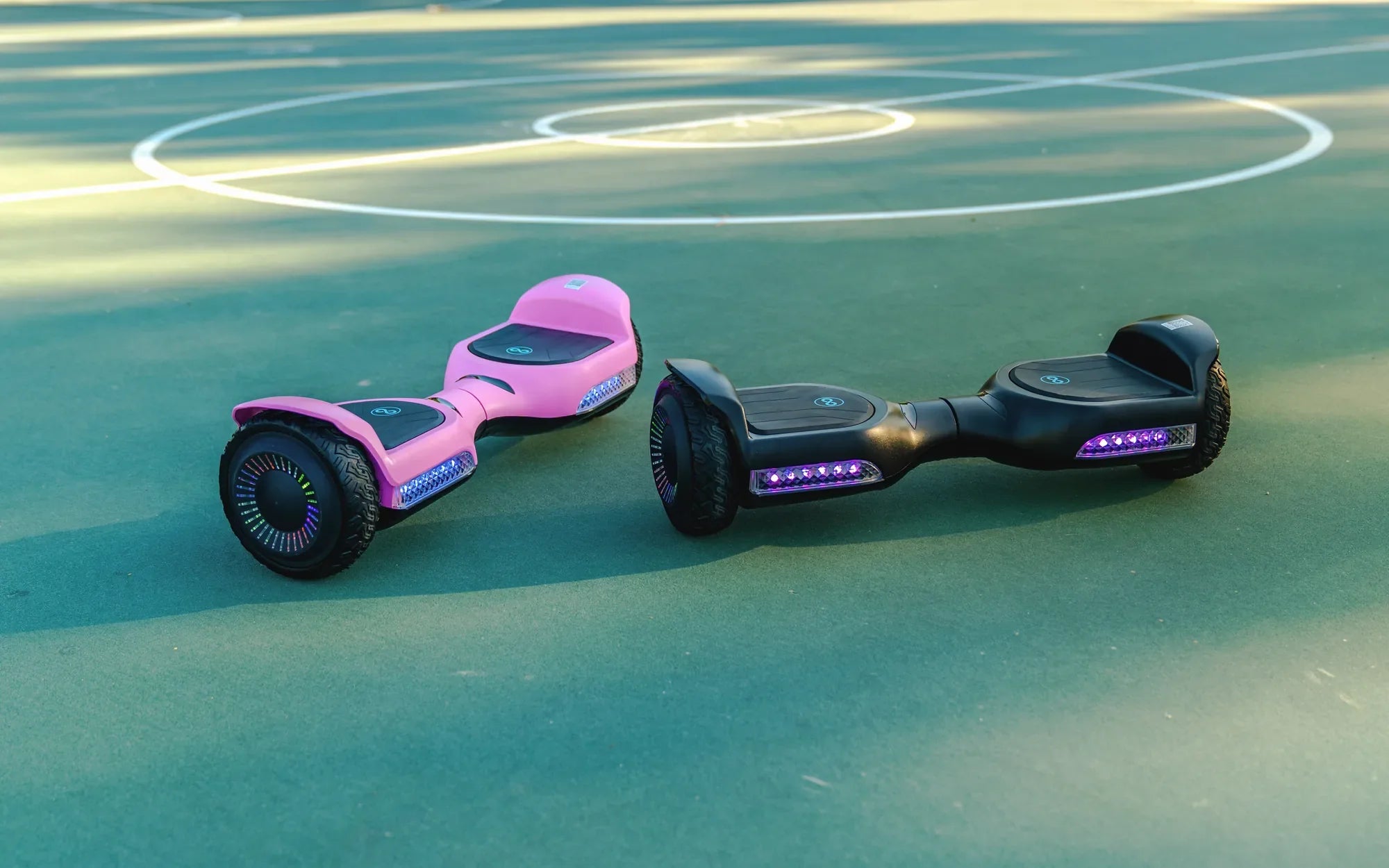
Introduction: Why Mastering the Turn is the Key to Hoverboard Freedom
A hoverboard is not a point-and-go vehicle. Its true potential, and your safety, are unlocked not when you move forward, but when you learn to change direction with intention and grace. Learning to turn a hoverboard is the fundamental skill that separates a nervous beginner from a confident rider. It transforms the device from a novelty into a legitimate, enjoyable form of personal transport.
This mastery is about understanding a unique language of balance and pressure. Every smooth turn, every avoided obstacle, and every moment of flowing down a path is built upon this core competency. While the principles are universal, the experience is profoundly influenced by the quality and responsiveness of your board. A reliable platform, like those engineered by Gyroor, provides the consistent feedback necessary for rapid skill acquisition.
This guide will deconstruct the art of the turn. We will explore the underlying physics, provide structured, progressive drills, and advance to dynamic maneuvers. Our goal is to equip you with the knowledge to learn to turn a hoverboard not just functionally, but masterfully, ensuring every ride is safe, controlled, and exhilarating.
The Physics of the Lean: How Your Hoverboard Interprets Commands
At its core, a hoverboard is a sophisticated balance of gyroscopes, microprocessors, and electric motors. Understanding this briefly demystifies the process and makes learning intuitive. The footpads are not simple platforms; they are arrays of pressure sensors constantly communicating with the main logic board.
When you stand upright with even weight distribution, the sensors report equal pressure. The motors in each wheel receive identical commands to either hold position (if stationary) or maintain matching speeds (if moving). To initiate a turn, you must create a differential—a deliberate imbalance. The fundamental rule is lean-to-steer.
Leaning forward on your right foot increases pressure on that sensor. The processor interprets this as a command for the right wheel to accelerate or maintain a higher speed than the left. This causes the board to pivot left. Conversely, pressure on the left footpad turns the board right. It is a direct, physical conversation: your weight shift is the input; the board's change in direction is the output.
The gyroscopic sensors provide the stability that makes this control possible, constantly making micro-adjustments to keep you upright. This system allows for remarkably precise control, but it requires clear, confident input from the rider. Hesitant, jerky movements send conflicting signals, leading to the wobbles commonly experienced by beginners.
Pre-Ride Fundamentals: Stance, Balance, and Mental Preparation
Before attempting your first turn, you must establish a solid foundation. Your stance is your connection to the board. Place your feet shoulder-width apart, near the rear of the footpads but not hanging off. Keep your knees slightly bent and relaxed—they are your primary shock absorbers.
Look forward, not down at your feet. Your head is heavy; where it goes, your body and center of mass will follow. This is crucial for turning. Practice simply mounting, dismounting, and finding your balance point while the board is stationary. Feel the subtle resistance of the motors holding the board level.
Mental preparation is equally key. Accept that you will make mistakes. The goal of initial practice is not elegance, but understanding cause and effect. Choose a practice area that is flat, smooth, paved, and completely free of traffic, pedestrians, and major obstacles. An empty parking lot or a smooth driveway is ideal.
Finally, gear up non-negotiable safety equipment. A certified helmet, wrist guards, and knee and elbow pads are essential. They protect you from falls and, just as importantly, give you the psychological confidence to push your limits slightly without fear of minor scrapes, allowing for more effective learning.
Step-by-Step: Executing Your First Controlled Turns
With your gear on and in your practice area, begin by riding slowly in a straight line for 10-20 feet. Feel the board's acceleration and deceleration as you lean forward and back. Once comfortable, you're ready to learn to turn a hoverboard.
Drill 1: The Wide, Slow Turn. While moving slowly forward, gently shift your weight to the balls of your right foot. Do not bend your ankle or twist your upper body. Think of pressing your right knee forward slightly. The board will begin a wide, arcing turn to the left. To stop the turn, recenter your weight. Practice this in both directions, making large, gentle circles.
Drill 2: The Toe Pivot (Stationary or Slow-Moving Spin). This is for sharp direction changes. Come to a near-stop or start from stationary. Press your right toes down (shifting weight to the front of the right footpad) while simultaneously pulling your left heel back slightly (shifting weight to the rear of the left footpad). The wheels will counter-rotate, spinning you clockwise. Practice 90 and 180-degree pivots.
Drill 3: Integrating Turns with Travel. Practice weaving in a shallow slalom. Set out two visual markers 15 feet apart. Ride toward them and practice linking a right turn into a left turn, forming a soft "S" shape. Focus on smooth weight transitions from one foot to the other, letting the board flow between turns.
Advanced Maneuvering: Carving, Obstacles, and Fluid Riding
Once basic turns are muscle memory, you can progress to dynamic riding that truly feels like gliding.
Carving is the pinnacle of smooth maneuvering. It involves linking aggressive, banked turns in a rhythmic, S-shaped pattern, similar to snowboarding or surfing. To carve, initiate a turn with a strong, committed lean, allowing your body to tilt inward with the board. As you reach the apex of the turn, smoothly transfer your weight to the opposite foot to swing back across your path. Speed and commitment are your friends here.
Obstacle Navigation applies your turning skills practically. For sidewalk cracks or small debris, a slight hop or unweighting of the board combined with a minor directional tweak is effective. For navigating around pedestrians or fixed objects, master the combination of a toe pivot to reorient quickly and a lean-turn to glide away smoothly. Always scan your path 10-15 feet ahead.
Controlled Descents & Inclines. Turning on a gentle slope requires extra caution. When descending, use shallow, braking turns—leaning back slightly while turning to scrub speed. When climbing, ensure you have enough momentum and make wider turns to avoid losing speed and stalling on the incline.
Safety, Maintenance, and Practice Protocol
Advanced skill is meaningless without a rigorous safety framework. Beyond protective gear, always be aware of your environment. Never use headphones at a volume that blocks ambient noise. Obey local laws regarding where you can ride, typically prohibiting roads and often mandating use of bike lanes or sidewalks where allowed.
Your practice surface matters. Always start on pristine pavement. As you advance, you can cautiously try packed dirt or dry boardwalks, but avoid gravel, wet surfaces, sand, and grass, especially when learning to turn. These surfaces offer inconsistent traction and can cause the wheels to slip or catch unexpectedly.
Board maintenance is proactive safety. Regularly check tire pressure (for inflatable tire models) and ensure tires are free of deep cuts or embedded debris. Listen for unusual grinding or clicking noises from the wheel hubs. Keep the footpad sensors clean and dry. A well-maintained board responds predictably.
Structured practice beats aimless riding. Dedicate 15-20 minute sessions 2-3 times a week, focusing on one skill per session (e.g., "today is tight figure-eights"). This deliberate practice leads to faster, more ingrained skill development than occasional, unfocused rides.
Gyroor Advantage: Engineering That Supports Mastery
Learning complex motor skills is easiest on equipment that provides consistent, reliable feedback. This is where the engineering philosophy of a brand like Gyroor directly impacts your ability to learn to turn a hoverboard effectively. Their design choices prioritize rider control.
The precision-calibrated pressure sensors in the footpads offer a linear response—a little more pressure gives a little more turn, predictably. This builds trust. The dual motors are balanced for synchronous output, preventing the "drift" or pull to one side that can plague lower-quality boards and confuse a learner. The stable wheelbase and deck geometry provide a confident platform for shifting your weight.
Safety is engineered in. The use of UL 2272 certified battery packs, tested for over 500 charge cycles, means you can focus on your technique, not on battery reliability. An IPX5 water-resistant rating protects the electronics from puddles and light rain you might encounter during practice. This robust construction, backed by a 1-year warranty, means the board is a dependable partner throughout your learning journey and beyond.
| Feature | Impact on Learning to Turn | Benefit to Rider |
|---|---|---|
| Precision Pressure Sensors | Provides linear, predictable response to weight shifts. | Builds muscle memory faster; turns feel intuitive. |
| Balanced Dual Motors | Ensures even power delivery for smooth pivots. | Eliminates unpredictable drift, allowing pure focus on technique. |
| Stable Wheelbase & Deck | Offers a solid platform for aggressive leans. | Enables confident carving and advanced maneuvers. |
| UL-Certified Battery | Provides consistent power output throughout ride. | No lag or drop in responsiveness mid-turn; essential safety. |
| Robust, IPX5 Construction | Withstands practice on varied surfaces. | Allows practice in more conditions with less worry about damage. |
FAQ: Quick Answers to Common Turning Questions
Q1: Why does my hoverboard feel wobbly and unstable when I try to turn?
A: Wobbles are almost always caused by one of three issues: going too slowly (which reduces gyroscopic stability), having an uneven or hesitant weight distribution, or riding on an uneven surface. Solution: Gain a bit more speed, commit to your lean, and practice on perfectly flat ground.
Q2: Can I turn on grass or gravel?
A: It is strongly discouraged, especially while learning. These surfaces provide poor traction and can cause the wheels to slip out during a lean, leading to a fall. They also strain the motors. Master turning on pavement first.
Q3: How do I turn sharply without falling off?
A: For the sharpest turns, use the toe-pivot technique at very low speeds or from a stop. Combine a clear press with your toes on one foot with a heel-pull on the other. Keep your core tight and look in the direction of the spin.
Q4: My hoverboard seems to turn easier one way than the other. Is it broken?
A> Not necessarily. First, ensure the tire pressure is equal on both sides (if applicable). Second, you may have a natural dominant side, just like being right or left-handed. Consciously practice the "weaker" side more. If a significant mechanical pull persists, contact the manufacturer.
Q5: How long does it typically take to learn smooth turns?
A: With regular, focused practice, most riders achieve basic controlled turns within 1-2 hours total practice. Fluid carving and advanced obstacle navigation can take 10-20 hours of riding to feel instinctive. Consistency is more important than marathon sessions.
From Deliberate Practice to Instinctive Flow
The journey to master the hoverboard turn is a rewarding progression from conscious effort to unconscious competence. It begins with understanding the simple physics of the lean and progresses through deliberate drills in a safe space. Each practice session builds the neural pathways that transform jerky weight shifts into smooth, flowing carves.
Your equipment is your partner in this journey. A board built with precision sensors, balanced motors, and robust safety features, like those from Gyroor, removes variables and uncertainty, allowing you to focus purely on refining your technique. The confidence that comes from reliable engineering cannot be overstated.
Remember, mastery is not the absence of challenge but the ability to meet it with skill. Whether you're navigating a crowded pathway or simply enjoying the feeling of a sunset carve, the foundational skill of the smooth turn makes it all possible. Now, with knowledge and a reliable board, the path is open. Your next ride awaits.
Ready to practice on a platform designed for control? Browse the full collection of UL-certified, rider-focused Gyroor hoverboards, electric scooters, and e-bikes at gyroorboard.com.
Self Balancing Scooter New York: The Ultimate Urban Commuting Experience
Smart Balance Self Balancing Scooter: The Future of Personal Transportation