


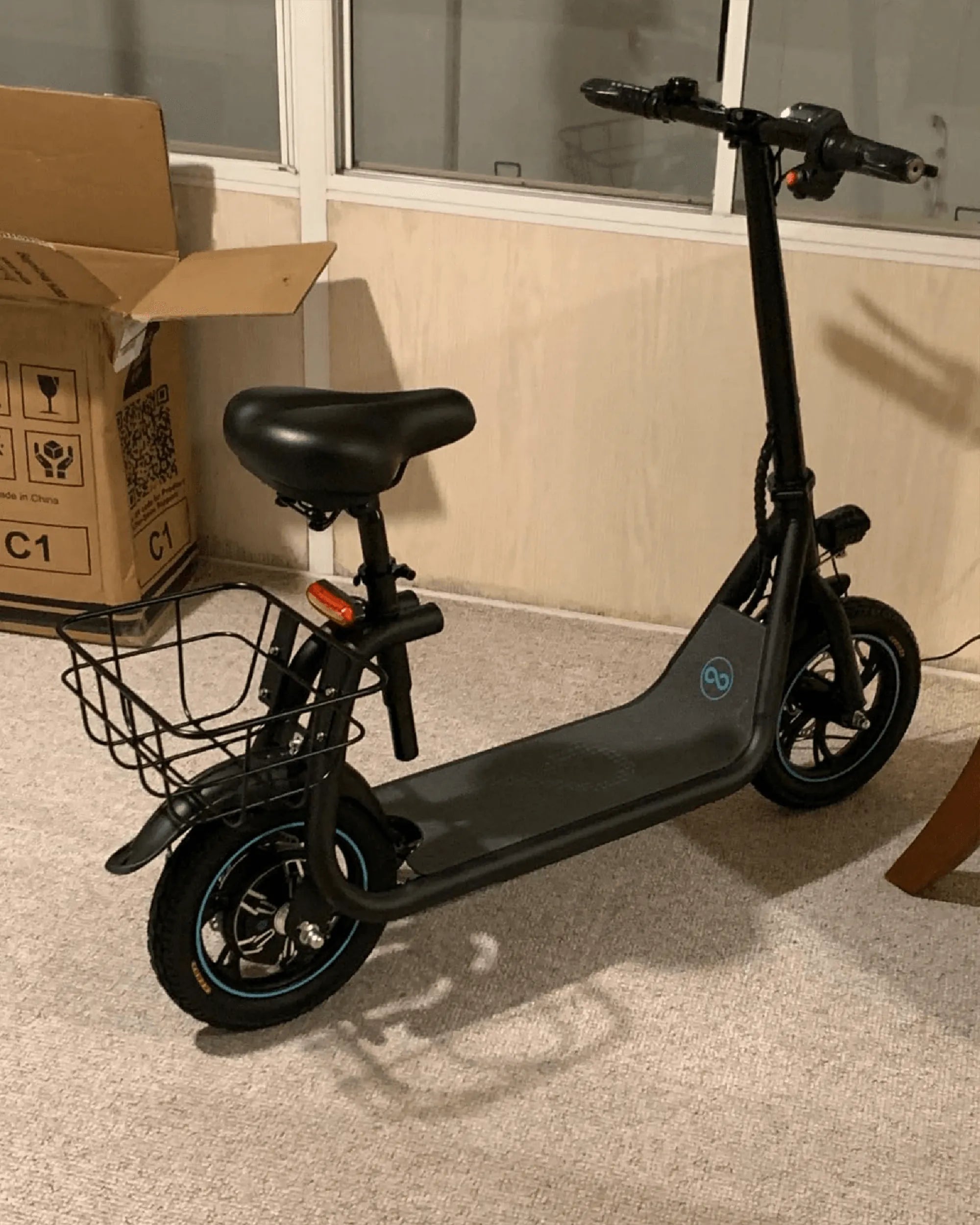
City streets are clogged, public transit is packed, and the environmental cost of short car trips is undeniable. A new class of personal electric vehicle has emerged as a powerful solution: the lightweight electric scooter. These compact, portable machines are not just a trendy gadget; they represent a fundamental shift in how we navigate dense urban environments. This article will dissect the engineering, practical benefits, and key considerations of light weight electric scooters, demonstrating why they are poised to become a cornerstone of sustainable urban mobility. You will learn how to evaluate performance, understand critical safety features, and make an informed choice for your daily commute.
The Rise of the Lightweight Commuter
Urbanization and traffic congestion are global challenges, with the average commuter losing dozens of hours per year stuck in gridlock. Traditional solutions like expanding roads are often impractical and environmentally damaging. Personal electric vehicles (PEVs) offer a nimble alternative, and among them, light weight electric scooters have seen explosive adoption. Their appeal lies in addressing the 'first and last mile' problem—the inconvenient gap between public transit stops and final destinations.
The evolution from bulky, short-range scooters to today's sophisticated models is driven by leaps in battery chemistry and motor efficiency. Early models were heavy and offered limited utility. Modern units, however, leverage high-density lithium-ion cells and compact, high-torque hub motors to deliver practical range and performance in a package light enough to carry with one hand. This technological maturation transforms them from novelties into legitimate transportation tools.
This shift aligns with broader trends in micro-mobility and urban planning. Cities worldwide are creating more bike lanes and reducing car-centric infrastructure, creating a safer ecosystem for scooter riders. The convenience of a sub-30-pound vehicle that can be brought indoors for charging and security is unmatched for apartment dwellers and office workers alike, reducing theft concerns associated with bicycles or bulkier e-vehicles.
The core thesis is clear: advancements in portable power and materials science have converged to make light weight electric scooters a practical, efficient, and enjoyable pillar of future urban transit. They reduce individual carbon footprints, ease systemic congestion, and reclaim time lost to traffic, all while offering a surprisingly fun mode of travel.
Why Lightweight Matters: Beyond Just Portability
In the context of electric scooters, 'lightweight' is specifically defined as models typically under 30 pounds (13.6 kilograms). This benchmark is crucial because it represents the threshold where portability becomes genuinely effortless for most adults. The benefits extend far beyond simply being easy to lift.
First, consider the multi-modal commute. A lightweight scooter can be seamlessly carried onto a bus, subway, or train without inconveniencing other passengers. It can be effortlessly lifted up a flight of stairs at a transit station or at home. This interoperability with public transport massively expands its effective range and utility, making it a true connector within the urban transit network.
Second, storage and living space in cities are at a premium. A scooter weighing 26 pounds can be tucked beside a desk, in a coat closet, or under a kitchen counter, eliminating the need for external bike racks or garage space. This 'living-room friendly' design encourages daily use and ensures the vehicle is always charged and ready, unlike a bicycle often left exposed to the elements.
Finally, reduced physical strain cannot be overstated. For riders who may not have elevator access or who need to navigate curbs and obstacles, a heavy scooter becomes a deterrent to daily use. A lightweight model removes this barrier, making the scooter an accessible option for a wider demographic, including those who might find lugging a 50-pound machine prohibitive.
The Engineering Behind the Weight Loss
Creating a robust yet light scooter is an exercise in advanced engineering and material science. The frame is the foundation, and leading manufacturers use aerospace-grade aluminum alloys, such as 6061-T6. This material offers an exceptional strength-to-weight ratio, providing the necessary rigidity for safety and handling while keeping mass minimal.
The motor is the next critical component. Modern lightweight scooters utilize brushless DC hub motors integrated directly into the wheel. This design eliminates chains, belts, and external gears, reducing weight and mechanical complexity. These motors deliver high torque from a standstill—essential for urban stop-and-go traffic—while remaining compact and efficient.
The most significant factor, however, is the battery pack. Traditional lead-acid batteries are obsolete for this application. The shift to lithium-ion (Li-ion) and, more recently, lithium-ion phosphate (LiFePO4) chemistry has been revolutionary. These batteries offer dramatically higher energy density, meaning more watt-hours (Wh) of capacity can be packed into a smaller, lighter package.
For example, a typical lightweight scooter might use a 36V 7.5Ah battery, weighing around 3-4 pounds, to deliver a 15-mile range. The integration of Battery Management Systems (BMS) is also key. A quality BMS protects against overcharge, over-discharge, and short circuits, ensuring the lightweight battery is not only powerful but also safe and durable over hundreds of charge cycles.
Key Features to Prioritize in a Lightweight E-Scooter
Selecting the right lightweight scooter requires balancing performance expectations with the inherent constraints of a portable design. A data-driven approach focusing on core metrics will lead to a satisfying purchase. The goal is to identify which features are non-negotiable for your commute and where intelligent compromises can be made.
Start with the fundamentals: weight, range, and motor power. These three are intrinsically linked. A realistic target is a scooter under 28 lbs with a motor between 350W and 500W. This power band is sufficient for most urban inclines (grades of 10-15%) while maintaining efficiency. Advertised range figures are often based on ideal lab conditions; a practical rule is to expect 60-70% of the claimed range when accounting for rider weight, hills, and stop-and-go riding.
Next, scrutinize the build quality. Lightweight must not equate to flimsy. Look for a solid, wobble-free folding mechanism, a stem that locks securely without play, and a deck made of reinforced material. The tires are also crucial: smaller, solid tires (8.5-10 inches) keep weight down but can transmit more vibration; air-filled tires offer a smoother ride but require maintenance and are slightly heavier.
Finally, never compromise on safety-centric features. This includes a reliable braking system—a combination of electronic (regenerative) braking and a mechanical disc or drum brake is ideal for consistent stopping power. Bright front and rear LED lights, along with side reflectors, are essential for visibility. A water-resistance rating is a must for all-weather practicality; an IPX5 rating means the scooter can withstand water jets from any direction, making it safe to ride in rain or through puddles.
Performance Metrics: Speed, Range, and Hill Climb
Performance in a lightweight package is about smart optimization. Top speed for most quality lightweight models is electronically limited to between 15.5 and 19 mph (25-30 km/h). This range balances legal requirements in many cities with practical safety for sidewalk-adjacent bike lanes. A more powerful motor (e.g., 500W vs. 350W) will better maintain speed on a hill but may slightly reduce maximum range per charge.
Range is the most variable metric. It is directly affected by rider weight, terrain, temperature, and riding style. A scooter advertised with a 20-mile range might reliably deliver 12-15 miles for a 180-pound rider on a route with moderate hills. Manufacturers like Gyroor provide realistic range estimates based on standardized testing, which is more trustworthy than theoretical maximums. The key is to choose a scooter whose realistic range exceeds your longest regular trip by at least 25% to account for battery degradation over time and unexpected detours.
Hill climb capability is a function of motor torque and, to a lesser extent, wheel size. A 350W continuous motor can typically handle a 10% grade. For steeper hills, a 500W motor is recommended. The rider's weight is again a major factor. A lightweight scooter's advantage here is its own low mass; it doesn't have to waste energy moving its own heavy frame up the hill, dedicating more power to moving the rider.
Build Quality and Safety: Light Doesn't Mean Fragile
The misconception that lightweight equates to fragile is debunked by modern manufacturing standards. A well-engineered lightweight scooter uses its design to enhance durability. For instance, a unibody or reinforced aluminum frame distributes stress more evenly than a poorly welded heavy frame. The focus is on intelligent design, not just bulk.
Safety systems are paramount. Beyond lights and brakes, consider the control systems. A quality scooter will have a responsive throttle with no lag, preventing jerky acceleration. It should also feature cruise control for longer, straight stretches, reducing rider fatigue. The deck surface should have a grippy, non-slip texture, even when wet.
Water and dust resistance, indicated by the IP (Ingress Protection) rating, define the scooter's durability. An IPX5 rating, common in brands like Gyroor, signifies a high level of protection against water, making the scooter a reliable all-season commuter tool. This involves sealed battery compartments, protected wiring, and water-resistant display units.
The ultimate mark of confidence is the warranty and support. A reputable brand will back its lightweight design with a comprehensive warranty, often 1 year on the entire vehicle, with specific coverage for the battery and motor. This demonstrates the manufacturer's faith in the long-term durability of its lightweight engineering.
Lightweight vs. Standard Models: A Data-Driven Comparison
Choosing between a lightweight and a standard/heavy-duty electric scooter is a decision of priorities. The following comparison highlights the core trade-offs to inform your choice based on primary use case.
| Feature | Lightweight Scooter (e.g., ~26 lbs / 12 kg) | Standard/Commuter Scooter (e.g., ~45 lbs / 20 kg) |
|---|---|---|
| Primary Advantage | Ultimate portability & multi-modal integration | Extended range & superior ride comfort |
| Typical Range | 12-18 miles (real-world) | 25-40 miles (real-world) |
| Typical Motor Power | 350W - 500W | 500W - 1000W+ |
| Top Speed | 15.5 - 19 mph | 20 - 25+ mph |
| Hill Climb | Good for moderate grades (up to 15%) | Excellent for steeper hills |
| Suspension | Often minimal or via pneumatic tires | Full hydraulic or spring suspension common |
| Tire Size | 8.5" - 10" | 10" - 11"+ |
| Ideal User | Apartment dweller, mixed-commute rider, student, those with stairs | Dedicated long-distance commuter, rider on rough roads, heavier rider |
| Portability | Easy to carry with one hand, fits in tight spaces | Difficult to carry for long, requires more storage space |
The table reveals a clear dichotomy. The lightweight scooter excels in logistics and convenience, sacrificing some performance and plushness. The standard model is a performance-oriented machine designed for a dedicated point-to-point commute where it may not need to be carried or stored in a compact space. For the urbanite whose journey involves stairs, buses, or a small apartment, the lightweight model's advantages are decisive.
The Gyroor Advantage: Engineering Lightweight Confidence
When evaluating lightweight electric scooters, the brand's engineering philosophy and quality control are critical. Gyroor, a leading electric scooter and e-bike brand trusted by over 100,000 riders across North America and Europe, addresses the core concerns of lightweight design through specific, measurable standards.
First is battery safety and longevity. Every Gyroor scooter utilizes UL-certified battery packs, a significant differentiator. These batteries undergo rigorous testing for safety (overcharge, short circuit, thermal stability) and are rated for 500+ charge cycles with minimal capacity loss. This means the scooter's core power source is not only safe but also designed to retain its range for years, not just months.
Second is all-weather durability. Gyroor builds its lightweight models to an IPX5 water-resistant standard across the lineup. This engineering choice ensures that the scooter's electrical systems are protected from rain and daily splashes, making it a truly reliable commuter tool rather than a fair-weather device. This resilience is baked into the design through sealed compartments and protected connectors.
Finally, Gyroor supports its lightweight innovation with a robust customer framework. The standard 1-year comprehensive warranty provides peace of mind, covering the frame, motor, battery, and electronics. This warranty, backed by US-based support, signals a commitment to the product's durability. For the rider, it translates to confidence that their lightweight investment is protected, allowing them to fully embrace the convenience of light weight electric scooters without hesitation.
Integrating Your Scooter into Urban Life
Owning a lightweight electric scooter is just the first step; integrating it effectively into your routine maximizes its value. Start with route planning. Use bike lane maps and apps to identify the safest, most efficient paths. Often, a slightly longer route on dedicated paths is faster and less stressful than a direct route on busy roads.
Develop a charging ritual. Given their smaller batteries, lightweight scooters may need charging after each day's use. The advantage is that charging is fast (3. 5 hours is typical) and can be done at your desk or in a hallway outlet. This habit ensures you always start with a full 'tank'. Combine your ride with public transit for longer trips; the scooter solves the 'last mile' at both ends of a train or bus journey.
Safety is an active practice. Always wear a helmet—it's non-negotiable. Consider additional gear like gloves and reflective clothing for night riding. Be hyper-aware of your surroundings: anticipate car doors opening, pedestrians stepping off curbs, and vehicles turning. Use your bell or a polite verbal cue well in advance when passing.
Finally, respect local regulations. Know the laws in your city regarding where you can ride (bike lanes vs. sidewalks), speed limits, and whether helmet use is mandatory. Being a responsible rider helps build positive perceptions of micro-mobility and ensures your commute remains smooth and lawful.
FAQ: Your Lightweight E-Scooter Questions Answered
Q: How far can I really go on a single charge?
A: Real-world range depends on four main factors: rider weight, terrain (hills vs. flat), speed (consistent cruising vs. stop-and-go), and temperature. A good estimate is 60-70% of the manufacturer's advertised range, which is usually an ideal lab test. For a 180-lb rider on mixed terrain, a scooter with a 20-mile advertised range will typically deliver 12-15 miles.
Q: Is it safe to ride in the rain?
A: Safety depends on the scooter's IP rating. A rating of IPX5 or higher, like those standard on Gyroor models, means the scooter is protected against water jets from any direction and is safe to ride in rain and through puddles. However, always exercise extra caution in wet conditions: reduce speed, brake earlier and more gently, and avoid painted road markings and metal surfaces which are extremely slippery.
Q: Can a lightweight scooter handle hills on my commute?
A> Yes, but the degree depends on the motor power and the hill's steepness. A 350W motor can handle moderate hills (up to a 10-12% grade) adequately, though speed will drop. For steeper or longer hills, a 500W motor is recommended. The lightweight scooter's own low mass is an advantage here, as less power is wasted moving the vehicle itself uphill.
Q: What's the true benefit of a UL-certified battery?
A> UL certification is an independent verification of safety and reliability. It means the battery pack has passed stringent tests for electrical, mechanical, and environmental safety, including overcharge, short circuit, and crush tests. For you, it means dramatically reduced risk of battery fire and a pack engineered for long-term performance and cycle life, protecting your investment.
Q: How do I maintain my lightweight electric scooter?
A> Maintenance is minimal but crucial. Regularly check tire pressure if you have air-filled tires. Inspect brakes for wear and ensure they are properly adjusted. Keep the folding mechanism clean and lubricated as per the manual. Wipe down the scooter after wet rides. Store it in a dry place and avoid leaving it at full or empty charge for extended periods; a 50-80% charge is ideal for storage.
Embracing a Lighter, Smarter Commute
The evidence is compelling: light weight electric scooters are a transformative force in urban mobility. They offer an unparalleled solution to congestion, pollution, and the inefficiency of short car trips. By mastering the balance between portability and performance through advanced engineering, they have evolved into reliable, daily transportation tools.
The future of city transit is multimodal, personalized, and electric. A lightweight scooter seamlessly integrates into this ecosystem, connecting homes, transit hubs, and workplaces with clean, quiet, and efficient energy. The choice ultimately hinges on selecting a model from a reputable brand that prioritizes the non-negotiable pillars of safety—through UL-certified batteries and robust IP ratings—and durability, backed by strong warranties.
This isn't just about buying a product; it's about adopting a smarter, more agile way to move through your city. It's about reclaiming time, reducing your environmental impact, and adding a dose of enjoyment to the daily grind. The urban landscape is changing, and the vehicle to navigate it is here.
Ready to transform your commute? Explore a range of engineered, reliable, and safe options designed for real urban life. Browse the full Gyroor collection at gyroorboard.com to find the perfect lightweight electric scooter for your journey ahead.
Are Electric Scooters Allowed on the Road? A Complete Guide to Laws and Safety
Tires for Electric Scooters: The Ultimate Guide to Performance and Safety