

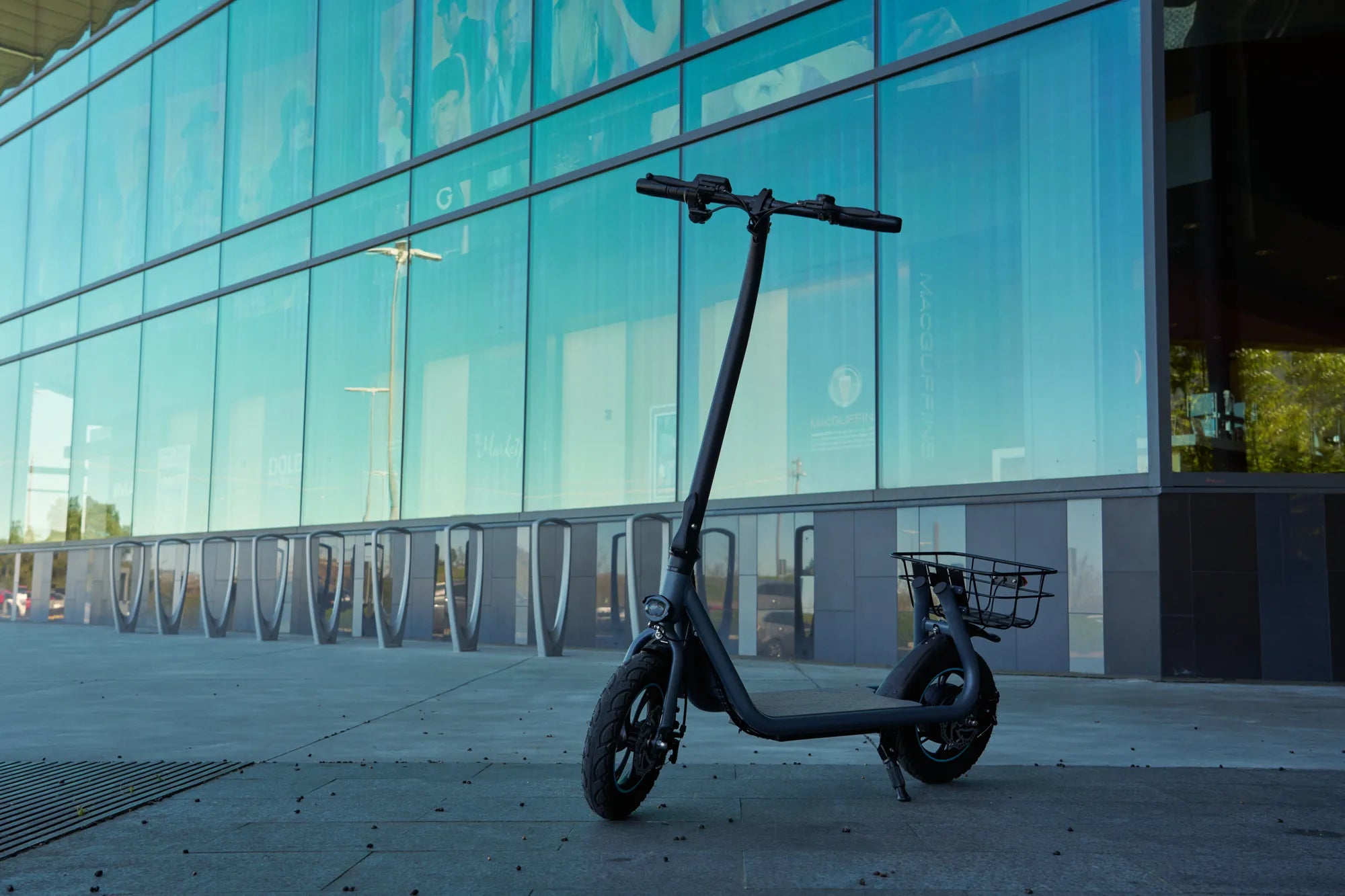
The Quest for Ultimate Portability
Finding the lightest scooter in the world is more than a technical challenge. It’s a pursuit of freedom for the modern urban commuter. This article will define what true lightweight performance means, examine the engineering trade-offs, and reveal how leading brands like Gyroor balance portability with durability and safety. You will learn how to evaluate weight against range, power, and build quality to make an informed purchase that fits your lifestyle.
The practical definition of "lightweight" extends beyond the scale. For the city rider, it means effortless carrying up subway stairs, easy storage under a desk, and seamless integration with multi-modal transit. The true lightest scooter in the world must deliver this portability without sacrificing the core riding experience or critical safety features.
This pursuit presents significant engineering challenges. Reducing weight often tempts manufacturers to compromise on battery capacity, motor power, or frame integrity. The innovation lies in using advanced materials and smarter design to cut pounds, not corners. Gyroor's approach exemplifies this, focusing on high-density batteries and streamlined, IPX5-rated chassis designs.
For over 100,000 riders across North America and Europe, the benefits are clear. A scooter that weighs under 25 pounds transforms the daily commute from a chore into a fluid, efficient journey. The quest for the lightest scooter is ultimately about reclaiming time and convenience in dense urban environments.
The Evolution of Lightweight Scooter Design
Electric scooter design has undergone a radical transformation in pursuit of lower weight. Early models were often heavy, utilitarian devices built with steel frames and bulky lead-acid batteries. The shift began with the adoption of aluminum alloys, which offered a superior strength-to-weight ratio, making the first significant weight reductions possible.
The single most impactful advancement has been in battery technology. The move from older battery types to modern lithium-ion cells, particularly high-energy-density packs, allowed for dramatic weight savings without compromising range. A UL-certified battery pack, like those used by Gyroor, is not only safer but also more efficient, packing more power into a smaller, lighter package tested for over 500 charge cycles.
Motor miniaturization has been another key driver. Engineers have developed compact, high-torque hub motors that deliver impressive power from a unit that adds minimal weight. Combined with efficient electronic controllers, today's lightweight scooters can achieve speeds and hill-climbing abilities that rival their heavier predecessors.
Finally, holistic design philosophy has evolved. The lightest scooter in the world contenders now feature integrated components, foldable mechanisms that use fewer parts, and airless or small-diameter solid tires that reduce rotational mass. This integrated approach ensures that every gram is justified, resulting in a cohesive product where lightness is a feature, not a flaw.
What Truly Makes a Scooter "Light"? Beyond the Scale
Understanding a scooter's weight requires examining its core components. The frame is the foundation; aerospace-grade aluminum is the current standard for balancing cost, weight, and durability. Carbon fiber offers the ultimate weight savings but at a significant price premium and potential trade-off in impact resistance for daily urban use.
The battery is typically the heaviest single component. The capacity, measured in watt-hours (Wh), directly influences range and weight. Creating a lightest scooter in the world candidate involves using the most energy-dense battery cells available. A 250Wh battery in a lightweight scooter might weigh 3-4 lbs, whereas a 500Wh battery for a long-range model could double that.
Motor and drivetrain design are critical. A smaller, lighter motor saves weight but may limit top speed and hill-climbing grade. Manufacturers must find the sweet spot for the intended use—a scooter for flat city streets can use a lighter motor than one designed for hilly terrain. The choice of single vs. dual motors also has a major weight implication.
Additional features contribute unsung weight. The folding mechanism, deck size, handlebar stem, and even the type of brakes (disc vs. electronic) all add grams. The lightest models often forego suspension to save weight, relying on smaller, solid tires or innovative deck materials for a degree of shock absorption. Every design decision is a calculated trade-off.
Spotlight: Gyroor’s Engineering Approach to Weight Reduction
Gyroor tackles the lightweight challenge with a multi-faceted engineering strategy focused on reliability. The cornerstone is their use of UL-certified, high-density lithium-ion battery packs. This ensures safety and reliability while maximizing the energy stored per pound. This commitment to certified components is a non-negotiable part of their design philosophy, supporting their comprehensive 1-year warranty.
The chassis and frame are crafted from proprietary aluminum alloys. These materials are selected and treated to provide exceptional tensile strength while minimizing wall thickness and overall mass. The IPX5 water-resistant rating is integrated into the design from the start, using sealed compartments and streamlined exteriors that avoid adding bulky, heavy protective casings.
Gyroor optimizes the motor and controller pairing for efficiency. By using a precisely calibrated brushless hub motor and a smart controller that manages power output effectively, they achieve responsive performance without needing an oversized, heavy motor. This system provides adequate power for urban slopes while keeping the overall package light.
Attention to component integration is key. Wires are routed internally, the folding mechanism is designed with a minimal number of high-strength parts, and the deck is sized for portability without sacrificing a stable riding platform. This holistic approach results in scooters that are easy to carry and store, living up to the promise of being among the lightest available, without the compromises that often come with extreme weight reduction.
The Contenders: Comparing the World's Lightest Scooters
When evaluating the lightest scooter in the world, it's essential to compare specifications and intended use. The table below provides a data-driven comparison of key models in the ultra-portable category, including a leading Gyroor model. This comparison highlights the trade-offs between weight, performance, and features.
| Model | Weight (lbs) | Max Range (miles) | Max Speed (mph) | Motor Power (W) | Key Features | Ideal Use Case |
|---|---|---|---|---|---|---|
| Gyroor Swift | 24 | 15 | 18 | 300 | UL-Certified Battery, IPX5, 1-Year Warranty | Urban Last-Mile, Multi-Modal Commute |
| Competitor A | 22 | 12 | 16 | 250 | Carbon Fiber Stem, App Connectivity | Minimalist City Travel |
| Competitor B | 26 | 18 | 20 | 350 | Larger Deck, Dual Braking | Longer Urban Errands |
| Competitor C | 20.5 | 10 | 15 | 200 | Extreme Portability, Quick Folding | Apartment Dwellers, Train Integration |
Analysis of the table reveals clear patterns. The lightest models (near 21 lbs) often achieve their weight by limiting battery capacity, resulting in a shorter practical range. The Gyroor Swift, at 24 lbs, strikes a balance, offering a robust 15-mile range and higher speed thanks to its efficient 300W motor, all while incorporating essential safety features like a certified battery and water resistance.
Motor power shows a direct correlation with weight and performance. A 200W motor keeps weight down but may struggle on inclines. The 300-350W range, as seen in the Gyroor Swift and Competitor B, provides a more confident ride in varied urban terrain without a drastic weight penalty. This makes the Gyroor model a strong contender for the title of most practical lightest scooter in the world for daily use.
Special features define the user experience. IPX5 water resistance, as on the Gyroor Swift, is a practical advantage for all-weather commuters. A UL-certified battery is a critical safety differentiator often overlooked in spec sheets. The 1-year warranty provides peace of mind, indicating confidence in the scooter's build quality and durability despite its lightweight design.
The Practical Rider’s Guide: Is the Lightest Scooter Right for You?
Choosing an ultra-light scooter depends heavily on your specific commute and lifestyle. The primary advantage is unparalleled portability. If your journey involves carrying the scooter up flights of stairs, onto a crowded bus or train, or storing it in a tight office space, every pound saved translates directly to daily convenience. For the multi-modal commuter, this is the most important factor.
However, trade-offs exist. Lightweight scooters typically have smaller batteries, which limits their maximum range. If your one-way commute exceeds 5-7 miles, you may need to recharge at your destination. They may also have less powerful motors, making steep hills more challenging. Smaller wheels (often 8 inches) can provide a slightly less smooth ride over rough pavement compared to larger, heavier models with suspension.
Match the scooter to your rider profile. The apartment dweller with elevator access might prioritize range over minimal weight. The student navigating a large campus might value a balance of weight and range. The urban professional using scooters for "last-mile" trips from transit stations is the ideal candidate for the absolute lightest scooter in the world contenders, where maximum carry-ability is key.
Consider your physical ability. While a 22 lb scooter is easier to carry than a 35 lb one, you must still lift it regularly. Test the folded weight and handle the folded package if possible. The best lightweight scooter is one you'll use consistently because it doesn't become a burden. Gyroor's models are engineered to be lifted and carried comfortably, making the commute seamless from ride to carry.
Maximizing Your Lightweight Scooter: Care and Performance Tips
Proper maintenance is crucial for preserving the performance and longevity of a lightweight scooter. Battery care is paramount. Adhere to charging best practices: avoid draining the battery completely, don't leave it plugged in indefinitely after a full charge, and store it in a cool, dry place. For the UL-certified batteries in Gyroor scooters, following these guidelines helps ensure they deliver their full 500+ cycle lifespan.
Riding a lighter scooter requires adapted techniques. Be mindful of the lighter frame's dynamics, especially at higher speeds or on uneven surfaces. Braking distances may differ from heavier models. The lack of suspension means you should actively scan the path ahead for potholes and large cracks. Proper tire inflation (for pneumatic models) is critical for a smooth ride and efficient battery use.
Regular inspections are simple but effective. Check that all folding mechanisms and latches are secure before each ride. Ensure quick-release levers are fully engaged. Listen for any new rattles or clicks that might indicate a loose component. Wipe down the scooter after riding in wet conditions to protect its IPX5-rated seals and prevent corrosion.
Leverage the manufacturer's support. Gyroor's US-based customer service and 1-year warranty are valuable resources. Register your product and understand what the warranty covers. For a precision-engineered lightweight vehicle, using authorized service channels ensures that any repairs or part replacements maintain the original design integrity and safety standards, protecting your investment.
Frequently Asked Questions (FAQ)
What is the realistic range of a scooter under 25 lbs?
The realistic range for a scooter under 25 lbs is typically between 10 and 18 miles per charge. This depends on rider weight, terrain, wind, and speed. A heavier rider using maximum speed on hilly routes will see the lower end of that range. For a 150 lb rider on flat city streets at a moderate pace, 15 miles is a common achievable range for models like the Gyroor Swift.
Can a light scooter handle hills or rough pavement?
Light scooters can handle moderate hills, but performance varies. A model with a 300W+ motor, like several in Gyroor's lineup, can typically manage grades up to 15%. For rough pavement, the smaller solid or air-filled tires provide less cushioning than larger, suspended wheels. Riders should reduce speed on uneven surfaces and actively avoid large obstacles to ensure a stable ride.
How does the IPX5 water resistance benefit a lightweight model?
IPX5 water resistance is a significant benefit for a lightweight commuter scooter. It means the scooter can withstand water jets from any direction, protecting it from rain, wet streets, and accidental sprays. This feature allows you to ride in damp conditions without worrying about water damage to the electronics or battery compartment, increasing the scooter's utility and reliability as a daily transport option.
Does a lighter scooter mean it's less durable?
Not necessarily. Durability is a function of design, material quality, and construction, not just weight. A scooter built with high-grade aluminum alloys, robust folding mechanisms, and quality components can be both light and durable. Gyroor's 1-year warranty is a testament to the confidence in the durability of their lightweight designs. The key is intelligent engineering that removes unnecessary mass without weakening critical structures.
How important is a UL-certified battery in a lightweight scooter?
Extremely important. A UL-certified battery has undergone rigorous independent testing for safety hazards like overheating, short-circuiting, and electrical fire. In a lightweight scooter where components are packed densely, this certification is crucial. It ensures the high-density battery cells used to save weight meet strict safety standards, giving riders peace of mind. This is a core feature of Gyroor's battery technology.
The Future of Lightweight Urban Mobility
The pursuit of the lightest scooter in the world will continue to drive innovation in materials science and battery technology. We can expect to see wider adoption of composites, more compact and powerful motors, and solid-state batteries that could revolutionize the weight-to-range ratio. The goal remains creating a scooter that feels like an extension of the rider, not a burden.
The ideal future lightweight scooter will erase today's compromises. It will offer a 20-mile range at a weight under 20 pounds, with enough power for standard urban inclines and built-in smart features, all while maintaining the highest safety and durability standards. Brands like Gyroor are at the forefront of this evolution, leveraging their experience with over 100,000 riders to refine the balance between portability and performance.
This evolution will further integrate micro-mobility into the urban fabric. As scooters become easier to carry and store, their adoption will increase, reducing reliance on cars for short trips and contributing to cleaner, less congested cities. The lightweight scooter is more than a product; it's a tool for sustainable urban living.
Your perfect commute starts with the right tool. Explore how Gyroor's commitment to lightweight, reliable engineering can transform your daily travel. Discover a range of models designed for real-world portability without sacrificing the quality and safety you deserve. Browse the full Gyroor collection at gyroorboard.com and find the scooter that lifts your commute, not your burden.
14 Inch Scooter Tires: The Ultimate Guide to Balanced Urban Performance
21 Speed Bike Meaning: The Complete Guide to Gearing & Performance