



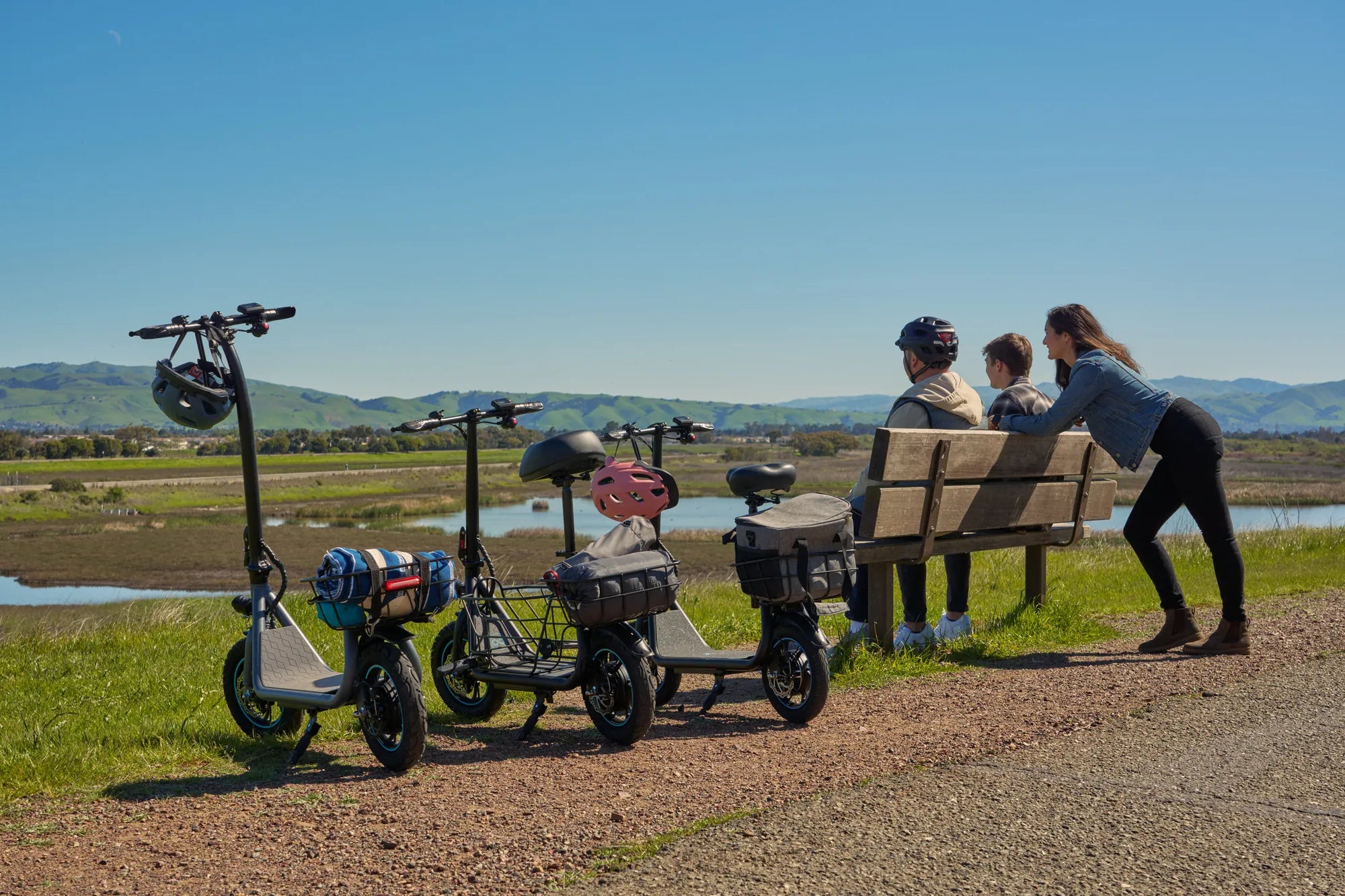
Introduction to the Lowrider Scooter Phenomenon
A lowrider scooter is not merely a vehicle; it's a mobile canvas for personal expression. Unlike standard electric scooters designed primarily for efficient commuting, a lowrider scooter prioritizes custom style, a lowered profile, and cultural statement. This movement draws direct inspiration from the lowrider automotive and bicycle cultures that originated in mid-20th century American communities, particularly among Mexican American car enthusiasts.
The core philosophy shifts focus from raw performance specs like top speed to aesthetics, ride attitude, and uniqueness. It transforms a utilitarian device into a personalized work of art. The defining visual characteristic is a lowered deck and frame, often achieved through modification kits, which creates a distinctive, aggressive stance. This is typically accompanied by custom paint, intricate lighting, unique handlebars, and bespoke accessories.
For urban riders, the appeal is multifaceted. It offers a stable, comfortable riding position due to the lower center of gravity and a connection to a rich customization heritage. While a standard commuter scooter gets you from point A to B, a lowrider scooter announces your arrival and reflects your identity throughout the journey. This guide will dissect every aspect, from choosing the right base model to executing modifications that balance style, safety, and functionality.
Why Choose a Lowrider E-Scooter? Style Meets Practicality
The decision to build or ride a lowrider e-scooter is a conscious choice for individuality in an increasingly homogenized urban transport landscape. The primary appeal is unparalleled customizability. Every component, from the deck grip tape to the color of the brake calipers, becomes an opportunity for personalization. This stands in stark contrast to the mass-produced, often generic appearance of many off-the-shelf commuter scooters.
Beyond aesthetics, the lowered design offers tangible riding benefits. A lower deck height translates to a more stable and confident riding stance. Riders can place their feet more solidly, improving balance at lower speeds and during stops. This can be particularly reassuring for new riders or those navigating dense, stop-and-go city traffic. The overall riding experience feels more planted and connected to the road.
Furthermore, the lowrider scooter serves as a unique urban fashion statement. It functions as an extension of personal style, much like customized sneakers or a unique bicycle. In social settings or group rides, a well-executed lowrider becomes a conversation piece and a marker of belonging to a community of enthusiasts who value craftsmanship and self-expression over conformity.
The Gyroor Approach: Built for Customization
Gyroor's engineering philosophy naturally aligns with the lowrider ethos. By designing scooters with robust, welded aluminum frames and standardized, reliable components, Gyroor provides an ideal, trustworthy foundation for customization. Riders seeking to create a lowrider scooter need a base that won't compromise on core safety and durability.
Starting with a Gyroor model means beginning with UL-certified battery safety, IPX5 water resistance, and a proven powertrain. This allows modifiers to focus on aesthetic and ergonomic enhancements without worrying about the fundamental reliability of their ride. The strong, predictable frame geometry is a perfect canvas for lowering kits and custom parts, ensuring the modified scooter remains safe and enjoyable to ride daily.
Key Features to Look for in a Lowrider Scooter Base
Selecting the right electric scooter as a starting point is the most critical step in any lowrider project. The base model determines the ceiling for your customization and the floor for your safety. Here is a data-driven checklist for urban commuters and enthusiasts evaluating a potential candidate.
First, assess the motor and battery configuration. A single, rear-mounted motor is often preferable for a clean, symmetrical look that is easier to modify. A battery with a proven safety record is non-negotiable. Look for a base scooter with a battery management system (BMS) and certifications like UL 2271, which test for electrical, mechanical, and environmental safety.
Second, examine the braking systemtire type and size. Larger, air-filled tires (10 inches or more) often offer a better foundation for a lowered look and can improve ride comfort over urban imperfections.
Frame Strength and Geometry
The frame is the skeleton of your lowrider scooter. It must be constructed from high-grade, welded aluminum alloy to handle the stresses of modification and daily use. A rigid, one-piece stem and deck assembly is ideal. The geometry should be evaluated for its potential to be lowered; scooters with a straightforward, uncluttered underside and ample deck space are easier to modify with aftermarket lowering kits or custom fabrications.
Battery Safety as a Non-Negotiable Foundation
Any modification project must begin with a safe power source. This is paramount. Choosing a base scooter with a UL-certified battery pack, like those used in all Gyroor models, is the single most important safety decision. These batteries undergo rigorous testing for overcharge, short circuit, and thermal stability.
This certification is especially critical for a lowrider project, where riders may later add custom electronics, extensive LED lighting, or sound systems. Starting with a certified, high-quality battery minimizes fire risk and ensures a stable power supply for all your added components. Never compromise on this feature.
Water Resistance for Real-World Riding
A good Ingress Protection (IP) rating is crucial for a lowrider. The modified, lowered stance may place the scooter closer to road spray, puddles, and debris. An IPX5 rating, indicating protection against water jets from any direction, is a strong baseline. This protects the core electronics, motor, and battery from moisture before any custom work begins, ensuring your investment is durable enough for all weather conditions you might encounter.
The Lowrider Transformation: Popular Modifications and Considerations
Transforming a standard e-scooter into a head-turning lowrider involves a spectrum of modifications, from simple cosmetic swaps to more involved mechanical changes. The path you choose depends on your budget, technical skill, and vision.
Cosmetic & Stance Upgrades are the most common starting point. This includes installing a commercial or custom lowering kit to reduce the deck height, swapping out handlebars for ape-hanger or low-rise styles, and applying custom vinyl wraps, hydro-dips, or professional paint jobs. Upgrading deck grip tape to a custom pattern or material, and adding extensive LED underglow, stem lights, and custom turn signals are also hugely popular for achieving that signature nighttime glow.
Performance Tweaks (Within Limits) focus on refining the ride rather than chasing outright speed. This can involve changing to whitewall or colored tires for a classic look, tuning the controller via official apps for smoother acceleration curves (not higher top speed), or upgrading to higher-quality brake pads. It is vital to avoid modifications that over-stress the stock motor or battery, such as unauthorized voltage increases, which can lead to premature failure and safety hazards.
The Warranty and Support Consideration
It is essential to have a clear, honest understanding of how modifications affect a manufacturer's warranty. For example, Gyroor offers a comprehensive 1-year warranty on its scooters. While modifications may void warranty coverage on specifically altered parts or issues directly caused by the modification, starting with a reliable, well-supported brand ensures a solid baseline.
This means you still have access to technical support, can purchase genuine replacement parts for unmodified components, and have the confidence that the core systems were engineered to a high standard. Always keep your original parts; they can be useful for troubleshooting or if you need to revert the scooter for service.
Lowrider Scooter vs. Standard Commuter Scooter: A Data-Driven Comparison
Choosing between a customized lowrider and a standard commuter scooter is a choice between personal expression and optimized utility. The table below breaks down the key differences.
| Feature | Lowrider Scooter | Standard Commuter Scooter |
|---|---|---|
| Customization Potential | Extremely High. Every aspect can be personalized. | Low to Moderate. Limited to accessories like bags or phone mounts. |
| Riding Comfort/Stance | Stable, planted feel with lower center of gravity. | Functional; stance varies by model, often more upright. |
| Top Speed & Range | Often similar to base model; not the primary focus. | A primary design focus, often optimized for maximum efficiency. |
| Urban Maneuverability | Good, but reduced ground clearance can be a concern for curbs. | Generally high, with designs focused on agility and portability. |
| Initial + Ongoing Cost | Higher. Base cost plus significant investment in parts/labor. | Lower. One-time purchase with minimal additional costs. |
| Primary Appeal | Self-expression, culture, uniqueness, community. | Transport efficiency, reliability, ease of use, value. |
As the data shows, a lowrider scooter is a deliberate choice for personalization and cultural connection, not for maximizing spec sheet performance. It's for the rider who views their commute as part of their lifestyle.
Frequently Asked Questions (FAQ) About Lowrider Scooters
1. Is it legal to ride a modified lowrider scooter?
Legality depends entirely on local e-scooter regulations. Most jurisdictions regulate based on top speed, motor wattage, and where you can ride (bike lanes vs. roads). Modifications that add functional lighting (white front, red rear, turn signals) often improve legal compliance. However, extreme modifications that remove required reflectors, create blinding light patterns, or intentionally produce excessive noise may violate local vehicle codes. Always check your city's specific micro-mobility laws.
2. How much does a lowrider scooter project typically cost?
Costs vary dramatically. A basic project starts with a reliable base scooter (e.g., a Gyroor model ranging from $500-$900). Entry-level modifications (custom grips, basic LEDs, vinyl wrap) can add $100-$300. A full transformation with a professional lowering kit, custom paint, high-end lighting, and tire changes can easily add $500-$1500+ to the base cost. It's a scalable project that can grow with your budget and ambition.
3. Does lowering my scooter affect its ride quality or safety?
Yes, it can. The most significant impact is reduced ground clearance, making the scooter more susceptible to hitting speed bumps, potholes, or curb ramps. This requires more attentive riding. It can also alter the suspension geometry if the scooter has springs or shocks, potentially making the ride firmer. Safety is enhanced by the increased stability but can be compromised if the modification weakens the frame or critical components. Always use quality parts and ensure all fasteners are properly torqued.
4. Can I revert my lowrider scooter back to stock?
This depends on the modifications. Cosmetic changes like vinyl wraps are easily reversible. Swapping handlebars, grips, and lights is typically reversible if you keep the original parts. Permanent modifications like drilling new mounting holes, cutting the frame, or a professional paint job over the original finish are difficult or impossible to reverse without significant cost. The best practice is to keep all original parts in a box and avoid permanent alterations to the main frame and electrical system.
5. What is the best way to learn about lowrider scooter customization?
Start with online communities and forums dedicated to e-scooter enthusiasts and customization. Social media platforms like Instagram and YouTube are treasure troves of build videos, tutorials, and inspiration from the global lowrider scooter community. Engaging with these communities allows you to ask questions, learn from others' experiences, and discover parts suppliers before you start your own project.
Conclusion: Building Your Unique Ride on a Foundation of Trust
The lowrider scooter represents the ultimate fusion of personal transport and self-expression. It is a testament to the desire to stand out and inject personality into the daily routine. The journey of building one is as rewarding as the final product, offering deep engagement with the mechanics and aesthetics of your vehicle.
The most successful and satisfying projects are built on a foundation of trust and quality. Beginning with a base scooter engineered for safety and reliability—featuring UL-certified batteries, robust water resistance, and a strong warranty—provides the peace of mind needed to explore creativity freely. It ensures your custom creation is not only beautiful but also dependable for the long haul.
Your unique vision for a lowrider scooter deserves a starting point that won't let you down. Explore the range of durable, well-engineered electric scooters designed to be the perfect canvas for your customization project. Browse the full Gyroor collection at gyroorboard.com and find the ideal foundation for your next build.
Can I Drive a Dirt Bike on the Road? The Ultimate Legal & Practical Guide
Scooter Blanket: The Essential Protective Cover for Your E-Scooter