


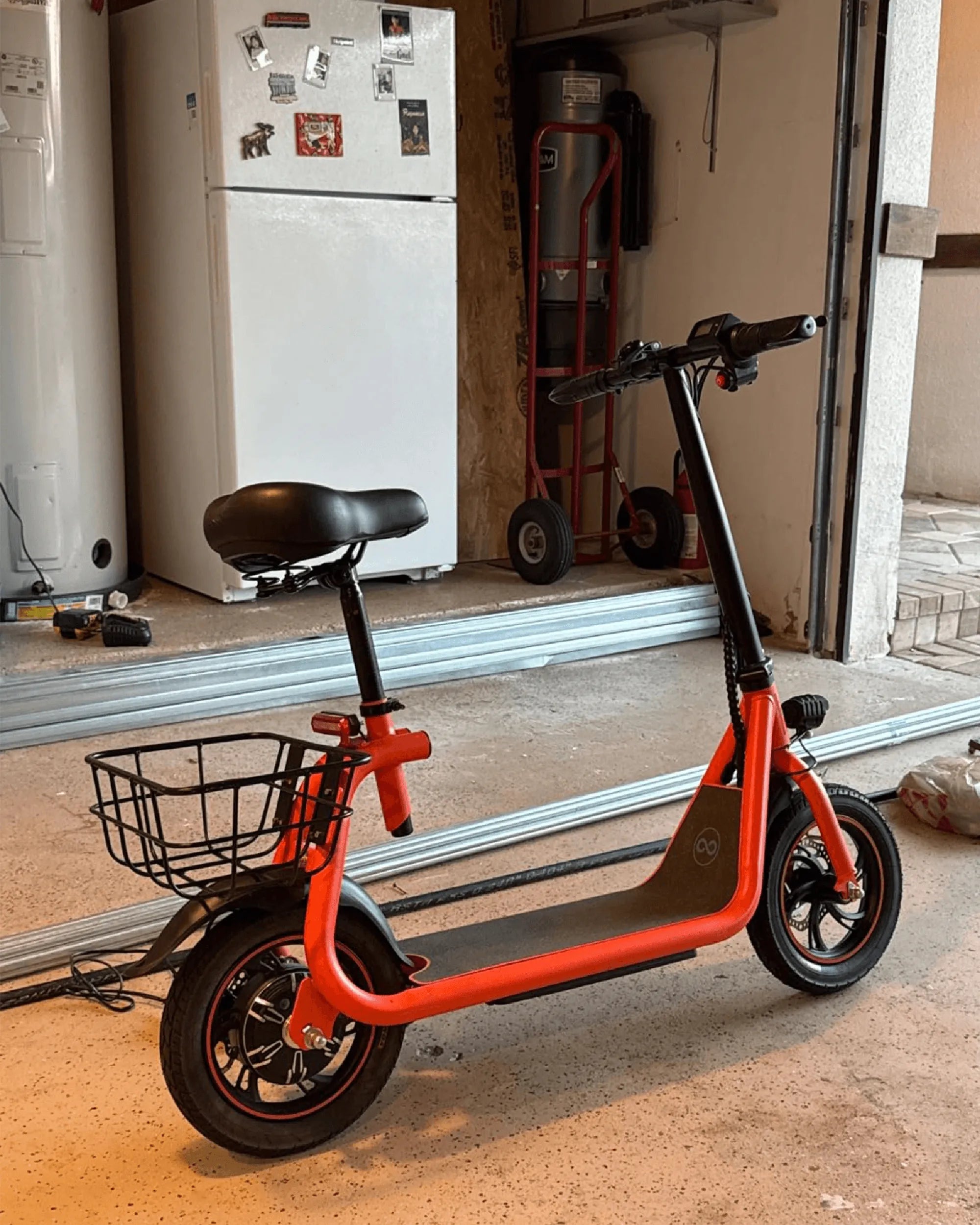
Understanding Mobility Scooter Weight Capacity: A Key to Safety and Performance
Selecting a mobility scooter is a decision that hinges on one non-negotiable specification: its weight capacity. Exceeding this limit isn't just about reduced performance; it's a direct threat to safety, stability, and the scooter's longevity. For many users, a standard 250-300 lb capacity is insufficient. This is where the mobility scooter weight capacity 400 lbs becomes a significant benchmark, offering a substantial safety margin and opening doors to enhanced mobility for a broader range of individuals.
A scooter rated for 400 lbs is engineered from the ground up for robustness. It provides a crucial buffer for the combined weight of the rider, any personal items, and potential cargo like groceries or medical equipment. This capacity directly translates to greater stability, especially on inclines or uneven surfaces, and ensures the motor, battery, and frame are not operating at their absolute limits during everyday use. Understanding this specification is the first step toward a secure and empowering mobility solution.
This guide will delve into the engineering behind a 400 lb capacity, compare it to standard models, and outline the key features you must prioritize. We will also explore how reputable brands like Gyroor build reliability into their high-capacity designs, ensuring your investment is protected by rigorous safety standards and dependable support.
Why 400 lbs Capacity Matters: Beyond the Number
The figure 400 lbs is not arbitrary; it represents a comprehensive engineering target that influences every component of the scooter. A standard scooter pushed beyond its limit will experience rapid battery drain, sluggish acceleration, poor hill-climbing ability, and excessive wear on brakes and tires. A scooter built for a mobility scooter weight capacity 400 lbs is designed to handle these stresses efficiently, maintaining performance and safety.
At its core, this higher capacity ensures the scooter operates well within its designed parameters for most users. This means the motor doesn't overheat on hills, the battery provides a more consistent range, and the braking system can safely manage the momentum of a heavier load. The result is a vehicle that feels confident and responsive, not strained or precarious, which is essential for user confidence and daily independence.
Furthermore, this capacity future-proofs your investment. It accommodates fluctuations in user weight and provides ample room for carrying daily essentials without a second thought. For caregivers or family members who may occasionally need to transport additional items on the scooter, that extra capacity margin is not a luxury—it's a critical component of practical, daily usability.
The Components Built for Strength
To safely support a mobility scooter weight capacity 400 lbs, manufacturers must reinforce key systems. The frame is the most obvious starting point, typically constructed from high-grade, thickened aluminum or steel alloys. This reinforced chassis resists flexing and twisting, which is vital for maintaining alignment and handling precision under load.
The motor is another critical upgrade. High-capacity models feature high-torque motors, often in the 500W to 800W range or higher. Torque is the rotational force that gets you moving, especially from a stop or up a slope. A motor with ample torque ensures smooth, powerful acceleration regardless of the load, preventing the lurching or stalling that can occur with underpowered units.
Suspension and tires are equally important. A robust suspension system, often with wider springs or hydraulic shocks, absorbs road imperfections to provide a stable ride. Paired with wider, air-filled or solid rubber tires, these scooters maintain better contact with the ground, improving traction and further enhancing stability for the user.
Choosing the Right High-Capacity Mobility Scooter: Key Features to Prioritize
When shopping for a scooter with a mobility scooter weight capacity 400 lbs, the capacity rating is your starting point, not your checklist. Several interrelated features determine whether a scooter is truly suitable for heavy-duty use. Prioritizing these elements will lead you to a model that is not only powerful but also safe, comfortable, and durable.
First, scrutinize the drive system. A rear-wheel-drive (RWD) configuration is often preferred for high-capacity models as it provides superior traction and hill-climbing power, as the rider's weight naturally shifts toward the rear wheels during acceleration. The motor's wattage and voltage are also key indicators; look for a minimum of a 48V system with a motor rated for continuous, not peak, performance at high loads.
Next, evaluate the battery system. Capacity is measured in Amp-hours (Ah). A scooter carrying a heavier load will consume more energy. Therefore, a high-capacity scooter must be paired with a high-capacity battery (e.g., 18Ah or 20Ah+) to ensure a practical range. More importantly, the battery's safety certification is paramount. UL-certified battery packs, like those used by Gyroor, have undergone rigorous testing for stability and safety, which is non-negotiable when the electrical system is under consistent, high demand.
Safety and Stability Features
Safety is magnified in importance with a high-capacity scooter. Essential features include anti-tip wheels, which are small additional wheels at the rear that prevent the scooter from tipping backwards on steep inclines. A comprehensive braking system is also critical; look for electromagnetic (regenerative) brakes combined with mechanical disc or drum brakes for reliable stopping power in all conditions.
Lighting and visibility are crucial for any mobility device. A high-capacity scooter should have bright LED headlights, tail lights, and turn signals to ensure you are seen by other road users. Furthermore, a low center of gravity, achieved through smart battery placement and frame design, is a fundamental engineering principle that enhances stability during turns and on uneven terrain, making the scooter feel planted and secure.
Comfort and Usability for Daily Life
A scooter that meets a mobility scooter weight capacity 400 lbs must also be a practical tool for daily life. Comfort begins with the seat: it should be wide, well-padded, and offer adjustable height and possibly swivel functionality for easy mounting. The tiller (steering column) should also be adjustable to fit the user's arm length for optimal control.
Usability extends to the little details. Ample legroom and a large, reinforced footplate are necessary. Integrated storage, such as a under-seat basket or a rear cargo rack rated for significant weight, transforms the scooter from a simple transporter into a true mobility aid for running errands. Finally, consider the scooter's overall dimensions and turning radius to ensure it can navigate your home, local stores, and other frequented environments.
Gyroor's Commitment to Robust and Reliable Mobility
In the realm of personal electric mobility, Gyroor has established itself as a brand trusted by over 100,000 riders across North America and Europe. This trust is built on a foundation of engineering that meets real-world demands, a philosophy that aligns perfectly with the requirements for a high-capacity mobility scooter. Choosing a brand with a proven track record is essential when the product's performance is tied directly to user safety and independence.
Gyroor's approach focuses on core pillars that are especially critical for a mobility scooter weight capacity 400 lbs: certified safety, environmental resilience, and dependable support. These are not just marketing claims but engineered realities that provide tangible peace of mind for riders who rely on their scooters daily. The brand's extensive lineup, developed over years of innovation, reflects a deep understanding of diverse rider needs.
Engineered for Confidence: The Gyroor Standard
The Gyroor standard begins with power system integrity. Every Gyroor model utilizes UL-certified battery packs tested for over 500 charge cycles. For a high-capacity scooter, this certification is crucial. It guarantees the battery management system can handle the sustained high-current draws required to move heavier loads without risk of overheating or failure, ensuring both safety and long-term battery health.
Durability is further ensured by IPX5 water-resistant designs. Mobility doesn't stop for a drizzle, and IPX5 rating means the scooter's critical electrical components are protected against water jets from any direction. This resilience is vital for a vehicle used daily in various weather conditions. Finally, Gyroor backs its engineering with a reliable 1-year comprehensive warranty, providing clear support should any issue arise. This combination of certified safety, built-in durability, and strong warranty support defines the confidence embedded in a Gyroor mobility solution.
Data-Driven Comparison: 400 lbs vs. Standard Capacity Scooters
To make an informed choice, it's vital to understand the performance differences between a scooter built for a mobility scooter weight capacity 400 lbs and a standard 250-300 lb model. The table below highlights key comparative metrics. The data assumes both scooters are from reputable brands and are tested with a load at or near their respective maximum weight capacities.
| Performance Metric | Standard Scooter (250-300 lb Cap.) | High-Capacity Scooter (400 lb Cap.) |
|---|---|---|
| Frame & Construction | Standard aluminum frame; adequate for rated load. | Reinforced, heavy-duty frame; minimal flex under load. |
| Motor & Hill Grade | Struggles on inclines >6-8° under max load; slower acceleration. | Confidently handles inclines of 10-12°+; maintains stronger acceleration. |
| Range per Charge* | Advertised range drops significantly (30-40%) under max load. | Range is more consistent; designed for efficiency under heavy load (15-25% drop). |
| Braking Distance | Increased stopping distance under max load; potential for brake fade. | Shorter, more consistent stopping distance; robust brake systems. |
| Recommended Terrain | Primarily smooth pavement; cautious use on mild slopes. | Pavement, packed trails, steeper slopes; more capable on varied surfaces. |
| Long-Term Durability | Higher wear on tires, bearings, and motor if operated at capacity. | Components are sized for the load; reduced stress leads to longer lifespan. |
*Range is highly dependent on battery capacity (Ah), terrain, and riding style. Always check the battery specification.
Making an Informed Decision for Your Needs
Interpreting this data requires a personal assessment. First, calculate your typical total load: your weight plus the weight of any items you routinely carry (purse, oxygen tank, groceries). If this total consistently approaches or exceeds 300 lbs, a standard scooter will operate at its limit, compromising all the metrics in the table. A 400 lb capacity model provides the necessary headroom.
Next, consider your environment. Do you encounter hills, gravel paths, or curb cuts? The enhanced motor and stability of a high-capacity scooter make these obstacles more manageable. Finally, think long-term. Investing in a scooter with a higher capacity than your immediate need accounts for future changes and ensures the vehicle remains a safe, high-performing asset for years to come. The right choice prioritizes safety margins and real-world performance over minimal sufficiency.
Frequently Asked Questions (FAQ) About 400 lbs Mobility Scooters
Q1: Is the listed 400 lbs weight capacity for the rider only, or does it include cargo?
A: The listed mobility scooter weight capacity 400 lbs is the maximum total weight the scooter is designed to safely carry. This includes the weight of the rider, any personal items, and any cargo placed on the scooter (in baskets, on racks, or on the footplate). Always ensure the combined weight does not exceed this limit.
Q2: How does carrying cargo or riding at maximum capacity affect battery range and handling?
A: It significantly affects both. Heavier loads require more energy to move and stop. Expect a reduction in range, potentially by 20-30% when at full capacity compared to a lighter load. Handling will feel different; acceleration is slower, stopping distances are longer, and the scooter will be less nimble. This is why choosing a scooter rated well above your typical load is advisable for maintaining better performance.
Q3: Are 400 lb capacity scooters too large or powerful for indoor use?
A: Not necessarily. Many high-capacity scooters are offered in compact or mid-size models with tight turning radii suitable for navigating indoor spaces like homes, supermarkets, and malls. The key is to check the scooter's overall dimensions, length, and turning radius before purchasing. The "power" is in the motor's torque, which provides safe acceleration even with a heavy load, but top speeds are often similar to or regulated like standard models.
Q4: What is the proper way to maintain a scooter used at or near its capacity?
A> Maintenance is crucial. Check tire pressure weekly (if using air-filled tires), as proper inflation is vital for load-bearing and efficiency. Listen for new sounds from the motor or drivetrain. Inspect brake pads for wear more frequently, as they work harder. Keep the battery charged and avoid completely draining it. Following the manufacturer's service schedule, especially for a brand like Gyroor that offers clear support, will ensure longevity.
Q5: Can I modify my existing scooter to increase its weight capacity?
A> No, you should never attempt to modify a scooter to increase its rated weight capacity. The capacity is determined by the integrated design of the frame, motor, brakes, axles, and electronics. Altering one component does not address the systemic strength required. Doing so voids warranties and creates an extreme safety hazard, risking structural failure, brake failure, or electrical fire.
Empowering Mobility with the Right Support
Selecting a mobility scooter is a profound investment in independence and quality of life. As we've explored, the weight capacity is the cornerstone of that investment, dictating safety, performance, and durability. Opting for a mobility scooter weight capacity 400 lbs provides a critical safety margin that enhances stability, ensures consistent performance on varied terrain, and protects the longevity of the scooter itself. It is a choice that prioritizes confidence and capability for the long term.
This confidence must be underpinned by trustworthy engineering. Brands that commit to certified safety standards like UL, build-in durability features like IPX5 water resistance, and stand behind their products with comprehensive warranties are not just selling a product—they are offering a reliable partnership in mobility. Gyroor exemplifies this approach, engineering scooters that meet the rigorous demands of high-capacity use without compromise.
Your journey to greater mobility deserves a foundation of strength and security. Assess your needs honestly, prioritize the features that guarantee safety and comfort, and choose a scooter from a brand that engineers for real-world resilience. Explore the robust designs and proven reliability that can support your active life. Browse the full Gyroor collection at gyroorboard.com to find the high-capacity mobility solution engineered for your confidence.
3.00-10 Scooter Tire: The Complete Guide to Sizing, Safety & Performance
Scooter for 7 Years Boy: The Ultimate Guide to Safety, Fun, and Confidence