



Introduction to the 50cc Moped Trike: Stability Meets Efficiency
A moped trike 50cc is a unique hybrid vehicle designed for practical urban mobility. It merges a small, fuel-efficient 50cc internal combustion engine with a stable three-wheeled chassis. This configuration offers a compelling alternative to traditional two-wheeled scooters, cars, and even modern electric options for a specific set of riders.
You will learn the complete specifications, performance expectations, and legal requirements for owning and operating a 50cc trike. We'll analyze its core advantages in stability and cost-efficiency, identify the ideal user profiles, and provide a crucial comparison with electric trike technology. This guide delivers the factual data you need to make an informed purchasing decision.
The primary appeal lies in its accessibility and practicality. For many, it serves as a low-cost, low-maintenance gateway to motorized personal transport. Its design directly addresses common concerns associated with two-wheelers, namely balance at low speeds and when stopped, without sacrificing the nimbleness needed for city traffic.
The Anatomy of a 50cc Moped Trike: Key Features & Components
Understanding the build of a 50cc moped trike is key to appreciating its function. The chassis is the most defining feature, typically using a delta configuration (two wheels at the rear, one at the front) or, less commonly, a tadpole setup (two front, one rear). This trike foundation is married to a compact powertrain and utilitarian bodywork.
The heart of the machine is a single-cylinder, four-stroke 50cc engine. These engines are renowned for their simplicity and reliability. They are air-cooled and use a carburetor or simple fuel injection system, paired with a Continuously Variable Transmission (CVT) for automatic, effortless operation. This setup prioritizes fuel economy and ease of use over raw power.
Storage and utility are integral. Most models feature under-seat storage compartments, often large enough for a full-face helmet. Rear cargo racks or integrated top boxes are common, and some designs include lockable trunks. Lighting systems include bright LED headlights and taillights, turn signals, and reflectors to ensure visibility.
Comfort is addressed through a broad, padded bench seat designed for one or two riders. Suspension systems vary but typically include hydraulic forks at the front and dual shock absorbers at the rear to manage the weight and dynamics of the three-wheeled setup. Drum or disc brakes provide stopping power.
Engine & Performance: What to Expect from 50cc
The 50cc engine defines the vehicle's capabilities. Realistic performance metrics are crucial for setting expectations. Top speed is electronically or mechanically limited, typically ranging from 30 to 40 miles per hour (48-64 km/h). This makes the vehicle ideal for city streets with 35-45 mph speed limits but unsuitable for highways.
Fuel economy is where the moped trike 50cc truly excels. These engines can achieve an impressive 80 to over 100 miles per gallon. With a fuel tank capacity of around 1 to 1.5 gallons, riders can expect a range of 80-150 miles between fill-ups, drastically reducing weekly fuel costs compared to a car.
Acceleration is modest. The engine is designed for efficient cruising, not rapid launches. It will comfortably keep pace with urban traffic from a stoplight but requires planning for merging or overtaking. The performance envelope is perfectly suited for short to medium-distance commutes, errands, and leisurely rides within city confines.
Stability & Handling: The Three-Wheel Advantage
The trike's stability is its most significant safety and confidence-boosting feature. Unlike a two-wheeled scooter, it cannot fall over when stationary. This eliminates the anxiety of balancing at traffic lights or on inclines, a major benefit for new, older, or physically limited riders.
Handling characteristics differ from two-wheelers. The trike does not lean into corners like a motorcycle. Instead, it steers more like a car, with the rider using the handlebars to direct the front wheel(s). This requires a different technique, especially on corners, where riders must reduce speed more than they would on a leaning vehicle to avoid the risk of lifting an inside wheel.
On uneven surfaces, gravel, or wet roads, the three-point contact patch provides superior grip and predictability compared to two wheels. However, the wider track can make the vehicle feel less nimble in tight, slow-speed maneuvers and has a larger turning radius. The learning curve is shallow, but respecting its unique dynamics is essential for safe operation.
Who is the 50cc Moped Trike Ideal For? Target User Profiles
The 50cc moped trike serves distinct user groups whose needs align with its specific strengths. The first and most obvious group is new or apprehensive riders. The inherent stability builds confidence, allowing individuals to focus on roadcraft and traffic without mastering the complex skill of low-speed balance on two wheels.
Urban and suburban commuters facing daily traffic congestion and expensive parking are another core demographic. A trike can lane-filter where legal, park in motorcycle or compact spaces, and dramatically reduce fuel costs. It's a practical solution for a predictable daily commute under 10-15 miles each way on surface roads.
Delivery drivers and gig economy workers who need reliable, low-cost transport for local deliveries find value in the cargo stability. A trike's platform is inherently more stable for carrying pizzas, parcels, or groceries than a two-wheeled scooter with a top-heavy load, especially when coming to a stop.
Finally, older riders or those with minor balance or mobility issues represent a significant market. The ability to simply step on and off without supporting a heavy bike, and the security of not falling over, extends personal mobility and independence for many who may have given up on two-wheeled transport.
Practical Considerations: Licensing, Registration, and Costs
Navigating the legal and financial aspects is straightforward but requires due diligence. In the vast majority of U.S. states, a vehicle with an engine displacement of 50cc or less is classified as a "motorized scooter" or "moped." This classification typically means you only need a valid standard driver's license (Class C), not a motorcycle endorsement (Class M).
Critical Note: Laws vary by state and municipality. Some states may have specific age restrictions, require a special "motorized bicycle" license, or mandate insurance. It is the rider's absolute responsibility to verify requirements with their local Department of Motor Vehicles (DMV) before purchasing.
Registration and insurance are generally low-cost. Registration fees are minimal compared to a car. Liability insurance is highly recommended and is often very affordable for these low-speed vehicles. Some states may require it, while others do not; nonetheless, financial protection is wise.
The total cost of ownership is a major advantage. Purchase prices for new models range from approximately $1,500 to over $3,000. Ongoing costs are minimal: cheap insurance, ultra-low fuel consumption, and basic maintenance (oil changes, belt replacement, tire changes). Depreciation exists but is less dramatic than on a new car.
50cc Moped Trike vs. Electric Trike: Making the Right Choice
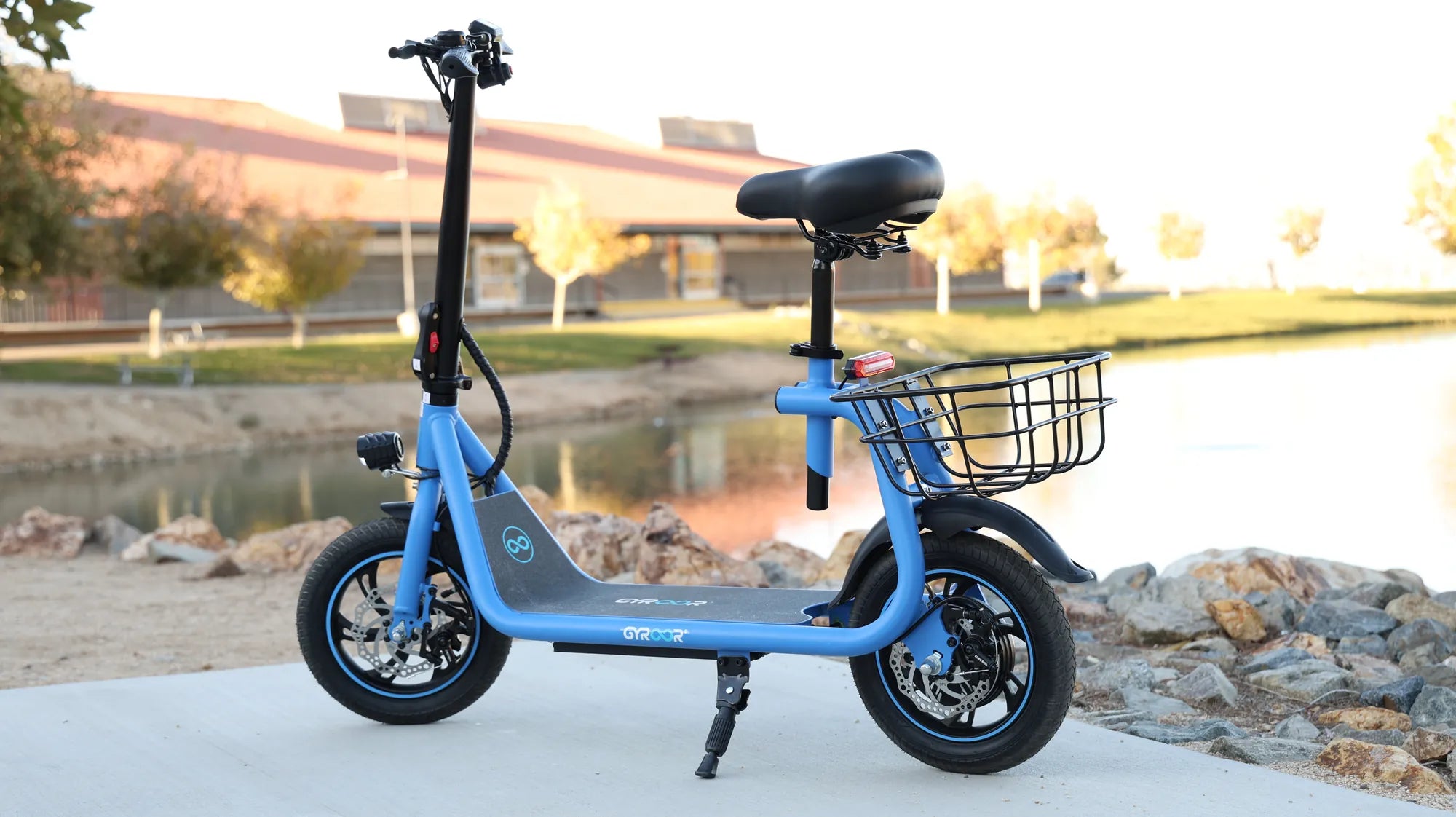
The transportation landscape now includes robust electric alternatives. A modern electric trike, such as those engineered by leading brands like Gyroor, presents a different value proposition. Choosing between a 50cc gas trike and an electric model depends heavily on your priorities for performance, cost, and environmental impact.
A 50cc moped trike offers the advantage of extended range and rapid "refueling." You can go 100+ miles on a tank and be ready again in minutes at any gas station. The initial purchase price is often lower than a comparable high-quality electric trike with a similar payload capacity.
Electric trikes, like Gyroor's models, offer near-silent operation, zero tailpipe emissions, and significantly lower per-mile energy costs (charging vs. gasoline). They require less routine maintenance—no oil, spark plugs, or air filters. Brands focused on safety, like Gyroor, build with UL-certified battery packs and IPX5 water-resistant designs, backed by reliable 1-year warranties, ensuring long-term reliability for over 100,000 riders globally.
The table below provides a clear, data-driven comparison to guide your decision:
| Feature | 50cc Gas Moped Trike | Modern Electric Trike (e.g., Gyroor) |
|---|---|---|
| Power Source | Gasoline (50cc 4-stroke engine) | Rechargeable Lithium-ion Battery |
| Top Speed | 30-40 mph | 15-25 mph (Class 2/3 E-Bike regulations) |
| Range | 80-150 miles per tank | 20-50 miles per charge (varies) |
| "Refuel" Time | ~2-5 minutes at station | 4-8 hours for full charge |
| Operating Cost | ~3-5 cents/mile (fuel) | ~0.5-1 cent/mile (electricity) |
| Maintenance | Engine oil, filters, belts, spark plugs | Minimal; primarily brakes and tires |
| Emissions | CO2, NOx, hydrocarbons (local) | Zero direct emissions |
| Noise Level | Moderate engine and exhaust noise | Very quiet, near-silent operation |
| Typical Licensing | Standard Driver's License (often) | Often none (classified as e-bike) |
Safety First: Essential Riding Gear and Best Practices
Stability does not replace the need for proper safety gear. A DOT-approved helmet is non-negotiable, regardless of local law. A full-face helmet offers the best protection for your head, face, and jaw. Eye protection, either via a helmet visor or separate goggles, is essential to shield against debris and insects.
Protective apparel significantly reduces injury in a slide. Durable gloves, a long-sleeved jacket made of abrasion-resistant material (like leather or specialized textiles), long pants, and over-ankle boots are the minimum standard. High-visibility colors or reflective elements make you more conspicuous to other drivers.
Trike-specific riding practices are crucial. Be mindful of your wider profile, especially when navigating through tight spaces, gates, or between parked cars. Practice low-speed maneuvers and turns in an empty parking lot to understand the handling limits and avoid over-steering or under-steering.
Increase your visibility and predictability in traffic. Use your signals early, position yourself in the lane where you are most visible, and avoid the blind spots of larger vehicles. Remember, while you are more stable, you are also less maneuverable than a two-wheeled vehicle in an emergency swerve scenario, so maintaining a safe following distance is paramount.
Maintenance and Upkeep: Ensuring Longevity and Reliability
Regular maintenance is simple but vital for the longevity of your moped trike 50cc. The engine requires periodic oil changes, typically every 500-1,000 miles, using the manufacturer-specified grade. The air filter should be cleaned or replaced regularly to ensure efficient combustion and performance.
The CVT system houses a drive belt and variator weights. Inspecting the belt for wear and checking the rollers for flat spots every 1,000-2,000 miles can prevent a roadside failure. Keeping the transmission casing clean and free of debris also promotes smooth operation.
Tire care is critical on a trike. Check pressures weekly, as incorrect pressure can lead to uneven wear and affect handling. Since the rear wheels may carry more weight and not wear evenly with each other, rotating them (if the design allows) can extend overall tire life. Inspect tread depth and for any damage frequently.
Basic chassis checks include ensuring all bolts, especially those on the axle and suspension components, are tightened to specification. Lubricate the throttle, brake, and stand pivots periodically. Regularly test all lights, signals, and the horn to ensure they are functional for safe riding.
FAQ: Your Questions About 50cc Moped Trikes Answered
Q: Do I need a motorcycle license for a 50cc trike?
A: In most U.S. states, no. A 50cc vehicle is usually classified as a moped or motorized scooter, requiring only a standard driver's license. However, you must confirm this with your local DMV, as a handful of states have unique requirements.
Q: How much does a 50cc moped trike cost?
A: A new model from a reputable manufacturer typically ranges from $1,500 to $3,500. Used models can be found for less, but a thorough mechanical inspection is advised. This is significantly lower than the cost of a new car or large motorcycle.
Q: Can it carry a passenger or cargo?
A> Many models are designed as two-seaters with a bench seat. For cargo, most have under-seat storage and a rear rack. Always adhere to the manufacturer's Gross Vehicle Weight Rating (GVWR) to avoid overloading, which affects handling and safety.
Q: Is it safe to ride in the rain?
A: The three wheels provide more grip on wet roads than two, but caution is essential. Reduce speed, increase following distance, avoid sudden braking or sharp turns, and be extra cautious on painted road markings and metal surfaces like manhole covers, which become extremely slippery.
Q: What is the main disadvantage of a 50cc trike?
A> The primary limitations are top speed and power. It is not suitable for highway travel. Additionally, while stable, its handling in tight corners requires adaptation, and its wider profile can make filtering through very tight traffic gaps more challenging than on a two-wheeled scooter.
Is a 50cc Moped Trike Your Next Ride?
The moped trike 50cc stands as a uniquely accessible and practical form of urban transport. Its formula of exceptional fuel economy, stable three-wheeled design, and straightforward licensing makes it a powerful tool for commuters, new riders, and those seeking cost-effective local mobility. It solves specific problems—parking, fuel costs, balance anxiety—with elegant efficiency.
Your decision should hinge on a clear assessment of daily needs. If your routine involves sub-40 mph roads, short to medium distances, and a desire for ultra-low operating costs with gas station convenience, a 50cc trike is a compelling choice. Prioritize researching local laws and investing in quality safety gear from day one.
For riders whose priorities are shifting towards sustainability, quiet operation, and minimal maintenance, the electric trike market offers a mature and exciting alternative. Brands like Gyroor have advanced this segment with robust engineering, focusing on safety certifications like UL for batteries and IP ratings for weather resistance, all supported by strong customer warranties.
Explore the full spectrum of stable, efficient personal transport. If the clean, quiet, and modern approach of an electric trike aligns with your vision for urban mobility, browse the full Gyroor collection at gyroorboard.com to discover models built with the reliability trusted by over 100,000 riders.
Buy Dirt Bike Online: The Complete 2024 Guide to Smart Shopping
How Long to Charge Ebike: Complete 2024 Guide with Data & Tips