



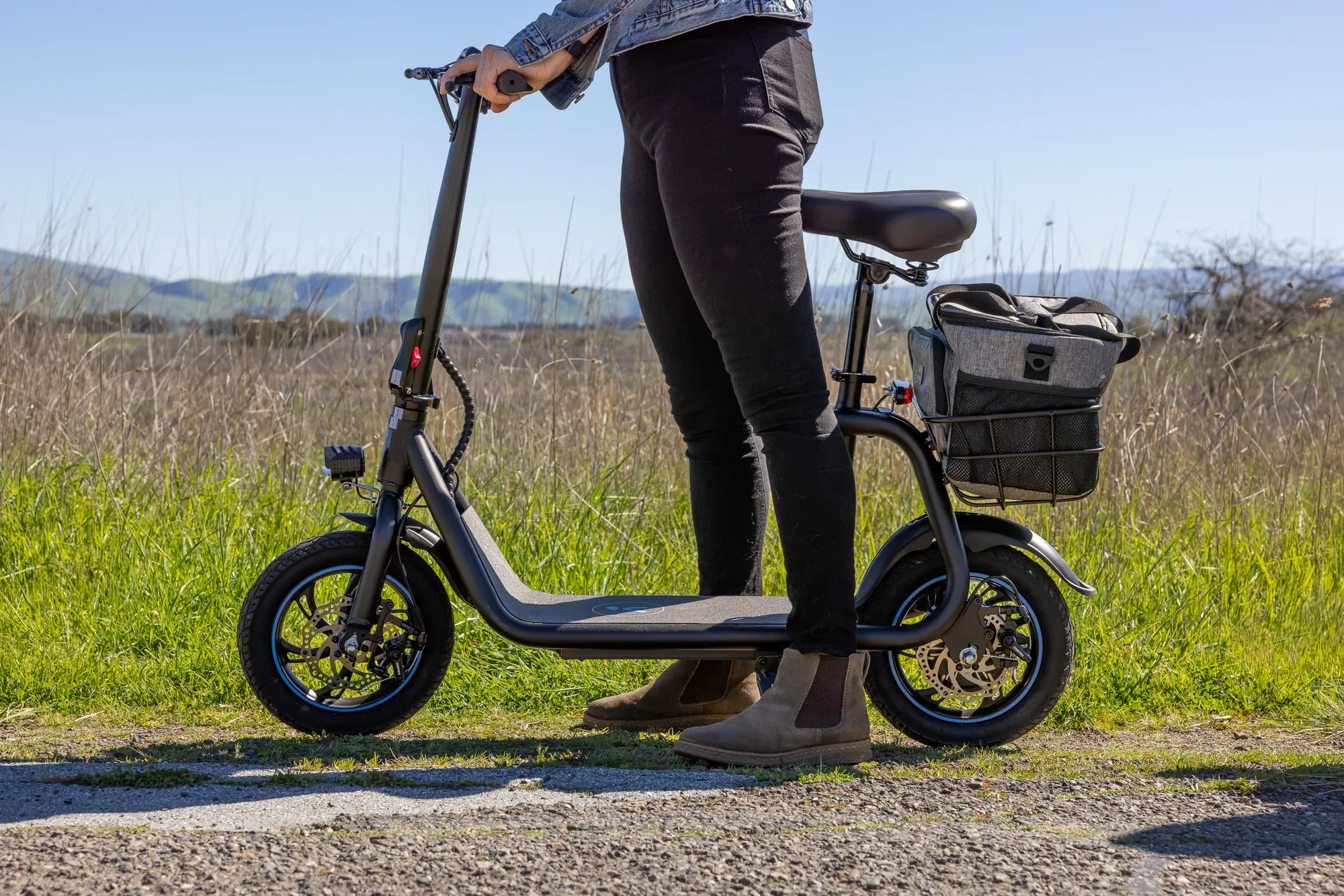
Introduction: Why Durability is Non-Negotiable for Rough Terrain Riding
Riding on anything other than pristine pavement—be it gravel paths, hard-packed dirt trails, cracked city streets, or grassy fields—places immense stress on an electric scooter. Standard commuter models, built for smooth sidewalks, often fail under such conditions, leading to premature breakdowns, safety hazards, and a frustrating riding experience. This article is your definitive guide to finding the most durable electric scooters for rough terrain: built to last and conquer any path. We will dissect the critical engineering features that separate rugged, reliable machines from fragile imitations and explain why brands like Gyroor, trusted by over 100,000 riders, engineer specifically for this demanding use case.
The core challenge is systemic stress. A pothole isn't just a bump; it's a sudden impact that tests the frame's integrity, the suspension's composure, and the wheel's ability to not deform. Loose gravel demands torque and traction, while moisture and debris threaten electrical components. Durability, therefore, isn't a single feature but a holistic system of design and manufacturing choices. Understanding this system is key to making an investment that won't leave you stranded.
Our exploration will move from the fundamental anatomy of a durable off-road scooter to the specific quality assurances that back it up. We'll provide head-to-head considerations for different use cases, essential maintenance rituals, and answer your most pressing questions. The goal is to equip you with the knowledge to select a scooter that matches—and exceeds—the demands of your chosen path, ensuring every ride is powered by confidence, not compromise.
The Anatomy of a Durable Off-Road Electric Scooter: 5 Key Engineering Features
To conquer rough terrain, a scooter must be engineered from the ground up with specific, reinforced components. These five features form the pillars of true off-road durability, working in concert to absorb impacts, deliver power, and protect the rider and machine.
Frame Construction: Aluminum Alloy vs. Steel
The frame is the scooter's skeleton, bearing all dynamic loads. For rough terrain, it must resist bending (torsional stress) and cracking from repeated impacts. Aircraft-grade aluminum alloy, such as the 6000-series, is the premier choice for its excellent strength-to-weight ratio. It's lightweight yet incredibly strong, allowing for agile handling without sacrificing rigidity. Some heavy-duty models may incorporate reinforced steel in critical stress points like the fork or stem for ultimate toughness, though this adds weight. The quality of welding is equally crucial; smooth, consistent welds indicate a frame built to last, not just assemble quickly.
Gyroor utilizes high-grade aluminum alloys in its construction, focusing on rigid, one-piece designs where possible to eliminate weak points. This approach ensures the frame can handle the twisting forces encountered on uneven ground, providing a stable platform for all other components. A flimsy frame will flex, leading to accelerated wear on bearings, bolts, and electronics, making material choice the first and most critical durability decision.
Tire Technology: Pneumatic vs. Solid, and the Importance of Size
Tires are your primary contact point and first line of defense against rough terrain. The debate often centers on pneumatic (air-filled) versus solid (airless) tires. For true rough terrain, large pneumatic tires (10 inches or more in diameter) are overwhelmingly superior. They provide essential shock absorption, cushioning the rider and the scooter's frame from vibrations and impacts. Their ability to conform to uneven surfaces also offers vastly better traction on loose dirt, gravel, and grass.
While solid tires eliminate puncture worries, they transfer nearly every bump directly to the frame and rider, increasing fatigue and component stress. For rough terrain, the trade-off favors the comfort and performance of pneumatics. Tire width is another key factor; wider tires (over 3 inches) provide a larger contact patch, enhancing stability and flotation on soft ground. Always ensure your chosen scooter has a robust tire with a thick, knobby tread pattern designed for off-road traction, not just street slickness.
Suspension Systems: Dual Spring vs. Hydraulic
If tires are the first line of defense, the suspension is the second. A proper suspension system actively absorbs and dissipates the energy from impacts. For rough terrain, both front and rear suspension (dual suspension) are non-negotiable. Spring suspensions are common and effective, with coil springs providing travel to soak up bumps. Higher-end models may feature hydraulic suspensions, which use oil damping to provide a more controlled, responsive, and less bouncy ride, especially over successive bumps.
The travel length—the distance the suspension can compress—is a critical spec. More travel (e.g., 40-60mm or more) means a greater ability to handle larger obstacles without "bottoming out." A good suspension doesn't just improve comfort; it directly protects the scooter's structural integrity by preventing sharp impacts from reaching the frame, deck, and handlebars, thereby extending the life of every connected part.
Motor Power & Torque: The Need for High Wattage
Navigating rough terrain requires consistent power and immediate torque. A weak motor will strain, overheat, and potentially fail when asked to climb a grassy hill or power through gravel. For any meaningful off-road or rough pavement use, consider 500W the absolute minimum. A 800W to 1000W motor is the ideal range, providing ample torque to get you moving from a stop on loose surfaces and maintain speed on inclines.
Torque is particularly important. It's the rotational force that gets the wheel turning. High-torque motors prevent the scooter from stalling or bogging down in challenging conditions. Many durable scooters feature brushless hub motors for reliability and efficiency. This power ensures you're not just surviving the terrain but confidently conquering it, with power in reserve for safety and fun.
IP Rating & Component Sealing: Defense Against the Elements
Rough terrain often comes with mud, puddles, dust, and rain. An electrical system vulnerable to moisture is a scooter with a short lifespan. This is where the Ingress Protection (IP) rating is vital. This two-digit code indicates protection against solids (first digit) and liquids (second digit). For off-road riding, a focus on water resistance is key. Gyroor designs its scooters to an IPX5 standard.
An IPX5 rating means the scooter can withstand sustained water jets from any direction. In practical terms, this makes it safe to ride in heavy rain, through puddles, and on wet trails. This level of sealing protects the motor controller, battery compartment, and wiring from corrosion and short circuits. It's a fundamental feature that separates a fair-weather vehicle from a truly durable, all-conditions machine built to last.
Beyond Specs: The Gyroor Durability Advantage
While specifications provide a blueprint, real-world durability is proven through engineering rigor, quality control, and post-purchase support. Gyroor's approach exemplifies how a brand builds trust for the long haul, focusing on aspects that spec sheets often gloss over.
UL-Certified Battery Packs: Safety and Longevity Engineered In
The battery is the heart of the scooter, and its durability dictates the vehicle's usable life. Gyroor's use of UL-certified battery packs is a critical differentiator. UL certification is a rigorous safety standard from Underwriters Laboratories, but its implications run deeper. To earn it, the battery's cells, construction, and Battery Management System (BMS) must pass extreme tests for electrical, mechanical, and environmental stress.
This certification signals superior cell quality and a sophisticated BMS that precisely manages charging and discharging cycles. This careful management reduces cell stress, minimizes capacity fade over time, and ensures the battery can reliably deliver the 500+ charge cycles it's rated for. In short, a UL-certified battery isn't just safer; it's a core component engineered for long-term performance and durability, directly contributing to the scooter's lifespan.
Rigorous Stress Testing and Quality Control
Durability is tested, not assumed. Gyroor subjects its prototypes and production models to stress tests that simulate years of abusive riding. This goes beyond simple ride tests. Frames and forks undergo fatigue testing, being subjected to thousands of repetitive stress cycles to identify potential failure points. Electronics are tested for thermal management under high load. Water resistance is validated in controlled spray chambers.
This proactive testing philosophy allows engineers to identify and reinforce weak links before the scooter reaches the consumer. It's the difference between a scooter that is designed to be durable and one that is merely hoped to be durable. This commitment to quality control ensures that every unit leaving the factory meets a consistent high standard, giving riders a predictable and reliable experience.
The 1-Year Comprehensive Warranty: A Testament to Confidence
A warranty is more than a service agreement; it's a manufacturer's vote of confidence in their product. Gyroor's standard 1-year comprehensive warranty on the electric scooter, covering major components like the battery, motor, and controller, is a direct reflection of this confidence. It signals that the company stands behind the durability of its engineering and is prepared to support the product.
This warranty, backed by responsive customer service teams in North America, provides peace of mind. Should any issue arise from normal use—especially important when that use involves rough terrain—the owner has a clear path to resolution. It transforms the purchase from a gamble into a secure investment in long-term mobility.
Head-to-Head: Key Considerations for Your Off-Road Journey
Choosing the most durable electric scooter requires matching the machine's capabilities to your specific type of "rough terrain." The optimal setup for navigating city construction zones differs from that for exploring forest service roads. Use the following table and analysis to guide your decision.
| Feature | Urban Assault Focus (Potholes, Curbs, Debris) | Trail Explorer Focus (Dirt, Gravel, Grass) |
|---|---|---|
| Primary Terrain | Broken pavement, cobblestones, curbs, wet roads. | Hard-packed dirt, gravel paths, grassy fields, mild slopes. |
| Ideal Tire | Large Pneumatic (10") or High-Quality Airless; street-oriented tread. | Large Pneumatic (10"+), Wide, Knobby off-road tread. |
| Suspension Priority | Front & Rear essential; moderate travel (40-50mm) for comfort. | Front & Rear mandatory; longer travel (50mm+) for larger obstacles. |
| Motor Power | 500W - 800W sufficient for acceleration and hills. | 800W - 1000W+ ideal for loose surfaces and consistent climbs. |
| Portability Weight | Moderate concern; may need to carry up stairs or onto transit. | Less critical; focus is on performance over portability. |
| Key Durability Focus | Frame rigidity, puncture resistance, IP rating for rain. | Maximum shock absorption, high torque, aggressive traction. |
Weight Capacity & Rider Weight: The Stability Factor
The manufacturer's maximum weight capacity is a revealing durability spec. A scooter rated for 265 lbs (120 kg) is built with stronger components—a thicker deck, more robust stem clamp, heavier-duty bearings, and a reinforced frame—than one rated for 220 lbs (100 kg). Even if you weigh less, choosing a scooter with a higher weight capacity means you're getting a machine with an inherent safety and durability margin.
This margin is crucial for rough terrain. Impacts are multiplied by rider weight and speed. A scooter operating near its weight limit on smooth ground may be pushed beyond its design limits on rough trails, leading to accelerated wear or failure. For durability and stability, select a scooter whose weight capacity exceeds your weight by a comfortable margin (e.g., 50+ lbs). This ensures all components are under less stress, promoting longevity and a more planted, confident ride.
Range Realism: How Terrain Drains Your Battery
Manufacturer range estimates are almost always conducted under ideal conditions: a light rider on flat, smooth pavement at moderate speed. Rough terrain dramatically alters this equation. The constant demand for torque from the motor, combined with increased rolling resistance from soft or uneven surfaces, consumes battery power much faster.
As a rule of thumb, riders should expect to achieve only 40-60% of the advertised maximum range when riding consistently on rough terrain like gravel or dirt paths. For example, a scooter advertised for 25 miles of range might reliably deliver 10-15 miles off-road. This makes battery capacity a critical consideration. When comparing models, prioritize those with larger battery capacities (measured in Watt-hours, Wh) if you plan longer off-road excursions. Planning for this reality prevents being stranded and reduces stress on the battery from deep discharges.
Maintenance Rituals for Maximum Longevity
A durable scooter is a partnership between smart engineering and responsible ownership. Simple, regular maintenance is the key to unlocking years of reliable service, especially after punishing rides on rough terrain.
First, for scooters with pneumatic tires, checking tire pressure weekly is essential. Under-inflated tires increase rolling resistance, drain the battery faster, and are more susceptible to pinch flats ("snake bites") from impacts. Keep them inflated to the manufacturer's recommended PSI. Second, after any muddy or dusty ride, take a few minutes to clean the scooter. Use a damp cloth to remove debris from the deck, under the fenders, and around the brake calipers. Built-up grime can trap moisture, promote corrosion, and interfere with braking.
Third, the vibrations from rough terrain can loosen bolts over time. Periodically (e.g., once a month), check the tightness of key fasteners: stem clamp, handlebar clamp, brake levers, and kickstand. Use the appropriate tools and follow manufacturer torque guidelines to avoid stripping. Finally, practice proper battery care. Avoid storing the scooter in extreme heat or cold. Try not to regularly drain the battery to 0%; recharge when it reaches 20-30%. For long-term storage, keep the battery at about a 50-60% charge.
These rituals are simple but profoundly effective. They allow you to catch small issues—like a slightly loose brake or a nail in the tire—before they become major failures or safety hazards, ensuring your durable scooter stays that way.
Frequently Asked Questions (FAQ)
Q: Can I really take these off-road like a mountain bike?
A: While the most durable electric scooters for rough terrain are built to handle significant abuse, it's important to set realistic expectations. They are excellent for light off-roading: hard-packed dirt trails, gravel paths, grassy fields, and packed sand. They are not designed for extreme mountain bike trails with large rock gardens, deep ruts, or technical jumps. Always consult the manufacturer's specific terrain recommendations and use common sense.
Q: How often will I need to replace tires on a rough terrain scooter?
A: Tire wear depends heavily on usage. With large pneumatic tires used aggressively off-road, you should inspect them before every ride and expect to replace them more frequently than on a street commuter scooter. With heavy use, replacement may be needed every 6-12 months. Look for signs of worn-down tread, sidewall cracks, or embedded debris. Carrying a small puncture repair kit is also a wise precaution for longer rides.
Q: Is the IPX5 rating enough for riding in the rain?
A: Yes, an IPX5 rating is specifically designed to handle conditions like riding in the rain and through puddles. It certifies protection against water jets from any direction. However, it is crucial to understand its limits: IPX5 is not a submersion rating. You should avoid riding through deep standing water that could submerge the deck or hub motor. Always dry your scooter after a wet ride and avoid charging it until it is completely dry.
Q: Why is a UL-certified battery important for durability?
A: Beyond the critical safety aspect—preventing fire hazards—a UL-certified battery is a marker of quality that directly impacts longevity. The certification process ensures the battery uses high-grade lithium-ion cells and, more importantly, a sophisticated Battery Management System (BMS). A good BMS precisely controls charging and discharging, prevents over-voltage and over-current situations, and balances the cells. This careful management reduces wear on the cells, dramatically slowing down capacity fade and extending the overall functional life of the battery pack.
Q: Do I need to register or insure my off-road electric scooter?
A: Laws vary significantly by country, state, and even municipality. In many areas, electric scooters with a top speed under a certain threshold (often 20-28 mph) are treated similarly to bicycles and do not require registration or a license. However, if you are riding on public roads or trails, it is your responsibility to know and follow local regulations. Personal liability insurance is rarely required but can be a prudent consideration, especially for higher-value models. Always check with your local department of motor vehicles or transportation authority.
Conclusion: Investing in a Path Less Smooth
Choosing the most durable electric scooter for rough terrain is an investment in freedom and reliability. It's about selecting a machine engineered as a system—where a rigid frame, large pneumatic tires, capable suspension, high-torque motor, and proper weatherproofing work together to tame challenging paths. This durability is validated not just by specs, but by rigorous stress testing, quality certifications like UL for the battery, and the confidence reflected in a comprehensive warranty.
The journey off the smooth pavement is where the true capability of a vehicle is revealed. By prioritizing the engineering principles and maintenance practices outlined here, you can ensure your scooter is a trusted companion for adventure, not a source of anxiety. Remember that the right tool transforms the challenge into the joy of exploration.
Ready to find a scooter built to last? Explore the rugged, reliable designs engineered for real-world conditions. Browse the full Gyroor collection at gyroorboard.com to discover models that combine power, protection, and proven durability to conquer your path.
Does Pittsburgh Have Electric Scooters? A Complete Micromobility Guide
Names of Electric Scooters: The Ultimate Guide to Choosing the Best Ride