



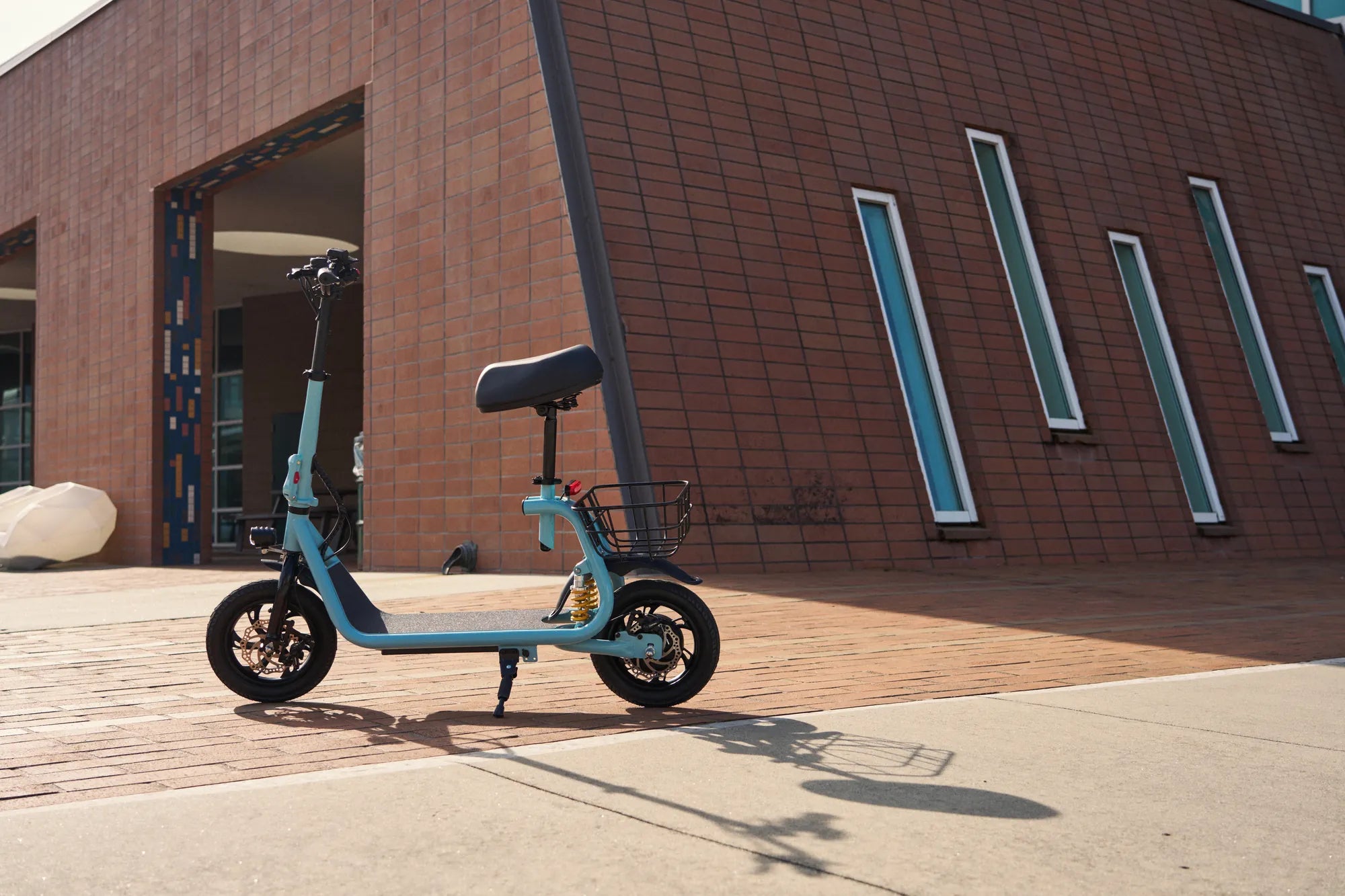
Introduction: Why a Pair of Electric Scooters is the New Commuting Power Couple
Owning a single electric scooter changes how one person moves. Owning a pair transforms how an entire household travels. This guide is dedicated to the strategic decision of investing in two electric scooters, a move that unlocks unparalleled convenience, deepens financial savings, and amplifies your positive environmental impact. We will dissect the tangible benefits, from eradicating the need for a second car to fostering a shared, active lifestyle. You will learn how to select the perfect scooter duo tailored to your collective needs, ensure their long-term durability, and ultimately, master a new form of eco-friendly commuting built for two. This is more than a purchase; it's an upgrade to your household's mobility infrastructure.
The Tangible Benefits of Investing in Two Scooters, Not Just One
The leap from one scooter to two creates a synergistic effect where the whole is greater than the sum of its parts. While a single scooter serves an individual, a pair serves a system—your household's daily flow of people and tasks. The primary advantage is the elimination of scheduling conflicts and vehicle dependency. No more debates over who gets the scooter today; both partners can commute emission-free, run errands simultaneously, or embark on spontaneous trips together.
This shift directly challenges the necessity of a second car. For many urban and suburban households, a second vehicle sits idle over 95% of the day, accruing costs without providing proportional value. A pair of electric scooters offers a dynamic, on-demand alternative for the majority of short-to-medium trips, which constitute over 60% of all personal vehicle journeys according to urban mobility studies. The freedom gained is not just logistical but financial and environmental.
Beyond practicality, investing in a pair fosters a shared commitment to a sustainable lifestyle. It turns eco-conscious travel from a solo act into a collective habit. Riding together for leisure or commute strengthens community, encourages outdoor activity, and visually champions a cleaner mode of transport. This shared experience is a powerful, often overlooked benefit that enhances quality of life and aligns daily actions with environmental values.
Financial and Environmental ROI: Crunching the Numbers
The financial argument for a pair of scooters versus a second car is compelling. Let's examine a clear comparison. The average used compact car has a purchase price of $12,000. Annual costs include insurance ($1,200), fuel ($1,500), maintenance ($800), and parking ($600), totaling over $4,100 per year.
In contrast, a pair of reliable, feature-rich electric scoototers, such as those from Gyroor, represents a one-time investment typically between $1,600 and $2,500. Annual operating costs are minimal: electricity for charging (approx. $30 for both), basic maintenance ($100), and no insurance, registration, or parking fees. The payback period is often less than one year when factoring in avoided car costs.
Environmentally, the impact is stark. A typical gasoline-powered car emits about 4.6 metric tons of CO2 annually. Replacing its use for a 10-mile daily commute with two electric scooters can prevent over 3 metric tons of CO2 emissions each year, as e-scooters produce zero direct emissions and have a vastly smaller manufacturing footprint. This dual investment directly translates into a halved carbon footprint for household travel.
Syncing Lifestyles: From Errands to Adventures
Owning a matched set of scooters synchronizes daily life. Imagine coordinating commutes to nearby workplaces, turning a routine drive into a shared morning ride. Errands become efficient duets: one partner can head to the grocery store while the other visits the post office, both completing tasks in the time it would take a single car to navigate traffic and parking for one stop.
Weekends are transformed. A pair of scooters enables effortless exploration of local parks, beachfront paths, or urban trails that are inaccessible or stressful by car. It encourages micro-adventures, turning a simple coffee run into a scenic tour of your neighborhood. This accessibility to spontaneous, joint activity strengthens relationships and creates shared memories, all while utilizing a clean, silent, and fun mode of transport.
For families with older children or roommates in shared households, a scooter pair solves the "last-mile" problem for everyone. It provides independent mobility without the cost and complexity of multiple cars. This shared resource model is not only economical but builds a sense of communal responsibility around the care and use of the vehicles.
Key Considerations When Choosing Your Scooter Pair
Selecting two scooters requires a holistic view of your household's needs. The goal is complementary, not necessarily identical, units. Start by auditing your typical travel patterns: list all regular trips, distances, riders' weights, and prevalent terrain (smooth pavement, hills, light off-road). This data will inform your spec requirements.
Consider the storage and charging logistics for two units. Do you have adequate, secure space to park and plug in both scooters simultaneously? Folding mechanisms and weight become twice as important when managing a pair. Also, factor in the aesthetic and functional cohesion; while specs may differ, choosing scooters from the same reputable brand often ensures parts compatibility, unified app control, and consistent build quality, simplifying maintenance and the user experience.
Finally, assess the legal landscape. Research local regulations for e-scooters regarding where they can be ridden (bike lanes, roads, sidewalks), speed limits, and any age or helmet requirements. Ensuring both of your chosen models are compliant from the start prevents future headaches and promotes safe, lawful riding habits for both users.
Matching Performance to Need: Speed, Range, and Terrain
Performance matching is crucial. Avoid the trap of buying two overpowered (and overpriced) scooters if only one user needs high performance. A strategic pairing might involve one long-range, high-speed model for a partner with a 15-mile round-trip commute, and a more compact, ultra-portable model for the other who has a shorter commute but needs to carry it on public transit.
Always reference the manufacturer's tested range under standard conditions, not the theoretical maximum. Real-world range is affected by rider weight, incline, temperature, and riding style. For a reliable pair, look for brands that provide transparent, verified data. Gyroor, for instance, publishes range figures based on standardized testing with a 165 lb rider at 15 mph on flat terrain, giving you a realistic baseline for planning.
Terrain dictates motor power and suspension. If one rider encounters hills, a motor with higher continuous wattage and torque is non-negotiable. For mixed urban terrain with cracks and curbs, dual suspension on at least the primary scooter enhances comfort and control. The secondary scooter for smoother paths might prioritize a lighter frame over advanced suspension.
Prioritizing Safety and Compliance as a Unit
Safety is paramount and must be standardized across both scooters. The absolute baseline is a UL-certified battery system, which has passed rigorous tests for electrical and fire safety. This certification is a non-negotiable feature for any scooter sharing your home's charging space.
Braking systems should be robust and redundant. A combination of electronic (regenerative) and mechanical (disc or drum) brakes on each scooter provides reliable stopping power in all conditions. Lighting is equally critical for a pair; both scooters must have bright front headlights, rear brake lights, and side reflectors to ensure high visibility when riding together at dawn, dusk, or night.
Establish a household safety protocol. This includes mandating helmet use for all rides, understanding right-of-way rules in bike lanes, and practicing defensive riding techniques together. Investing in high-visibility vests or attachments for both scooters further enhances safety when riding as a pair in traffic.
Spotlight on Durability and Warranty: Protecting Your Dual Investment
When you purchase two scooters, the stakes for reliability are doubled. Durability is no longer a convenience; it's an economic imperative. Key durability features include high-quality construction materials, such as aerospace-grade aluminum frames, and ingress protection ratings for water and dust resistance.
An IPX5 water-resistance rating, a standard across Gyroor's scooter lineup, is highly recommended for a scooter pair. It means both units can withstand water jets from any direction, making them resilient against rainy commutes, wet roads, and accidental splashes. This ensures that a sudden downpour doesn't sideline one or both of your primary transit options.
The warranty and customer support structure is your financial safety net. A comprehensive 1-year warranty that covers the motor, battery, controller, and frame on both scooters protects your investment from manufacturing defects. Prioritize brands with established, accessible customer service in your region, as support for issues, even minor ones, needs to be efficient for both units to keep your household mobile.
Technical Deep Dive: Understanding the Specs for Your Duo
To make an informed decision, you must speak the language of scooter specifications. The core specs are motor power (in watts), battery capacity (in Watt-hours, Wh), and voltage (V). Motor power (e.g., 350W, 500W) determines acceleration and hill-climbing ability. For a pair, ensure the lower-powered scooter still meets its user's needs on their specific route.
Battery capacity is the fuel tank. Watt-hours (Volts x Amp-hours) is the most accurate measure. A larger Wh rating generally means a longer range. For example, a 36V 10.4Ah battery is 374 Wh. When comparing two potential scooters for your pair, use the Wh rating, not just the "Ah," for an apples-to-apples range potential comparison.
Other critical specs include the wheel type and size (air-filled tires offer better shock absorption than solid ones), the deck size and weight capacity (must accommodate each rider comfortably), and the presence of a clear, functional digital display for speed, battery level, and mode settings on each unit. Consistency in display layout between the two scooters can reduce the learning curve.
Curated Pairing Suggestions: From Budget-Friendly to Premium Duos
Based on common household profiles, here are strategic pairing suggestions. These hypothetical pairings use general performance tiers to guide your selection, emphasizing how to match models to shared and individual needs.
The Urban Commuter Pair
Ideal for city-dwelling couples with similar sub-10-mile commutes on paved surfaces. This duo prioritizes portability, foldability, and reliable daily range.
Scooter 1 & 2 (Identical): Lightweight (under 30 lbs), compact folding design, 15-20 mile real-world range, 15-18 mph top speed, air-filled tires, and a bright headlight. The focus is on ease of carrying onto buses or trains, storing under a desk, and navigating crowded sidewalks. Dual mechanical brakes and an IPX5 rating ensure all-weather readiness for both.
The Versatile Adventure Pair
Designed for a household with diverse needs—one primary commuter and one weekend explorer. This pair maximizes flexibility.
Scooter 1 (The Commuter): A long-range (25-35 mile), comfortable cruiser with a wider deck, dual suspension, and a 350W-500W motor for steady pace. It focuses on comfort for daily use.
Scooter 2 (The Adventurer): A higher-performance model with off-road capabilities: 500W+ motor, 8.5-10 inch pneumatic tires, enhanced suspension, and a robust frame for light trails. It serves weekend fun and handles rougher terrain.
The Family & Household Pair
For families with teens or adult children, or roommates sharing expenses. Balances affordability with dependable performance for multiple users.
Scooter 1 (Primary/Adult): A mid-range all-rounder with a 300-400W motor, 20-mile range, and a higher weight capacity. Serves as the workhorse.
Scooter 2 (Secondary/Teen): A slightly more budget-conscious model with a speed limiter function (adjustable to comply with local youth laws), essential safety features, and a durable but simpler design. Teaches responsibility while providing independent mobility.
Maintenance and Care for Your Scooter Fleet
Proactive maintenance for two scooters is simple but systematic. Create a shared maintenance log. Basic weekly checks should include tire pressure (for pneumatic tires), brake function, and light operation on both units. Keep tires properly inflated to maximize range and prevent flats.
Cleaning is important. Wipe down both scooters with a damp cloth after riding in wet or dirty conditions. Avoid high-pressure hoses. For charging, use only the provided charger for each specific scooter. Establish a routine where both scooters are charged after use, avoiding deep discharges to prolong battery life. Store them in a dry, temperate place, away from extreme heat or cold.
Learn to recognize common issues: unusual noises from the motor or brakes, significant reduction in range, or a wobbly stem. Having a basic toolkit and spare parts like inner tubes (for models with air-filled tires) for both scooter types can resolve minor issues quickly, keeping your pair on the road.
Comparison Table: Second Car vs. Scooter Pair
| Feature | Second Compact Car | Pair of Electric Scooters |
|---|---|---|
| Upfront Cost | $12,000+ | $1,600 - $2,500 |
| Annual Operating Cost | $4,100+ (Fuel, Insur., Maint.) | $130 (Electricity, Maint.) |
| Parking | Monthly fees, space search | Free, minimal indoor space |
| CO2 Emissions (Annual) | ~4.6 Metric Tons | < 0.1 Metric Tons (from grid) |
| Maintenance Complexity | High (Professional often needed) | Low (Basic user care) |
| Commute Flexibility | Stuck in traffic, parking stress | Use bike lanes, agile, park anywhere |
| Household Utility | One user at a time | Two independent users simultaneously |
Conclusion: Embracing a Shared, Sustainable Journey
Investing in a pair of electric scooters is a decisive step toward a smarter, greener, and more connected lifestyle. It represents a clear financial calculation that favors long-term savings over perpetual car expenses, and an environmental choice that tangibly shrinks your household's carbon footprint. Beyond the data, it gifts you and your partner, family, or roommates a shared sense of freedom—the ability to glide through traffic, explore your community with ease, and turn daily commutes into moments of enjoyment. This guide has equipped you with the framework to select, maintain, and fully utilize your scooter duo. Now, the path forward is to research, compare, and imagine the possibilities of riding together. Explore a range of reliable, well-engineered options designed for real-world use and backed by strong warranties.
Ready to start your journey as a two-scooter household? Browse the full Gyroor collection at gyroorboard.com to find the perfect pair that matches your needs, from UL-certified batteries and IPX5 water-resistant designs to models built for every type of commute and adventure.
FAQ: Your Questions About Scooter Pairs, Answered
Q1: Do we need to buy two identical electric scooters?
A: Not necessarily. While identical models simplify charging and maintenance, a strategic pair often involves different specs tailored to each rider's primary use (e.g., a long-range commuter + a portable errand-runner). The key is ensuring both meet core safety standards (UL-certified battery, good brakes) and your household's collective needs.
Q2: Can we charge both scooters at the same time on the same circuit?
A: Typically, yes. Most e-scooter chargers draw between 50W and 150W. Two chargers would draw 100W-300W, which is far less than a hair dryer (1,500W) or microwave (1,000W) and is perfectly safe for a standard 15-amp household circuit. Avoid using extension cords as a permanent solution and always use the manufacturer-provided charger for each scooter.
Q3: How do we handle maintenance and repairs for two scooters?
A> Proactive, shared care is best. Perform basic checks (tire pressure, brakes, lights) together weekly. Keep a shared log for any issues. Purchasing from a brand with a strong warranty and accessible customer support, like Gyroor's 1-year comprehensive warranty, streamlines the process. Having a basic toolkit and model-specific spare parts (e.g., tubes) for both can resolve minor issues quickly.
Q4: Is it safe for two people to ride on one scooter?
A: No. Electric scooters are designed and certified for a single rider. Riding double significantly overloads the scooter's weight capacity, dangerously compromises braking efficiency and stability, and voids the warranty. It is also illegal in most jurisdictions. For shared trips, each rider should use their own scooter.
Q5: What's the best way to secure our pair of scoototers when parked in public?
A> Use a high-quality, hardened steel U-lock or heavy-duty chain lock for each scooter. Lock each scooter through the frame (not just the stem) to a fixed, immovable object. If possible, lock them to each other AND to the object for added security. Consider a secondary motion alarm or a GPS tracker for high-theft areas. Never rely solely on the scooter's built-in electronic lock.
Are Electric Scooters Allowed? A Complete Guide to Laws and Safety
Are Electric Scooters Allowed? A Complete Guide to Laws and Safety