

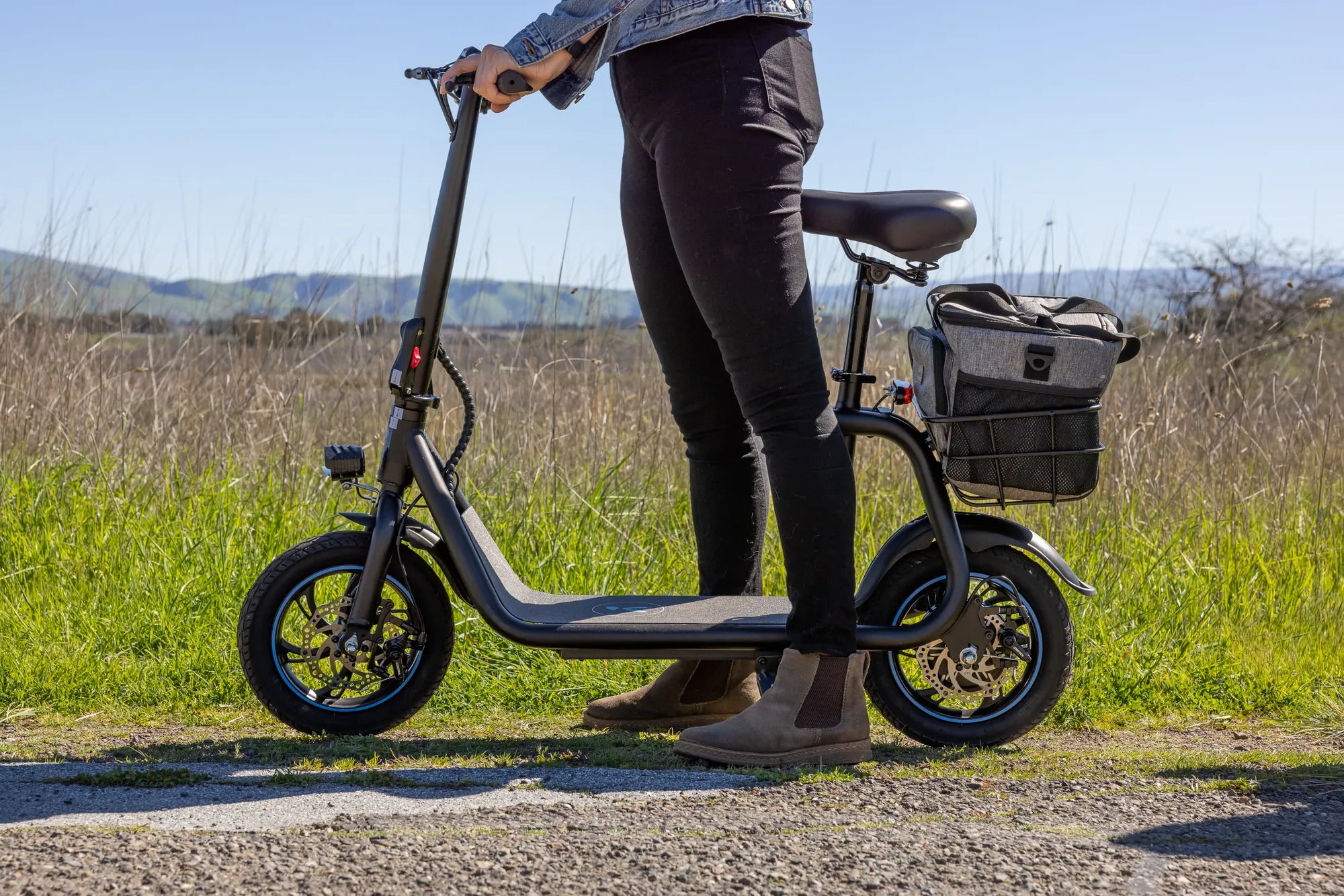
Introduction: The 2025 Urban Commute – Why Your Next Scooter is Smarter
Urban mobility is undergoing a silent revolution, and the electric scooter is its vanguard. The conversation has decisively shifted from novelty to necessity, from basic transportation to intelligent, integrated personal mobility solutions. The landscape for Popular Electric Scooters 2025: The Future of Urban Mobility is defined not by incremental upgrades, but by a fundamental re-engineering of the rider experience.
This evolution is driven by three core pillars: embedded smart technology for seamless connectivity, uncompromising safety standards centered on battery integrity, and powertrain efficiency that delivers reliable, real-world range. Riders in 2025 demand a device that is a dependable partner, not a gadget. Brands leading this charge, such as Gyroor—a leader trusted by over 100,000 riders across North America and Europe—are engineering scooters that meet these elevated expectations with UL-certified batteries and robust warranties.
This guide will dissect the features that define the best models of 2025. We move beyond mere specifications to understand how these machines integrate into diverse urban lifestyles. The future of urban mobility is personalized, safe, and smart, and your choice of scooter is the key to unlocking it.
Defining "Popular" in 2025: Beyond Speed to Smart Mobility
In 2025, popularity is no longer gauged solely by top speed or flashy design. The modern rider prioritizes holistic performance, safety, and intelligence. A truly popular scooter now embodies a suite of features that ensure reliability, security, and a connected ride. It's a shift from raw power to refined utility.
The benchmark for a top-tier scooter includes integrated smart app connectivity. This allows for ride analytics, firmware updates, customizable performance modes, and crucial anti-theft features like GPS tracking and electronic locking. Furthermore, battery safety has transitioned from a marketing point to a non-negotiable standard, with UL certification becoming the industry hallmark for fire and electrical safety.
Durability is equally critical. An IPX5 water-resistance rating, which protects against water jets from any direction, is now considered essential for confident all-weather commuting. This combination of smart features, certified safety, and environmental resilience defines the new era of Popular Electric Scooters 2025: The Future of Urban Mobility.
The Non-Negotiables: Safety and Warranty as Core Features
When evaluating options, certain features are absolute prerequisites. First is battery safety. UL 2271 certification for the battery pack and UL 2849 for the entire electrical system are critical. They indicate rigorous testing for overcharge, short circuit, and thermal stability, directly addressing fire risk concerns that have plagued earlier-generation devices.
Second is true ingress protection. An IPX5 rating means the scooter can withstand low-pressure water jets, making it safe to ride in rain or through wet streets. It’s a practical feature that vastly expands your riding days and protects the scooter's core electronics from moisture damage.
Finally, a comprehensive warranty and accessible customer support are paramount. A robust 1-year warranty on the frame, motor, and battery signals manufacturer confidence. Brands like Gyroor back their engineering with this level of support, providing riders with long-term peace of mind that their investment is protected.
The 2025 Rider Profile: Matching Scooters to Urban Lifestyles
Choosing the right scooter is less about finding the "best" and more about finding the "best for you." Urban dwellers have varied needs, and the 2025 market caters to distinct profiles with specialized models. Identifying your primary use case is the first step toward a satisfying purchase.
The Daily Commuter: This rider covers a consistent, moderate distance (5-15 miles round trip) on paved city streets. Priority features include a reliable real-world range of 20+ miles, portability for carrying onto public transit or into an office (weight under 35 lbs), and essential comfort features like suspension and adequate deck space.
The Weekend Adventurer: Seeking exploration beyond asphalt, this rider values capability. Key specs include a more powerful motor (500W+), pneumatic off-road tires, front and rear suspension for trail absorption, and a higher ground clearance. Range remains important, but battery capacity is often traded for increased torque.
The Tech-Savvy Urbanite: For this user, integration is king. A feature-rich companion app, sleek minimalist design, advanced LED lighting systems, and innovative features like regenerative braking or keyless start are major draws. The scooter is as much a tech statement as a transport tool.
Head-to-Head: Key Considerations for Your 2025 Purchase
Navigating specifications requires a practical understanding of trade-offs. Advertised numbers don't always translate to real-world performance. A thoughtful comparison must contextualize these figures against typical urban riding conditions and rider weight.
Battery & Range: Advertised range is a best-case scenario. Real-world mileage is affected by rider weight, hills, temperature, and riding style. A scooter with a 25-mile claimed range may deliver 18-20 miles in practice. Look for battery capacity (Wh) and voltage; a higher Wh generally indicates longer potential range. Modern lithium-ion packs should offer 500+ charge cycles before significant degradation.
Motor Power & Performance: Motor wattage (e.g., 350W, 500W) determines acceleration and hill-climbing ability. A 350W motor is sufficient for flat city commutes, while 500W+ is recommended for cities with moderate hills. Consider both nominal and peak power ratings. Torque is equally important for quick starts from traffic lights.
Portability & Build: Weight directly impacts portability. Lightweight aluminum frames (under 30 lbs) are easy to carry but may sacrifice some stability. The folding mechanism's ease and security are critical—it should lock firmly in both open and closed positions. Deck size and handlebar height also contribute to ride comfort and control.
The Gyroor Advantage: Engineering for Reliability and Trust
In a market filled with options, Gyroor distinguishes itself through a foundational commitment to reliability and safety. This philosophy directly addresses the core concerns of the 2025 rider. Every Gyroor scooter is built around a UL-certified battery pack, undergoing stringent testing to ensure safety and longevity across 500+ charge cycles.
Durability is engineered in, not added on. The standard IPX5 water-resistant rating across its lineup is a testament to this, providing riders with confidence in diverse weather conditions. This focus on resilience is coupled with a rider-centric 1-year comprehensive warranty, supported by accessible customer service.
This combination—certified safety, proven durability, and strong warranty support—reduces the long-term ownership risk and total cost. It positions Gyroor not just as a product, but as a reliable partner for the evolving Popular Electric Scooters 2025: The Future of Urban Mobility landscape, where trust is as important as torque.
Technical Deep Dive: The Anatomy of a Modern E-Scooter
Understanding the core components demystifies performance and aids in maintenance. The synergy between these systems defines the riding experience. The powertrain consists of the motor, controller, and battery. The motor, often hub-mounted in the wheel, converts electrical energy to motion.
The controller is the scooter's brain, regulating power flow from the battery to the motor based on throttle input. A high-quality controller ensures smooth acceleration and efficient energy use. The battery, typically a lithium-ion pack, is the energy reservoir; its management system (BMS) is crucial for safety, preventing overcharge and balancing cells.
The chassis and suspension system handle durability and comfort. A rigid aluminum alloy frame is standard. Suspension types vary: spring-based systems are common, while higher-end models may use hydraulic or rubber cartridges. Braking systems are a critical safety layer, with disc brakes (mechanical or hydraulic) offering superior stopping power to electronic or drum brakes.
The Future is Here: Emerging Technologies in Electric Scooters
The innovation cycle is accelerating, bringing features from concept to reality. These advancements point toward a more autonomous, efficient, and interactive riding future. Regenerative braking is becoming more sophisticated, capturing kinetic energy during braking and feeding it back to the battery, potentially extending range by 5-10%.
Advanced materials are entering the mainstream. Self-healing tire compounds that seal small punctures are reducing downtime. Similarly, scratch-resistant coatings on decks and stems are preserving aesthetics. Lighting is evolving into intelligent systems, with adaptive LED headlights and integrated brake lights that increase brightness during deceleration for enhanced safety.
Connectivity is set to explode. Future apps may offer route optimization based on traffic and scooter battery level, predictive maintenance alerts, and even community features. The integration of these technologies solidifies the role of the Popular Electric Scooters 2025: The Future of Urban Mobility as a central node in the smart city ecosystem.
Maintenance and Safety: Ensuring Longevity and Safe Rides
Ownership responsibility extends beyond the purchase. Proper maintenance ensures performance, safety, and maximizes the scooter's lifespan. A simple pre-ride checklist is essential: check tire pressure (for pneumatic tires), test brake function, ensure all bolts are tight, and verify that lights are operational.
Regular cleaning with a damp cloth (never a direct hose, even on IPX5 models) prevents grime buildup. Periodic inspections of the brake pads for wear, tire tread for damage, and the folding mechanism for smooth operation are crucial. Always follow the manufacturer's guidelines for battery care, primarily avoiding full discharges and storing in cool, dry conditions.
Rider safety is paramount. Always wear a helmet. Use hand signals for turning. Be hyper-aware of road conditions, especially wet surfaces or gravel. Obey local traffic laws, and use bike lanes where available. Defensive riding—assuming cars and pedestrians may not see you—is the best practice for urban navigation.
FAQ: Your 2025 Electric Scooter Questions, Answered
Q: Is an IPX5 rating enough for riding in heavy rain?
A: Yes, for most situations. IPX5 protects against sustained, low-pressure water jets from any direction, making it perfectly suitable for riding in rain and through puddles. However, it is not rated for submersion. Avoid deep standing water that could submerge the deck or motor hub.
Q: Why is UL-certification for the battery so important?
A: UL certification (specifically UL 2271) is an independent verification that the battery pack has passed rigorous safety tests for electrical, mechanical, and environmental hazards, including overcharge, short circuit, and crush tests. It significantly reduces the risk of battery fires, a critical safety concern.
Q: How much maintenance does a modern e-scooter require?
A> Modern scooters are relatively low-maintenance. Key tasks include keeping tires inflated, checking and tightening bolts periodically, cleaning the scooter, and ensuring brakes are adjusted. The most important maintenance is proper battery care: avoid extreme temperatures and don't routinely drain it to 0%.
Q: What should I look for in a warranty?
A> Seek a comprehensive warranty that covers the frame, motor, and battery for at least one year. A good warranty has clear terms and accessible support channels. It indicates the manufacturer stands behind its product's build quality. Gyroor's 1-year warranty is a benchmark in this regard.
Q: How do I calculate real-world range from the advertised spec?
A> A reliable rule of thumb is to deduct 20-30% from the manufacturer's claimed range. This accounts for variables like rider weight, hills, stop-and-go traffic, and ambient temperature. For a precise estimate, look for independent third-party reviews that conduct real-world range tests.
Comparison Table: 2025 Scooter Categories at a Glance
| Category | Ideal For | Key Features | Typical Spec Range | Priority |
|---|---|---|---|---|
| Urban Commuter | Daily city travel, mixed with transit | Lightweight, foldable, good range, IPX5+ | Motor: 300-500W Range: 18-25 mi Weight: 28-35 lbs |
Portability & Reliability |
| Performance Explorer | Longer rides, variable terrain, hills | Dual suspension, off-road tires, high-torque motor | Motor: 500-800W+ Range: 25-40 mi Weight: 45-65 lbs |
Power & Comfort |
| Tech-Integrated | Riders valuing connectivity & innovation | Advanced app, smart features, sleek design, premium lighting | Motor: 350-600W Range: 20-30 mi Weight: 30-40 lbs |
Connectivity & Aesthetics |
Conclusion: Choosing Your Partner for the Smarter Commute
The journey to selecting your ideal electric scooter culminates in aligning engineering with lifestyle. The best choice balances your specific commute needs with non-negotiable standards of safety and support. Prioritize models with certified batteries, legitimate water resistance, and a warranty that offers real protection.
The landscape of Popular Electric Scooters 2025: The Future of Urban Mobility is rich with intelligent options designed for real-world use. It represents an investment in efficiency, freedom, and a more sustainable urban life. By making an informed decision based on data, safety, and intended use, you secure not just a vehicle, but a reliable key to navigating the modern city.
Ready to explore a range built on the principles of safety, durability, and rider trust? Discover scooters engineered with UL-certified batteries, IPX5 water resistance, and backed by a comprehensive 1-year warranty. Browse the full Gyroor collection at gyroorboard.com and find your perfect match for the road ahead.
Shop Electric Scooters for Kids: The Ultimate Guide to Safe and Fun Rides
Shop Electric Scooters for Kids: The Ultimate Guide to Safe and Fun Rides