



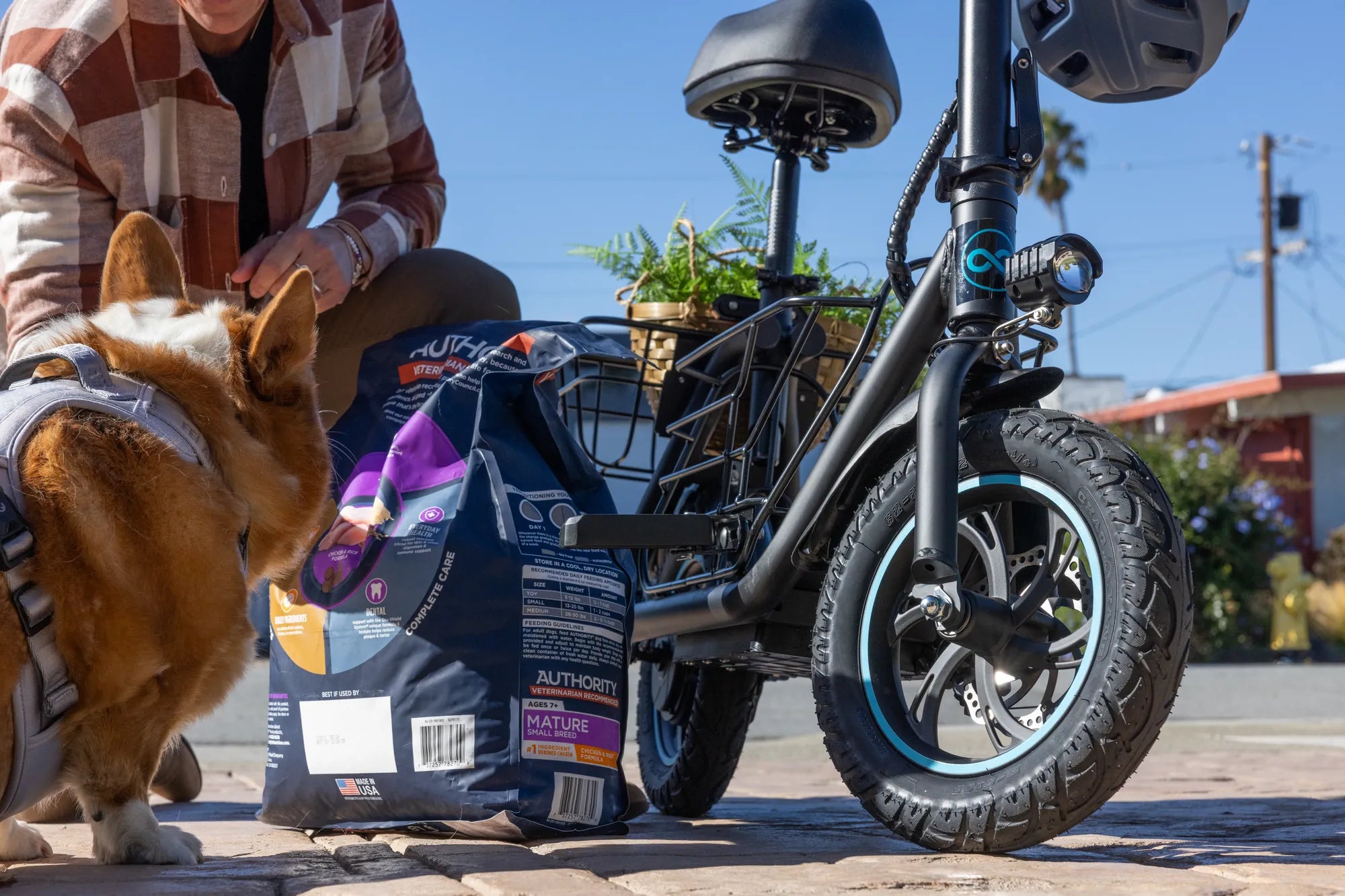
Introduction: The Rise of the Portable Foldable E-Bike
Urban mobility is undergoing a quiet revolution, driven by the need for efficient, flexible, and space-conscious transportation. At the forefront of this shift is the portable foldable e-bike, a versatile machine that combines electric assist with a compact, storable form factor. This guide will dissect every aspect of these innovative vehicles, from their core components and undeniable benefits to the critical features that ensure a safe, long-lasting investment. You'll learn how a well-engineered portable foldable e-bike can seamlessly integrate into a multi-modal commute, solve storage dilemmas, and provide a cost-effective, eco-friendly alternative to car dependency. As a leader in the micro-mobility space, Gyroor has leveraged its experience from electric scooters to engineer e-bikes that prioritize the safety and reliability demanded by over 100,000 riders.
What Exactly is a Portable Foldable E-Bike?
A portable foldable e-bike is a full-featured electric bicycle equipped with a battery-powered motor to provide pedal assistance, all built upon a frame engineered to fold into a compact size. This dual functionality distinguishes it from both standard, non-folding e-bikes and traditional, non-electric folding bicycles. The defining characteristic is its ability to transform from a rideable vehicle into a package manageable enough to carry onto public transit, store in a small closet, or fit into a car trunk. The integration of the electric drive system—comprising a motor, battery, controller, and display—into a robust folding mechanism is where engineering excellence is paramount. This category is designed for the modern urbanite, the apartment dweller, the commuter, and the traveler who values flexibility above all.
Key Components of a Quality Foldable E-Bike
The value and performance of a portable foldable e bike hinge on four primary systems working in harmony. First, the frame and folding mechanism form the foundation; typically constructed from aluminum alloy for a balance of strength and weight, the hinges and latches must be secure, easy to operate, and designed to maintain structural rigidity when unfolded. Second, the motor, usually a hub motor in the rear or front wheel, provides the assist. Wattage ratings from 350W to 750W determine hill-climbing capability and acceleration. Third, the battery pack, its capacity measured in Watt-hours (Wh), dictates the riding range. A quality battery from a reputable brand is non-negotiable for safety and longevity. Finally, the controller and user interface manage the power delivery from the battery to the motor based on the rider's selected assist level and pedal input.
Top 5 Benefits of Owning a Portable Foldable E-Bike
The appeal of the portable foldable e-bike extends far beyond novelty. It delivers tangible solutions to everyday logistical and financial challenges faced by city residents and commuters. By consolidating the benefits of electric propulsion with unprecedented portability, it creates a new category of personal utility vehicle. The following advantages explain its rapidly growing popularity and why it represents a smart upgrade to your daily routine.
Ultimate Space Saver for Urban Living
For those living in apartments, condominiums, or homes with limited garage space, storage is a constant challenge. A standard bicycle or e-bike can consume significant floor space or require bulky wall mounts. A portable foldable e bike collapses into a footprint often smaller than a piece of carry-on luggage. This allows it to be tucked away in a closet, stored under a desk at work, or placed in a corner of a living room without being an eyesore or obstacle. This eliminates concerns about outdoor theft, exposure to the elements, and negotiating storage with landlords or building management.
Seamless Multi-Modal Commuting
This is perhaps the most transformative benefit. A portable foldable e-bike elegantly solves the "first and last mile" problem of public transit. Riders can cycle from home to the train or bus station, fold their bike, board with it, and then unfold it to complete the journey from the station to their final destination. This extends the practical range of public transportation, reduces reliance on ride-sharing services for short connections, and makes commutes that combine cycling with trains or ferries not only possible but efficient and enjoyable. It provides schedule freedom unmatched by waiting for connecting buses.
Convenience for Travel and Errands
The portability factor unlocks new use cases. It can be easily loaded into the trunk of a car for weekend getaways or RV trips, providing instant local mobility upon arrival without needing a bike rack. Running local errands becomes more efficient, as you can cycle to the store, fold the bike, and wheel it inside like a shopping cart, eliminating the risk of theft while you shop. For those who work across multiple locations or need to attend off-site meetings, having a compact, personal vehicle in the car boot ensures you're never stuck without transport.
Eco-Friendly and Cost-Effective Transport
The environmental and economic arguments are compelling. Compared to a car, the operating cost is minuscule—merely pennies per charge versus dollars per gallon. Data from the U.S. Department of Energy suggests e-bikes can travel over 1,000 miles on the electricity equivalent of one gallon of gasoline. By replacing car trips for commutes under 10 miles, a rider can significantly reduce their carbon footprint. When compared to the recurring costs of public transit fares, ride-sharing, or car payments, insurance, parking, and maintenance, a portable foldable e-bike offers a rapid return on investment while providing door-to-door convenience.
Adaptable Fitness and Fun
Contrary to the belief that e-bikes eliminate exercise, they often encourage more riding by making it accessible and less daunting. The pedal-assist function allows riders to customize their exertion level. You can opt for minimal assist for a vigorous workout or use higher assist levels to conquer hills, combat headwinds, or arrive at your destination sweat-free. This adaptability makes cycling enjoyable for people of varying fitness levels, encourages couples or families with different abilities to ride together, and removes the barrier of daunting terrain, ultimately leading to more frequent and longer rides.
Critical Features to Look for When Buying
Not all portable foldable e-bikes are created equal. Discerning buyers must look beyond marketing claims and evaluate specific engineering and component choices that directly impact safety, durability, and the overall user experience. Focusing on these key areas will help you select a model that will serve as reliable transportation for years, not a disposable gadget.
Folding Mechanism: Security and Ease of Use
The folding system is the heart of the product. Look for a mechanism that is intuitive, requires minimal steps (often a main frame fold and handlebar stem fold), and uses robust locking pins or latches. A high-quality hinge will have little to no lateral play or wobble when the bike is unfolded and locked into riding position. The folding action should be smooth but secure, not requiring excessive force. Some models feature quick-release levers, while others may use bolt-on security for added peace of mind. The best designs allow the bike to be folded or unfolded in under 30 seconds with practice.
Motor Power and Battery Performance
Motor wattage (e.g., 350W, 500W, 750W) and type (hub vs. mid-drive) determine performance. For most urban uses with moderate hills, a 500W hub motor provides ample power. Battery performance is defined by its voltage (V) and amp-hour (Ah) rating, which multiply to give Watt-hours (Wh). A larger Wh number generally means a longer range. For example, a 48V 10Ah battery is a 480Wh pack. Realistically, expect 20-40 miles per charge depending on rider weight, terrain, and assist level. Crucially, insist on a battery with recognized safety certifications.
Build Quality and Portability Weight
The frame material is almost always aluminum alloy for its strength-to-weight ratio. The true test is the finish, weld quality, and the integration of the folding joints. "Portable" implies a weight you can manage. While performance varies, most quality portable foldable e bikes weigh between 40 and 55 pounds. Lighter models are easier to carry up stairs or onto transit but may use smaller batteries or fewer features. Look for integrated carrying handles or wheels on the folded package to aid transport. A bike that is too heavy defeats the purpose of portability.
Ride Comfort and Safety Features
Comfort is key for daily use. Larger wheel sizes (e.g., 20-inch) provide better stability and roll over bumps more easily than tiny 16-inch wheels. Some form of suspension—whether a front fork, seat post shock, or both—dramatically improves ride quality on imperfect pavement. Braking is critical: disc brakes (hydraulic or mechanical) offer superior stopping power and consistency in wet conditions compared to rim brakes. Integrated front and rear lights, reflectors, and a bell are essential safety features for urban riding. An IP rating for water resistance is a major plus for all-weather commuters.
Gyroor's Approach: Engineering Trust in Portability
As a brand trusted by a large community of riders, Gyroor applies lessons learned from its electric scooter lineup to its portable foldable e-bike designs. The focus is on delivering reliable performance through rigorous safety standards and practical features that address real-world riding conditions. This engineering philosophy translates into direct benefits that give riders confidence, whether they're navigating city streets, folding the bike for a train ride, or storing it in their home.
Safety First: The UL-Certified Battery Advantage
The most critical safety component in any e-bike is the lithium-ion battery pack. Gyroor's use of UL-certified batteries is a fundamental differentiator. UL certification involves extensive testing for electrical, mechanical, and environmental safety, including overcharge, short circuit, and crush tests. For a portable foldable e bike that will be stored indoors, often near living spaces, this certification is not a luxury—it's a necessity. It significantly reduces the risk of battery-related incidents and ensures the battery can reliably deliver hundreds of charge cycles, protecting your investment and your home.
Built for the Real World: IPX5 Water-Resistance
Commuting isn't always under sunny skies. Gyroor designs its vehicles with an IPX5 water-resistance rating. This engineering standard means the electrical components are protected against low-pressure water jets from any direction. In practical terms, you can confidently ride through rain puddles, wet streets, or in a light rainstorm without worrying about immediate water damage to the motor, controller, or battery connections. This feature enhances the bike's durability and usability as a true daily transport solution, ensuring a sudden shower doesn't leave you stranded.
Rider Confidence: The 1-Year Comprehensive Warranty
Warranty coverage reflects a manufacturer's confidence in its product. Gyroor backs its portable foldable e-bikes with a 1-year comprehensive warranty that covers the frame, motor, battery, and electronic components. This provides significant peace of mind, safeguarding against manufacturing defects. Coupled with accessible customer support, this warranty ensures that riders have a direct path to assistance for troubleshooting or parts, making ownership a more secure and supported experience. It's a commitment to the product's longevity and the rider's satisfaction.
Portable Foldable E-Bike vs. Alternatives: A Quick Comparison
To understand the unique value proposition, it's helpful to compare a portable foldable e-bike directly with other common transport options. The table below highlights key differentiators across several categories.
| Transport Mode | Key Advantages | Key Limitations | Best For |
|---|---|---|---|
| Portable Foldable E-Bike | Door-to-door convenience, space-saving storage, multi-modal integration, eco-friendly, low operating cost, customizable exercise. | Upfront cost, limited range per charge (vs. car), exposure to weather. | Urban commuters, apartment dwellers, multi-modal travelers, those seeking car trip replacement. |
| Standard E-Bike | Often more robust frame, potentially larger battery for longer range, may have more accessory mounts. | Bulky, difficult to store indoors or take on transit, high theft risk if left outside. | Riders with secure garage storage, those prioritizing maximum range/performance over portability. |
| Electric Scooter | Extremely compact when folded, very lightweight, simple to carry. | Small wheels less stable on rough terrain, generally shorter range, less comfortable for long distances, standing-only ride. | Very short "last-mile" trips, ultra-dense urban environments where carrying is frequent. |
| Public Transit Only | No upfront vehicle cost, no maintenance responsibility. | Fixed schedules and routes, crowded conditions, often requires walking at both ends of journey. | Those living and working directly on efficient transit lines with minimal transfers. |
| Personal Car | Maximum range and speed, protection from weather, cargo capacity. | Very high total cost (purchase, insurance, fuel, parking, maintenance), traffic congestion, parking challenges, emissions. | Long-distance travel, families with children, transporting large goods, areas with no alternative infrastructure. |
Frequently Asked Questions (FAQ)
Q: How long does it take to fold and unfold a portable foldable e-bike?
A> With a well-designed mechanism, the process should take between 15 to 30 seconds once you're familiar with the steps. It typically involves unlocking and folding the frame at one or two points and lowering or folding the handlebar stem. Practice a few times at home to become proficient.
Q: Are portable foldable e-bikes allowed on buses and trains?
A> Policies vary by transit authority, but most buses and trains that allow standard bicycles also permit folded e-bikes, as they resemble bulky luggage. It's always best to check the specific rules of your local carrier. The key is to keep the bike folded and out of the aisle during transit.
Q: What is a realistic range I can expect on a single charge?
A> Range is highly variable. Manufacturer claims are often based on ideal conditions (light rider, flat terrain, low assist). A realistic estimate for a quality 400-500Wh battery is 20 to 40 miles. Factors that reduce range include higher assist levels, hilly terrain, heavier rider/cargo, headwinds, and cold temperatures.
Q: How do I maintain the folding mechanism?
A> Regular maintenance is simple but important. Every few months, inspect all folding latches, hinges, and quick-release levers for tightness and signs of wear. Clean any dirt or grit from the joints. Apply a light lubricant (like bicycle chain lube) to pivot points as needed to ensure smooth operation. Avoid using excessive force when folding/unfolding.
Q: Is a portable foldable e-bike suitable for taller or heavier riders?
A> Most models have adjustable seat posts and handlebar stems to accommodate a range of heights. Check the manufacturer's specifications for the maximum recommended rider height and weight. Weight limits typically range from 220 to 300 pounds. Heavier riders should prioritize models with higher wattage motors (500W+) and robust frames to ensure adequate performance and durability.
Q: How do I secure a portable foldable e-bike from theft?
A> The best anti-theft feature is to never leave it locked outside unattended for long periods. When you must lock it, use a high-quality U-lock or heavy-duty chain lock through the frame and rear wheel to a fixed object. If possible, take the removable battery with you. Its primary security advantage is the ability to bring it indoors at your destination.
Conclusion: Your Ticket to Effortless, Flexible Mobility
The portable foldable e-bike represents a paradigm shift in personal urban transportation, merging the freedom of cycling with the practicality of compact storage. It is a direct response to the challenges of dense living, costly commuting, and environmental impact. By carefully selecting a model with a secure folding mechanism, a UL-certified battery, and thoughtful features like water resistance, you invest in a tool that liberates you from traffic, parking fees, and rigid transit schedules. This isn't just a purchase; it's an upgrade to your lifestyle, granting you time, savings, and a newfound agility in navigating your city. As urban centers continue to evolve towards smarter, more sustainable mobility, having a reliable, personal electric vehicle that can adapt to any situation is no longer a luxury—it's a strategic advantage. Explore how a meticulously engineered portable foldable e bike from a trusted brand can redefine your daily journey.
Ready to experience the freedom of space-saving electric mobility? Browse the full Gyroor collection, featuring UL-certified, IPX5 water-resistant e-bikes and scooters engineered for real-world reliability, at gyroorboard.com.
How Fast Does a 90cc Dirt Bike Go? A Complete Performance Guide
Dual Battery Electric Tricycle for Long Range: Ultimate Guide for 2024