



Introduction: Why a "Professional" Scooter is a Game-Changer for Kids
Choosing a professional scooter for kids means moving beyond disposable toys to invest in a vehicle designed for real riding. A professional-grade model prioritizes certified safety, durable construction for long-term use, and features that actively develop a child's coordination and confidence. This guide will help you navigate the critical specifications, from battery safety to frame geometry, ensuring you select a ride that grows with your child.
The distinction lies in engineering intent. Toy scooters often compromise on materials and safety systems to hit a price point. A professional scooter, however, is built to consistent performance standards, much like a quality bicycle. It transforms the scooter from a passing novelty into a reliable tool for adventure, exercise, and independent mobility.
Brands like Gyroor exemplify this approach, creating electric scooters for young riders that don't cut corners. With a focus on UL-certified battery packs, water-resistant designs, and comprehensive warranties, they provide the peace of mind that comes with a serious product. This guide will detail the features that matter most, helping you make an informed decision for your child's next great adventure.
Key Features of a True Professional-Grade Kids' Scooter
Identifying a professional scooter requires examining specific, non-negotiable features. These elements converge to create a product that is safe, durable, and appropriately powerful, ensuring the scooter is an asset, not a liability.
Uncompromising Safety: The Non-Negotiables
Safety is the cornerstone of any youth product. For electric scooters, this starts with the battery. A UL-certified battery has passed rigorous independent testing for electrical, fire, and mechanical hazards. This certification is critical for a device that will be charged in your home and used by your child. Gyroor's commitment to using only UL-certified battery packs in all models is a fundamental safety benchmark.
Braking systems must be reliable and intuitive. A combination of electronic (e-brake) and mechanical (disc or foot) braking offers redundancy. A stable, wide deck with a textured, non-slip surface prevents foot slippage. Finally, integrated lighting is essential for visibility. Bright LED headlights and taillights, along with reflective elements, ensure your child is seen during daytime and in low-light conditions.
Built to Last: Durability & Weather Resistance
Durability is defined by material quality and construction. A professional scooter features a frame made from aircraft-grade aluminum alloy, which provides an optimal strength-to-weight ratio. It resists bending and corrosion far better than cheaper, heavier steel or plastic composites.
Tire choice impacts ride quality and longevity. Air-filled (pneumatic) tires offer superior shock absorption and traction but require maintenance. Solid rubber or honeycomb tires are puncture-proof but provide a firmer ride. For all-weather capability, an IPX5 water-resistance rating is key. This rating, which Gyroor designs to, means the scooter can withstand water jets from any direction, allowing safe riding on wet pavement and easy cleaning without damaging electronics.
Age-Appropriate Performance & Control
Power must be matched with control. A professional scooter offers multiple speed modes, always including a very slow beginner mode (e.g., 5-6 mph) that allows a child to master balance and steering before accessing higher speeds. Motor power (measured in watts) should be adequate for the scooter's weight class and intended terrain without being excessive.
Smooth, predictable acceleration prevents jarring starts that can cause a loss of balance. Advanced models, like some from Gyroor, offer app connectivity that allows parents to set a permanent speed limit, monitor battery life, and even lock the scooter remotely. This layer of digital control is a hallmark of a modern, professional-grade product designed with parental oversight in mind.
How to Choose: Matching the Scooter to Your Child's Age & Skill Level
Selecting the right scooter is not one-size-fits-all. The ideal model aligns with a child's physical size, coordination, and riding experience. This age-bracketed guide focuses on developmental appropriateness.
Ages 6-8: Stability and Confidence Builders
For this first-time rider group, stability is paramount. Look for a scooter with a lower maximum speed (typically 8-10 mph), a wider deck for a confident stance, and a shorter wheelbase for easier maneuverability at slow speeds. Dual braking systems—often a combination of electronic and rear foot brake—provide simple, reliable stopping power.
The scooter should feel lightweight and manageable for the child. A key feature is a dedicated beginner or "training" mode that limits speed to a walking or slow-jog pace. This allows the child to build fundamental skills without intimidation. The focus at this stage is on fun and foundational proficiency, not range or top speed.
Ages 9-12: Performance for Growing Enthusiasts
As children grow, their desire for exploration and performance increases. Scooters for this age bracket can feature higher top speeds (up to 15 mph), longer ranges (10-15 miles), and suspension systems to smooth out bumps on sidewalks and park paths. The dimensions will be slightly larger, with a taller handlebar and longer deck.
This tier often introduces more advanced features like brighter headlights for longer adventures, digital displays showing speed and battery level, and more powerful motors (250W-350W) to handle slight inclines. The scooter should be robust enough to handle more active use while remaining within safe performance parameters controlled by parental settings.
The Importance of Proper Fit: Weight & Height Limits
Ignoring manufacturer specifications for weight and height compromises safety and performance. A scooter ridden by a child over the weight limit will strain the motor, drain the battery rapidly, and stress the frame and brakes. A child too tall for the scooter will be hunched over, affecting control and balance.
Parent Checklist for Proper Fit:
- Verify the child's weight is comfortably under the scooter's maximum limit.
- Ensure the handlebar height is between the child's waist and lower chest when standing on the deck.
- Check that the child can comfortably place both feet side-by-side on the deck.
- Confirm they can easily reach and operate the brake levers and throttle without adjusting their grip.
Data-Driven Comparison: Professional vs. Basic Scooters
The difference between a professional scooter and a basic toy-store model is quantifiable. The following comparison highlights key differentiators that impact safety, longevity, and overall value.
| Feature | Typical Basic/Toy Scooter | Professional Scooter (e.g., Gyroor Standard) |
|---|---|---|
| Battery Certification | Often uncertified or with unknown standards | UL-certified battery pack (tested 500+ cycles) |
| Frame Material | Heavy steel or thin aluminum | Aircraft-grade aluminum alloy |
| Water Resistance | None or unspecified | IPX5 rating (protected from water jets) |
| Warranty | 90 days or less, limited coverage | 1-year comprehensive warranty |
| Braking System | Single, often less reliable brake | Dual braking (electronic + mechanical) |
| Customer Support | Minimal or offshore | Direct, US-based support & service |
| Speed Control | Single speed or basic modes | 3+ speed modes with app-based parental limits |
The Gyroor Advantage: Warranty and Support You Can Trust
A robust warranty is a direct reflection of a company's confidence in its product. Gyroor's standard 1-year comprehensive warranty covers the frame, motor, battery, and electronic components against manufacturing defects. This protection is a critical investment safeguard, ensuring that a single component failure doesn't render the entire scooter unusable.
This warranty is backed by accessible, knowledgeable customer support. For parents, the ability to quickly get answers to technical questions or assistance with a warranty claim provides invaluable peace of mind. This level of after-purchase care is a defining trait of a professional brand and is virtually absent from generic, low-cost alternatives found on mass-market shelves.
Essential Safety Gear and Riding Etiquette
Owning a professional scooter necessitates professional safety habits. The scooter's capabilities require that riders adopt a responsible approach to gear and riding behavior from day one.
The Must-Have Safety Kit: Beyond the Helmet
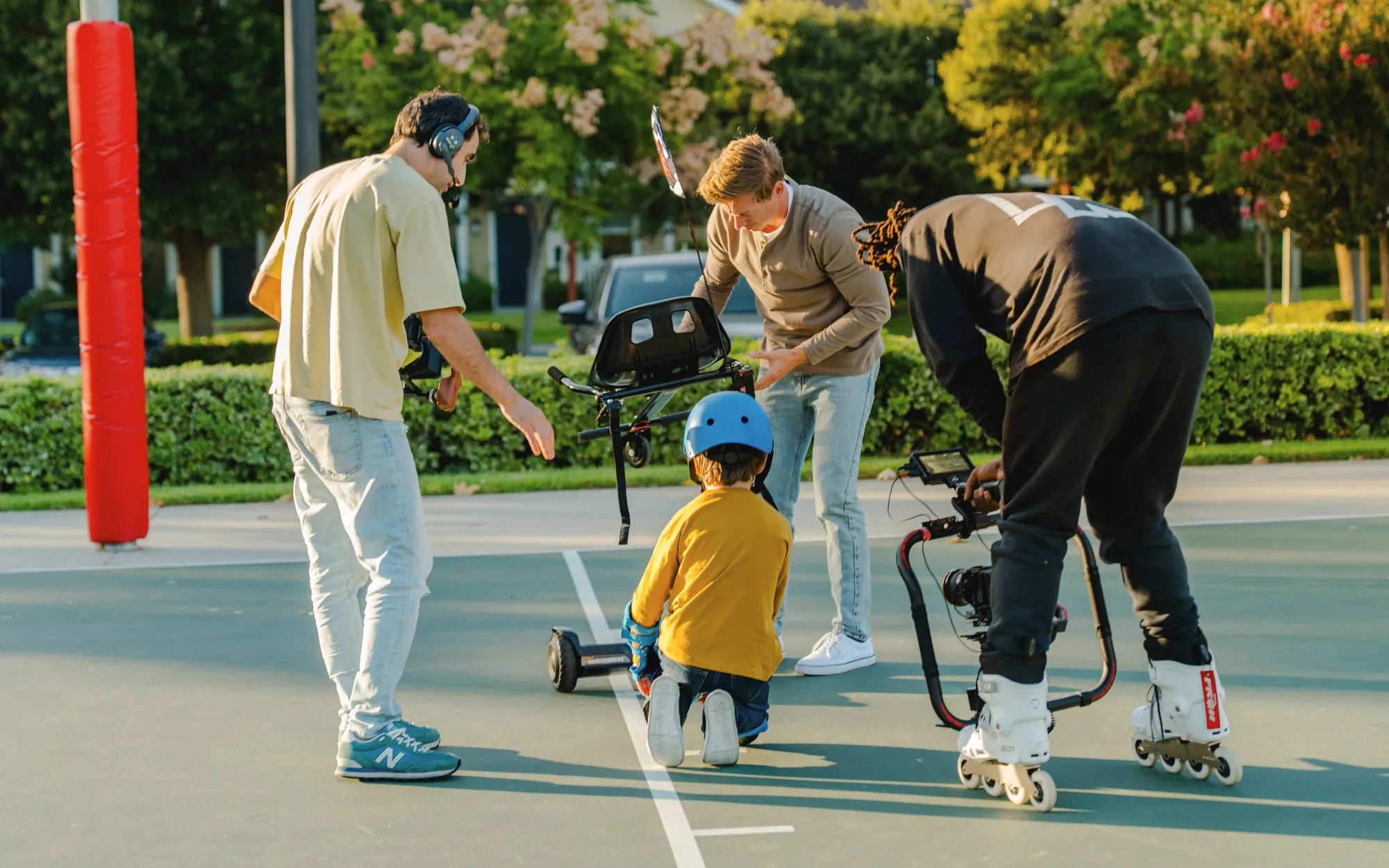
A helmet is mandatory, but it must be a properly fitted, ASTM-certified helmet designed for cycling or multi-impact sports. Do not use a skateboard-style helmet for higher-speed electric scooter riding. The kit should be rounded out with knee pads, elbow pads, and wrist guards. Wrist guards are particularly important, as falls often involve putting hands out to brace.
Appropriate footwear is non-negotiable. Closed-toe shoes with grippy soles (like sneakers) are essential. Sandals, flip-flops, or crocs offer zero protection and can easily slip off, leading to a loss of control. Making this gear a non-negotiable part of the "riding uniform" instills a culture of safety.
Teaching Responsible Riding: Rules for Kids and Parents
Establish clear rules before the first ride. Designate practice zones—empty parking lots, smooth driveways, or quiet cul-de-sacs—for initial learning. Absolutely prohibit riding on streets with car traffic. Teach children to be hyper-aware of pedestrians, to always yield, and to announce their presence politely when passing.
Institute a pre-ride safety check: test the brakes, check tire pressure (if applicable), ensure the handlebar and stem are tight, and verify the lights are working. Set a firm rule against night riding without direct adult supervision. Finally, model and insist on a "helmet on, scooter on" policy—if the helmet comes off, the ride ends immediately.
Maintenance and Care for Long-Term Performance
A professional scooter is a durable product, but its longevity depends on proper maintenance. Simple, regular checks can prevent major issues and keep the scooter running smoothly for years.
Regularly inspect the physical condition of the scooter. Tighten any bolts (especially on the handlebar clamp and folding mechanism) every few weeks, as vibration can loosen them. Check the brakes for wear and responsiveness. For pneumatic tires, maintain the recommended PSI; under-inflated tires reduce range and increase the risk of pinch flats.
Battery care is crucial for electric models. Avoid letting the battery fully deplete before charging. Store the scooter in a cool, dry place, and avoid leaving it in extreme heat or cold for prolonged periods. When cleaning, use a damp cloth—never a high-pressure hose, even on water-resistant models—and ensure the charging port is completely dry before plugging in.
Frequently Asked Questions (FAQs)
Q1: What is the ideal age for a child to start using an electric scooter?
Most children are ready around age 6 or 7, provided they have good balance and coordination, can follow safety rules, and will wear full protective gear. The decision should be based on individual maturity and physical capability, not just age.
Q2: How long does the battery last, and what's the charging time?
A professional scooter like those from Gyroor typically offers a range of 8-15 miles per charge, depending on the model, rider weight, and terrain. Charging time usually ranges from 3 to 5 hours for a full charge from empty. Batteries are rated for 500+ charge cycles.
Q3: Are Gyroor scooters easy to assemble?
Yes. Most Gyroor kids' models arrive 90-95% pre-assembled. Typically, assembly requires only attaching the handlebar to the stem and tightening a few bolts with the included tools—a process that takes 10-15 minutes.
Q4: Can the scooter be used on hills or rough pavement?
Professional scooters with motors of 250W or more can handle gentle slopes. However, they are primarily designed for paved surfaces like sidewalks, bike paths, and smooth park trails. Avoid excessively rough pavement, gravel, or dirt trails, as these can damage the scooter and are unsafe for smaller wheels.
Q5: What maintenance does a professional kids' scooter require?
Regular maintenance includes checking and tightening bolts, ensuring brakes work properly, keeping tires inflated (if pneumatic), and cleaning the scooter with a damp cloth. The most important practice is proper battery care: regular charging and avoiding extreme temperatures.
Conclusion: Investing in Confidence, Safety, and Fun
Selecting a professional scooter for kids is an investment that pays dividends in safety, durability, and sustained enjoyment. It’s a choice that prioritizes certified components like UL-certified batteries, robust construction with IPX5 water resistance, and features that give parents control, such as app-based speed limiting. This approach transforms the scooter from a simple toy into a reliable vehicle that fosters independence, responsibility, and outdoor activity.
The data is clear: professional-grade scooters offer tangible, measurable advantages in every critical category, from warranty length to braking performance. By choosing a brand like Gyroor, trusted by over 100,000 riders, you secure not just a product but a support system designed for the long term. Your child gains a tool for adventure, and you gain the peace of mind that comes with a thoughtfully engineered and responsibly supported purchase.
Ready to find the perfect professional ride for your young adventurer? Explore the full range of high-performance, safety-focused electric scooters designed specifically for kids. Browse the full Gyroor collection at gyroorboard.com and make an investment in fun that's built to last.
What Is a Good Christmas Gift for Kids: Top Ideas to Delight Little Ones
What Is the Max Speed of a Hoverboard? Exploring Modern Self-Balancing Scooters