

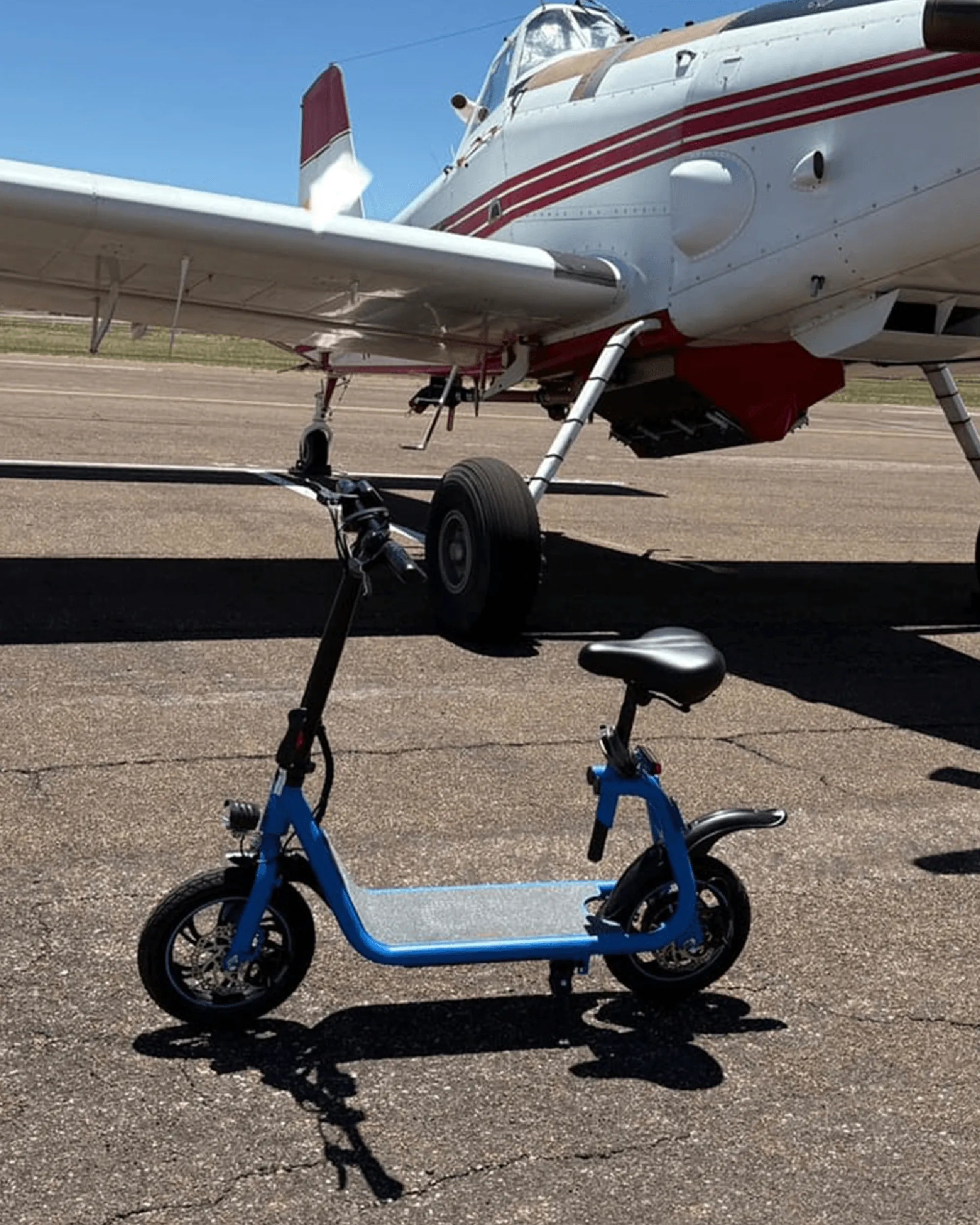
Understanding Scooter Battery Life: A Guide for Every Rider
Your electric scooter's battery is its heart. Its performance dictates your range, influences your scooter's resale value, and represents a significant portion of the vehicle's total cost. Understanding scooter battery life is not just about knowing how far you can go on a single charge; it's about ensuring your investment delivers reliable performance for years. This guide will demystify the factors affecting both immediate range and long-term battery lifespan, providing you with the knowledge to ride smarter and maintain your scooter effectively. As a leader trusted by over 100,000 riders, Gyroor designs every model with UL-certified battery packs and intelligent systems to maximize both safety and durability from the first mile to the five-hundredth charge cycle.
What Determines Your Scooter's Battery Range?
The advertised range on a scooter's box is a best-case scenario, often achieved under laboratory conditions. Your real-world scooter battery life in miles per charge depends on a dynamic interplay of hardware, rider input, and environment. Knowing these variables allows you to predict your actual range and plan your commutes or rides without anxiety. It's the difference between theoretical potential and practical, daily usability.
Battery Capacity (Wh) and Motor Power (W)
Think of battery capacity as your fuel tank and motor power as your engine's appetite. Capacity is measured in Watt-hours (Wh), a composite of voltage (V) and amp-hours (Ah). A higher Wh rating means a larger energy reservoir. A 500Wh battery can theoretically deliver 500 watts of power for one hour. However, a powerful 500W motor will drain that reservoir faster than a 250W motor under similar conditions. For substantial range, you need a balance: a high-capacity battery paired with an appropriately sized motor for your typical terrain.
Rider Weight and Terrain
Physics plays a major role. More weight requires more energy to accelerate and maintain speed. Riding uphill demands significantly more power from the motor, which draws heavily from the battery. As a rule of thumb, every 25 pounds over the scooter's rated capacity can reduce range by 5-10%. Similarly, a route with constant hills can easily cut your range by 30-40% compared to flat, smooth pavement. Planning a route with minimal elevation gain is one of the most effective ways to conserve battery.
Riding Style and Speed
Aggressive riding is the enemy of range. Jackrabbit starts from a full stop, maintaining top speed constantly, and frequent hard braking that requires re-acceleration all place high, inefficient demands on the motor and battery. A smooth, moderate pace with gradual acceleration preserves scooter battery life dramatically. Using eco or cruise control modes, when available, can help enforce a more range-efficient riding style, especially on longer trips.
Environmental Conditions
Cold weather is a well-known challenge for lithium-ion batteries. Low temperatures increase the battery's internal resistance, reducing its ability to deliver power and hold a charge. You may see a 20-30% range reduction in freezing temperatures. Conversely, extreme heat can accelerate long-term degradation. Wind resistance also becomes a major factor at higher speeds; riding into a strong headwind can feel like riding up a constant, invisible hill, sapping your range unexpectedly.
Maximizing Your Battery's Lifespan (Not Just Range)
While range concerns your daily ride, lifespan is about preserving your battery's health over hundreds of charge cycles and years of use. Proper care prevents premature capacity fade, saving you money on early replacement and maintaining safety. A well-maintained battery from a quality brand like Gyroor, with its focus on UL-certified components, should retain most of its capacity for the life of the scooter.
Charging Best Practices
The golden rule for lithium-ion longevity is the 20-80% rule. For daily use, avoid letting the battery drop below 20% and stop charging once it reaches 80%. This minimizes stress on the cells. While an occasional full charge for a long trip is fine, avoid leaving the scooter plugged in at 100% for days. Always use the manufacturer's provided charger—third-party chargers may not have the correct voltage or safety cutoffs, risking damage or fire.
Proper Storage Guidelines
If you won't be riding for a month or more (e.g., during winter), proper storage is critical. Never store a battery fully charged or completely empty. The ideal storage charge is between 50% and 60%. Store the scooter or battery pack in a cool, dry place with a stable temperature, away from direct sunlight or freezing conditions. Check the charge level every few months and top it up to the 50-60% range if needed.
The Importance of Water Resistance
Moisture is a silent killer for electronics. While a quick splash might not cause immediate failure, repeated exposure to rain or puddles can lead to corrosion on battery terminals and internal circuits, creating short circuits or cell damage. This is why a scooter's Ingress Protection (IP) rating matters. Gyroor scooters feature an IPX5 water-resistant rating, meaning they are protected against water jets from any direction, offering robust protection for real-world urban commuting.
Gyroor's Engineering for Long-Lasting Battery Performance
At Gyroor, battery performance is engineered in from the start. We go beyond basic specifications to integrate systems that protect the battery, ensure rider safety, and deliver consistent power. This commitment is why our scooters are trusted by a community of over 100,000 riders across North America and Europe, backed by a reliable 1-year warranty for complete peace of mind.
UL-Certified Battery Packs: The Safety Standard
UL certification is not just a sticker; it's the result of rigorous independent testing for electrical, mechanical, and fire safety. Every Gyroor battery pack undergoes this process. This certification ensures the cells, wiring, and casing can withstand the demands of daily use, vibration, and temperature fluctuations without risk. It's a non-negotiable foundation for both the longevity and safety of your scooter battery life.
Intelligent Battery Management Systems (BMS)
Inside every Gyroor battery pack is a sophisticated BMS. This onboard computer acts as a guardian. It monitors individual cell voltages to ensure balanced charging and discharging, preventing any single cell from being overworked. It protects against overcharging, over-discharging, short circuits, and overheating. By managing these parameters, the BMS is the single most important component for maximizing the total number of charge cycles a battery can deliver.
Warranty and Support: Our Commitment to You
Our confidence in our battery technology is reflected in our comprehensive 1-year warranty. This coverage protects against defects in materials and workmanship, including the battery system. Coupled with accessible, US-based customer support, this warranty ensures that your investment is protected. We stand behind the durability and performance engineered into every model, allowing you to ride with confidence.
Comparing Battery Performance: What to Look For
When shopping for an electric scooter, the battery specifications can be confusing. Moving beyond marketing claims to understand the underlying numbers will help you choose a scooter that truly matches your range needs and longevity expectations.
Decoding the Spec Sheet: Wh, Ah, and Voltage
Voltage (V): Think of this as the "pressure" of the electrical system. Higher voltage often allows for more powerful motors and better hill-climbing.
Amp-hours (Ah): This measures the current capacity of the battery over time.
Watt-hours (Wh): This is the key number. Calculated as Voltage (V) x Amp-hours (Ah), it represents the total energy capacity. A 36V 10Ah battery has 360Wh. For comparison, a 48V 10Ah battery has 480Wh—a 33% larger energy reservoir. Always compare Wh for the most accurate range potential assessment.
Key Questions to Ask Before You Buy
Use this checklist to evaluate any scooter's battery system:
1. Is the battery pack UL-certified or otherwise independently safety-tested?
2. What is the scooter's IP rating for water and dust resistance? (IPX4 or higher is recommended for commuters).
3. Based on the Wh rating and my weight, what is a realistic real-world range estimate?
4. What is the warranty period, and what does it specifically cover regarding the battery?
5. Does the manufacturer provide a genuine, compatible charger designed for this specific model?
Real-World Expectations vs. Manufacturer Claims
To avoid disappointment, take the manufacturer's maximum range claim and apply a realistic discount. For an average rider (~160-180 lbs) on mixed terrain with some stops and starts, expect to achieve 60-70% of the advertised range. For a claimed 30-mile range, plan for a reliable 18-21 miles. This buffer ensures you never get stranded and gives you a true picture of your scooter battery life per charge.
Scooter Battery Comparison Table
| Use Case | Recommended Min. Battery | Expected Real-World Range* | Key Features to Prioritize | Gyroor Model Example |
|---|---|---|---|---|
| Last-Mile Commute (Short Trips) | 250-350 Wh | 8-15 miles | Lightweight, fast charging, portability | Compact Folding Commuter Models |
| Full City Commute / Leisure | 360-500 Wh | 15-25 miles | UL-certified battery, IPX5 rating, comfortable ride | Mid-Range City Scooters |
| Long-Distance / Performance | 500+ Wh | 25-40+ miles | High-capacity pack, dual braking, robust BMS | High-Performance & Long-Range Models |
*Range estimates are for a ~175 lb rider on mixed urban terrain. Heavier riders or hillier routes will see reduced range.
Frequently Asked Questions on Scooter Batteries
How long does a scooter battery last before needing replacement?
A quality lithium-ion battery, like those used by Gyroor, is typically rated for 500 to 800 full charge cycles before its capacity degrades to about 80% of its original state. With partial charging (like the 20-80% rule), you can extend this significantly. For most commuters, this translates to 2-4 years of daily use before noticeable range reduction. Proper care is the biggest factor in longevity.
Can I replace the battery myself?
It depends on the scooter model. Some have user-removable battery packs for easy swapping and charging off the scooter. Others are integrated for better weather sealing and require tools for replacement. Always refer to the manufacturer's manual. Gyroor provides clear guides and genuine replacement parts to ensure safe and compatible upgrades or swaps when the time comes.
Is it bad to leave my scooter plugged in all the time?
Yes, for extended periods. Modern chargers and BMS systems will stop charging at 100%, but keeping the battery at a high voltage state (100% charge) for days or weeks accelerates chemical aging within the cells. For optimal scooter battery life, unplug once fully charged, or use a smart outlet timer if you charge overnight.
Why does my range drop in the winter?
This is primarily due to lithium-ion chemistry. Cold temperatures increase internal resistance, reducing the battery's ability to deliver power and its overall capacity. The battery also uses some energy to warm itself to an efficient operating temperature. You can mitigate this by storing the scooter indoors before a ride and keeping the battery above freezing when not in use.
What does Gyroor's IPX5 rating protect against?
An IPX5 rating means the scooter's electrical components are protected against water jets (6.3mm nozzle) from any direction. In practical terms, this means it can handle heavy rain, riding through wet streets, and accidental sprays from puddles. It is a robust rating for all-weather urban commuting, providing essential protection for the battery and motor systems.
Powering Your Journeys with Confidence
Mastering your scooter's battery is the key to unlocking reliable, long-term electric mobility. By understanding the factors that affect range, adopting simple maintenance habits, and choosing a scooter built with certified, protected components, you transform from a passive rider into an informed owner. Your scooter battery life ultimately depends on the quality of its engineering and the care you provide. Gyroor is committed to the first part—delivering UL-certified safety, IPX5 water resistance, and intelligent battery management in every model, backed by our warranty. You can then focus on the joy of the ride, free from range anxiety, knowing your scooter is built to last. Explore the engineering behind our performance and find the perfect model for your journey.
Browse the full Gyroor collection at gyroorboard.com
Best E Bike 2026: The Ultimate Guide to Safety, Tech & Future-Proof Riding
Best Full Suspension E-Bike: The Ultimate Guide to Comfort and Control