

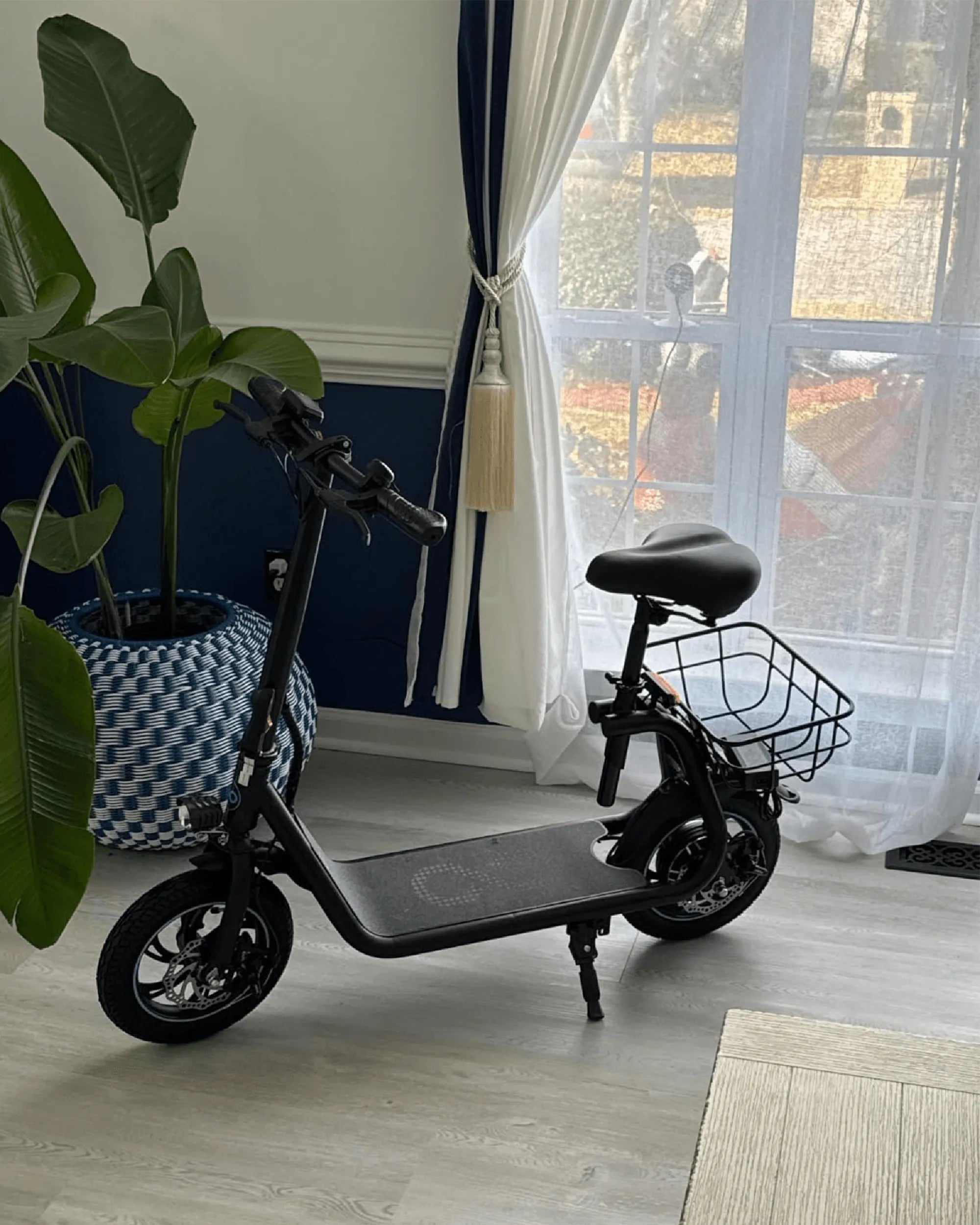
Selecting a scooter for 2 year old with seat is about more than just picking a toy. It's choosing a developmental tool that introduces mobility, builds coordination, and fosters independence—all within a framework of absolute safety. For toddlers, a seated scooter provides the crucial stability needed to learn balance and steering without the fear of falling. This guide will dissect the essential safety features, compare the different styles of seated scooters, and provide a data-driven parent's checklist to help you make the best choice for your child's first wheels. We'll also explore the engineering principles that brands like Gyroor apply to ensure safe, durable products for young riders.
Why a Scooter with a Seat is Ideal for 2-Year-Olds
At two years old, children are in a rapid stage of gross motor skill development. They are mastering running, jumping, and climbing, but their balance and coordination are still refining. A traditional standing scooter requires a level of core strength, weight-shifting, and single-leg balance that is often too advanced. A scooter for 2 year old with seat bridges this gap perfectly.
The integrated seat offers a stable base, allowing the child to focus on the fundamental actions of propulsion and steering. They learn to push off with their feet, steer the handlebars to change direction, and understand basic cause-and-effect mechanics of movement. This seated position significantly lowers the center of gravity, drastically reducing the risk of tipping over compared to a standing model. It builds confidence in a controlled environment.
From a developmental psychology perspective, this controlled success is key. Successfully maneuvering their own vehicle boosts a toddler's sense of autonomy and self-efficacy. The activity strengthens leg muscles, improves hand-eye coordination, and enhances spatial awareness. Choosing a seated model is not about delaying development; it's about providing the appropriate scaffold for it to flourish safely and joyfully.
Key Safety Features to Prioritize
Safety is the non-negotiable cornerstone when selecting any ride-on toy for a toddler. The following features are critical benchmarks that every scooter for 2 year old with seat should meet or exceed.
Stable, Wide Wheelbase and Low Center of Gravity
The geometry of the scooter is its first line of defense against tipping. Look for a wide wheelbase—the distance between the left and right wheels. A broader stance provides inherent lateral stability, especially during turns. Combined with a low deck and seat height, this ensures the child's feet can plant flat on the ground for stability when stopping. A low center of gravity means the scooter is less likely to become unstable if the child leans.
Secure, Enclosed Seat with Backrest
The seat should be contoured and slightly enclosed, not just a flat pad. This design helps keep the child positioned correctly. A small, integrated backrest is invaluable for providing lumbar support and preventing the child from sliding backward during propulsion. The seat must be securely bolted to the main frame with no wobble or potential for pinch points. Padding, while not essential for short rides, can add comfort.
Limited Speed and Reliable Braking
For this age group, speed must be minimal. Non-motorized, foot-to-floor scooters are ideal as the child controls the pace. If considering a battery-powered option, it must be strictly parent-controlled via a remote or a push-button that only operates when held. There should be no throttle a toddler can activate. Braking should be simple and fail-safe. A foot-press rear fender brake is common and effective—the child presses down on the rear fender, which contacts the wheel.
Non-Toxic, Durable Materials
Toddlers explore with their mouths. All plastics and paints must be certified non-toxic and BPA-free. The construction must withstand repeated use, drops, and weather if used outdoors. Look for high-quality, reinforced plastics and powder-coated steel or aluminum frames. Brands with rigorous testing, like Gyroor, which prioritizes UL-certified components and robust builds, set the standard parents should seek.
Top Scooter Styles for 2-Year-Olds: A Comparison
Not all seated scooters are the same. Understanding the different categories helps match the product to your child's current ability and your environmental needs.
3-Wheel Sit-and-Scoot (Scooter Trike)
This is the classic and most stable design, typically featuring two wide-set wheels at the front and one at the rear. The trike configuration makes it nearly impossible to tip over during normal use. It's the ideal starting point for a complete beginner. The steering is often direct (the front wheels turn with the handlebars), which is intuitive for toddlers. These models are perfect for smooth indoor floors or paved driveways.
Balance Bike/Scooter Hybrids
These innovative designs function primarily as a balance bike but feature a extended deck or a secondary standing platform behind the seat. The child starts by sitting and walking the bike, then can gradually transition to standing on the deck while still holding the handlebars, mimicking a traditional scooter motion. This style offers exceptional longevity as it grows with the child's skills, bridging the gap between seated and standing mobility.
Parent-Steerable & Push-Button Ride-Ons
For ultimate control, especially in crowded or less secure areas, parent-steerable models feature a long push handle attached to the frame. This allows the adult to guide, steer, and even push the scooter. Some electric versions in this category have a simple push-button on the parent handle that activates a slow, steady motor—only when the button is pressed. This provides a thrilling yet completely supervised first taste of powered motion.
| Style | Best For | Key Advantage | Consideration |
|---|---|---|---|
| 3-Wheel Scooter Trike | Absolute beginners, maximum stability | Extremely low tip-over risk, intuitive steering | May be outgrown faster; less challenging for advancing skills |
| Balance Bike Hybrid | Long-term use, transitional learning | Grows with child, teaches core balance bike skills | Can have a higher initial learning curve; often less stable than a pure trike |
| Parent-Steerable Electric | Supervised, controlled fun; parents wanting involvement | Complete adult control over speed and direction | Typically higher cost; requires charging; less child-powered activity |
The Gyroor Approach to Toddler Mobility
While Gyroor's core lineup focuses on electric scooters and e-bikes for older riders and adults, the brand's foundational engineering principles are precisely what parents should look for in any juvenile product. Gyroor's commitment to safety, durability, and reliable performance translates into a valuable checklist. First, robust construction is paramount. The use of aerospace-grade aluminum alloys and reinforced polymers in their products points to a standard of durability that can withstand toddler use.
Second, a safety-first design philosophy is critical. Gyroor's insistence on UL-certified battery packs for its electric models reflects a deep commitment to hazard prevention. For a toddler's scooter, this parallels the need for non-toxic materials, rounded edges, and secure fastenings. Third, performance integrity matters. Smooth-rolling, sealed-bearing wheels and reliable braking systems ensure predictable operation—a must for a young child's vehicle.
Finally, trust and support are key. Gyroor's backing of its products with a clear 1-year warranty and support for a community of over 100,000 riders exemplifies the accountability parents deserve. When evaluating a scooter for 2 year old with seat, seek out brands that embody these same principles of quality engineering and customer assurance, even in the preschool toy segment.
Parent's Guide: What to Look for When Shopping
Armed with knowledge of features and styles, use this actionable checklist during your evaluation.
- Weight Limit & Adjustability: Ensure the scooter supports your child's weight with a margin. Adjustable seat height (and handlebar height, if possible) extends usable life.
- Ease of Assembly: It should require minimal tools and time. Pre-assembled or one-step assembly is a major plus.
- Noise Level: Test wheel roll. Quiet, polyurethane wheels are better for indoor use and indicate higher quality than loud, hard plastic wheels.
- Terrain Compatibility: Most are for smooth, hard surfaces only. Larger, air-filled tires can handle slightly rougher pavement but add complexity.
- Storage & Portability: Consider weight and if it can be easily carried or stored. A lightweight frame is beneficial.
- Certifications: Look for ASTM F963 (U.S. Toy Safety) or EN71 (European) certifications, which mandate tests for mechanical hazards, toxicity, and flammability.
Always supervise your child during use, ensure they wear a properly fitted helmet, and restrict use to safe, controlled environments away from driveways, streets, and bodies of water.
Frequently Asked Questions (FAQ)
At what age can my child start using a scooter with a seat?
Most children are ready between 18 months and 2.5 years, depending on their physical development. Key readiness signs include confident walking, running without frequent falls, and the ability to follow simple instructions. The seated scooter is often the perfect first wheeled toy.
Are these scooters safe on sidewalks?
On smooth, flat, and uncracked sidewalks with direct adult supervision, they can be. However, driveways, parks, or smooth indoor floors are often safer initial environments. Avoid hills, gravel, sand, or wet surfaces entirely due to tipping and loss-of-control risks.
How do I transition my child from a seated scooter to a standing one?
Use a hybrid balance bike/scooter model to naturally facilitate the shift. Alternatively, once your child exhibits excellent balance and propulsion confidence on their seated scooter, introduce a three-wheel standing scooter (two wheels in front) for short, supervised sessions, gradually increasing time as skills improve.
What is the typical weight limit for these scooters?
Weight limits vary but commonly range from 44 lbs (20 kg) to 55 lbs (25 kg). Always check the manufacturer's specification and choose a model with a limit well above your child's current weight to ensure structural integrity and safety.
How important is adjustable seat height?
Very important. An adjustable seat allows the scooter to fit your child properly for up to two years, ensuring their feet can always plant flatly for stability and efficient pushing. It represents better long-term value and a more ergonomic fit for development.
Conclusion: Building Confidence on Wheels
Choosing the right scooter for 2 year old with seat is an investment in your child's joyful development and physical confidence. By prioritizing a stable wheelbase, a secure seat, limited speed, and durable, non-toxic materials, you create a safe platform for exploration and growth. Whether you opt for a stable trike, a transitional hybrid, or a parent-controlled model, the goal is the same: to provide a fun, secure introduction to personal mobility. This early positive experience lays the groundwork for a lifelong appreciation for active play and outdoor adventure. For parents who value the engineering integrity and safety-first design seen in brands like Gyroor, applying those same rigorous standards to your toddler's first scooter is the wisest path forward. Ready to explore more mobility solutions for the whole family? Browse the full Gyroor collection at gyroorboard.com.
Europe E-Bike Market: A Comprehensive Guide to Growth, Trends, and Buying
Dirt Bike Online: The Ultimate Guide to Buying Your Next Ride