


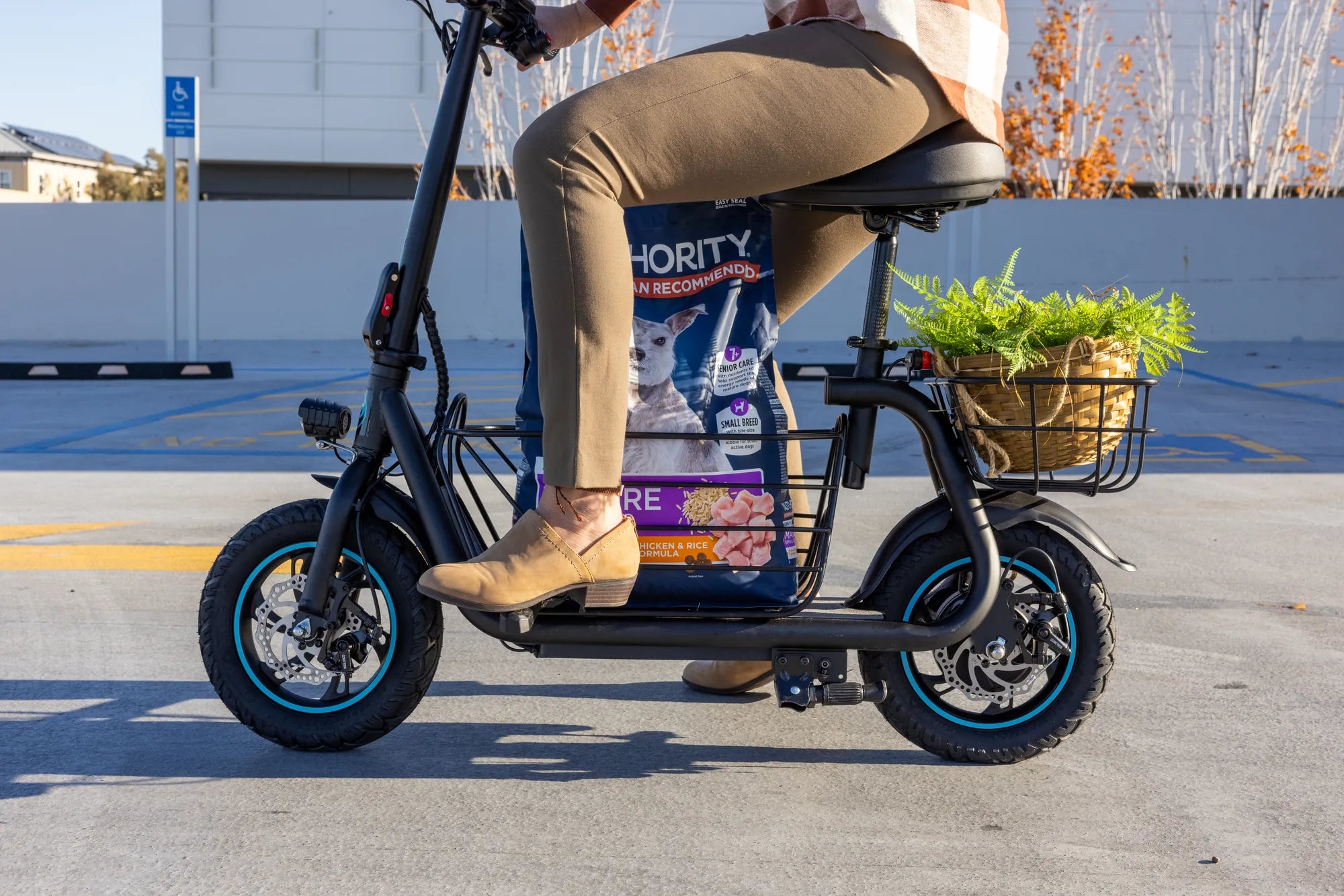
Introduction: Redefining Personal Mobility for Every Body
For many adults, the standard electric scooter market presents a frustrating barrier: weight limits that often cap at 220-265 pounds. This leaves a significant portion of the population without a viable, fun, and efficient option for personal electric transportation. The search for a true scooter for 400 lbs is not just about finding a vehicle; it's about unlocking accessibility, utility, and confidence. This guide delves into the world of heavy-duty electric scooters engineered specifically for higher capacities, explaining the critical features that make them safe and effective. We'll explore how leading brands like Gyroor engineer robust solutions, combining high-torque motors, reinforced frames, and UL-certified battery systems to deliver performance you can trust, mile after mile.
What Makes a Scooter "400 lbs Rated"? Key Engineering Features
A scooter capable of safely supporting 400 pounds is not merely a standard model with a higher number on the spec sheet. It is the result of holistic engineering where every component is designed, tested, and reinforced to handle sustained stress. Understanding these features is crucial to distinguishing a genuinely capable scooter from a marketing claim.
Motor Power and Torque
The motor is the heart of performance under load. For a scooter for 400 lbs, a high-wattage motor is non-negotiable. Look for motors rated at 1000 watts or higher, with dual-motor configurations (e.g., 1000W x2) offering exceptional power. More important than peak wattage is torque, which determines acceleration and hill-climbing ability. A high-torque motor ensures the scooter can move a heavier rider from a stop smoothly and tackle inclines without stalling or overheating.
Sustained power output is key. Some motors may boast a high peak power but cannot maintain it, leading to performance drops on longer hills. Quality heavy-duty scooters use motors with robust cooling and efficient controllers to deliver consistent power, ensuring you're not left struggling on a slope.
Frame and Deck Construction
Structural integrity is the foundation of safety. The frame of a heavy-duty scooter is typically constructed from reinforced aerospace-grade aluminum alloy or high-tensile steel. These materials provide the necessary strength-to-weight ratio. Critical attention is paid to welding points—especially where the stem meets the deck and the folding mechanism—which are often reinforced.
The deck itself is longer and wider than standard models, providing a stable platform for a larger stance. It must be constructed from a single, thick piece of metal or a reinforced composite to prevent flexing or cracking under constant load. This robust construction directly impacts rider confidence and the long-term durability of the scooter.
Battery Capacity and Management
A larger rider demands more energy for the same distance. Therefore, battery capacity, measured in watt-hours (Wh), is paramount. A scooter advertising a 40-mile range for a 180 lb rider might only achieve 15-20 miles for a 400 lb rider. Look for batteries with 52V or higher systems and capacities of 20Ah or more for realistic commuting range.
Battery management system (BMS) quality and certification are critical for safety. A UL-certified battery pack, like those used in Gyroor scooters, has undergone rigorous testing for overcharge protection, temperature management, and cell balancing. This ensures not only safety from fire risk but also longevity, maintaining reliable power delivery through 500+ charge cycles even under high-stress loads.
Braking System and Suspension
Stopping power must match the increased momentum. A dual or triple braking system is essential. This typically combines hydraulic or mechanical disc brakes—which offer strong, consistent stopping force—with an electronic regenerative brake. This redundancy is vital for safety in all conditions.
Enhanced suspension is not just for comfort; it's for control and component protection. A robust spring or hydraulic suspension system with long travel absorbs impacts from bumps and cracks, preventing that energy from transferring to the frame, deck, and rider. This reduces fatigue and minimizes the risk of damage from road imperfections, which is more pronounced under maximum load.
Beyond the Spec Sheet: Performance and Practicality Under Load
Technical specifications tell only part of the story. Understanding how a scooter for 400 lbs performs in real-world conditions is crucial for setting accurate expectations and ensuring it meets your daily needs.
Real-World Range vs. Advertised Range
Advertised range is almost always calculated under ideal conditions with a lightweight rider. Weight is the single biggest factor affecting range. A practical rule of thumb: for every 100 pounds over the test rider's weight, expect a 20-30% reduction in range. Therefore, a scooter rated for 40 miles might realistically provide 18-22 miles for a 400 lb rider, depending on terrain, speed, and temperature. Always choose a scooter with a battery capacity that gives you a comfortable buffer over your daily commute distance.
Hill Climbing and Acceleration Expectations
Acceleration will be more gradual than with a lighter rider, and hill-climbing ability is defined by the motor's torque. A quality heavy-duty scooter with a 1000W+ motor should handle grades of 15-20%. However, steep, sustained hills will drain the battery faster and may require reduced speed. It's important to test or research the scooter's performance on inclines specific to your area to ensure it meets your needs.
Stability and Ride Comfort at Max Capacity
Stability is enhanced by a longer wheelbase and larger wheels. Scooters designed for 400 lbs often feature 10-inch or larger pneumatic (air-filled) tires. These tires provide better shock absorption and traction than solid tires, improving comfort and safety on uneven surfaces. The combination of large tires and a capable suspension system creates a planted, confident feel, making urban obstacles like potholes and curb cuts more manageable.
Top Considerations When Choosing Your Heavy-Duty Scooter
Weight capacity is the starting point, not the finish line. Use this checklist to ensure your chosen scooter aligns with your lifestyle and offers long-term reliability.
Warranty and Customer Support
A comprehensive warranty is a direct reflection of the manufacturer's confidence in their product. Seek out a robust 1-year warranty that covers the frame, motor, battery, and controller. Gyroor, for example, offers a reliable 1-year warranty, backed by accessible customer support. This is non-negotiable for a vehicle carrying a significant investment and your safety.
Portability and Weight of the Scooter Itself
There is a trade-off: durability adds mass. A true heavy-duty scooter for 400 lbs can weigh 70 pounds or more. While most feature a folding mechanism, they are often best thought of as "fold-for-storage" rather than "fold-for-carrying." Check if the folded dimensions fit in your car trunk or designated storage space. A sturdy carrying handle can assist with short lifts, like onto a curb or into a vehicle.
Water and Dust Resistance (IP Rating)
For a reliable daily commuter, weather resistance is key. An IP rating indicates protection against solids and liquids. An IPX5 rating means the scooter can withstand water jets from any direction, making it safe to ride in rain or through puddles. This protects the sensitive electronics and battery from moisture-related damage, ensuring longevity and all-weather usability.
Safety First: Essential Riding Tips for Heavier Riders
Riding at or near the maximum weight limit requires an adapted approach to ensure safety and preserve your scooter. These practices are essential.
Pre-Ride Checks and Maintenance
Establish a strict pre-ride routine. Check tire pressure weekly; under-inflated tires on a heavy load risk pinch flats and rim damage. Inspect brake pads for wear and test braking response before each ride. Periodically check that all bolts, especially around the stem and folding mechanism, are tight. Adhere to a more frequent maintenance schedule than a lighter rider would.
Protective Gear is Non-Negotiable
The laws of physics are unforgiving. Increased mass means greater momentum and longer stopping distances. A full-face helmet, riding gloves, and knee and elbow pads are critical investments. Reflective clothing or accessories are also vital for visibility. This gear is your primary safety system.
Adapting Your Riding Style for Optimal Control
Adopt a smooth, anticipatory riding style. Accelerate and brake gradually to avoid stressing the motor and brakes. Allow for a much greater following distance than you might think. Take turns at moderate speeds, leaning your body rather than relying solely on the scooter's steering. Avoid directly impacting curbs; instead, approach at an angle or dismount and step up.
Comparison: Heavy-Duty Scooter Features at a Glance
This table compares key specifications to look for when evaluating a scooter for 400 lbs against standard models.
| Feature | Standard Scooter (≤265 lbs) | Heavy-Duty Scooter (400 lbs) | Why It Matters for Heavy Loads |
|---|---|---|---|
| Motor Power | 350W - 500W | 1000W - 2000W+ | Provides necessary torque for acceleration and hills. |
| Frame Material | Standard Aluminum | Reinforced Alloy/Steel | Prevents flex, cracking, and ensures long-term structural safety. |
| Battery (Typical) | 36V-48V, 10-15Ah | 52V+, 18-25Ah+ | Delivers the energy needed for practical range under max load. |
| Braking System | Single disc or drum brake | Dual hydraulic/mechanical disc + electronic brake | Ensures reliable, fade-resistant stopping power for greater momentum. |
| Tire Size | 8-8.5" | 10"+ Pneumatic | Improves stability, comfort, and handles urban obstacles better. |
| Suspension | Basic or none | Full hydraulic or robust spring | Absorbs impacts, protects scooter components, and enhances control. |
| IP Rating | IPX4 or unspecified | IPX5 or higher | Guarantees all-weather reliability and protects electronics. |
FAQ: Your Questions About 400 lb Capacity Scooters, Answered
Q: Can I really ride at the exact 400 lb limit, or should I aim for a buffer?
A: A well-engineered scooter is designed and tested for its stated limit. However, for optimal long-term performance, component lifespan, and a margin of safety, it is advisable to have a buffer. Consistently operating at the absolute maximum capacity can increase wear on tires, bearings, and the battery. A 10-15% buffer (e.g., a 340-360 lb rider on a 400 lb scooter) is a prudent practice.
Q: Are these scooters suitable for daily commuting?
A: Absolutely, provided you select the right model. For daily use, prioritize features like high water resistance (IPX5+), reliable dual braking systems, and a real-world range that is at least double your one-way commute distance. This accounts for battery degradation over time and variations in weather and terrain.
Q: How does weight affect the scooter's warranty?
A: Reputable manufacturers design and warranty their products for use within the specified weight capacity. Using a Gyroor scooter at or below its 400 lb rating will not void the warranty. Always review the manufacturer's warranty terms to confirm that proper use within the rated capacity is covered. Avoid brands with vague or restrictive language regarding weight.
Q: What's the most common point of failure on scooters under heavy load, and how can I prevent it?
A: Tires and inner tubes are under the most direct and constant stress. The risk of pinch flats and wear is higher. Prevention includes maintaining tire pressure at the manufacturer's recommended maximum (check weekly), avoiding sharp impacts with curbs, and considering aftermarket puncture-resistant tire liners or more robust tires if available for your model.
Q: Is a more expensive scooter always better for heavy riders?
A: Not always "better" in every feature, but a higher price point typically reflects the cost of the superior components required for heavy-duty use: a larger, UL-certified battery, a more powerful motor with better cooling, a reinforced frame, and advanced brakes. For a 400 lb rider, investing in these proven, quality components from a trusted brand is a matter of safety and long-term value, not just luxury.
Conclusion: Empowering Your Journey with Confidence
Finding the right scooter for 400 lbs transforms personal mobility from a limited option to an empowering reality. It's about choosing a vehicle engineered with integrity—where a UL-certified battery ensures safety, a robust frame guarantees durability, and a powerful motor delivers reliable performance. This journey requires prioritizing verified engineering, comprehensive warranties, and safe riding practices over price alone. By understanding the key features and adapting your habits, you can enjoy the freedom, convenience, and fun of electric scooting with complete confidence. Explore engineering-focused brands that build for durability and support their riders.
Ready to find a scooter built to carry your journey forward? Browse the full collection of high-performance, robustly engineered electric scooters and e-bikes at gyroorboard.com, where innovation meets reliability for every rider.
Most Popular Scooter Brands: A Data-Driven Guide to Choosing Your Ride
LED Wheel Scooter: The Ultimate Guide to Safety, Style, and Performance