



Choosing the right scooter for a 9-year-old is a decision that impacts their safety, development, and joy. At nine, children are refining their motor skills, seeking independence, and need outdoor activities that challenge them appropriately. This guide provides a data-driven framework to evaluate scooters, moving beyond marketing claims to focus on safety, ergonomics, and long-term value. You will learn how to match scooter specifications to your child's maturity, the essential safety features that are non-negotiable, and how to interpret technical details for informed purchasing. We'll also explore why brands like Gyroor, with over 100,000 riders and a focus on UL-certified safety, set the standard for reliable kids' mobility.
Why the Right Scooter Matters for Your 9-Year-Old
A scooter is more than a toy for a nine-year-old; it's a tool for physical development, social interaction, and independent exploration. This age marks a significant leap in coordination, balance, and risk assessment. The correct scooter supports this development by providing a stable, controllable platform that builds confidence.
Physically, regular scooting enhances cardiovascular health, leg strength, and core stability. It also develops proprioception—the body's ability to sense its position in space. A poorly designed scooter can hinder this development or, worse, lead to a loss of confidence or injury through instability or unpredictable handling.
Psychologically, mastering a scooter fosters independence and decision-making. A nine-year-old learns to navigate paths, judge speeds, and follow safety rules. The scooter becomes a key to neighborhood adventures, promoting outdoor play away from screens. Selecting a model that is neither too juvenile nor overly advanced is crucial to nurturing this growing autonomy safely.
Therefore, the investment in a well-engineered scooter from a reputable brand is an investment in your child's healthy growth. It's about finding the intersection of fun, fitness, and fundamental safety engineering that can withstand the energetic use of an active child.
Key Factors to Consider When Choosing a Scooter for a 9-Year-Old
Selecting a scooter requires evaluating a matrix of factors, with safety as the immutable foundation. The ideal model balances performance, ergonomics, and durability specific to a child's capabilities at age nine.
Safety First: Non-Negotiable Features
The braking system is the most critical safety component. For kick scooters, a reliable rear fender brake (foot brake) is essential, requiring the rider to press down on the rear fender. Many models also include a hand-operated brake on the handlebar for more controlled stopping. For electric scooters, a combination of electronic braking (regenerative or disc) and a physical hand brake is standard. The brakes must offer progressive, predictable stopping power without being overly sensitive.
Stability is dictated by the wheelbase (distance between axles) and deck width. A longer wheelbase and wider deck provide greater stability at speed, reducing the risk of speed wobbles. The steering mechanism should have a slight resistance or a limiter to prevent sharp, unstable turns. Additionally, the deck surface must have a permanent, slip-resistant grip tape or pattern to keep feet securely planted.
Size & Adjustability: Ensuring a Perfect Fit
Proper fit prevents strain and improves control. When the child stands on the deck, the handlebars should ideally sit between their waist and lower chest. A common range for adjustable handlebars for this age is approximately 28 to 36 inches from the ground. This allows for 1-2 years of growth, extending the scooter's usable life.
The deck length must accommodate a comfortable stance with one foot behind the other. A deck that is too short forces an unnatural, cramped posture. The overall scooter weight is also part of "fit"; a child must be able to safely lift and carry it up a curb or stairs, with 6-12 lbs being a manageable range for most nine-year-olds.
Weight & Portability: For Independence and Storage
Portability empowers independence. A lightweight scooter, typically constructed from aluminum alloys, allows a child to easily carry it into a friend's house, onto a school bus, or up to their room. Foldability is a key feature for storage in car trunks, closets, or school lockers.
The folding mechanism must be robust, simple to operate, and secure when locked in the riding position. A flimsy latch is a significant safety hazard. For families with limited space, a scooter that folds compactly is not a luxury but a necessity for encouraging regular use.
Scooter Types Explained: From Kick to Electric
The fundamental choice lies between traditional kinetic power and electric assistance. Each type offers distinct benefits and responsibilities, catering to different child personalities and family lifestyles.
Traditional Kick Scooters: Classic Fun & Fitness
Kick scooters are the quintessential starter vehicle, powered solely by the rider's leg. They are excellent for developing coordination, balance, and providing genuine physical exercise. With fewer mechanical parts, they are generally low-maintenance and highly durable.
Wheel material is a key differentiator. Polyurethane (PU) wheels are common, offering a smooth, fast ride on paved surfaces. Larger PU wheels (e.g., 200mm+) roll over cracks and small debris more easily. Pneumatic (air-filled) tires provide superior shock absorption on rougher terrain like sidewalks and light gravel paths, though they require occasional inflation and are prone to punctures.
These scooters teach fundamental riding mechanics—balancing, steering, braking, and momentum—without the complexity of a motor and battery. They are ideal for short trips to the park, sidewalk cruising, and as a tool for active play where the child controls the pace entirely through their own effort.
Electric Scooters for Kids: Powered Adventure with Responsibility
Electric scooters introduce a new dimension of mobility and are suitable for responsible, rule-following nine-year-olds. They extend range and reduce physical effort, making them great for longer family outings or commuting to a nearby friend's house. However, they demand greater maturity and parental oversight.
Critical specs for this age are a speed limit of 10-12 mph (often adjustable via a parent app or mode selector), a motor in the 150W to 250W range for adequate but manageable power, and a smooth, gradual acceleration curve to prevent jerky starts. Battery safety is paramount. Brands like Gyroor use UL-certified lithium-ion battery packs, which undergo rigorous testing for thermal stability and charge cycle longevity (500+ cycles), offering crucial peace of mind.
Durability against the elements is also key. An IPX5 water-resistant rating, as found on many Gyroor models, means the scooter can withstand water jets from any direction. This allows it to safely handle puddles, wet pavement, and light rain, ensuring a ride isn't ruined by a sudden drizzle and protecting the internal electronics from moisture damage.
The Gyroor Advantage: Engineered for Young Riders
Gyroor distinguishes itself by applying adult-grade engineering and safety standards to scooters designed for younger audiences. This translates into tangible benefits in safety, durability, and long-term ownership experience.
Built to Last: Durability Meets Smart Design
Gyroor frames are typically constructed from high-grade, aerospace-aluminum alloys, offering an optimal strength-to-weight ratio. Critical stress points, such as the folding mechanism and stem joints, are reinforced with precision welding or robust casting. This build quality ensures the scooter can withstand the inevitable drops, curb jumps, and general rough handling from an energetic nine-year-old.
Beyond the physical product, support is crucial. Gyroor backs its products with a 1-year comprehensive warranty and US-based customer support. This commitment reduces long-term ownership risk, providing a direct channel for troubleshooting and parts, should they ever be needed, ensuring the scooter remains a source of joy, not frustration.
Performance Tailored for Kids
Performance for children isn't about top speed; it's about predictable, controllable power. Gyroor models for this demographic are engineered with governed top speeds, soft-start acceleration to prevent wheel slip, and responsive braking systems that don't lock up. The tuning prioritizes stability and rider confidence over raw performance.
The practical benefit of the IPX5 water-resistant design cannot be overstated. It allows play to continue in a wider range of real-world conditions and significantly reduces anxiety about accidental exposure to water. Combined with the safety assurance of UL-certified batteries, these features represent a holistic approach to creating a scooter that parents can trust and kids can reliably enjoy.
Comparison & Data: Making an Informed Choice
Visualizing the differences between scooter types helps align features with your child's needs and your family's expectations for supervision and use.
Feature Checklist: Kick vs. Electric Scooter
| Feature | Traditional Kick Scooter | Electric Scooter (Kid-Specific) |
|---|---|---|
| Primary Power | Rider's leg (kinetic) | Electric motor & battery |
| Avg. Speed | 3-8 mph (rider-dependent) | 8-12 mph (electronically limited) |
| Avg. Weight | 6-10 lbs | 15-25 lbs |
| Best For | Short trips, park play, daily fitness | Longer adventures, family outings, commuting |
| Supervision Level | Moderate (for traffic/area) | High (for speed & battery management) |
| Maintenance | Low (tire pressure, bolt checks) | Moderate (battery care, electronic systems) |
| Key Benefit | Promotes exercise, simple, durable | Extended range, less physical effort |
What to Look for on the Spec Sheet
Decoding specifications empowers you to compare models objectively. A "250W motor" provides enough torque for small hills and quick acceleration from a stop, but should be paired with a speed governor for safety. "8.5-inch pneumatic tires" offer a smoother ride over bumps compared to solid 6-inch wheels, enhancing comfort and traction.
Battery capacity, measured in Watt-hours (Wh) or Amp-hours (Ah), indicates range. For a nine-year-old, a battery offering 6-10 miles of range is typically ample and keeps the scooter's weight manageable. Always verify the battery certification (UL, CE) for safety. The scooter's maximum load capacity should comfortably exceed your child's weight, with a margin for a backpack, ensuring structural integrity.
Safety Gear and Riding Etiquette: The Complete Package
A scooter is only as safe as the rider's preparation and behavior. Investing in proper safety gear and establishing clear rules are essential steps that complement choosing a well-made scooter.
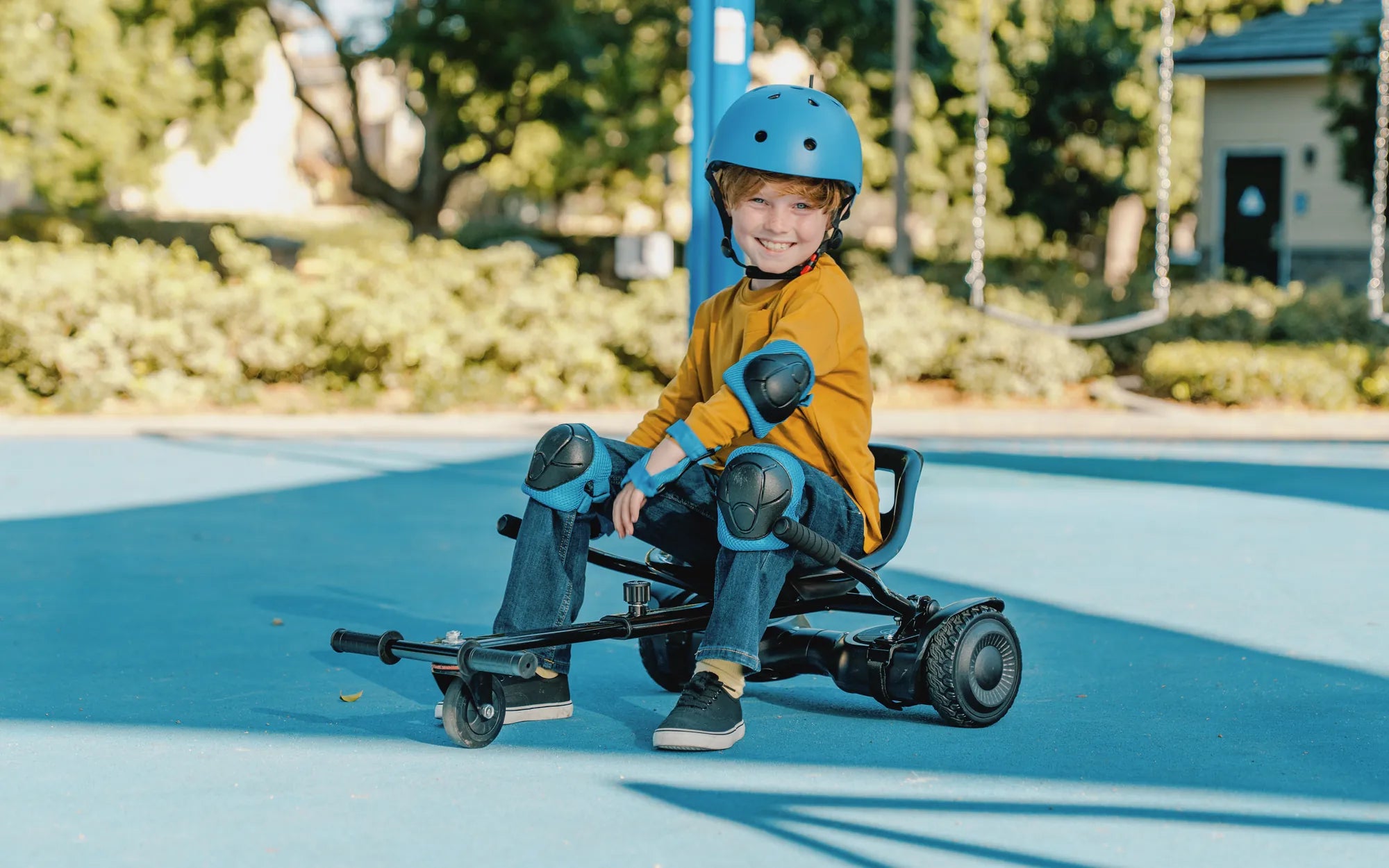
A certified bicycle helmet is non-negotiable and should be worn for every ride, regardless of distance. Elbow and knee pads are highly recommended, especially during the learning phase or when riding an electric scooter. Durable gloves can protect hands from abrasions in a fall. High-visibility clothing or reflective elements on the scooter are crucial for evening rides.
Riding etiquette must be taught and reinforced. This includes riding on sidewalks or designated paths where permitted and legal, yielding to pedestrians, using a bell or verbal warning when passing, and obeying all traffic signals. For electric scooters, children must learn to start and stop smoothly, avoid wet or sandy surfaces, and never tamper with speed limiters.
Parents should conduct regular "scooter checks" similar to a bicycle pre-ride check: ensure brakes work, tires are inflated, the folding mechanism is locked, and all bolts are tight. Establishing a charging routine for e-scooters in a safe, dry location away from flammable materials is also a critical safety habit.
Maintenance and Care for Longevity
Proper maintenance ensures safety, performance, and extends the scooter's lifespan, protecting your investment. A simple routine can prevent most major issues.
For all scooters, regularly check and tighten all bolts and fasteners, especially on the handlebar stem, folding mechanism, and wheels. Inspect brakes for wear; hand brake pads may need replacement, and foot brakes should engage smoothly. Keep wheels clean and check for debris lodged in the tread. For pneumatic tires, maintain the recommended PSI.
For electric scooters, battery care is paramount. Follow the manufacturer's charging instructions: avoid leaving the scooter plugged in indefinitely, store it with a partial charge (around 50-80%) if not used for extended periods, and never charge it immediately after a hot ride. Keep the charging port clean and dry. Wipe down the scooter with a damp cloth after riding in wet or dirty conditions to prevent corrosion.
Store the scooter in a dry place, away from extreme temperatures. For foldable models, ensure the latch is clean and lubricated occasionally with a dry lubricant. Addressing small issues promptly prevents them from becoming safety hazards or costly repairs.
FAQ: Your Top Questions Answered
Q: Is an electric scooter safe for a 9-year-old?
A: Yes, when it is a model specifically designed for children with appropriate speed limits (10-12 mph), smooth acceleration, reliable brakes, and from a brand that prioritizes safety with features like UL-certified batteries. It also requires a responsible child who follows rules and wears full safety gear.
Q: What safety gear is absolutely essential?
A> A properly fitted CPSC-certified bicycle helmet is mandatory. We strongly recommend knee pads, elbow pads, and gloves as a complete set. For low-light conditions, add reflective clothing or accessories.
Q: How long does the battery last on a kids' e-scooter, and how far can it go?
A> A quality battery, like Gyroor's UL-certified packs, is rated for 500+ charge cycles. With typical use, this means years of service. Range per charge varies by model and rider weight but is typically between 6 and 10 miles for this age group—more than enough for neighborhood adventures.
Q: Can the scooter handle small hills?
A> A kick scooter relies on the rider's momentum. An electric scooter with a motor of 200W or more can handle gentle inclines commonly found in residential areas. Steep hills may require a kick-assist or walking the scooter. Always check the manufacturer's stated hill-climbing grade.
Q: What is the most important maintenance task I should do regularly?
A> The single most important task is checking that all critical bolts (stem, handlebars, wheels) are tight and that the brakes function correctly before every ride. For e-scooters, proper battery charging and storage habits are equally vital.
Ready, Set, Ride!
The journey to finding the perfect scooter for your 9-year-old culminates in a simple formula: prioritize certified safety features and ergonomic fit above all else. Let your child's maturity level and your family's lifestyle guide the choice between the active simplicity of a kick scooter and the extended adventure of a responsibly engineered electric model. Investing in a durable, well-supported brand engineered for young riders, like Gyroor, pays dividends in safety, longevity, and uninterrupted fun.
This choice unlocks a world of outdoor activity, developmental growth, and joyful independence for your child. Equip them with the right ride, the right gear, and the right knowledge, and watch them confidently explore their world. For a range of scooters built with these principles—featuring UL-certified batteries, IPX5 water-resistance, and a robust 1-year warranty—explore the options designed for growing adventurers. Browse the full Gyroor collection at gyroorboard.com.
Smart Balance Wheel Self Balancing Hover Board Scooter: The Future of Personal Transportation
Smart Balance Wheel Self Balancing Hover Board Scooter: The Future of Personal Transportation