

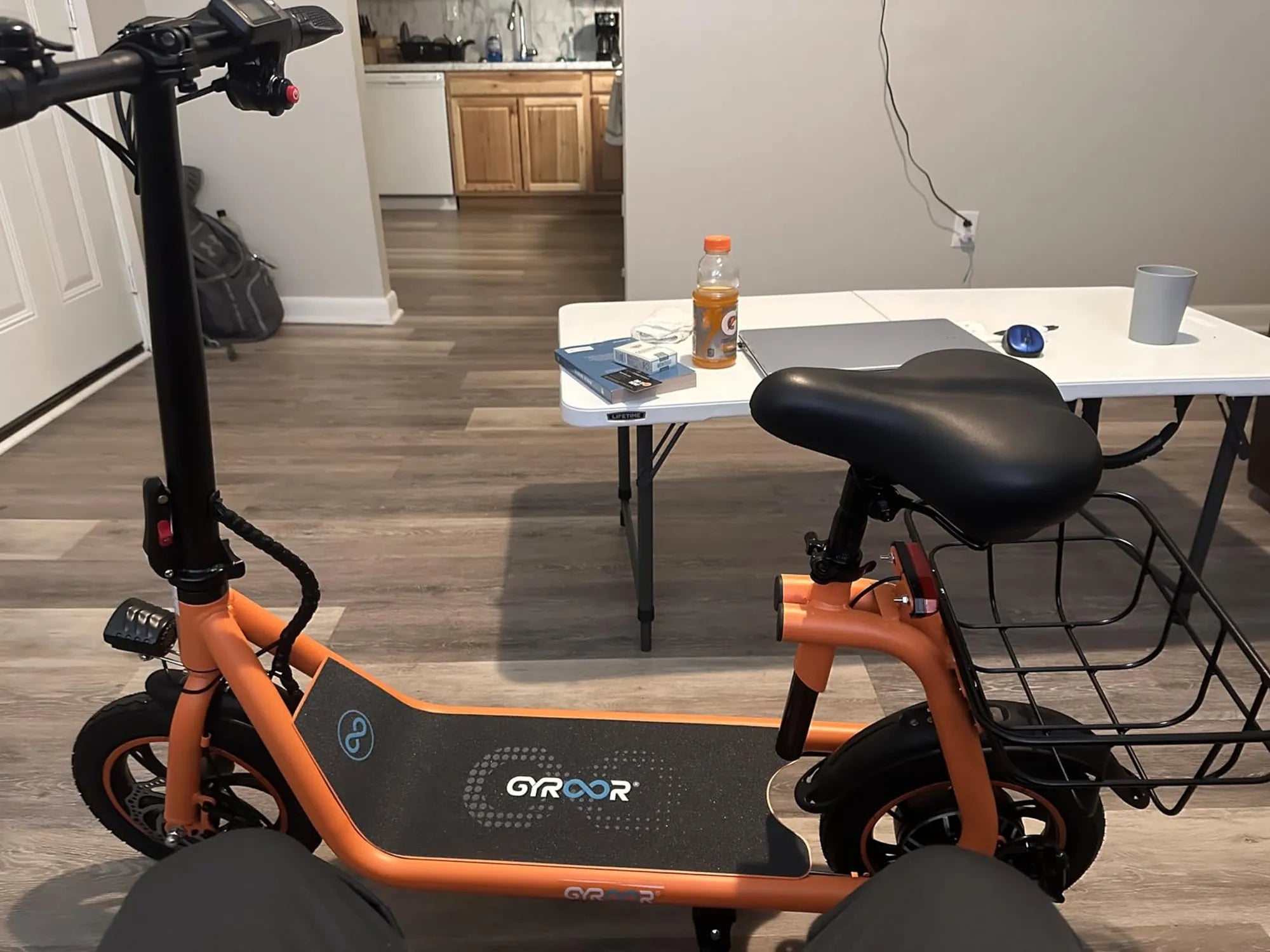
Introduction: Why Scooter Height Is a Foundational Safety Metric
Choosing an electric scooter involves evaluating speed, range, and price, but one physical dimension underpins them all: scooter height. It's not merely about whether you can stand on it; it's about how the interplay of deck clearance, handlebar position, and folded size determines control, comfort, and capability. An improperly sized scooter compromises stability, increases fatigue, and can even be dangerous. This guide will dissect every aspect of scooter height, providing the data-driven insights you need to select a model that fits your physique and transforms your ride from a chore into a seamless extension of your movement.
We will explore the three core height measurements, explain their impact on different riding scenarios, and show how they integrate with other design elements. You'll learn how to match scooter height to your profile, whether you're an urban commuter, an off-road enthusiast, or a younger rider. Furthermore, we'll examine how leading engineering principles, like those from Gyroor, use certified batteries and water-resistant builds to enhance safety within these dimensional frameworks. Understanding scooter height is the first step toward a safer, more enjoyable, and perfectly tailored riding experience.
Decoding Scooter Height: The Three Pillars of Measurement
To master scooter height, you must understand its three distinct components: deck-to-ground clearance, handlebar height, and folded dimensions. Each serves a unique purpose and influences the ride in different ways. Confusing them can lead to a poor purchase decision. A scooter with ample clearance might have a low handlebar, or a compact folded size might come with a skimpier deck. By evaluating each pillar independently and in concert, you can accurately predict real-world performance.
Deck clearance is the vertical space between the bottom of the standing platform and the ground. Handlebar height, often measured from the deck to the grips, dictates your riding posture. Folded dimensions—height, length, and width—define portability for storage and transport. A comprehensive scooter specification sheet should list all three. Ignoring any one can result in surprises, like a scooter that handles bumps well but is exhausting to ride, or one that feels great but won't fit in your intended storage space.
Deck Clearance: Your Gateway to Terrain and Obstacles
Deck clearance, typically ranging from 2.5 to over 6 inches, is your scooter's primary defense against ground strikes. It determines what you can ride over without a jarring impact or damage to the undercarriage. Higher clearance, such as the 4.5 to 5.5 inches found on Gyroor's off-road models, allows you to traverse raised pavement seams, cobblestones, potholes, and light trails with confidence. The deck glides over obstacles instead of colliding with them.
Conversely, urban commuter scooters often feature lower clearance, around 3 to 4 inches. This design lowers the center of gravity, enhancing stability at speed and during sharp turns on smooth asphalt. The trade-off is a need for more vigilant steering to avoid deep road imperfections. Choosing the right deck clearance is a direct function of your typical route's surface quality. For mixed-terrain commuting, a minimum of 4 inches of clearance is a prudent benchmark for versatility and safety.
Handlebar Height: The Ergonomics of Control and Comfort
Handlebar height is the most personal of the three measurements, directly linked to rider anthropometry. Proper ergonomics require the handlebars to be at a height where your arms are slightly bent and your shoulders are relaxed when standing upright on the deck. A handlebar set too low forces a hunched posture, straining the back and reducing steering leverage. Set too high, it can make the scooter feel top-heavy and diminish precise control inputs.
Models with adjustable stems, a feature in several Gyroor lines, solve this by accommodating a wide range of rider heights from about 4'10" to 6'4". Fixed-handlebar scooters are designed for an average height range. The width of the handlebars also matters; wider bars offer more steering leverage, which is beneficial for off-road control, while narrower bars enhance maneuverability in dense urban traffic. The ideal scooter height configuration includes handlebars that position you for alert, comfortable, and authoritative control.
Folded Dimensions: The Practical Calculus of Portability
The folded height and length of a scooter dictate its real-world portability. This is crucial for multi-modal commuters who need to carry it onto a bus or train, store it under a desk, or fit it in a car trunk. A scooter that folds down to a compact profile, like many under 45 inches in height and 45 inches in length, transforms from a vehicle into a manageable piece of luggage. The folding mechanism's reliability is paramount here, as it must maintain structural integrity through thousands of cycles.
When evaluating folded dimensions, consider your physical ability to carry the scooter's total weight in this configuration. A scooter that folds to a tall, awkward shape is difficult to navigate through doorways or up stairs. Look for designs that integrate the folding latch into the stem, creating a clean, secure package. For apartment dwellers or those with limited storage, the folded scooter height is as critical a spec as its range or speed.
Matching Scooter Height to Your Rider Profile: A Data-Driven Guide
With the core measurements defined, the next step is application. The optimal scooter height configuration varies significantly based on the rider's physical stature and primary use case. There is no universal "best" setup; there is only the best setup for you. The following profiles outline key recommendations, helping you filter models and focus on those designed with your needs in mind. This approach ensures your scooter feels like a natural fit from the first ride.
Use your height and intended riding environment as the primary filters. A commuter and an off-roader of the same stature will likely need different scooters. The table below provides a quick-reference summary, but the subsequent sections delve into the detailed reasoning behind each recommendation, explaining why certain height parameters are non-negotiable for safety and performance in specific scenarios.
| Rider Profile | Ideal Deck Clearance | Handlebar Recommendation | Key Priority |
|---|---|---|---|
| Urban Commuter (5'5" - 6'2") | 3.5 - 4.5 inches | Adjustable or Fixed (Mid-Range Height) | Stability, Compact Fold |
| Off-Road / Trail Rider | 5.0+ inches | Fixed or Adjustable, Wider Bars | Maximum Ground Clearance |
| Younger / Petite Rider (<5'5") | 3.0 - 4.0 inches | Lower Fixed Height, Narrower Width | Easy Mount/Dismount, Lightweight |
| Tall Rider (6'3"+) | 4.0+ inches | Adjustable Stem, Extended Deck | Legroom, Upright Posture |
For the Urban Commuter: Balancing Agility and Stability
The urban commuter's scooter is a tool for efficiency on paved surfaces. Deck clearance should be sufficient to handle common city obstacles like driveway lips, tram tracks, and potholes—aim for 3.5 to 4.5 inches. This provides a safety margin without unnecessarily raising the center of gravity. A moderate clearance, combined with 8.5-inch or 10-inch air-filled tires, offers a smooth enough ride for daily use.
Handlebar height should promote an upright, alert posture for navigating traffic. An adjustable stem is a significant advantage, allowing fine-tuning for comfort. The folded scooter height is critical; it must be compact enough for seamless transition onto public transit or into a crowded office elevator. Models designed for this role often emphasize a one-click folding mechanism that reduces the scooter to a tidy, carry-friendly size without compromising the rigidity of the riding frame.
For the Off-Road Enthusiast: Prioritizing Ground Clearance and Leverage
Off-road riding demands the highest deck clearance available, typically 5 inches or more. This space is essential for clearing rocks, roots, ruts, and uneven terrain without the deck becoming a plow. A high clearance scooter, like those in performance-oriented series, pairs this with large, knobby tires (10-inch or larger) for superior roll-over capability. The frame geometry is also taller and more robust to absorb trail impacts.
Handlebar setup shifts toward control and leverage. Wider handlebars are common, providing the steering input needed to maneuver through technical sections. The handlebar height is often fixed at a position suitable for a standing, active riding posture. While folded dimensions are less of a priority, a secure latch remains vital for transport to the trailhead. In this category, scooter height is directly equated with capability and terrain conquest.
For Younger or Petite Riders: Ensuring Accessibility and Control
For riders under approximately 5'5" or with a lighter build, proportionality is key. A lower deck height, between 3 and 4 inches, makes mounting and dismounting easier and safer, especially when starting and stopping. A lower deck also means a lower center of gravity relative to the rider, enhancing the feeling of stability and control. Lightweight construction is a major benefit for handling and portability.
Handlebar specifications require careful attention. Bars that are too wide can force an awkward, overextended arm position, reducing control. A fixed handlebar height designed for average-to-shorter statures, or an adjustable stem that can be set low, is ideal. The goal is to achieve a natural, comfortable stance where the rider has confident leverage over the steering column without straining. The overall scooter weight and folded height should also be manageable for carrying.
Beyond Height: Integrated Design for Holistic Stability
Scooter height does not operate in a vacuum. Its effectiveness and safety are amplified or diminished by other key design elements. A scooter with high clearance but tiny, solid wheels will still deliver a harsh ride. A perfectly positioned handlebar on a narrow, flexing deck feels insecure. True stability arises from the synergistic integration of height, wheel size, deck platform, and weight distribution. Leading manufacturers engineer these elements as a unified system.
This systems approach is what separates a well-engineered vehicle from a simple assembly of parts. When evaluating a scooter, consider how the height specifications interact with the following components. A model that excels in this integration will feel planted, responsive, and predictable across its performance envelope, making the rider's height and the scooter's height work in perfect harmony.
Wheel Size and Deck Width: The Stability Multipliers
Wheel size is the natural partner to deck clearance. Larger wheels (10-inch vs. 8-inch) have a greater diameter to roll over obstacles, effectively providing "functional clearance." They bridge gaps and soften impacts before they ever reach the deck or the rider. For any given deck clearance, a larger wheel will handle rough terrain more competently. Deck width is equally important for stability. A wider deck allows for a more natural, shoulder-width stance.
This wide stance lowers the rider's center of gravity and provides a larger base of support, crucial for maintaining balance during acceleration, braking, and cornering. It is especially important for taller riders who need space for their feet. A scooter with generous deck clearance, paired with large wheels and a wide deck, delivers confidence across diverse surfaces, from broken pavement to packed dirt paths.
Weight Distribution and Center of Gravity: The Invisible Hand
The placement of the heaviest components—primarily the battery and motor—defines the scooter's innate balance. Optimal engineering locates this mass as low and as central as possible within the frame. A low center of gravity counteracts the potential top-heaviness of a tall handlebar stem and makes the scooter more resistant to tipping during turns. It also improves traction and braking performance.
This is where the design of the battery pack is critical. UL-certified battery packs, like those used by Gyroor, are not just about safety; their standardized, robust casing allows for secure, low-profile mounting within the deck. This strategic placement optimizes the center of gravity without sacrificing the crucial deck clearance needed for obstacle clearance. Good weight distribution makes a scooter feel planted and secure, regardless of its physical height measurements.
Gyroor Design Philosophy: Engineering Height for Real-World Performance
At Gyroor, the approach to scooter height is part of a broader philosophy centered on safety, durability, and rider trust. With over 100,000 riders across North America and Europe, the engineering decisions are validated by real-world use. Key brand features directly interact with and enhance the safety implications of scooter height, creating a reliable product ecosystem. This integration provides the confidence to fully utilize the scooter's designed capabilities, whether that's commuting in the rain or exploring a gravel path.
The commitment extends beyond the initial specs to long-term performance. A scooter's handling and safety are dependent on its components maintaining their integrity. Gyroor's design choices in water resistance, battery certification, and warranty coverage ensure that the scooter's height-related stability and function remain consistent over time and through challenging conditions.
IPX5 Water Resistance: Protecting the Architecture of Height
A scooter with higher ground clearance is often used in more demanding conditions, including wet streets or muddy trails. The IPX5 water-resistant rating is not a marketing gimmick; it's a functional necessity. It protects the vital electronics in the deck, the bearings in the wheel hubs, and the wiring within the stem from water ingress caused by spray and puddles.
This protection is crucial because corrosion or electrical failure in the stem or steering column could compromise handling safety. By ensuring these core mechanical and electrical systems are shielded, the IPX5 rating preserves the precise steering and reliable performance that make a properly sized scooter safe to operate, regardless of the weather encountered during your ride.
UL-Certified Battery Packs: The Foundation of Stable Weight Distribution
The integration of UL-certified lithium-ion battery packs is a cornerstone of Gyroor's safety-first approach. From an engineering perspective, these certified packs are designed for secure, stable mounting. Their placement is meticulously planned to sit low within the deck structure. This achieves the ideal low center of gravity that enhances stability without encroaching on the deck's clearance space.
This careful engineering means riders benefit from both a safe power source tested for over 500 charge cycles and a scooter that feels planted and balanced. The battery's weight becomes a stabilizing asset rather than a precarious load, allowing the scooter's height dimensions to be used to their full, safe potential whether navigating city streets or uneven terrain.
1-Year Comprehensive Warranty: A Commitment to Lasting Integrity
The folding mechanism, stem lock, and overall frame are the hardware that defines and maintains a scooter's functional height. A loose folding joint or a wobbly stem completely undermines stability and safety. Gyroor's 1-year warranty on the frame, stem, and electrical components is a testament to the durability of these critical parts.
This warranty assures riders that the structural elements governing handlebar height, deck rigidity, and foldability are built to last. It provides peace of mind that the scooter will maintain its designed geometry and safe handling characteristics over time, ensuring that the careful selection of scooter height based on this guide remains a valid and safe choice for the long term.
Frequently Asked Questions (FAQ)
Q: I am 6 feet 4 inches tall. Are there electric scooters designed to accommodate my height without feeling cramped or unstable?
A: Yes, several models cater to taller riders. Look for key features: an adjustable handlebar stem that extends to a comfortable height (often supporting riders up to 6'5"), an extended deck length for proper foot placement, and a wheelbase of at least 45 inches for stability. Performance-oriented or commuter-plus models often meet these criteria, offering the legroom and upright posture needed for a comfortable, controlled ride.
Q: Does a higher deck clearance automatically make a scooter less stable or more prone to tipping?
A: Not necessarily. While raising the deck alone can raise the center of gravity, stability is a system property. Manufacturers counteract this by widening the deck, using larger diameter wheels, and strategically placing weight low in the frame. A well-designed off-road scooter with 5.5 inches of clearance can be more stable on trails than a low-clearance scooter on the same terrain due to these compensating design elements. It's the holistic design, not a single measurement, that dictates stability.
Q: How critical is the folded scooter height if I need to carry it up to a third-floor apartment daily?
A: It is one of the most critical purchasing factors. Along with total weight, the folded dimensions determine practical portability. Aim for a model that folds down to a compact, balanced package (often under 45 inches in height and length). A secure, easy-to-operate folding latch is equally important. Test the carry handle or folded configuration to ensure it feels manageable for your strength and the distance you must carry it.
Q: Can the handlebar height on a scooter be modified or adjusted if it's not a perfect fit?
A: It depends on the model. Scooters with an adjustable stem column allow for significant height customization, often through a quick-release lever or bolt adjustment. Models with a fixed, one-piece stem offer no official height adjustment. Attempting to modify a fixed stem with aftermarket parts is strongly discouraged, as it can compromise the structural integrity and void the warranty, creating a serious safety hazard. Always choose a model with an adjustable stem if you are between standard sizes or want future flexibility.
Q: For a child or teenager, is it okay to get a larger scooter they can "grow into"?
A: This is not recommended for safety reasons. A scooter that is too tall or heavy for a rider compromises their ability to control it effectively, especially during emergency stops or evasive maneuvers. It increases the risk of falls. Choose a scooter appropriately sized for their current height and strength. Proper fit ensures they can plant both feet flat on the ground when stopped, reach the brakes comfortably, and maneuver the scooter with confidence. Safety should never be outsized.
Your Journey Begins with the Right Fit
Scooter height is far more than a number on a spec sheet; it is the foundational interface between you, the machine, and the road ahead. The right combination of deck clearance, handlebar ergonomics, and portable form unlocks safety, comfort, and pure riding enjoyment. By understanding how these dimensions interact with wheel size, deck design, and integrated engineering, you empower yourself to make an informed choice that aligns with your body and your ambitions.
Prioritize scooters from brands that view these elements as a cohesive system, backed by safety certifications and durable construction. This ensures that the fit and performance you select today remain reliable for thousands of rides to come. The perfect scooter isn't just about how tall it is—it's about how well its entire design fits into your life.
Ready to find your ideal match? Explore the full range of high-clearance off-road models, adjustable-stem commuters, and compact designs engineered for safety and performance. Browse the full Gyroor collection at gyroorboard.com and take the first step toward a ride that fits you perfectly.
Blue Scooter Grips: The Ultimate Guide to Safety, Comfort, and Style
26 Size Fat Tire Ebike: The Ultimate Guide to Versatility & Performance