


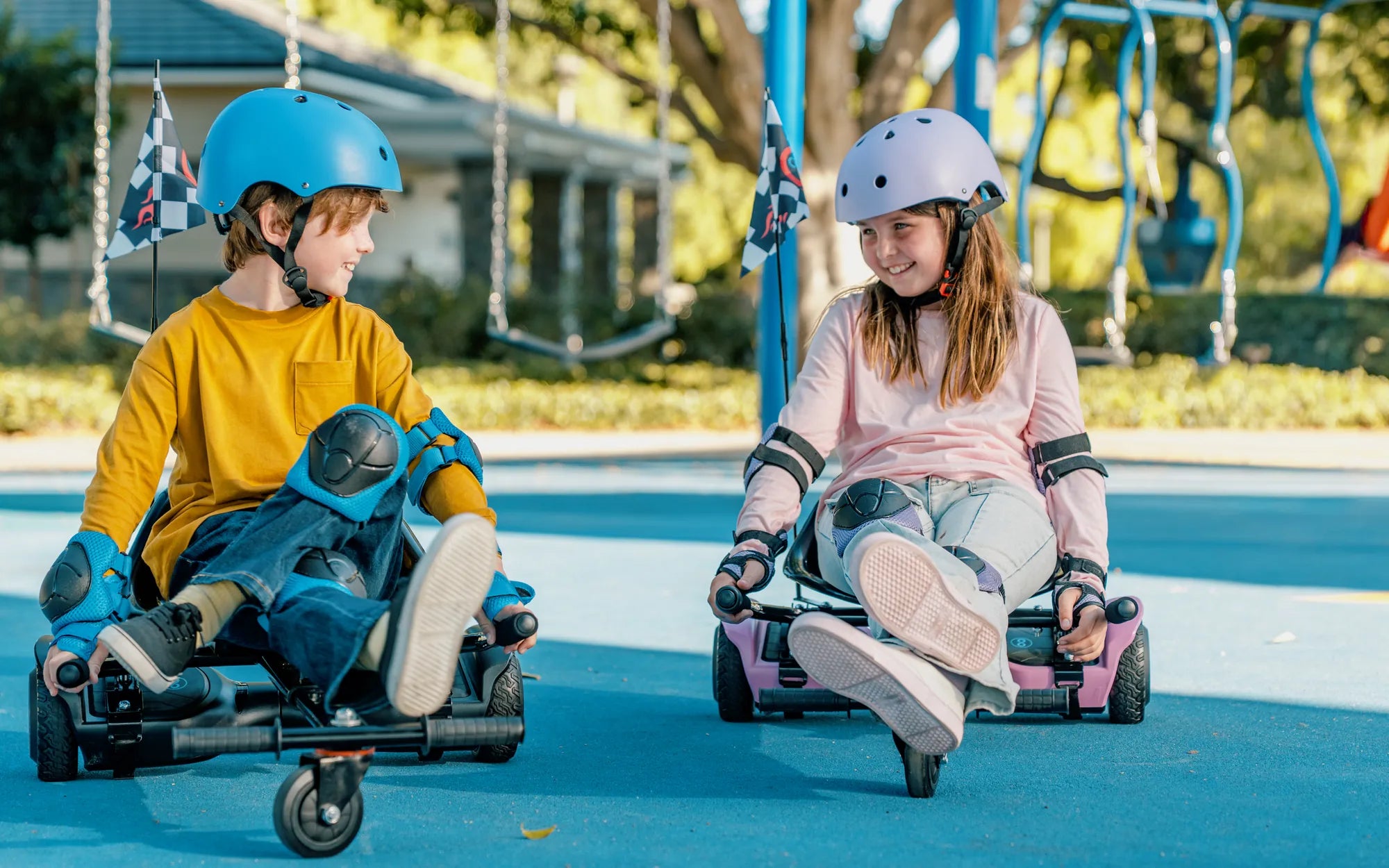
Ready to transform sidewalk cruising into an exciting, skill-building adventure? A scooter race for kids offers more than just a burst of speed; it's a dynamic activity that promotes physical fitness, coordination, strategic thinking, and healthy social interaction. This guide moves beyond casual riding to explore how organized, safe racing can become a highlight of your child's active play. We'll cover every critical aspect, from selecting a performance-ready scooter and non-negotiable safety gear to progressive training drills and event planning. By prioritizing safety and skill development, you can create an environment where thrills and responsibility go hand-in-hand, fostering confidence on and off the scooter.
Introduction to Kids' Scooter Racing: Beyond the Sidewalk
Scooter racing for kids is a structured yet fun form of active play that introduces elements of friendly competition, goal-setting, and motor skill refinement. Unlike unstructured riding, it involves simple rules, defined courses, and an emphasis on technique and control. This framework turns a simple activity into a engaging developmental tool.
The benefits are multifaceted. Physically, it enhances balance, core strength, coordination, and cardiovascular health. Mentally, it teaches focus, risk assessment, and perseverance. Socially, it encourages teamwork, communication, and sportsmanship when conducted in a group setting. The key is to frame it as a challenge of personal improvement rather than just winning.
From a brand committed to safe, active lifestyles, Gyroor views kids' scooter racing as an excellent way to cultivate a love for outdoor activity. The foundation, however, is always secure, reliable equipment. A successful and safe scooter race for kids starts long before the starting line—it begins with informed choices about gear and preparation.
Choosing the Right Scooter: The Foundation of Safety and Performance
Not all scooters are created equal for racing-oriented activities. The right model balances lightweight agility with durable construction, ensuring it can handle more dynamic use than casual cruising. The primary considerations are the rider's age, skill level, and the intended riding environment.
For younger children (ages 3-6), a simple three-wheeled or two-wheeled kick scooter with a low deck and wide wheelbase is ideal for stability. As children grow older and more proficient (ages 6-12), a two-wheeled scooter with a responsive steering mechanism and smoother wheels becomes necessary for developing proper technique. The scooter should feel like an extension of the rider, not a limitation.
Key Features for a Race-Ready Kids' Scooter
Specific features separate a toy from a tool for skill development. First, the frame material is critical. Aircraft-grade aluminum alloy offers the best strength-to-weight ratio, providing durability without unnecessary heft. The braking system must be reliable; a rear fender brake is standard, but models with an additional front brake offer superior stopping power and control.
Wheels determine roll speed and grip. Urethane (PU) wheels between 200mm and 230mm in diameter offer a smooth ride over minor pavement imperfections. Softer durometer (hardness) provides better grip, while harder wheels may roll faster but offer less traction. Adjustable handlebar height is essential to accommodate growth and ensure an ergonomic, controlled riding posture.
Why Gyroor Scooters Are Engineered for Active, Demanding Play
Gyroor's design philosophy aligns directly with the needs of young, energetic riders. A cornerstone of their safety commitment is the use of UL-certified battery packs in all electric models, rigorously tested for over 500 charge cycles. This certification is a critical safeguard, giving parents peace of mind during rigorous use.
Furthermore, an IPX5 water-resistant rating means scooters can handle wet pavement and puddles often encountered during outdoor play, protecting internal components. Coupled with a reliable 1-year warranty, these features ensure the scooter is a dependable partner for developing skills. The robust construction, from reinforced decks to secure folding mechanisms, is built to withstand the demands of active racing play.
Essential Safety Gear: The Non-Negotiable Kit
In any scooter race for kids, safety gear is not an accessory—it is mandatory equipment. Racing amplifies the potential for falls and collisions, making full-body protection an absolute requirement before any riding begins. Instilling the habit of gearing up every time is a crucial lifelong safety lesson.
The mindset should be similar to a cyclist or skateboarder: no gear, no ride. This rule must be enforced consistently by parents and supervisors. High-quality protective gear significantly reduces the risk and severity of injuries, allowing children to push their limits in a controlled manner and build confidence without fear of painful consequences.
The Comprehensive Safety Gear Checklist
Every rider must be equipped with the following items for any racing activity:
- Helmet: Must be certified (CPSC for cycling in the U.S., ASTM). It should fit snugly, sitting level on the head and covering the forehead. Replace after any significant impact.
- Knee and Elbow Pads: These are crucial for protecting the joints most likely to hit the ground during a fall. Look for hard plastic caps with ample foam padding and secure, adjustable straps.
- Gloves: Durable gloves, preferably with padded palms, protect hands from abrasions during falls and improve grip on the handlebars, reducing hand fatigue.
- Appropriate Footwear: Closed-toe shoes with flat, grippy soles (like skate shoes or sneakers) are essential. Never allow riding in sandals or flip-flops.
- Optional but Recommended: Wrist guards can provide additional support, and long pants and sleeves offer a first layer of protection against scrapes.
Setting the Rules: Creating a Safe Racing Environment
The physical environment is as important as personal gear. Establish clear, non-negotiable rules for every event. First, designate a riding area free of automotive traffic, such as a smooth, paved driveway, empty parking lot, or tennis court. Visually inspect the surface for cracks, gravel, sand, or wet leaves that could cause a loss of traction.
Rules should include: one rider on a ramp or feature at a time, a clear signal for starting and stopping, and a mandatory walk-through of the course before riding. Emphasize the importance of scanning ahead for hazards and maintaining a safe distance from other riders. Constant adult supervision is required to enforce rules and respond immediately to any incidents.
Training and Skills Development: Building a Confident Rider
Before racing, children must master fundamental scooter control. A progressive training plan builds competence and confidence systematically. Rushing into racing before a child has solid basics is a recipe for accidents and frustration. Frame each skill as a milestone to achieve.
Start in a wide-open, flat space. The goal is muscle memory and instinctive reactions. Training should be short, positive, and fun. Celebrate small victories, like a smooth stop or a tight turn, to keep motivation high. This phased approach ensures that speed is added only after control is firmly established.
Mastering the Fundamentals: Balance, Braking, and Turning
Begin with posture and kick-off. Practice standing comfortably on the deck with one foot while kicking smoothly with the other. Drill controlled braking: riding at a slow walk pace and applying the rear brake gently to come to a stop without skidding. This teaches modulation.
Next, practice wide, sweeping turns by leaning slightly and guiding the handlebars. Gradually decrease the turn radius. Drills like riding in a large figure-eight pattern are excellent for linking turns. Always practice looking in the direction of the turn, not down at the front wheel. Mastery of these fundamentals is the bedrock of safe racing.
Introducing Advanced Maneuvers (With Extreme Caution)
For proficient riders, introduce race-specific techniques focused on efficiency, not recklessness. Teach an efficient pushing start: several strong, rapid kicks while leaning forward before placing both feet on the deck. Practice "taking a line" through a corner—approaching from the outside, hitting the inside apex, and exiting wide to maintain momentum.
Low-speed control exercises, like a "slow race" where the last to put a foot down wins, are incredibly valuable for teaching balance. Always reiterate that these skills are about control. Speed is a byproduct of good technique, not the primary goal. Supervision is even more critical during this phase.
Organizing a Fun and Fair Kids' Scooter Race
Hosting a mini-racing event is a fantastic way to bring kids together for active fun. The focus should be on participation, personal achievement, and camaraderie. Keep it simple, safe, and inclusive for riders of different skill levels. The event's success is measured in smiles, not just who crossed the line first.
Plan according to the age group and available space. For younger children, very simple courses are best. For older kids, you can introduce more complex elements. Clearly communicate the schedule, rules, and safety requirements to all parents and participants beforehand. Have a first-aid kit readily accessible.
Race Format and Creative Course Design Ideas
Formats that reduce head-to-head collisions are safest. Consider timed solo laps, where each rider completes the course individually against the clock. A slalom course using plastic cones or chalk marks tests agility. A "slow race" emphasizes supreme balance.
For course design, use chalk to mark start/finish lines, boundaries, and turning points. Create a simple oval or circuit. Add fun, safe challenges like a straight "speed zone," a weaving slalom section, and a controlled stop box at the end. Always include a long, clear runoff area after the finish line.
Fostering Sportsmanship and Positive Competition
Set the tone from the beginning. Cheering for all participants should be encouraged. Award ribbons or certificates for various achievements beyond first place: Most Improved Rider, Best Sportsmanship, Most Consistent Technique, or Best Course Attitude.
Emphasize that beating a personal best time is a greater victory than beating a friend. This approach nurtures a healthy relationship with competition, where effort and improvement are valued above winning. A brief awards ceremony at the end celebrates everyone's effort and reinforces positive behavior.
Electric vs. Kick Scooters: Choosing the Right Tool
The choice between an electric scooter and a traditional kick scooter for kids' racing depends heavily on age, maturity, and the event's context. This comparison outlines the key differences to inform your decision.
| Feature | Kick Scooter (Traditional) | Electric Scooter (e.g., Gyroor Models) |
|---|---|---|
| Power Source | Child's leg power | Rechargeable electric motor |
| Best For Ages | 3 to 12+ | 8+ (check local laws; often 8+ or 12+) |
| Skill Development | Excellent for building balance, coordination, and physical stamina. | Focuses on throttle control, braking modulation, and situational awareness at higher speeds. |
| Speed Control | Directly controlled by child's effort. | Controlled via throttle and often multiple speed modes (e.g., Gyroor's 3-speed modes). |
| Use in Racing | Ideal for all skill levels, focusing on technique and fitness. Perfect for short-track, skill-based courses. | Suitable only for older, responsible riders in controlled, supervised environments on larger courses. Speed modes must be locked to the lowest setting initially. |
| Safety Priority | Mastery of fundamentals and protective gear. | All kick scooter safety, PLUS understanding of motor power, battery management, and stricter supervision. |
Maintenance and Pre-Ride Checks
A well-maintained scooter is a safe scooter. Instituting a simple pre-ride checklist habit is vital, especially before a scooter race for kids. Teach your child to participate in this process, fostering responsibility for their equipment.
Before every ride, check that the handlebars and stem are tightly secured and do not wobble. Ensure the folding mechanism (if present) is fully locked. Squeeze the brake lever to confirm it engages firmly and stops the rear wheel. Visually inspect the wheels for significant wear or cracks and spin them to check for warping or debris.
For electric scooters, also check the battery charge level and ensure all electronic functions (lights, display) are working. Regularly inspect the frame for any hairline cracks, particularly near weld points and folding joints. Keep the deck clean of mud and grit to maintain foot grip. Proper maintenance prevents mechanical failures that could lead to accidents during active use.
Frequently Asked Questions (FAQs)
Q: At what age can kids start participating in scooter racing events?
A: While toddlers can start on three-wheeled scooters, the concept of organized racing with rules and courses is most appropriate for children ages 6 and up. At this age, they typically have the necessary motor skills, attention span, and ability to understand and follow safety instructions consistently.
Q: Are electric scooters like Gyroor's suitable for kids' racing?
A> For older, responsible children (generally 8+, adhering to local regulations), electric scooters can be used in highly controlled and supervised racing environments. Always begin with the scooter in its lowest speed mode, and prioritize skill drills over speed. The UL-certified battery and robust construction of brands like Gyroor provide a critical safety foundation for this more advanced activity.
Q: What's the most common injury in kids' scooter racing and how do we prevent it?
A: The vast majority of injuries are falls resulting in abrasions (cuts, scrapes, and road rash) to the hands, knees, and elbows. Prevention is straightforward and highly effective: wearing full protective gear—especially gloves, knee pads, and elbow pads—every single time. Riding on smooth, dry, hazard-free surfaces is the second key prevention factor.
Q: How long should a kids' scooter race event last?
A> Keep it short and sweet to match children's attention spans and energy levels. For younger kids (6-8), 60-90 minutes total, including warm-up, practice, and a few race runs, is ample. For older kids (9-12), you can plan for 1.5 to 2 hours. Include breaks for hydration and rest to prevent fatigue, which leads to mistakes.
Q: My child is nervous about racing. How can I encourage them?
A> Decouple the idea of "racing" from "winning." Frame it as a fun skills challenge or a game with friends. Let them set personal goals, like "I will complete the course without putting my foot down" or "I will use my brake smoothly every time." Positive reinforcement for effort and improvement, not just outcome, builds confidence. Never force participation.
The Finish Line: Where Lifelong Fun Begins
A well-executed scooter race for kids is a powerful blend of exhilaration and education. It teaches children that preparation, practice, and respect for safety rules are the true pathways to freedom and fun. The memories created—the concentration on a slalom course, the pride in a new personal best, the cheers for a friend—last far longer than the result of any single race.
By choosing durable, safe equipment like that from Gyroor, enforcing unwavering safety protocols, and focusing on skill development and sportsmanship, you equip your child for a lifetime of enjoyable, responsible riding. The ultimate victory isn't a trophy; it's the confidence, health, and joy that come from mastering a fun physical activity in a safe and supportive environment. Start slow, gear up, and let the good times roll.
Ready to find the perfect scooter to start your child's racing journey? Explore Gyroor's range of UL-certified, robustly built scooters and e-bikes designed for active, safe play. Browse the full Gyroor collection at gyroorboard.com and equip your young rider for adventure.
Kids Electric Scooter with Pneumatic Tires: The Ultimate Guide for Parents
Electric Scooter for Kids Ages 10-14: The Ultimate Guide for Parents