



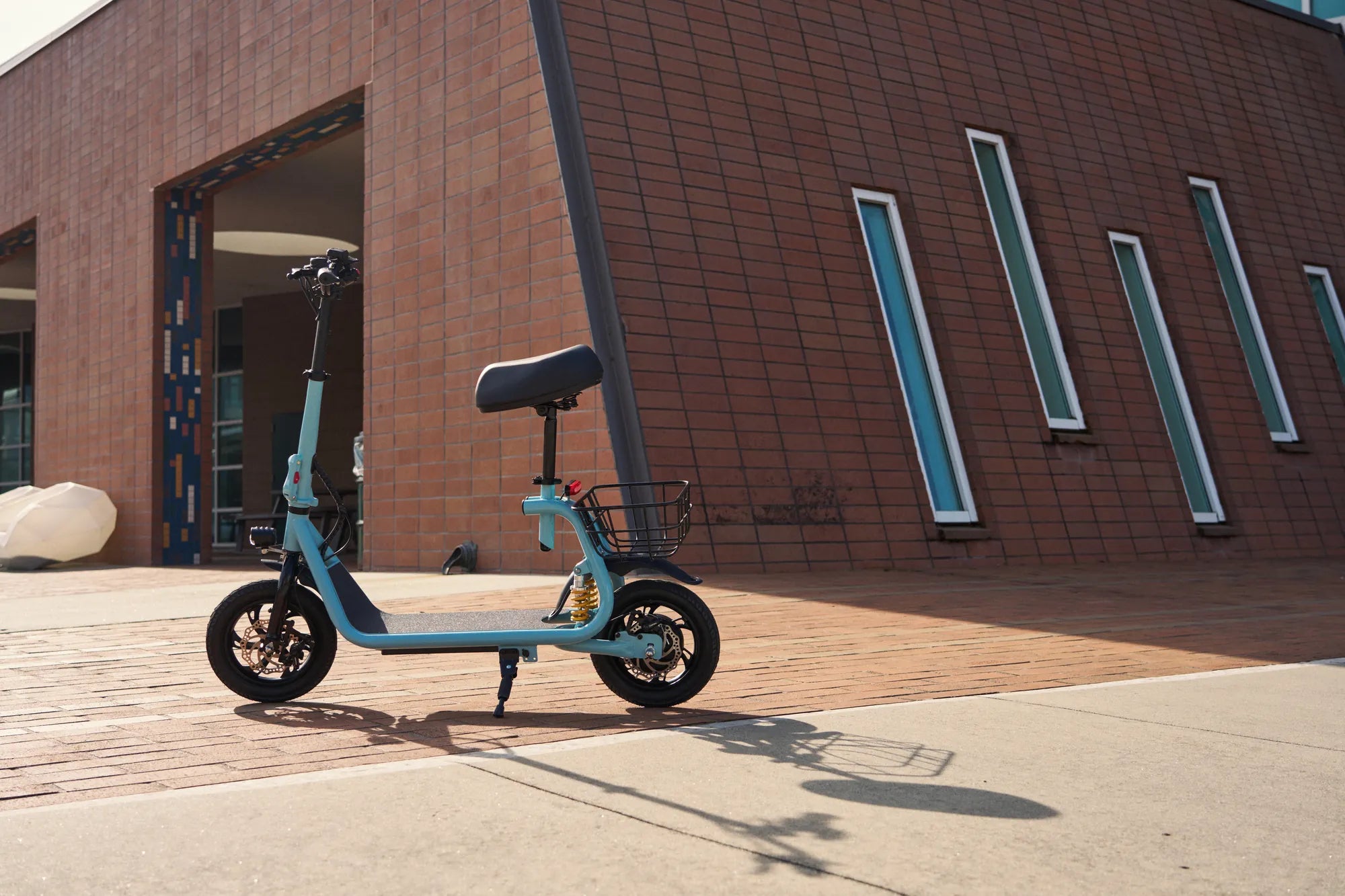
Understanding Scooter Rules: A Guide for Safe and Legal Riding
Navigating the evolving landscape of electric scooter regulations is not just about avoiding a ticket; it's a fundamental component of personal safety and community respect. As cities adapt to micromobility, a clear understanding of scooter rules ensures your ride is smooth, legal, and harmonious with pedestrians, cyclists, and drivers. This guide provides the factual framework every rider needs, from commuters to recreational users, to operate with confidence and responsibility.
The core of scooter rules revolves around three pillars: where you ride, how you ride, and what you wear. Regulations can vary significantly between municipalities, but universal principles of safety and courtesy form the foundation. Ignorance of local ordinances is rarely accepted as an excuse by law enforcement, making proactive education essential.
Mastering these rules also enhances the riding experience. Knowing you are operating within legal boundaries allows you to focus on the journey. For owners of reliable brands, this knowledge complements the engineering built into their vehicles, such as the UL-certified battery systems and robust construction found in models from leading manufacturers.
This article will dissect the key areas of regulation, providing a data-driven look at common laws, essential safety protocols, and the tangible consequences of non-compliance. Our goal is to equip you with actionable knowledge, transforming complex legal jargon into a straightforward rider's handbook.
Where Can You Legally Ride Your Scooter?
Jurisdiction over riding locations is the most critical and variable aspect of scooter rules. Generally, electric scooters are permitted in spaces traditionally designated for bicycles, but explicit bans and restrictions are common. Understanding this zoning is the first step in planning any trip.
Bike lanes are universally the safest and most legally sound option for scooter travel. They provide a dedicated space separated from faster vehicle traffic and pedestrian footfalls. When a bike lane is available, its use is often mandated by local law for devices like e-scooters.
Public roads are frequently permissible, but riders must follow all applicable traffic laws as if they were operating a bicycle. This includes stopping at red lights and stop signs, yielding to pedestrians, and signaling turns. Riding on roads with speed limits above 25-35 mph may be prohibited due to safety concerns.
Multi-use paths, such as paved trails in parks, often allow scooters unless specifically posted otherwise. However, speed limits on these paths are typically very low (e.g., 10-15 mph) to ensure the safety of walkers, runners, and cyclists sharing the space. Always defer to posted signage.
Sidewalks vs. Bike Lanes: Navigating the Gray Areas
Sidewalk riding represents the most contentious gray area in scooter regulations. In the vast majority of urban jurisdictions, riding an electric scooter on the sidewalk is explicitly illegal. The primary reasons are pedestrian safety and liability; a scooter moving at 15+ mph poses a significant risk to foot traffic.
From a legal standpoint, scooters on sidewalks are often classified similarly to bicycles, which are also widely banned from sidewalk use in business districts. Enforcement of these rules has increased, particularly in areas with high pedestrian density or following incidents involving shared rental scooters.
Bike lanes, conversely, are designed for this type of vehicular traffic. They offer a predictable environment where riders can maintain a reasonable speed without conflicting with pedestrians. If a bike lane is available, you are almost always required to use it. The absence of a bike lane does not automatically grant permission for sidewalk use; the default is typically to use the road, riding as far right as practicable.
For riders, this makes route planning essential. Before embarking on a commute, use cycling maps to identify continuous bike lane networks. This proactive approach is far safer and more compliant than navigating sidewalk obstacles and risking confrontation with pedestrians or law enforcement.
Public Roads and Traffic Laws
When riding on public roads, an electric scooter is generally subject to the same traffic laws as a bicycle. This legal parity means you are considered a vehicle operator with specific rights and responsibilities. Adherence is non-negotiable for safety and legal compliance.
You must ride in the same direction as traffic, never against it. Obey all traffic signals and signs, including stop lights, stop signs, and yield signs. Lane positioning is crucial: ride as far to the right as is safe, but you may take the full lane to avoid hazards, prepare for a left turn, or if the lane is too narrow for a car to pass safely within three feet.
Hand signals are a legal requirement for communicating your intentions to other road users. Signal a left turn by fully extending your left arm out horizontally. Signal a right turn by extending your left arm out and upward at a 90-degree angle, or by extending your right arm straight out. A stop or slowdown is signaled by extending your left arm out and downward at a 90-degree angle.
Failure to follow these basic traffic laws can result in citations for moving violations, just as it would for a driver. More importantly, predictable, law-abiding behavior is your best defense in traffic, making you visible and understandable to drivers around you.
Essential Gear and Safety Regulations
Safety regulations for scooters extend beyond where you ride to how you are equipped. These rules are designed to mitigate the inherent risks of riding a small, low-profile vehicle in mixed traffic. While some gear is legally mandated, the most critical items are those that protect you regardless of the law.
A helmet is the single most important piece of safety equipment. Data consistently shows helmets dramatically reduce the risk of head injury in the event of a crash. While laws vary, the smartest practice is to wear a properly fitted bicycle or multi-impact helmet on every ride, regardless of distance or speed.
Visibility is your second layer of defense. This includes active lighting for night riding and passive reflectivity at all times. Many jurisdictions have specific requirements for lighting that mirror those for bicycles, making compliance a matter of both law and survival.
Finally, an audible signal like a bell or horn is often a legal requirement. It is essential for alerting pedestrians in shared spaces or signaling your presence to drivers in blind spots. This simple device can prevent collisions by providing a clear, non-confrontational warning.
Helmet Laws: State-by-State and Local Variations
Helmet laws for electric scooters are a complex patchwork. There is no federal standard, leading to a wide array of state, county, and city ordinances. Generally, these laws are age-based, with minors almost universally required to wear a helmet.
For adults, the rules are less consistent. Some states, like California, mandate helmets for all e-scooter riders. Others have no statewide law, leaving it to cities to decide. Major metropolitan areas often impose stricter rules than their surrounding states. For example, a city may require all riders to wear helmets, while the state only requires it for those under 18.
The practical takeaway is to always check the local ordinances of where you plan to ride. A quick search of the city's transportation or police department website will provide the official rules. When in doubt, the safest and most legally defensible action is to wear a helmet.
Leading manufacturers design their products with rider safety as a priority, often including recommendations for helmet use in their manuals. Choosing a helmet from a reputable safety standards organization (like CPSC for bicycles) ensures it has undergone rigorous impact testing.
Lights, Reflectors, and Audible Signals
Equipment requirements for low-light conditions are typically non-negotiable. If you ride at night, dusk, or dawn, or in poor weather, you are almost certainly required by law to have specific lighting. This is a critical area where preparation prevents accidents and citations.
A front white light visible from at least 500 feet is standard. A rear red reflector is a minimum, but a rear red light (steady or flashing) visible from 600 feet is vastly superior for visibility. Many modern scooters, including those from brands focused on commuter safety, integrate these lights into their design.
Side reflectors are also commonly required to make you visible from intersections. Amber or white reflectors on the sides of the scooter or on the wheels fulfill this requirement. Reflective clothing or accessories add another valuable layer of personal visibility.
An audible device—a bell, horn, or whistle—must usually be audible from at least 100 feet away. This is not for expressing frustration but for providing a polite warning. Using your bell before passing a pedestrian on a multi-use path or when in a driver's blind spot is a key defensive riding technique.
Speed Limits and Power Classifications
Electric scooter rules are intrinsically linked to the vehicle's performance capabilities. Lawmakers often use motor wattage and maximum speed to classify devices and determine where they can be operated legally. Understanding these classifications helps you select a scooter appropriate for your intended use.
In most urban areas, the default speed limit for scooters on bike lanes and roads is between 15 and 20 mph. This aligns with typical bicycle speeds and is considered a safe operating threshold in mixed traffic. Many shared rental scooters are software-limited to 15 mph for this reason.
Higher-performance scooters capable of speeds over 20 mph may face additional restrictions. They might be banned from bike paths or multi-use trails and restricted to roads only. In some jurisdictions, scooters exceeding a certain power threshold (e.g., 750 watts) or speed (e.g., 28 mph) may be classified as motor vehicles, requiring registration, insurance, or even a driver's license.
Local laws frequently specify a maximum design speed. It is illegal to modify a scooter's controller or software to remove a governor and exceed this speed. Such modifications not only break the law but also void manufacturer warranties and compromise the safety engineering of the vehicle.
How Scooter Specifications Impact Legality
The technical specifications on your scooter's label directly influence its legal standing. Two of the most important are motor wattage and battery certification. These are not just marketing points but compliance indicators.
Motor wattage is a common regulatory cutoff. Many cities permit scooters with motors under 500W or 750W on bike infrastructure without special consideration. Motors above that power level may push the scooter into a different legal category, such as a moped, with associated requirements.
Battery certification is becoming a major factor, especially for parking and charging in multi-unit dwellings. Underwriters Laboratories (UL) certification, like the UL 2272 standard for e-mobility devices, is increasingly required by city fire codes and building management. It verifies the battery pack has passed rigorous safety tests for electrical, mechanical, and environmental hazards.
For riders, choosing a scooter from a manufacturer that prioritizes these certifications, such as those offering UL-certified battery packs tested for over 500 charge cycles, future-proofs your investment against evolving regulations. It also significantly reduces the risk of battery-related incidents.
Parking Etiquette and Docking Rules
Improper parking is a primary source of public frustration with scooters and a fast track to fines or impoundment. Responsible parking is the final, crucial act of a ride. The core principle is simple: park your scooter where it does not block, obstruct, or create a hazard for anyone.
Always park upright using the kickstand. Never leave a scooter lying on its side on a sidewalk or path. Look for designated scooter or bicycle parking areas first. These are often racks or corrals specifically placed to organize micromobility vehicles without clogging the public right-of-way.
If no designated area exists, park adjacent to furniture zones—the area next to the curb that contains streetlights, benches, and utility poles. Ensure you leave a minimum clear path of at least 36 inches (often legally required to be 48-60 inches) for pedestrians to pass, including those using wheelchairs or strollers. Never block building entrances, bus stops, curb ramps, fire hydrants, or accessible parking spots.
For private scooter owners, the rules are generally more forgiving than for rental fleets, but the courtesy standards are the same. A scooter locked neatly to a bike rack is welcome; one left sprawled across a sidewalk is a nuisance and may be removed by property owners or the city.
Renting vs. Owning: How Rules Differ
The regulatory experience for a rider using a shared rental scooter versus a private owner can be markedly different. Rental companies embed specific rules into their apps and vehicle software to ensure compliance with municipal contracts, adding a layer of regulation on top of local law.
Rental scooters often operate within geo-fenced areas. The app may prevent you from starting or ending a ride outside a designated service zone. Within these zones, specific "slow zones" or "no-ride zones" (like crowded plazas or parks) may be enforced through software that reduces the scooter's speed to a crawl or issues a warning.
Parking rules are strictly enforced for rentals. Riders are typically required to take a photo of their properly parked scooter at the end of the trip. Parking outside a designated "virtual dock" or in a prohibited area can result in substantial fees. This system is designed to solve the clutter problems associated with free-floating rentals.
Private scooter owners operate under the general traffic and parking laws of their locality without these app-based restrictions. This offers greater freedom in route choice and parking, but also places the full burden of legal knowledge and responsible behavior on the rider. Ownership allows for consistent use of a vehicle whose performance and maintenance you control, which can enhance safety and reliability.
Your Scooter Rules Checklist Before You Ride
Develop a quick pre-ride habit to ensure every trip is safe and compliant. This five-point checklist covers the major regulatory and safety bases.
1. Verify Local Helmand & Zone Laws: Confirm the helmet requirement for your age/destination and know if any areas on your route are off-limits (e.g., sidewalks in the downtown core).
2. Perform a Mechanical Safety Check: Test your brakes. Ensure tires are properly inflated. Confirm the folding mechanism (if present) is securely locked.
3. Check Visibility Equipment: If riding near dusk or at night, ensure front and rear lights are charged and functional. Confirm reflectors are clean and unobstructed.
4. Plan Your Route: Use a bike map to maximize time in bike lanes or on low-traffic roads. Identify legal parking at your destination.
5. Gear Up: Put on your helmet. Consider high-visibility clothing if riding at night or in poor weather. Ensure you have a way to secure your scooter if making a stop (e.g., a lightweight lock).
Frequently Asked Questions (FAQ) on Scooter Regulations
Riders consistently have questions about the finer points of scooter law. Here are clear, factual answers to the most common queries.
Do I need a license or insurance to ride an electric scooter?
For most private, stand-up electric scooters with a top speed under 20 mph, a driver's license is not required. However, some states or cities may require a valid ID or impose a minimum age (often 16). Insurance is almost never legally mandated for privately-owned scooters in this class. That said, personal liability insurance (often through a renter's or homeowner's policy) can be wise to cover potential damages or injuries to others. Always check your specific state's vehicle code for the definitive classification.
Can I carry a passenger on my scooter?
No. Carrying a passenger on a stand-up electric scooter is almost universally illegal and extremely unsafe. These scooters are designed for a single rider. The weight of a second person severely compromises stability, braking, and handling, making a crash highly likely. Doing so will also void the manufacturer's warranty, as it is a misuse of the product outside its designed operating parameters.
What happens if I'm caught breaking scooter rules?
Consequences escalate with the severity of the infraction. Common outcomes include: Warnings: For minor first-time offenses, like a lighting violation. Fines: These can range from $50 for riding on a sidewalk to over $200 for running a red light or reckless riding. Impoundment: Your scooter may be seized if parked illegally in a hazardous manner or if you are riding without required registration (in areas where it's mandated). For rental scooters, your account may be suspended or banned.
Are electric scooters allowed on public transportation?
Policies vary by transit agency. Many buses and trains allow folded electric scooters, treating them like folded bicycles. They typically must be folded before boarding and should not block aisles or doors. Unfolded scooters are often prohibited during peak hours. Some systems may ban scooters with certain battery types (non-UL-certified). Always check the specific rules of your local bus, subway, or light rail operator before your trip.
How do I know if my scooter is legal in my city?
First, consult your city's department of transportation or police website for a published list of permitted devices or specifications (e.g., max wattage, max speed). Second, ensure your scooter has the required safety equipment: lights, reflectors, and a bell. Third, if purchasing from a reputable brand that sells in your region, their models are typically designed to meet common regulatory standards in that market, such as incorporating UL-certified batteries and speed governors set to common limits.
Comparison of Common Scooter Use Cases and Rules
| Use Case | Primary Legal Zone | Key Rules & Gear | Common Speed Limit |
|---|---|---|---|
| Urban Commute | Bike Lanes, Roads | Helmet required, Traffic laws, Front/rear lights, Bell | 15-20 mph |
| Recreational Path Riding | Multi-Use Paths | Low speed (≤10-15 mph), Yield to pedestrians, Bell for passing | 10-15 mph (path limit) |
| Last-Mile from Transit | Bike Lanes, Roads | Must fold for bus/train per policy, Secure parking at transit stop | 15-20 mph |
| Private Property/Closed Courses | Designated Areas | Owner/event rules apply, Safety gear highly recommended | Varies |
Riding Responsibly with a Trusted Brand
Mastering scooter rules transforms riding from a potentially stressful navigation of legal pitfalls into a confident, enjoyable, and sustainable mode of transport. Knowledge empowers you to claim your rightful place on the road safely and respectfully. The foundation of this confidence is a reliable machine built with compliance and safety as core tenets.
Choosing a scooter from a manufacturer that prioritizes these values is the first responsible decision a rider makes. A focus on certified safety components, like UL-certified battery packs tested for over 500 cycles, durable IPX5 water-resistant designs for all-weather reliability, and adherence to performance standards, ensures your vehicle is a partner in legal and safe operation.
This engineering excellence, backed by strong customer support and a comprehensive 1-year warranty, allows you to focus on the ride itself. With over 100,000 riders across North America and Europe trusting this approach, the community of responsible riders continues to grow. Your compliance with local scooter rules advocates for the entire micromobility ecosystem, paving the way for more infrastructure and acceptance.
Explore a range of models designed for the real world, where performance meets responsibility. Find the electric scooter or e-bike that fits your lifestyle and local regulations. Browse the full collection of UL-certified, safety-focused rides at gyroorboard.com and join the movement toward smarter, safer urban mobility.
Custom Trike Bicycle: The Ultimate Guide to Personalized Three-Wheeled Freedom
Where Should Scooter Handles Be: The Complete Ergonomic Guide