

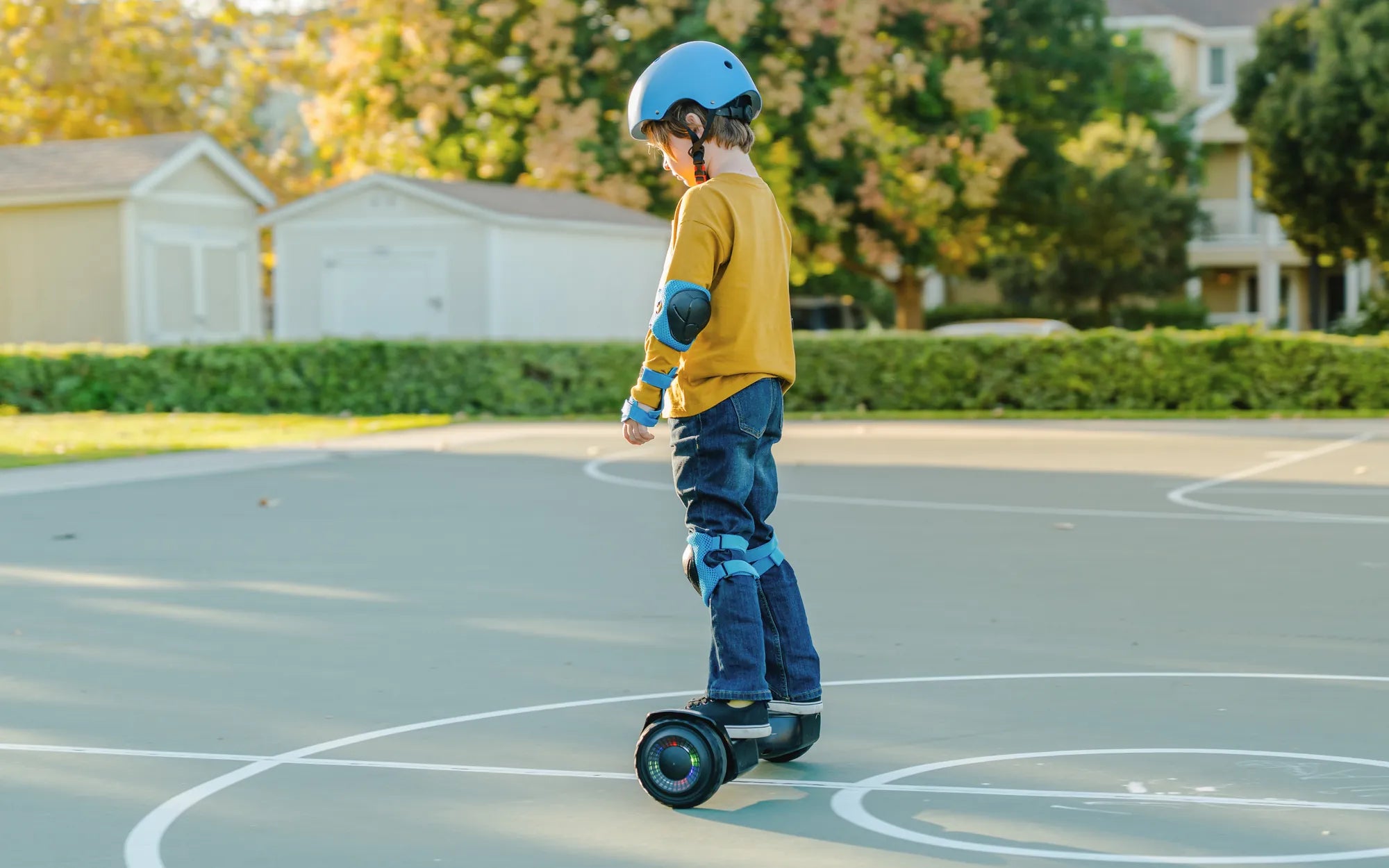
Riding a scooter offers children immense joy, physical exercise, and a valuable sense of independence. However, this popular activity carries real risks that demand a proactive approach from parents. The U.S. Consumer Product Safety Commission (CPSC) reports that emergency departments treat tens of thousands of scooter-related injuries to children annually, with common issues including fractures, contusions, and lacerations, often to the extremities and head. This guide on scooter safety for kids provides the essential, evidence-based framework you need. We will detail the non-negotiable protective gear, establish a fail-safe pre-ride routine, teach core riding skills, and outline maintenance protocols. By integrating these practices, you can transform scooter time from a potential hazard into a secure, confidence-building adventure for your child.
The Essential Safety Gear: Building Your Child's Protective Armor
A comprehensive safety strategy begins with the correct personal protective equipment (PPE). Viewing gear as optional is the single greatest risk factor for severe injury. The cornerstone, and absolute legal requirement in many jurisdictions, is a properly fitted helmet. Research consistently shows helmets reduce the risk of head injury by at least 45% and the risk of fatal head injury by nearly 75% for cyclists, a statistic directly applicable to scooter riders.
Beyond the helmet, a full set of pads is crucial. Knee and elbow pads are designed to absorb impact and prevent painful abrasions, the most common type of scooter injury. Wrist guards, often used in skating, can also be beneficial for very young or novice riders who are prone to falling onto their hands. The final, frequently overlooked piece of gear is appropriate footwear. Sturdy, closed-toe shoes with flat, grippy soles are mandatory. Sandals, flip-flops, or crocs can slip off pedals and offer zero protection in a fall.
Investing in quality gear from reputable sporting goods brands ensures the materials meet safety standards and will withstand impacts. This philosophy of built-in protection mirrors the engineering priorities of leading personal electric transport brands. For instance, Gyroor builds its electric scooters and e-bikes with UL-certified battery packs, undergoing rigorous testing for over 500 charge cycles to eliminate fire risk, and IPX5 water-resistant designs to prevent electrical failure—demonstrating that true safety is engineered from the inside out.
Choosing the Right Helmet: Fit, Certification, and Comfort
Not all helmets are created equal. For scooter riding, a helmet certified for bicycle use by the CPSC (U.S.) or an equivalent standard like CE (Europe) is the minimum. Multi-sport helmets certified for skating and cycling are an excellent choice. The fit is paramount: a helmet that is too loose will not stay in place during a crash.
To ensure a proper fit, measure your child's head circumference just above the eyebrows. Follow the manufacturer's size chart. When trying it on, the helmet should sit level on the head, covering the forehead without tipping back. The side straps should form a "Y" just under each ear. The chin strap must be snug, allowing only one or two fingers to fit between the strap and the chin. Many modern children's helmets feature an adjustable dial-fit system at the rear for a custom, secure fit.
Comfort encourages compliance. Look for helmets with adequate ventilation to prevent overheating. Let your child be involved in choosing a design they like—a helmet they love is a helmet they'll wear without a fight. Remember, helmets are designed for single-impact protection. Any helmet involved in a significant crash, even if no damage is visible, must be replaced immediately.
Pre-Ride Checklist: Setting Up for a Safe Journey Every Time
Safety is a habit, and it starts before the first push-off. Establishing a consistent pre-ride inspection routine with your child teaches responsibility and catches potential mechanical issues early. This checklist should become as automatic as putting on a helmet.
Begin with a visual inspection of the scooter's frame. Look for any visible cracks, dents, or significant rust, especially near weld points and the folding mechanism (if present). Ensure the folding mechanism is completely locked and secure; give it a firm shake to test. Next, check the handlebars and stem. They should be tight and aligned with the front wheel, with no unwanted rotation or wobble.
Move on to the wheels and brakes. Spin each wheel to ensure it rotates freely without rubbing. Check tire pressure if applicable; under-inflated tires make steering difficult and can damage wheels. For air-filled tires, maintain the PSI recommended on the tire sidewall. Inspect the brake pads for wear and test the braking system. When you squeeze the hand brake or step on the rear fender brake, the scooter should come to a smooth, controlled stop without the brake lever touching the handlebar.
This diligence is supported by starting with a well-constructed scooter. Brands that prioritize durability, like Gyroor, use reinforced frames and reliable componentry, which form a more stable foundation for safe riding. Their standard 1-year warranty provides added peace of mind, knowing the product is backed by the manufacturer against defects.
Selecting a Safe Riding Environment: Where to Ride and Where to Avoid
Location is a critical, often underestimated, component of scooter safety for kids. The ideal environment minimizes external hazards, allowing the child to focus on controlling their scooter. The gold standard is a smooth, paved, and level surface free of traffic, debris, and significant pedestrian congestion.
Excellent choices include empty school parking lots on weekends, paved park pathways, smooth driveways, or designated skate parks during off-peak hours. Always confirm that scooter riding is permitted in the chosen area. When using sidewalks, which are often legally permissible for young children, the rule is absolute deference to pedestrians. Teach your child to slow down, announce themselves politely ("Passing on your left!"), and give a wide berth.
Certain environments must be strictly avoided. Never allow riding on public roads, near moving traffic, or in parking lots with active cars. Other high-risk zones include hills (speed can quickly become uncontrollable), areas with sand or gravel (which can cause wheels to slip), and wet or icy surfaces. Night riding is exceptionally dangerous due to low visibility; if riding near dusk is unavoidable, the scooter and child should have active lights and reflective clothing.
Finally, the level of supervision must match the environment. In any non-enclosed, uncontrolled area, direct, attentive adult supervision is non-negotiable for younger children. The adult should be free from distractions (like a phone) and positioned to observe the child and the surroundings.
Teaching Core Riding Skills and Safe Behaviors
Proper gear and a good location set the stage, but skill is the active ingredient in safety. Begin by teaching the correct stance. For a standard kick scooter, the child should place their dominant foot firmly on the deck, typically towards the rear, with toes pointing forward. The non-dominant foot is used for pushing. The knees should be slightly bent to absorb bumps, and both hands must always be on the handlebars while in motion.
Start with the basics of propulsion and braking in a wide-open space. Have them practice pushing off gently, placing both feet on the deck for balance, and then using the brake to come to a complete, controlled stop. Master stopping before focusing on speed. Next, introduce wide, gradual turns. Emphasize looking in the direction of the turn and leaning gently, rather than making sharp handlebar adjustments.
Drill critical safety behaviors from day one. The most important rule: one rider per scooter. Hitching rides or attempting tandem riding is a leading cause of loss of control and falls. Teach them to always look ahead for obstacles like cracks, stones, or wet leaves, and to slow down well in advance. Instill the habit of a safe dismount: coming to a full stop, then stepping off to the side, never jumping off while the scooter is still moving.
As skills improve, you can introduce more advanced concepts like scanning the environment and hazard prediction. The goal is to develop a rider who is not just in control of their scooter, but also aware of their surroundings and capable of making safe decisions.
The Rules of the Road (and Sidewalk): Etiquette for Young Riders
Even on sidewalks and paths, scooter riders are part of a shared ecosystem. Teaching good etiquette prevents conflicts and accidents. First, be predictable. Ride in a straight line at a steady pace unless maneuvering around an obstacle. Sudden swerves are dangerous to the rider and those around them.
Second, communicate intentions. While formal hand signals may be advanced for very young children, they can learn to point in the direction they intend to turn and to make eye contact with drivers at every driveway and intersection. The rule for crossing any roadway, even a quiet residential street, is always: STOP. Dismount from the scooter, look left-right-left, listen for cars, and walk the scooter across as a pedestrian.
Third, eliminate distractions. Absolutely no headphones, earbuds, or mobile phone use while riding. A rider's full auditory and visual attention is required to react to dogs, balls, cars, or other children. Finally, teach respect. Yielding to walkers, giving space to other riders, and not riding on private property without permission fosters a positive image for all scooter users and keeps everyone safe.
Maintenance Matters: Keeping the Scooter in Safe Working Order
A scooter is a mechanical device, and its safety degrades without regular care. A simple monthly maintenance routine performed by a parent can prevent most failures. Use the table below as a quick-reference maintenance schedule.
| Component | Check Frequency | What to Look For | Action |
|---|---|---|---|
| All Nuts & Bolts | Before each ride (visual), Tighten monthly | Looseness, especially on stem, handlebars, and wheels | Tighten with correct size wrench. Do not overtighten. |
| Brakes | Weekly | Pad wear, braking responsiveness, cable tension (if applicable) | Replace worn pads. Adjust cable or mechanism per manual. |
| Tires/Wheels | Weekly | Air pressure (if pneumatic), cracks, wobble, worn tread | Inflate to correct PSI. Replace damaged tires/wheels. |
| Folding Mechanism | Before each ride | Security of lock, play or movement when locked | Ensure it clicks firmly into place. Clean and lubricate hinge if stiff. |
| Deck & Frame | Monthly | Cracks, sharp edges, excessive rust, loose grip tape | Retape deck if needed. Consult manufacturer for frame issues. |
| Bearings | Every 3-6 months | Grinding noise, rough wheel spin | Clean and lubricate or replace wheel bearings. |
For electric scooters, which are generally recommended for older teens and adults due to higher speeds and complexity, battery care is part of maintenance. This includes storing the scooter in a dry place, avoiding extreme temperatures, and not leaving it on charge indefinitely. Gyroor's use of UL-certified batteries and IPX5-rated construction inherently manages many of these risks, but user care remains essential for longevity and safety.
Comparison: Scooter Types and Their Safety Considerations for Kids
Choosing the right type of scooter is the first safety decision. The table below compares common scooter types for children, highlighting key safety factors. Note: Traditional kick scooters are appropriate for younger children, while motorized options require greater maturity, skill, and legal age compliance.
| Scooter Type | Typical Age Range | Key Safety Features | Primary Risks & Considerations | Best Use Case |
|---|---|---|---|---|
| 2-Wheel Kick Scooter | 5-12 years | Simple mechanics, low speed, rear fender brake. | Falls due to loss of balance, catching wheels on debris. | Learning fundamentals, neighborhood sidewalks, paved parks. |
| 3-Wheel (Delta/2 Front) Scooter | 3-8 years | Extra stability, lower deck, often lean-to-steer for intuitive control. | Can be less maneuverable; may tip if turned too sharply at speed. | First scooter for toddlers/preschoolers, building initial confidence. |
| Off-Road/All-Terrain | 8+ years | Larger, air-filled tires, more robust frame, sometimes suspension. | Higher potential speeds, used on rougher terrain which has its own hazards. | Paved trails, packed dirt paths, for adventurous riders with solid skills. |
| Electric Scooter (Note: For older teens/adults) | 14+ (Check local laws) | Hand brakes, often disc or electronic, lighting, speed modes. | Higher speeds (15-20+ mph), increased weight, complex systems (battery, motor). Requires road-awareness. | Older, responsible teenagers for commuting or recreation where legally permitted, with full safety gear. |
This comparison underscores that for young children, simplicity and controllability are safety features. The complexity and speed of adult-focused electric models, like those in Gyroor's lineup designed for commuters and enthusiasts, make them unsuitable for young kids but highlight the engineering (braking systems, lighting, durable builds) that becomes critical at higher performance levels.
Frequently Asked Questions (FAQs) on Kids' Scooter Safety
Q1: At what age can my child start riding a scooter?
Most children develop the necessary balance and coordination between ages 2 and 3 for a three-wheeled scooter. A traditional two-wheeled kick scooter is generally appropriate starting around age 5. Always base the decision on your individual child's physical development and coordination, not just their age.
Q2: Are electric scooters safe for kids?
Electric scooters are powerful vehicles with significant kinetic energy. Most reputable manufacturers, and many local laws, set a minimum age of 14 or 16. For young children, non-motorized kick scooters are vastly safer as they allow the child to develop fundamental balance and control skills without the risk of unexpected acceleration or high speeds. Electric models are best reserved for responsible teenagers under strict parental supervision and in full compliance with local regulations.
Q3: How do I get my child to actually wear their safety gear?
Consistency and modeling are key. Make gear non-negotiable from the very first ride: no gear, no scooter. Let them choose their own helmet and pads in a favorite color or design. Wear your own helmet if you're riding a bike alongside them. Praise them for gearing up. Eventually, it will become an automatic part of the riding ritual.
Q4: What should I do if my child has a fall or minor accident?
Stay calm. Check for serious injury (e.g., inability to move a limb, signs of concussion). For minor scrapes, clean the wound with water, apply an antibiotic ointment, and cover it. If there is a head impact, even with a helmet, monitor closely for signs of concussion (dizziness, nausea, headache, confusion) for the next 24-72 hours and consult a doctor if any symptoms appear. Use the incident as a learning opportunity to discuss what happened and how to avoid it next time.
Q5: How can I tell if a scooter is well-made and safe to purchase?
Look for a solid, wobble-free construction. Check for reputable safety certifications (e.g., ASTM F963 for toys). Read reviews focusing on durability and customer service. A trustworthy brand will offer clear age/weight limits and a warranty. For any motorized product, UL certification for the electrical system is a critical safety benchmark. Investing in a quality product from a company with a track record, like Gyroor with its 100,000+ riders and focus on certified components, reduces long-term mechanical risks.
Fostering a Lifelong Culture of Safety and Fun
Scooter safety for kids is not a one-time lesson but an ongoing partnership between parent and child. It is built on four unwavering pillars: consistent use of certified protective gear, careful selection of the riding environment, progressive development of riding skills and etiquette, and diligent maintenance of the equipment. When these elements are woven together, they create a safety net that allows the inherent fun, freedom, and developmental benefits of scooting to shine through.
The journey begins with choosing the right tool for the job. Selecting a sturdy, age-appropriate scooter from a manufacturer that prioritizes engineering integrity sets a foundation of reliability. This commitment to quality is what defines trusted brands in the mobility space. As your child grows and their riding horizons expand, this foundational culture of safety will scale with them, whether they graduate to a bicycle, an e-bike, or eventually, an electric scooter for urban commuting.
Empower your child with the skills and habits that protect them, so they can explore their world with confidence. Start their adventure on the right foot by choosing equipment designed to last and perform safely. Browse the full Gyroor collection at gyroorboard.com to see how a commitment to certified safety features, durable construction, and reliable performance defines a superior riding experience for enthusiasts of all ages.
Best E Scooter for Kids: A Parent's Guide to Safe and Fun Rides
Best Hoverboard for Kids 2024: Top Picks for Fun and Safety