


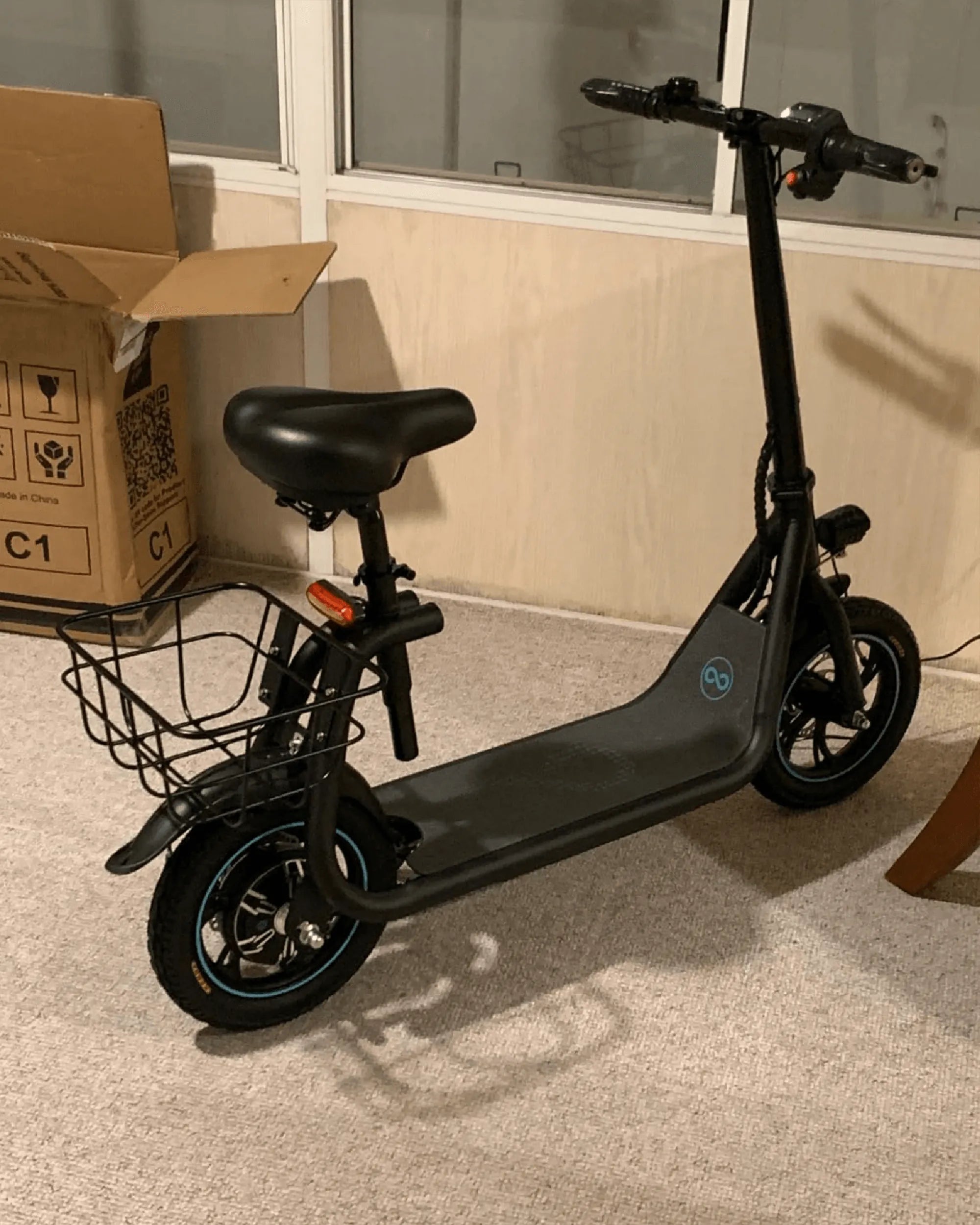
Introduction: Finding Your Perfect Fit
Choosing the wrong scooter size leads to immediate discomfort and long-term frustration. A deck that's too small forces an unstable stance, while handlebars set too low cause a hunched posture that strains your back. Incorrect sizing doesn't just hurt your ride quality—it compromises control and safety, especially during sudden stops or turns.
This scooter size guide provides the framework to avoid these pitfalls. The right fit is a precise balance of your physical dimensions, intended riding purpose, and practical storage logistics. It's about matching hard metrics to your real-world needs.
As a leader in personal electric mobility, Gyroor designs its 20+ models with this holistic approach. Every scooter, from ultra-portable commuters to robust off-road machines, integrates consistent, premium safety features like UL-certified battery packs and IPX5 water-resistant designs. This guide will help you navigate the options.
Decoding Scooter Size: It’s More Than Just Dimensions
Scooter size is a multi-variable equation. It extends far beyond a single measurement to encompass several interacting components that define the riding experience. Understanding each element is the first step toward an informed decision.
The deck—your standing platform—is defined by its length and width. Handlebar height determines your riding posture. Wheel diameter influences ride smoothness and obstacle clearance. Finally, the folded dimensions (Length x Width x Height) dictate portability and storability.
Each dimension directly impacts stability, control, and comfort. A longer wheelbase (the distance between the front and rear axles) generally increases stability at higher speeds. A wider deck allows for more natural foot placement, which is crucial for confidence during longer commutes.
The Rider-Scooter Match: Height and Weight Capacity
Your body is the most important variable in the sizing equation. Start by comparing your height to the scooter's handlebar height. For a comfortable, upright stance that allows for proper steering control, the handlebars should typically sit between your hip and lower waist when you're standing on the deck.
Consider this general guideline: Riders under 5'5" often find handlebar heights of 38-42" ideal, while riders from 5'6" to 6'2" should look for models with adjustable or fixed heights in the 42-48" range. Always check the manufacturer's recommended rider height range.
Weight capacity is a non-negotiable safety and performance spec. Exceeding the maximum load stresses the frame, motor, brakes, and battery, leading to reduced range, slower acceleration, and potential component failure. Gyroor models, for example, are engineered with robust frames to support their stated capacities reliably, ensuring performance isn't degraded under the limit.
Deck Dimensions: Your Platform for Control
The deck is your command center. Its surface area dictates how you stand. A common commuter-friendly deck size is around 20 inches long by 8 inches wide. This provides ample space to position your feet in a stable, side-by-side or slight staggered stance.
Larger decks, often 22 inches or longer, offer superior stability for taller riders or those carrying a backpack. They allow for micro-adjustments in foot position during long rides, reducing fatigue. Conversely, a compact deck under 18 inches in length enhances agility and quick maneuvering in tight spaces, often at the expense of high-speed stability.
Match the deck width to your shoe size. Riders with larger feet (size 11/US and above) will feel noticeably more secure on a deck that is 8.5 to 9 inches wide, preventing heel or toe overhang that can feel precarious.
Choosing Size by Primary Use Case
Abstract dimensions gain real meaning when applied to your primary riding goal. The ideal scooter for a daily subway commute differs vastly from one meant for weekend trail adventures. Aligning size with purpose is the key to satisfaction.
Your use case dictates priority. A commuter prioritizes stable comfort and foldable convenience. A multi-modal traveler demands ultra-portability. An adventure rider seeks large, robust dimensions for capability. Let's translate the earlier size components into these specific scenarios.
Urban Commuting & Last-Mile Solutions
For the daily urban commuter, the scooter is a serious transportation tool. Size selection focuses on a stable platform for varied pavement and a manageable form factor for mixed-mode travel. This demands a medium to large-sized scooter in its riding state.
Look for a deck length of at least 19-20 inches and a wheelbase over 40 inches for confident stability during 30-minute rides. Wheel diameter should be 10 inches or larger, with air-filled (pneumatic) tires preferred to absorb cracks and bumps, reducing fatigue.
The folded size is equally critical. It must fit seamlessly into your routine: beside an office desk, under a train seat, or in a crowded bus bay. A one-click folding mechanism is essential for quick transitions. The goal is a robust ride that transforms into a compact package.
Portability & Multi-Modal Travel
When portability is the top concern—for students moving between classes, professionals combining scooters with trains, or travelers—compactness and light weight trump all else. The scooter here is a supplement, not a primary vehicle.
These models feature shorter decks (often 16-18 inches) and lower handlebars, creating a smaller overall footprint when folded. Weight becomes a major factor; look for models under 30 lbs for easy carrying up stairs or through stations. The trade-off is often a slightly less plush ride and a smaller battery for reduced range.
The folding mechanism must be supremely secure and fast, with a reliable latch to prevent accidental unfolding while carried. The best models in this category balance minimal folded dimensions (akin to a large suitcase) with just enough deck space for secure footing on short trips.
Off-Road & Adventure Riding
Off-road riding demands the largest, most substantial scooter sizes. These conditions require a machine built to absorb impacts, maintain traction, and provide the rider with ultimate control over rough terrain. Size equates to capability here.
Prioritize a long wheelbase (often 45+ inches) and an extended, wide deck for superior stability on uneven ground. Large wheel diameters (10 inches minimum, 11+ preferred) with knobby, air-filled tires are mandatory for rolling over obstacles and maintaining momentum.
High ground clearance (at least 5 inches) prevents the undercarriage from scraping on roots or rocks. A robust, often dual suspension system (spring + hydraulic) is part of the "size" profile, managing the larger physical forces at play. This rugged build, combined with features like Gyroor's IPX5 water-resistant rating, enables true all-weather, all-terrain exploration.
The Practicalities: Storage and Transport
The journey doesn't end at the ride. Where will your scooter live when not in use? Overlooking storage and transport needs is a common mistake that can render a perfect-riding scooter impractical for your lifestyle. Always measure your available space.
Folded dimensions (L x W x H) are your key metric. Compare these numbers to the trunk of your car, the closet at your apartment, or the space under your desk. A typical commuter scooter might fold to 45"x20"x20", while an ultra-portable model can achieve 38"x15"x18".
Weight directly impacts usability. A 45-lb scooter is manageable for most adults to lift into a car trunk, but carrying it up three flights of stairs daily changes the calculus. Lighter models (under 35 lbs) excel in multi-story living situations or for those with less physical strength.
For apartment dwellers, consider vertical storage solutions or a model that can stand upright on its kickstand when folded. For car travel, a protective trunk mat is advisable. Proactively solving the storage equation ensures your scooter is a convenient asset, not a bulky burden.
Gyroor Size Spectrum: A Model Comparison
Applying these principles to real-world options clarifies the decision. Below is a comparison of key models from Gyroor's lineup, illustrating how size and specs align with different rider profiles and use cases. All models feature UL-certified battery packs tested for 500+ charge cycles and a reliable 1-year warranty.
| Key Model Type | Best For | Deck Size (LxW) | Folded Dims (LxWxH) | Weight | Wheel Size | Notable Feature |
|---|---|---|---|---|---|---|
| Compact & Portable | Multi-modal travel, students, last-mile | 17" x 7.5" | 38" x 15" x 18" | 28 lbs | 8.5" Solid | Ultra-fast 3-second fold |
| Urban Commuter | Daily city commuting, stable rides | 20" x 8.5" | 45" x 20" x 20" | 42 lbs | 10" Air-Filled | Dual suspension & integrated lighting |
| Performance Explorer | Longer range, varied terrain | 22" x 9" | 48" x 22" x 22" | 55 lbs | 11" Off-Road Tires | IPX5 rating, dual hydraulic brakes |
This table demonstrates the clear progression: as intended use becomes more demanding, the physical size, weight, and capability of the scooter increase proportionally. Your choice depends on which column's "Best For" description resonates most with your routine.
FAQ: Your Scooter Sizing Questions Answered
Q1: I'm 6'2". Will I be hunched over on a commuter scooter?
A: Not necessarily. Look specifically for models with an adjustable or fixed handlebar height of at least 46-48 inches. Many commuter scooters are designed with taller riders in mind. The deck length is also crucial; aim for 21 inches or longer to accommodate your stance comfortably.
Q2: Can two people ride a large scooter if it has a big deck?
A> No. Electric scooters are designed and tested for a single rider. Even a large deck does not change the engineered weight capacity, stability geometry, or braking power for two people. Riding double is extremely dangerous, voids warranties, and risks immediate component failure.
Q3: How do I know if the folded size will fit in my car trunk?
A> Measure your trunk's usable space (length, width, and height). Then, compare it to the scooter's published folded dimensions. Remember to account for the shape—some trunks have openings smaller than the interior space. Adding 2-3 inches of buffer to each measurement is a wise practice.
Q4: Is a heavier scooter always more stable?
A> Generally, yes, due to a lower center of gravity and more substantial construction. However, design is paramount. A well-engineered, lighter scooter with a long wheelbase and wide deck can be very stable. Weight contributes to stability but is not the sole factor; geometry and tire size are equally important.
Q5: Does wheel size affect the overall length of the scooter?
A> Yes, directly. Larger diameter wheels increase the wheelbase—the distance between the front and rear axles—which is a primary component of the scooter's total length. An 11-inch wheel model will typically have a longer chassis than an 8.5-inch wheel model, all else being equal, contributing to a smoother, more stable ride.
Conclusion: Confidence in Your Choice
Selecting the right scooter size is a systematic process that eliminates guesswork and ensures a rewarding experience. Begin with your body: match your height to the handlebars and your weight to the load capacity. Next, align the scooter's dimensions with your primary purpose, whether it's seamless commuting, ultimate portability, or off-road exploration. Finally, validate your choice against the practical realities of your storage and transport space.
Beyond physical fit, never compromise on the foundational safety and reliability features that make a scooter trustworthy. UL-certified batteries, water-resistant construction, and robust warranties are non-negotiable for peace of mind. With over 100,000 riders trusting Gyroor across North America and Europe, the commitment to these standards is proven.
Use this scooter size guide as your blueprint. Measure twice, prioritize your needs, and choose a model that fits not just your body, but your life. When you're ready to find your perfect match, explore the full range of thoughtfully designed options.
Browse the full Gyroor collection at gyroorboard.com.
Where Is the Battery on a Scooter: A Complete Guide to Location & Design
Best Automatic Scooter: The Ultimate Guide to Hands-Free Urban Mobility