

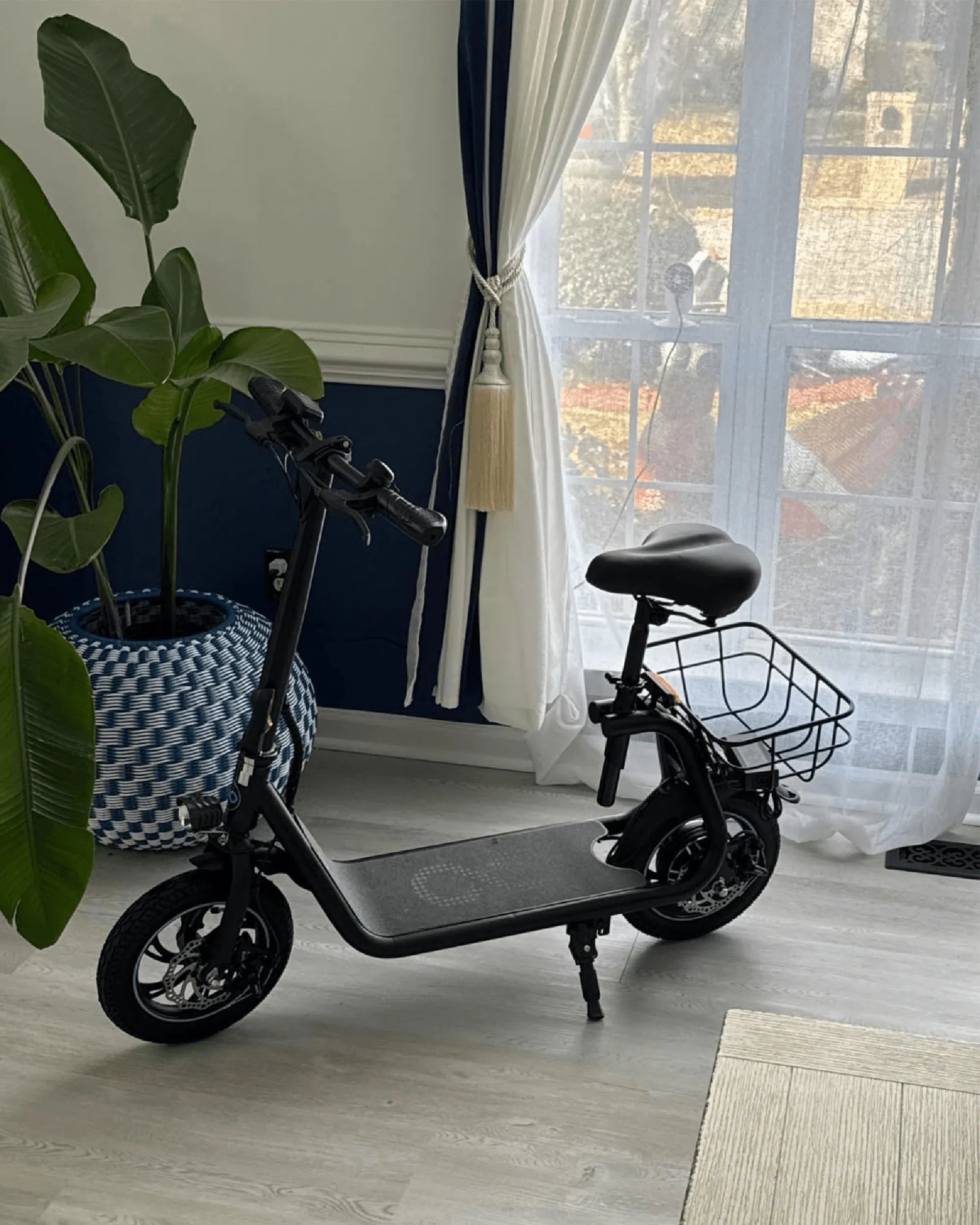
Introduction: Why a Proper Scooter Test is the Key to Your Perfect Ride
Choosing an electric scooter is a significant investment in your daily mobility. The key to satisfaction lies not in marketing claims, but in a rigorous, hands-on evaluation. A comprehensive scooter test is a structured process that assesses safety, real-world performance, and long-term value before you commit. This goes beyond a parking lot spin; it's about methodically verifying that the machine meets your specific needs for commuting, recreation, or last-mile travel. For a brand like Gyroor, known for its UL-certified batteries and robust designs, this user test is the final verification of engineering built to last.
This guide provides the framework for your personal scooter test. We will break down the process into actionable steps, from pre-ride safety checks to core performance metrics and feature evaluation. By the end, you'll know exactly what to look, listen, and feel for, transforming you from a casual rider into an informed evaluator. The goal is to ensure your chosen scooter passes your test with flying colors, delivering confidence with every ride.
The Pre-Ride Checklist: Setting Up Your Scooter Test for Success
Before you engage the throttle, proper preparation is essential for a safe and effective test. This phase sets the stage for accurate performance evaluation and minimizes risk. A haphazard approach can lead to misleading impressions or, worse, an accident. Treat this stage with the same seriousness as the ride itself.
Begin by selecting an appropriate environment. You need a smooth, dry, paved surface free of traffic, pedestrians, and major obstacles. An empty parking lot, a quiet residential street, or a dedicated bike path is ideal. The area should include a slight incline to test hill-climbing ability and enough straight, flat space to safely reach top speed. Always verify local regulations regarding where electric scooters are permitted to operate.
Safety First: Non-Negotiable Gear and Environment
Your personal protective equipment is non-negotiable. A properly fitted bicycle or multi-impact helmet is the absolute minimum. For a comprehensive scooter test involving speed and maneuverability, add knee pads, elbow pads, and sturdy, closed-toe shoes. This gear protects you during unexpected braking or instability tests. Never skip this step, even for a "quick test."
The testing environment must be legally compliant and physically safe. Check the weather; avoid testing on wet, icy, or excessively windy days, as these conditions dangerously alter handling and braking. Ensure you have clear visibility and that the scooter's lights are functional if testing in low light. Inform a friend or family member of your location and planned test duration as a basic safety precaution.
Initial Inspection: What to Look for Before You Power On
With safety gear on and environment secured, conduct a thorough visual and physical inspection. Examine the overall build quality: are weld seams clean? Is the frame free of cracks or deep scratches? Check all fasteners and bolts for tightness. Test the folding mechanism (if present) multiple times; it should engage securely without excessive play or wobble when locked.
Inspect the tires for proper inflation if they are pneumatic, or for significant wear if they are solid. Spin each wheel to ensure it rotates freely without rubbing against the brake caliper or fender. Squeeze the brake levers to feel for firm resistance and visually check that the brake pads or disc rotors are properly aligned. Finally, ensure the handlebars are straight and securely fastened, and the deck provides a stable, non-slip surface.
The Core Performance Metrics: What to Test and How
This is the heart of your scooter test. Here, you transition from static inspection to dynamic evaluation, gathering critical data on how the scooter performs under real riding conditions. Approach each metric systematically, taking notes on your impressions. Performance is a combination of power, control, and comfort, and each element must be assessed independently.
Start with basic maneuvers in a safe, open area. Get a feel for the scooter's balance at a standstill and its slow-speed handling. Gradually increase the complexity of your tests as you become more comfortable. Remember, the objective is to simulate everyday use, from brisk acceleration at a green light to navigating uneven pavement on your commute.
Acceleration & Throttle Response
Test acceleration from a complete stop. Engage the throttle smoothly and note how quickly the scooter reaches 10-15 mph. Is the power delivery linear and predictable, or is it jerky and abrupt? A smooth throttle is crucial for urban navigation, allowing precise control in traffic. Next, test acceleration from a rolling start at cruising speed (e.g., 10 mph) to see how it responds for overtaking or climbing a gentle incline.
Pay attention to the different riding modes if available. Eco mode should provide tame, battery-conserving acceleration, while Sport or Turbo mode should deliver more immediate power. The best scooters offer a progressive feel where you control your speed with millimeter precision, not an on/off switch. This test directly impacts your confidence in stop-and-go traffic.
Braking Power & Control
Braking is your most critical safety system. Test it methodically. First, at a low speed (5-7 mph), apply the brakes gently, then more firmly. The scooter should slow down predictably without the wheels locking up or causing a skid. Note any squealing or grinding noises. Next, at a moderate speed (15 mph), perform a controlled but firm brake application in a straight line.
Observe the stopping distance and stability. Does the scooter stop in a straight line, or does the rear end fishtail? Electronic (e-brake) and regenerative braking systems should feel smooth, while mechanical disc or drum brakes offer a more tactile, lever-modulated feel. The ideal system provides strong, fade-resistant stopping power that inspires confidence in emergency situations.
Ride Comfort & Suspension
Comfort determines how enjoyable and fatigue-free your rides are. Intentionally seek out minor road imperfections—cracks, seams, or small potholes—at a moderate speed. How well does the scooter absorb the impact? A rigid frame with small, solid tires will transmit every bump to your feet and legs, while a model with suspension and pneumatic tires will glide over them.
Evaluate the entire system: large air-filled tires (8.5-10 inches) provide primary cushioning, while front and/or rear spring or hydraulic suspension systems handle larger bumps. The deck should also provide some vibration damping. A comfortable ride isn't a luxury; it's essential for maintaining control and reducing strain on longer commutes, making it a vital part of any thorough scooter test.
Stability & Handling at Speed
Once comfortable, safely test the scooter's top-speed performance in your controlled environment. As you accelerate to its maximum, pay close attention to the steering. Does the front wheel or handlebar develop a speed wobble? Does the deck vibrate excessively? A stable scooter should feel planted and confident, with steering that remains precise and requires minimal correction.
Perform gentle, wide turns at speed to test lean stability. The scooter should carve predictably. Also, test its behavior on a straight line over a slightly uneven surface; it should not be easily knocked off course. High-speed stability is a direct result of frame geometry, wheelbase length, and weight distribution. Failure in this test is a major red flag for safety.
Beyond the Ride: Evaluating Key Features and Build Quality
After the dynamic tests, evaluate the features that impact daily usability and longevity. These elements won't be apparent during a short ride but are crucial for long-term ownership satisfaction. This phase of the scooter test focuses on practicality, durability, and the truth behind the specifications.
Spend time interacting with the scooter while it's powered off. Fold and unfold it, lift it, and examine the display and controls. Consider your daily routine: will this scooter fit seamlessly into your life? The best-performing scooter can become a burden if it's impractical to carry or store.
Battery & Range Verification
Manufacturer range claims are typically based on ideal laboratory conditions. Your real-world range will be less. During your test, note the battery indicator's behavior under hard acceleration and hill climbing—it may drop faster. While a single test won't verify the full range, you can assess the battery management system's honesty.
More important than the claim is the battery's safety and quality. Insist on UL-certified battery packs, like those used in all Gyroor models. These have undergone rigorous testing for overcharge protection, short-circuit prevention, and thermal stability. A quality battery from a reputable brand ensures not just range, but safety and longevity over 500+ charge cycles.
Portability & Daily Practicality
If you plan to commute, test portability rigorously. Time how long it takes to fold and secure the scooter. Is the mechanism intuitive and can it be done with one hand while holding a coffee in the other? Lift the folded scooter. Is the weight (often 30-45 lbs) manageable for carrying up a flight of stairs or onto a bus?
Check for integrated carrying handles or a hook that allows it to roll on one wheel when folded. Assess the folded dimensions: will it fit under your desk, in a trunk, or in a designated storage area? A scooter that is difficult to transport quickly becomes a nuisance, negating its convenience benefits.
Weather Resistance & Durability Indicators
Your scooter will encounter the real world. Check its Ingress Protection (IP) rating, which indicates resistance to dust and water. An IPX5 rating, a standard for Gyroor commuter models, means the scooter can withstand low-pressure water jets from any direction. This makes it safe to ride through puddles or in light rain, a critical feature for reliable commuting.
Look for other durability cues: are wire connections sealed? Are the display and charging port covered by rubber flaps? Is the deck made of textured, grippy aluminum or composite that won't wear smooth? These features protect your investment from the elements and daily wear, ensuring the scooter passes the test of time.
Comparative Analysis: Scooter Types for Different Test Priorities
Not all scooters are designed for the same purpose. Your personal scooter test should be weighted based on your primary use case. The table below outlines key performance and feature differences to guide your evaluation focus.
| Test Priority / Scooter Type | Commuter/Foldable | Off-Road/Performance | Lightweight/Last-Mile |
|---|---|---|---|
| Primary Use Case | Urban commuting, mixed transport | Trails, rough terrain, high speed | Short trips, subway integration |
| Key Test Metric | Portability, comfort, water resistance | Suspension, power, torque for hills | Weight, fold size, simplicity |
| Ideal Weight Range | 30-40 lbs | 55-75 lbs | 20-28 lbs |
| Typical Range | 15-30 miles | 20-40 miles | 8-15 miles |
| Suspension Importance | Medium (Comfort for pavement) | High (Dual full suspension) | Low (Small solid tires) |
| Gyroor Example Focus | Atmosphere F1 (IPX5, UL-Certified) | Performance models with dual motors | Compact, lightweight designs |
Use this table to calibrate your scooter test. A commuter should ace the portability and weather resistance tests, while an off-road model must excel in suspension and high-torque acceleration. Testing the right features for your needs prevents you from overpaying for unnecessary performance or underestimating required capability.
The Gyroor Difference: How Our Testing Informs Your Test
When you conduct your personal scooter test on a Gyroor model, you are validating an extensive internal testing process. Our engineering philosophy is that reliability and safety are not optional features, but the foundation of every product. This commitment directly impacts the metrics you evaluate during your ride.
Every design undergoes stress testing for the frame, brake system, and electronics. Batteries are not just UL-certified; they are cycle-tested to ensure longevity. Water resistance is validated to the stated IP rating. This rigorous development means that when you test for wobble at speed, smooth braking, or solid construction, a Gyroor scooter is built to deliver consistent, safe performance.
From Our Lab to Your Lane: The 100,000-Rider Proven Standard
With over 100,000 riders across North America and Europe, Gyroor designs are proven in the most demanding lab: daily life. Feedback from this vast community directly informs iterative improvements to motor tuning, ergonomics, and durability. When you test a Gyroor scooter, you're benefiting from a product refined by real-world use across diverse climates and terrains.
This large user base provides statistically significant data on long-term reliability. It allows us to identify and reinforce high-stress components, optimize battery management software, and ensure that folding mechanisms withstand thousands of cycles. Your test is the final step in a validation chain that begins long before the scooter reaches you.
Warranty & Support: The Ultimate Safety Net for Your Purchase
The final, critical component of your evaluation is the post-purchase safety net. A comprehensive warranty is the manufacturer's vote of confidence in its product. Gyroor backs its scooters with a reliable 1-year warranty on the vehicle and key components, supported by a US-based customer service team.
This means that after your scooter test confirms a quality purchase, you have long-term peace of mind. Should any issue arise from normal use, you have direct access to support and parts. This warranty is the ultimate criterion, transforming your test from a one-time event into a guaranteed standard of ownership for the year ahead.
Frequently Asked Questions (FAQ)
Q: How long should my test ride be to properly evaluate a scooter?
A: Aim for a minimum of 20-30 minutes of active riding. This allows time to test all performance metrics (acceleration, braking, comfort at different speeds) and get a feel for the handling. It also lets you gauge initial comfort over a duration that simulates a typical commute.
Q: What is the single most important safety test I should perform?
A> The braking test at moderate speed is paramount. Knowing the scooter can stop predictably, quickly, and in a straight line is the cornerstone of safe riding. Always test brakes in a safe, open area before riding in traffic.
Q: Are solid tires or pneumatic (air-filled) tires better?
A> It depends on your priority. Pneumatic tires offer superior shock absorption and ride comfort, making them ideal for uneven pavement. Solid tires are maintenance-free and never go flat but provide a harsher ride. For most commuters seeking comfort, pneumatic tires are recommended, and they are a common feature on Gyroor's commuter-focused models.
Q: What does an IPX5 water resistance rating mean for my daily use?
A> An IPX5 rating means the scooter is protected against water jets from a nozzle (6.3mm) from any direction. In practical terms, you can confidently ride through puddles, in light to moderate rain, and wash the scooter with a hose (avoiding high-pressure jets). This makes it a reliable choice for daily commuting where weather can change unexpectedly.
Q: How can I more accurately estimate real-world range from a claimed range?
A> A good rule of thumb is to reduce the manufacturer's claimed range by 30-40% for real-world conditions. Factors that decrease range include rider weight over 160 lbs, hilly terrain, frequent stop-and-go riding, use of the highest speed mode, and cold temperatures. If a scooter claims 25 miles, plan for 15-18 miles under average use.
Conclusion: Your Informed Verdict
A thorough scooter test empowers you to move beyond specs and marketing to make a confident, evidence-based decision. By systematically evaluating performance, comfort, practicality, and build quality, you identify the machine that truly fits your life. This process separates fleeting trends from enduring value, ensuring your investment enhances your mobility for years to come.
The ideal scooter is one that passes your personal test on every metric that matters to you. It should feel safe, responsive, and reliable from the first ride. When you choose a brand like Gyroor, you are selecting a partner whose commitment to UL-certified safety, IPX5 weather resistance, and proven durability is designed to pass your toughest evaluation. Now, equipped with this knowledge, you are ready to test with purpose and ride with confidence.
Ready to put the ultimate scooter test to work? Browse the full Gyroor collection at gyroorboard.com and discover models engineered to exceed your expectations for performance, safety, and everyday reliability.
Hot Sale Tricycle: The Ultimate Guide to Modern Electric Trikes
Fat Tire Ebike 1000w: The Ultimate All-Terrain Powerhouse