



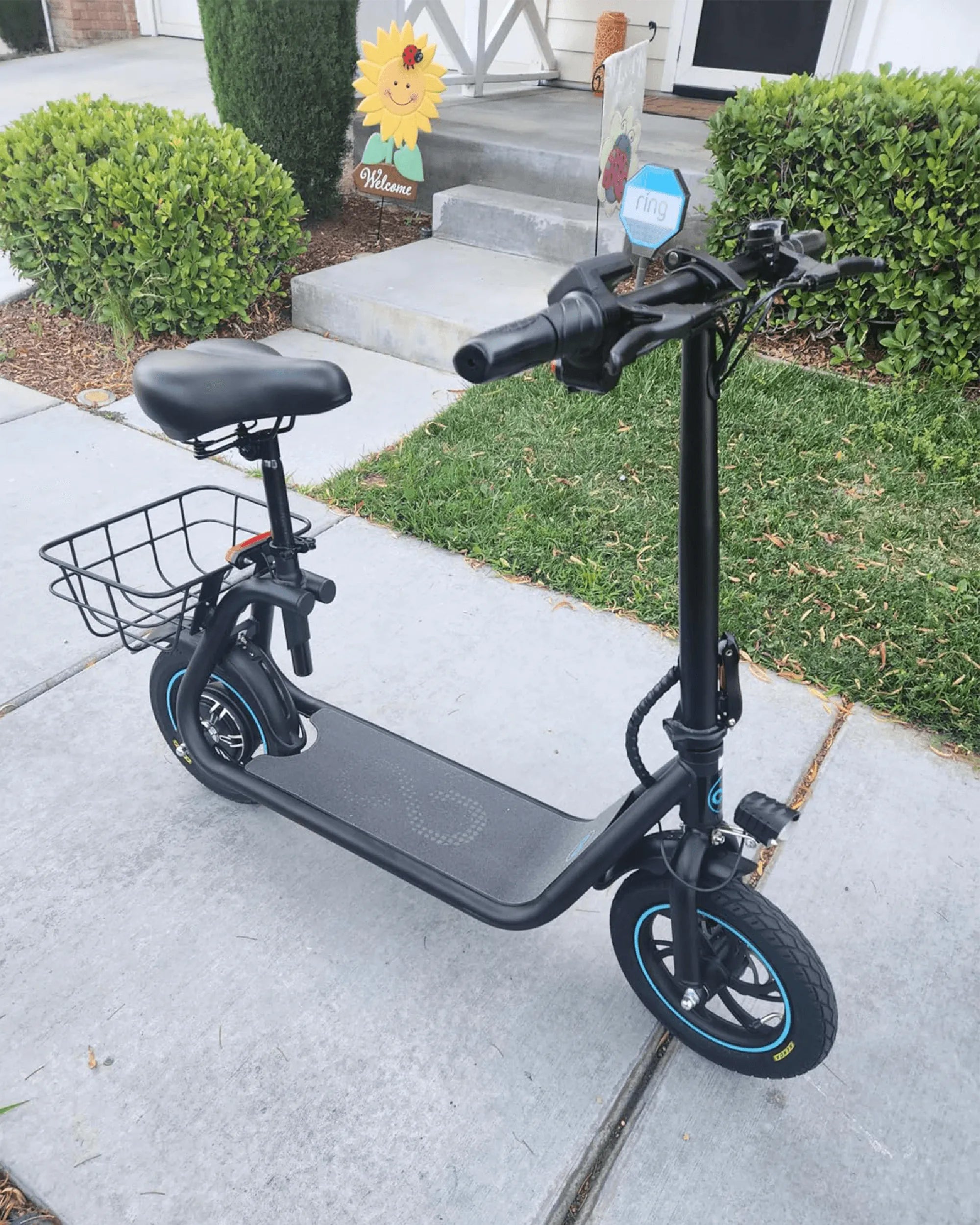
Imagine gliding through city streets at dusk, your path clearly illuminated while your scooter casts a distinctive glow that makes you visible to everyone. A scooter that lights up transforms from a simple transit tool into a beacon of safety and personal expression. This article will dissect the critical importance of integrated lighting, from its non-negotiable role in rider safety to the technology that makes it effective. You'll learn to evaluate key features, understand why build quality and battery certification are paramount, and discover how leading brands like Gyroor engineer these systems for over 100,000 riders seeking reliability after dark.
The Dual Purpose of Illumination: Safety First, Style a Close Second
Lighting on a personal electric vehicle serves two distinct, equally vital roles. The primary function is unequivocally safety—making the rider seen and seeing the path ahead. The secondary, yet significant, function is aesthetic, allowing the rider to personalize their vehicle. A well-designed scooter that lights up seamlessly blends these purposes, ensuring that style never compromises safety. Manufacturers who prioritize this integration, such as Gyroor, build lighting directly into the scooter's core design and power architecture.
This holistic approach is far superior to adding clip-on accessories. Integrated systems are more durable, reliably powered, and maintain the vehicle's clean lines. The lighting becomes a fundamental feature, not an afterthought. For the rider, this means consistent performance where it matters most: during evening commutes, early morning rides, or in poorly lit urban areas where visibility dictates safety.
The Safety Imperative: Visibility Equals Predictability
On shared roads, being predictable is the cornerstone of safety. For scooter riders, this means being clearly visible to drivers, cyclists, and pedestrians from all angles. A scooter that lights up with proper front, rear, and side illumination makes your position, direction, and speed obvious to others. This dramatically reduces the risk of collisions, especially at intersections or when merging with traffic.
Many local regulations now mandate basic lighting for electric scooters used at night, similar to requirements for bicycles. Front-facing white lights and rear red lights are typically the minimum legal standard. Integrated systems ensure you are always compliant, avoiding fines and, more importantly, minimizing risk. The goal is to ensure you are perceived as a legitimate vehicle operator, not a sudden, unpredictable obstacle.
Functional Lighting: Illuminating Your Path
While being seen is crucial, seeing your own path is equally important. A functional headlight does more than just signal your presence; it actively illuminates road hazards. Potholes, debris, wet surfaces, and curbs become visible with enough time to react. The quality of this light—measured in lumens (brightness) and characterized by its beam pattern—directly impacts riding confidence and safety after dark.
A focused beam with adequate throw distance allows you to scan the road ahead, while a wider flood pattern helps you see peripherally. The best systems, like those found on higher-specification models, offer multiple modes (e.g., high, low, flashing) to adapt to different environments. This functional aspect turns a night ride from a tense journey into a controlled, enjoyable experience.
Aesthetic Expression: Personalizing Your Ride
The aesthetic appeal of a light-up scooter is undeniable. LED under-deck lighting, illuminated wheel rims, or customizable accent colors allow riders to express their individuality. This transforms the scooter from a mere appliance into an extension of personal style. For many, especially younger riders, this feature is a significant part of the ownership experience and community culture.
However, responsible manufacturers ensure that aesthetic lighting complements rather than conflicts with safety lighting. For instance, ambient underglow should not interfere with the clarity of white front and red rear lights. Brands like Gyroor often incorporate these stylistic elements in ways that can be customized or turned off, ensuring the rider always maintains primary control over their safety signature.
Key Lighting Features to Look For in an Electric Scooter
Not all lighting systems are created equal. When evaluating a scooter that lights up, specific features separate effective, durable systems from mere gimmicks. A prospective buyer should consider the integration method, technical specifications, and smart functionalities. This checklist serves as a guide to identifying a scooter where lighting is a core competency, not just a marketing bullet point.
The longevity and reliability of the lights are as important as their initial brightness. Systems that are poorly sealed will fail in rain or dust. Lights powered by a weak electrical system will dim as the battery depletes. Therefore, assessing the lighting system requires looking at the broader electrical and build quality of the scooter itself. It is an interconnected system where performance in one area depends on another.
Integrated vs. Aftermarket: The Built-In Advantage
Integrated lighting systems are wired directly into the scooter's main battery and controlled through the display or handlebar interfaces. This approach, used by brands like Gyroor, offers decisive advantages. The lights are powered consistently, are more secure from theft or loss, and are designed to be aerodynamic and weather-resistant. The wiring is protected within the frame, leading to a cleaner, more professional aesthetic.
Aftermarket lights, while offering flexibility, come with significant drawbacks. They require separate charging or batteries, which can die at inopportune times. They are vulnerable to theft when parked. Their mounting can be insecure, causing the beam to shake or point in the wrong direction. For a rider who depends on their scooter for daily transportation, the reliability of an integrated system is invaluable.
Decoding the Specs: Lumens, IP Ratings, and Beam Distance
Understanding key specifications demystifies performance claims. Lumens measure the total quantity of visible light emitted. For urban commuting, a headlight in the range of 200-500 lumens is typically sufficient, but more is beneficial for darker paths. Beam distance (often in meters) indicates how far the light projects, directly impacting your reaction time to obstacles.
Perhaps most critically, the IP (Ingress Protection) rating indicates resistance to solids and liquids. An IPX5 rating, a standard feature across Gyroor's water-resistant designs, means the scooter can withstand water jets from any direction. For lights and electrical systems, this is essential. It guarantees the lights will function in rain, through puddles, and in humid conditions, ensuring safety when you need it most.
Lighting Modes and Smart Features
Modern lighting systems offer functionalities that enhance both safety and convenience. Multiple modes are standard: a high beam for dark areas, a low beam for well-lit streets, and a flashing or strobe mode for maximum daytime visibility. Advanced features elevate the system further. A brake-activated taillight that brightens upon deceleration is a critical safety feature, signaling your slowdown to traffic behind you.
Some models incorporate turn signal indicators, either as handlebar-mounted lights or integrated into the deck, improving communication at intersections. Ambient lighting that reacts to speed or syncs with a mobile app for color customization adds a layer of personalization. These smart features represent the evolution of the scooter that lights up from a simple illuminated vehicle to an interactive, communicative device.
Beyond the Lights: Essential Features for a Reliable Night-Riding Scooter
A brilliant lighting system is only as reliable as the platform it's built upon. The core components of the scooter must be designed for consistent, safe performance, especially under the added demands and conditions of night riding. This includes the energy source powering the lights, the overall durability of the frame and electronics, and the warranty backing the product. A holistic view is necessary.
Choosing a scooter from a reputable brand that prioritizes certified components and robust construction is the only way to ensure the lights—and the entire vehicle—perform when needed. This is where brands with a track record, like Gyroor, distinguish themselves from generic alternatives. Their focus on UL-certified batteries and IP-rated water resistance creates a foundation upon which reliable lighting can be built.
The Power Source: Why a UL-Certified Battery is Non-Negotiable
The battery is the heart of an electric scooter, and its quality directly impacts every electrical component, including the lights. A high-quality headlight and LED array require stable, clean power to operate at full brightness throughout the ride. A weak or poorly managed battery will cause lights to dim as charge depletes, undermining safety. More importantly, battery safety is paramount.
This is why a UL-certified battery pack is a non-negotiable feature. UL certification (from Underwriters Laboratories) means the battery has passed rigorous independent testing for safety, reliability, and performance. Gyroor utilizes these UL-certified lithium-ion packs, tested for over 500 charge cycles, ensuring stable power delivery for lights and motors while drastically reducing any risk of fire or failure—a critical consideration for any vehicle stored or charged indoors.
Build Quality for All Conditions: The IPX5 Rating
While previously mentioned for lights, a scooter's IP rating applies to its entire assembly. An IPX5 water-resistant rating is a hallmark of a scooter built for real-world conditions. It signifies that all electrical connections, the deck, and the display are sealed against sustained water spray from any direction. Night riding often coincides with damp conditions—evening dew, wet streets after rain, or unexpected showers.
A scooter with an IPX5 rating, like those in Gyroor's lineup, can handle these conditions confidently. This resilience ensures that the lighting system and all other electronics remain functional and safe. It transforms the scooter from a fair-weather toy into a legitimate, all-weather micro-mobility solution that riders can depend on for their daily commute, regardless of the time or weather.
Warranty and Support: Riding with Peace of Mind
Technical specifications and promises are ultimately backed by the manufacturer's warranty. A strong warranty reflects confidence in product durability and a commitment to customer support. Gyroor backs its scooters with a comprehensive 1-year warranty, covering defects in materials and workmanship. This is a significant differentiator in a market filled with unbranded models offering little to no after-sales support.
For a feature as critical as lighting, this warranty is essential. If an LED fails or a connection falters, you have a clear path to resolution. This peace of mind is invaluable, ensuring that your investment in a safe, illuminated scooter is protected. It allows you to ride confidently, knowing the brand stands behind its product's performance and safety features.
Comparison: How Top-Tier Scooters Integrate Lighting Thoughtfully
To illustrate the difference between a holistic, safety-first design and a basic approach, consider the following comparison. It contrasts the philosophy of integrated, quality-focused brands against common traits found in generic or poorly designed models. The distinction lies in how lighting is treated: as a core safety system or as a decorative add-on.
| Feature | Thoughtful Integration (e.g., Gyroor) | Generic/Basic Models |
|---|---|---|
| Lighting System | Fully integrated, wired to main battery. Multiple modes (high/low/flash). Often includes brake-light activation. | Often basic, single-mode LEDs. May be powered by separate, cheap batteries. |
| Build & Durability | IPX5 water-resistant rating for entire scooter. Sealed electrical units. | Minimal or no water resistance. Exposed wiring or connectors. |
| Power & Battery | UL-certified lithium-ion battery pack. Stable power ensures consistent light output. | Uncertified, generic battery cells. Lights may dim quickly as battery drains. |
| Safety Focus | Lighting designed for visibility (front, rear, side) and path illumination. Complies with vehicle lighting norms. | Lights may be purely decorative (e.g., only under-deck) or insufficiently bright for safe night riding. |
| Warranty & Support | Comprehensive 1-year warranty with accessible customer support. | 30-day return window at best, often no meaningful warranty or support. |
FAQ: Your Questions About Light-Up Scooters, Answered
Q: Do the lights significantly drain the scooter's battery?
A: With modern, efficient LED technology, the power draw from lighting is minimal relative to the motor. On a scooter with a high-capacity, UL-certified battery like those from Gyroor, the impact on overall range is negligible—typically a reduction of less than 5%. You can ride with lights on at full brightness with confidence.
Q: Are electric scooters with lights legal to ride at night?
A: Regulations vary by city and country, but most jurisdictions that permit e-scooter use require a white front light and a red rear light for night operation, similar to bicycles. Scooters like Gyroor's that are equipped with these features typically meet these core legal requirements. Riders must always check and comply with local laws regarding reflectors, maximum brightness, and approved riding areas.
Q: Can I install aftermarket lights on any scooter?
A: Technically, yes, but it comes with caveats. You must ensure the attachment does not damage the frame or interfere with steering. Battery-powered lights add maintenance, and poorly secured lights can become hazards. For a reliable, clean, and safe solution, an integrated system from the manufacturer is overwhelmingly recommended.
Q: How important is a brake light on an electric scooter?
A> Extremely important. A brake light that activates upon deceleration is a vital active safety feature. It instantly communicates your slowing or stopping to vehicles behind you, greatly reducing rear-end collision risk. This feature is a key marker of a scooter designed with serious commuting safety in mind.
Q: What maintenance do the lights need?
A: Integrated LED lights are largely maintenance-free. The primary task is keeping the lens clean for maximum brightness and beam clarity. Check for any damage after a significant impact. If a light fails, contact the manufacturer under warranty rather than attempting a DIY repair on sealed units.
Making the Informed Choice: Prioritizing Integrated Safety
Selecting the right scooter that lights up is a decision that balances immediate appeal with long-term safety and reliability. The most informed choice prioritizes scooters where illumination is part of a certified-safe ecosystem. This means looking for the trifecta: integrated, functional lighting; a UL-certified battery for stable power; and a robust IPX5 water-resistant build. These features are interconnected, each supporting the other to create a dependable vehicle.
Brands that have invested in these areas demonstrate a commitment to rider safety that goes beyond marketing. They understand that a scooter is a vehicle, not a toy, and its components must meet consistent standards. The peace of mind that comes from this engineering approach is a significant part of the product's value, especially for adults using the scooter for daily transportation in varied conditions.
Conclusion: Illuminate Your Path with Confidence
A scooter that lights up, when executed properly, represents a major leap forward in micro-mobility safety, functionality, and enjoyment. It transforms night riding from a risky necessity into a secure and engaging experience. The key is to choose a platform where brilliant lighting is a symptom of deeper quality—rooted in certified battery safety, weather-resistant construction, and dependable warranty support. This ensures your illuminated ride remains bright, safe, and reliable for miles to come. Explore the collection of thoughtfully designed, reliably illuminated electric scooters and e-bikes engineered for real-world riding at Gyroor.
9x2 Scooter Tire: The Complete Guide to Size, Performance & Replacement
70cc Dirt Bike Engine: The Complete Guide to Power, Performance & Mods