

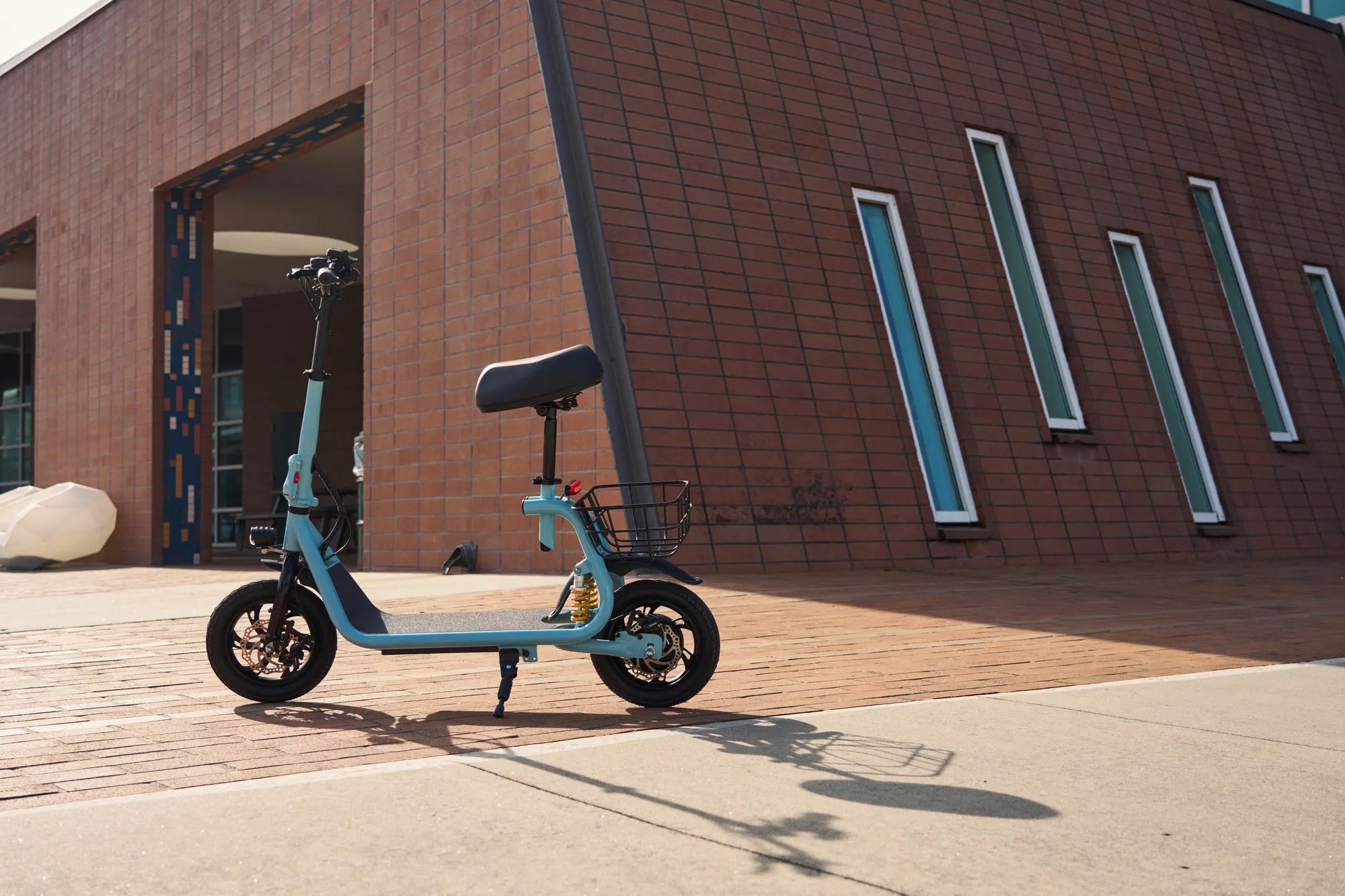
Introduction to Scooter Wheel Locks: Beyond the Basics
A scooter wheel lock is a physical security device designed to prevent a scooter's wheel from rotating, thereby immobilizing the vehicle. Its primary function is to act as a formidable theft deterrent by making the scooter impossible to roll away. For owners of valuable electric scooters, a robust wheel lock is not an accessory; it is a critical component of a mandatory, multi-layered security strategy. Understanding that not all locks offer equal protection is the first step in safeguarding your investment against opportunistic and determined thieves.
The modern urban landscape demands proactive security measures. While built-in electronic locks provide a baseline of convenience, they are rarely sufficient as a standalone solution. A dedicated physical scooter wheel lock introduces a significant time and effort barrier for thieves, directly influencing their risk-reward calculation. This guide moves beyond basic recommendations to provide a detailed, technical, and practical framework for selecting and using the right lock for your needs.
We will analyze the mechanics of different lock types, from U-locks to heavy-duty chains, and evaluate their effectiveness against common theft methods. The goal is to equip you with the knowledge to make an informed decision that balances security, portability, and usability. Your scooter's security is only as strong as its weakest point, and a high-quality wheel lock is your first and most vital line of defense.
How a Wheel Lock Works: Mechanism and Deterrence
The core principle of a scooter wheel lock is elegantly simple: it physically obstructs the wheel from turning. This is typically achieved by passing a hardened steel shackle (as in a U-lock or D-lock) or a chain link through the wheel's spokes or rim and then securing it to a fixed, immovable object like a bike rack. Once locked, the scooter cannot be rolled, making a quick "grab-and-go" theft impossible. The thief is forced to either break the lock, cut the secured object, or carry the entire scooter away—all high-effort, high-visibility actions.
This mechanism serves a dual purpose. First, it provides actual physical security by immobilizing the vehicle. Second, and equally important, it acts as a powerful psychological and visual deterrent. A visible, high-quality lock signals to a potential thief that this scooter is a difficult target. In an environment where many scooters may be secured with flimsy cables or not at all, a professional-grade scooter wheel lock makes your property a less attractive option, encouraging thieves to move on to easier prey.
It's crucial to understand that a wheel lock functions best as part of a broader security protocol. For electric scooters, this often means using the lock in conjunction with the scooter's built-in electronic lock feature, which may engage a brake or motor resistance. The combination creates a layered defense: the electronic lock provides initial immobilization and may trigger an alarm if moved, while the physical wheel lock provides the durable, cut-resistant barrier that forms the ultimate obstacle.
Proper usage is key to the mechanism's effectiveness. The lock must be positioned to minimize space inside the "U" or chain loop, giving thieves no room to insert leverage tools like car jacks. It should also secure both the wheel and the scooter's frame to the fixed object whenever possible, preventing a thief from simply removing the wheel if it's a quick-release model. A correctly applied scooter wheel lock transforms your vehicle from mobile asset into a stationary, fortified object.
Types of Scooter Wheel Locks: Choosing Your Defense
The market offers several types of locks, each with distinct advantages and trade-offs between security, weight, and convenience. Selecting the right one depends on your scooter's value, your local theft risk, and how you plan to carry the lock while riding.
Built-in Electronic Wheel Locks
Many modern electric scooters, including models from Gyroor, feature an integrated electronic wheel lock. This is usually activated via the scooter's display or a companion app and works by engaging the motor or brake to create resistance when the scooter is powered off. It's incredibly convenient and requires no extra hardware to carry. However, its security level is generally considered low; a determined thief can often bypass it by carrying the scooter or, in some cases, by manipulating the electronics. It is best used as a temporary, secondary lock or in extremely low-risk scenarios.
U-Locks and D-Locks
U-locks (shaped like a "U") and D-locks (shaped like a "D") are the gold standard for portable scooter security. Constructed from hardened steel, they resist cutting, prying, and leverage attacks far better than cables. Their rigid design offers little room for tools. The primary drawback is portability; high-security U-locks are heavy and can be challenging to mount neatly on a scooter's stem. They also have a fixed internal space, which can limit what you can lock your scooter to. For daily urban commuters with a medium-to-high-value scooter, a quality U-lock is often the recommended choice for a primary scooter wheel lock.
Heavy-Duty Chain and Padlock Locks
These systems consist of a thick, hardened steel chain (often covered in a protective sleeve to prevent scratching) and a separate, high-security padlock. Their main advantage is immense flexibility; the chain can be looped around large, irregularly shaped objects that a U-lock cannot accommodate. A chain with links of 12mm or thicker provides security comparable to a good U-lock. The significant downside is weight—a truly secure chain lock can weigh several kilograms, making it impractical for some riders to carry regularly. They are ideal for securing a scooter at a fixed location like a home or office garage.
Folding Locks and Cable Locks
Folding locks, made of interconnected steel plates, offer a balance between the flexibility of a chain and the compactness of a U-lock when folded. They are portable and can fit various objects. Cable locks, made of woven steel wires, are lightweight and highly flexible but provide the lowest level of security. Bolt cutters can sever most cables in seconds. We strongly advise against using a cable lock as the primary security for any valuable electric scooter; they are suitable only as an extra lock for securing a helmet or as a minimal deterrent in the most secure environments.
Key Features of a High-Quality Wheel Lock
Not all locks marketed for scooters are created equal. Discerning the quality requires looking at specific construction and design features that directly impact resistance to theft.
Hardened Steel Construction: The shackle of a U-lock or the links of a chain must be made of boron or manganese alloy steel that has been through a hardening process. This increases the material's resistance to cutting with bolt cutters or angle grinders. Look for locks that explicitly advertise "hardened steel" or have a high-security rating from organizations like Sold Secure (e.g., Diamond or Gold rating).
Locking Mechanism Security: The cylinder is the brain of the lock. A high-quality lock will feature a disc detainer or dual-ball locking mechanism that is highly resistant to picking, raking, and drilling. Locks with a protective cover over the keyway help prevent the insertion of debris and resist drilling attacks. More advanced models may use a tubular key or a combination mechanism, though physical keys often offer a more robust defense against brute-force attacks on the dials.
Tamper-Resistant Design: Examine the overall design for vulnerabilities. The crossbar on a U-lock should rotate to frustrate leverage attacks. The weld points on a chain should be smooth and robust. The lock should have minimal exposed mechanisms. A quality scooter wheel lock is designed to withstand not just cutting, but also prying, hammering, and twisting attempts that less robust locks would quickly succumb to.
Size and Fit: For U-locks and D-locks, the internal dimensions are critical. A lock that is too large creates space for leverage tools. A lock that is too small may not fit around your scooter's wheel, frame, and a secure anchor point. The ideal lock is the smallest one that will securely fit your regular locking setup, leaving almost no room inside the shackle.
The Gyroor Advantage: Integrated and Added Security
Gyroor designs its electric scooters with a holistic view of rider safety, which inherently includes theft prevention. Many Gyroor models come equipped with a convenient electronic wheel lock feature, activated with a simple press on the display. This provides a valuable first layer of security, ideal for quick stops where the scooter remains in your line of sight—like grabbing a coffee or stepping into a convenience store.
However, Gyroor's philosophy aligns with expert security advice: the electronic lock is a feature for convenience and short-term deterrence, not a replacement for a dedicated physical barrier. For any unattended parking, whether for 10 minutes or 10 hours, supplementing the electronic lock with a high-grade physical scooter wheel lock is non-negotiable. This two-tiered approach leverages Gyroor's smart engineering while adding the brute-force resistance that only hardened steel can provide.
Furthermore, Gyroor scooters are built with practical security in mind. Their frames often have reinforced areas and geometries that make it easier to securely attach a U-lock or chain, ensuring both the wheel and the main frame are immobilized. This design consideration reflects an understanding that security is a partnership between the vehicle's features and the rider's responsible practices.
Why UL-Certified and IPX5 Matter for Your Lock & Scooter
Gyroor's core brand promises—UL-certified batteries and IPX5 water-resistant designs—are intrinsically linked to reliable security. A scooter with a UL-certified battery pack is far less likely to suffer from power failures or electrical issues that could prevent you from using its electronic lock feature when you need it most. Reliability is a foundational element of security; your scooter must be operational to lock it down properly.
Similarly, an IPX5 water-resistant rating means your Gyroor scooter is built to withstand the elements. A quality physical scooter wheel lock should also boast weather resistance to prevent its internal mechanism from seizing due to rain or corrosion. When both your scooter and your lock are designed for real-world conditions, your security protocol remains intact rain or shine. These engineering standards signal an overall ecosystem of dependable, well-made products where security is not an afterthought but an integral part of the design philosophy trusted by over 100,000 riders.
Data-Driven Security: The Reality of Scooter Theft
While comprehensive global statistics on standalone electric scooter theft are still emerging, data from bicycle theft and urban crime reports paint a clear and concerning picture. In major metropolitan areas, lightweight, high-value personal transportation devices are prime targets. Police reports consistently show that the vast majority of thefts are crimes of opportunity, targeting scooters and bikes that are either unsecured or secured with inadequate locks.
A study by the Dutch cycling organization RAI Association and insurance group AXA found that it takes a professional thief less than 30 seconds to break a low-quality lock. In contrast, a high-security lock can increase the time required to several minutes, often using loud power tools like angle grinders. This time factor is critical; thieves prefer quick, discreet operations. A robust scooter wheel lock dramatically increases their exposure and risk of being caught.
This data underscores a crucial point: investing in a high-quality lock is a statistically sound decision that directly reduces your probability of becoming a victim. Viewing a lock as a simple accessory is a common mistake. Instead, it should be seen as an insurance premium—a relatively small, one-time investment that protects a much larger asset. The cost of a good U-lock is typically a fraction of the deductible on an insurance policy, not to mention the inconvenience and loss associated with theft.
Comparison: Wheel Lock vs. Other Security Methods
A comprehensive security strategy can involve multiple elements. The following table compares a physical wheel lock to other common methods.
| Security Method | How It Works | Pros | Cons | Best For |
|---|---|---|---|---|
| Physical Wheel Lock (U-Lock/Chain) | Immobilizes scooter via hardened steel. | High physical deterrent, requires power tools to defeat, visible warning. | Can be heavy to carry, requires a fixed object. | Primary, foundational security for all unattended parking. |
| GPS Tracker | Hidden device transmits location. | Can aid in recovery after theft, provides movement alerts. | Does not prevent theft, requires subscription, can be found and disabled. | Secondary recovery tool, useful in conjunction with a physical lock. |
| Audible Alarm | Emits loud sound if scooter is disturbed. | Draws immediate attention, can scare off opportunistic thieves. | Can be triggered accidentally, may be ignored, does not prevent physical removal. | Supplemental deterrent for short stops, adds a layer of noise. |
| Lightweight Cable Lock | Flexible wire secures components. | Very lightweight, highly portable, flexible. | Very low security, cut easily in seconds. | Securing accessories only, or as a minimal extra lock in safe areas. |
| Electronic Wheel Lock (Built-in) | Engages motor/brake resistance. | Extremely convenient, no extra gear, integrated. | Low security, scooter can be carried away, can be electrically bypassed. | Temporary immobilization during very brief, in-sight stops. |
The conclusion is clear: while GPS and alarms are valuable supplements, a high-quality physical scooter wheel lock remains the indispensable, non-negotiable foundation of any effective theft prevention plan. It is the only method that physically prevents the wheel from rolling, creating the essential barrier that turns a thief away.
Practical Usage Guide: Locking Your Scooter Correctly
Owning a great lock is only half the battle; using it correctly is paramount. Follow this step-by-step guide to maximize your scooter's security every time you park.
1. Choose a Secure Anchor Point: Always lock your scooter to a fixed, immovable object that is firmly rooted in the ground or a building. Ideal objects include dedicated bike racks, street signs with thick, buried posts, or sturdy metal railings. Avoid locking to objects that can be easily cut, broken, or lifted over the top of the post. Give the object a firm shake to test its stability before committing your lock.
2. Position the Lock Strategically: When using a U-lock or D-lock, fill as much of the internal space as possible. Pass the shackle through the rear wheel (which is harder to remove than the front), the scooter's frame, and the anchor point. If possible, secure both the frame and the wheel. This "frame-and-wheel" method ensures the thief cannot simply remove the wheel to steal the rest of the scooter. Position the lock's keyway facing downward to make it harder for debris to be inserted or for rain to seep in.
3. Minimize Ground Clearance: Keep the locked scooter and the lock itself as close to the ground as practical. This minimizes the space and leverage a thief has to attack the lock with tools. It also makes using a car jack to pry the lock open much more difficult.
4. Engage All Security Layers: Before walking away, always activate your Gyroor scooter's electronic wheel lock feature if it has one. This adds the electronic immobilization and potential alarm function to the physical barrier of your U-lock or chain. For extended parking in high-risk areas, consider using two different types of locks (e.g., a U-lock and a heavy chain), as this requires a thief to carry and use multiple tools to succeed.
5. Be Mindful of Location: Park in well-lit, high-traffic areas whenever possible. Visibility is a powerful deterrent. Avoid leaving your scooter in the same isolated spot day after day, as this allows thieves to plan an attack. Varying your parking routine can enhance security.
FAQ: Your Scooter Wheel Lock Questions Answered
Q: Is the built-in electronic lock on my Gyroor scooter enough by itself?
A: No. While extremely convenient for momentary, in-sight stops, the electronic lock is not a substitute for a physical lock. It can often be bypassed by carrying the scooter or manipulating the electronics. For any unattended parking, you must use a high-quality physical scooter wheel lock.
Q: How do I carry a heavy U-lock while riding?
A>Many U-locks come with a mounting bracket that can be attached to your scooter's stem. For scooters where this isn't feasible, consider a dedicated bag or backpack with external straps. Some riders prefer a lightweight chain or a high-security folding lock for easier portability, though these may involve trade-offs in ultimate strength.
Q: What's the best lock for a Gyroor electric scooter?
A>The "best" lock depends on your model and usage. For daily urban commuting on a high-performance model like the Gyroor F1 Pro, a Sold Secure Gold or Diamond-rated U-lock from a reputable brand is an excellent choice. For a lighter commuter scooter, a high-security folding lock might offer a better balance. Always prioritize hardened steel and a robust locking mechanism.
Q: Does the Gyroor warranty cover theft?
A>No. Manufacturer warranties, including Gyroor's reliable 1-year warranty, cover defects in materials and workmanship. They do not cover loss or theft. Protecting your scooter from theft is the owner's responsibility, which is why investing in a proper scooter wheel lock is so important.
Q: Can a thief just cut through any lock with an angle grinder?
A>While an angle grinder can eventually cut through almost any material, the goal of a high-security lock is to make the process as long, loud, difficult, and conspicuous as possible. A quality hardened steel lock with a protective sleeve may require multiple cutting discs and several minutes of noisy, spark-filled work—a huge risk in a public area. This level of deterrence is highly effective.
Q: Should I register or insure my scooter?
A>Absolutely. Registration with a national bike/scooter database and engraving a unique ID on the frame can aid recovery. Personal Articles Insurance or specific e-scooter insurance is highly recommended for expensive models. A good lock is your first-line defense; insurance is your financial safety net.
Your Action Plan for Scooter Security
Securing your electric scooter is a straightforward but essential discipline. Start by auditing your current lock—if it's a cable or a low-grade lock, replace it immediately with a hardened steel U-lock or heavy chain from a trusted security brand. Make using this physical lock, in conjunction with your scooter's electronic features, an unbreakable habit every time you park unattended. Remember that your locking technique is as important as the lock itself; always secure the frame and wheel to a solid object.
View this not as an inconvenience, but as the fundamental cost of owning and enjoying a premium mode of personal transportation. The peace of mind that comes from knowing your scooter is properly protected is invaluable. Gyroor provides the reliable, well-engineered platform with integrated security features; it is your responsibility to complete the system with the indispensable physical barrier.
Your scooter is an investment in freedom and mobility. Protect that investment proactively. Do not wait for a theft attempt to reveal the weaknesses in your security setup. Act now to implement a robust, layered defense centered on a high-quality scooter wheel lock. For riders seeking a scooter built with this security-first mindset from the ground up, explore the range of models designed for reliability and performance.
Ready to ride with confidence? Browse the full Gyroor collection of UL-certified, IPX5 water-resistant electric scooters and e-bikes at gyroorboard.com, and pair your new ride with the serious lock it deserves.
50cc Dirt Bike Price: The Complete 2024 Cost Breakdown
Do You Need a Motorcycle License to Ride a Scooter? A Complete 2024 Guide