



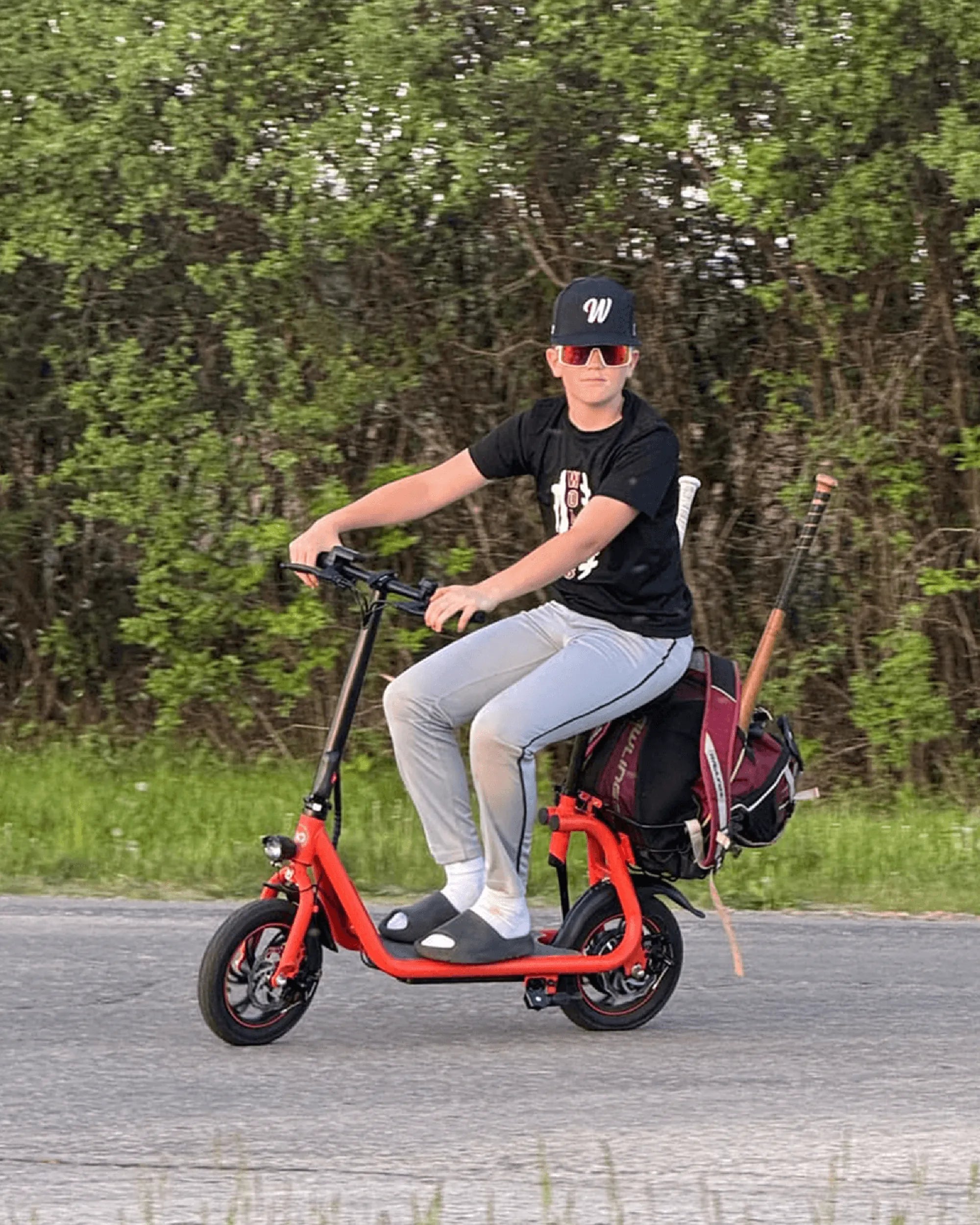
Choosing a scooter with lights on wheels is no longer just about aesthetics; it's a fundamental decision for rider safety and visibility. This guide will dissect the technology, benefits, and key features of illuminated wheel systems. You'll learn how they work, what to look for when buying, and why integrated solutions from reputable manufacturers provide superior reliability and peace of mind compared to aftermarket modifications.
Introduction: Why Wheel Lights Are the Smartest Upgrade for Your Scooter
The evolution of the electric scooter has moved far beyond basic transportation. Today, a scooter with lights on wheels represents a convergence of critical safety engineering and personal expression. What began as a novelty has rapidly become a standard feature for urban commuters and recreational riders alike, addressing a significant gap in rider visibility.
This transformation is driven by real-world needs. Traditional headlights and taillights, while essential, create a limited cone of visibility. They do little to alert traffic approaching from the sides, a common cause of intersection accidents. Wheel illumination solves this by creating a dynamic, 360-degree light signature.
For brands like Gyroor, integrating this technology is a logical step in building a comprehensive safety ecosystem. With over 100,000 riders trusting their UL-certified batteries and robust designs, adding wheel lights is about enhancing an already reliable platform. It turns the entire scooter into a visible beacon, fundamentally changing how the rider is perceived in traffic.
The demand is clear. Riders want to be seen, day and night, and they want their equipment to reflect their style. A scooter with integrated wheel lights fulfills both needs without compromising on the core performance that makes electric scooters a viable commuting option.
The Dual Purpose: Safety Meets Style in Wheel Illumination
The primary function of wheel lights is unequivocally safety. In low-light conditions—dusk, dawn, or nighttime—a rider's greatest risk is not being seen. Wheel lights dramatically increase the scooter's visible footprint. They act as permanent running lights that are visible from nearly every angle, including the critical side profile that traditional lights miss.
This side visibility is crucial at intersections, driveways, and when navigating around parked cars. A study on bicycle lighting found that side visibility lights reduced accident rates in low-light conditions by a significant margin. The same principle applies directly to electric scooters. The moving wheel creates a recognizable pattern that the human eye and driver awareness quickly identify as a vehicle, not a stationary object.
Simultaneously, wheel lights offer a powerful avenue for personalization. The ability to choose colors, patterns, and effects allows riders to express individuality. This isn't mere vanity; a uniquely lit scooter is more memorable, which can be a subtle theft deterrent. It also fosters a sense of community and identity among riders.
Gyroor models featuring this technology understand this balance. The lighting is bright and functional for safety but often includes customizable modes. This allows the rider to switch between a high-visibility white or amber for serious commuting and a personalized color scheme for a casual ride, all without adding bulky, unreliable aftermarket parts.
How Scooter Wheel Lights Work: Technology and Integration
Understanding the technology behind a scooter with lights on wheels demystifies its benefits and limitations. The most common and effective system involves LED strips embedded within the wheel rim itself. These strips are connected to a control unit that draws power from the scooter's main battery pack, ensuring consistent operation.
The LEDs are typically sealed within a durable, translucent silicone or polycarbonate channel. This protects them from water, dust, and the immense centrifugal force and impacts experienced by the wheel. The connection to the scooter's power system is managed through a slip ring or wireless induction system in the wheel hub, allowing for continuous power transfer while the wheel spins freely.
Power efficiency is a key engineering challenge. Modern LEDs are incredibly efficient, consuming minimal power. For instance, a full wheel LED system might draw between 5 to 10 watts, which is a negligible fraction of the power used by the scooter's motor. On a Gyroor scooter with a UL-certified battery rated for 500+ cycles, the impact on overall range is often less than 2-3%, a worthwhile trade-off for the safety benefit.
Integration is what separates a professional product from a DIY kit. In a well-designed scooter, the lighting system is managed by the main controller. It can feature automatic on/off with the scooter, sync with brake lights for increased visibility during deceleration, and offer mode control through a dedicated button or smartphone app. This seamless integration is a hallmark of brands that consider lighting a core feature, not an add-on.
Key Features to Look for in a Lit-Wheel Scooter
Not all wheel lighting is created equal. When evaluating a scooter with lights on wheels, a discerning buyer should assess several key features that determine functionality, durability, and overall value. A checklist grounded in these specifics will guide you to a superior product.
Light Modes and Customization
Versatility in lighting modes is essential. Look for scooters that offer multiple presets: a steady, high-lumen mode for maximum visibility; a flashing or strobe pattern for alerting attention in hazardous situations; and customizable color cycles for personal style. App connectivity is a premium feature, allowing granular control over hue, brightness, and pattern speed from your phone.
The quality of the LEDs themselves matters. High-CRI (Color Rendering Index) LEDs provide purer, more visible light. Brightness, measured in lumens for the entire wheel system, should be sufficient to be seen in daylight conditions. The best systems allow you to tailor the lighting to your environment—dim for night rides in residential areas, maximally bright for chaotic urban traffic.
Durability and Weather Resistance
The lights must be as rugged as the scooter. The wheel is the component that takes the most punishment from potholes, curbs, and debris. The lighting enclosure must have a high Ingress Protection (IP) rating. An IPX5 rating, common on Gyroor scooters, means the lights are protected against sustained low-pressure water jets from any direction, making them fully rain-resistant.
Beyond water, the system must withstand vibration and shock. The LED strips should be mounted with shock-absorbing materials to prevent solder joints from cracking. The wiring pass-through from the hub to the frame must be perfectly sealed. A warranty that explicitly covers the lighting system is a strong indicator of the manufacturer's confidence in its durability.
Power Efficiency and Impact on Range
A legitimate concern for any rider is whether the lights will drain the battery prematurely. As noted, LED technology is highly efficient. When reviewing specifications, look for data provided by the manufacturer on power draw. A well-integrated system will have a minimal, almost imperceptible impact.
For example, if a scooter has a 360Wh battery and a 10W lighting system, you could theoretically run the lights for 36 hours on a single charge, independent of the motor. In practice, the lights might reduce your 20-mile range by half a mile or less. This efficiency is a result of thoughtful engineering that leverages the scooter's stable battery voltage without requiring inefficient voltage converters.
Gyroor's Approach: Built-In Visibility with Peace of Mind
Gyroor implements wheel lighting with the same philosophy applied to its entire lineup: integrated reliability. For models featuring this technology, the lights are not an accessory but a fundamental component of the vehicle's electrical and safety system. This approach offers distinct advantages over aftermarket solutions.
The lighting draws power directly from the scooter's UL-certified battery pack. This certification is critical, indicating the battery has passed rigorous safety tests for electrical, mechanical, and environmental stress. Powering additional systems from this safe, stable source is inherently more reliable than clipping on separate battery packs that may be of unknown quality.
Furthermore, the lighting is covered under Gyroor's standard 1-year warranty. This coverage is significant. If an LED strip fails or a connection issue arises, it is treated as a manufacturing defect, not a user-installed modification gone wrong. This peace of mind is invaluable and underscores the brand's commitment to delivering a complete, trustworthy product.
The design is also holistic. Gyroor's IPX5 water-resistant rating applies to the entire deck and wiring, including the wheel light connections. The lights are designed to complement the scooter's aesthetic, with clean lines and diffused lighting effects that look professional, not tacked-on. This results in a scooter with lights on wheels that feels like a single, purpose-built machine.
Wheel Lights vs. Traditional Lighting: A Comparative Overview
To understand the unique value of wheel illumination, it's helpful to compare it directly with other lighting solutions. The table below outlines the key differences in visibility, installation, and purpose.
| Feature | Wheel Lights (Integrated) | Standard Headlight/Taillight | Aftermarket Accessory Lights |
|---|---|---|---|
| Primary Visibility | 360-degree, especially strong side visibility. | Forward and rearward cones only. | Varies by mounting location. |
| Installation | Factory-installed, seamless. | Factory-installed. | User-installed, often with adhesive or straps. |
| Power Source | Scooter main battery (efficient, reliable). | Scooter main battery. | Separate batteries (require charging/replacement). |
| Weather Resistance | High (IPX5 or similar as part of scooter). | Usually good. | Often low; not designed for constant exposure. |
| Theft Deterrence | High (integrated, makes scooter distinct). | Low (standard feature). | Low (easily removable). |
| Impact on Warranty | None (covered under standard warranty). | None. | Potentially voids warranty if wiring is tampered with. |
As the comparison shows, integrated wheel lights provide comprehensive visibility that traditional lights cannot match. While a bright headlight remains essential for illuminating the path ahead, wheel lights address the blind spots. They create a full-body illumination that makes the scooter's size, speed, and direction instantly apparent to all surrounding traffic.
Aftermarket kits, while offering customization, introduce points of failure—separate batteries, insecure mounting, and unreliable wiring. For the rider seeking a guaranteed, maintenance-free solution, a factory-equipped scooter with lights on wheels from a reputable brand is the superior long-term investment.
Installation and Upgrades: Adding Lights to Your Current Scooter
For riders who already own a scooter without integrated wheel lights, the aftermarket offers several paths. These range from simple clip-on solutions to more complex DIY kits. However, each comes with significant trade-offs that must be carefully considered.
The simplest option is battery-powered LED spoke lights or clip-on rim lights. These are affordable and easy to install but are notoriously unreliable. They are vulnerable to weather, vibration, and theft. Their separate batteries add maintenance and often fail to provide consistent brightness throughout a ride.
More advanced DIY kits involve LED strips, a control box, and a connection to the scooter's battery. This requires technical skill to install properly. The most critical risk is compromising the scooter's electrical system or waterproof seals, which can lead to malfunctions and almost certainly voids the manufacturer's warranty. Tapping into the battery incorrectly can also pose a safety risk.
For most riders, the time, cost, and risk of a high-quality aftermarket installation approach the cost of upgrading to a scooter designed with this feature. The wiser investment is often to enjoy your current scooter as is, and when ready for an upgrade, choose a model like those from Gyroor with professionally integrated, warrantied lighting. This guarantees performance, safety, and retains the full value of the manufacturer's support.
Frequently Asked Questions (FAQ)
Are scooter wheel lights legal?
Laws vary by jurisdiction, but integrated wheel lights are generally legal if they follow common vehicle lighting regulations. Typically, lights must be steady (not flashing) while the vehicle is in motion, though some areas allow certain flashing modes for safety. Colors are often restricted; white or amber to the front, red to the rear, and often amber or white to the sides. It is always the rider's responsibility to check local vehicle codes. Gyroor's systems are designed with these common regulations in mind, often featuring compliant steady modes.
Can I change the colors on my Gyroor scooter's wheel lights?
This depends on the specific model. Many Gyroor scooters equipped with wheel lights offer multiple color modes and patterns that can be cycled through via a button on the handlebar or a dedicated mobile app. The app-controlled models provide the highest level of customization, allowing you to select from a full spectrum of colors and set different patterns for different riding scenarios.
Do the lights work during the day?
Yes, and they are highly effective. Daytime Running Lights (DRLs) are a proven safety feature in the automotive world, reducing collisions. Wheel lights serve the same function for scooters. They significantly increase your visibility during the day, especially in overcast weather, in shaded areas under trees, or in the glare of a low sun. Using them during the day is a smart safety habit.
How long do the LED wheel lights last?
High-quality LEDs, like those used in integrated systems, have an exceptionally long lifespan, often rated between 30,000 to 50,000 hours of use. In practical terms, if you rode your scooter with the lights on for 3 hours every single day, the LEDs could last over 27 years. The limiting factor is rarely the LED itself but the durability of the seals, wiring, and connections, which is why a robust design and good warranty are crucial.
Do wheel lights make a scooter harder to maintain?
Properly integrated lights add minimal maintenance. There are no separate batteries to charge. The system should require no more attention than the scooter's brake lights or display. If a tire needs changing, the process might involve carefully disconnecting a wiring pass-through, but a good design makes this straightforward. The key is choosing a scooter from a brand with a reputation for reliable design and accessible customer support for any rare issues.
Conclusion: Lighting the Way Forward for Safer Rides
The illuminated wheel has transitioned from a fun accessory to a core safety component for the modern electric scooter. The data is clear: increased visibility leads to fewer accidents. A scooter with lights on wheels provides that visibility dynamically and comprehensively, making you a predictable and seen entity in complex traffic environments.
Choosing a scooter with this feature is an investment in your safety. When that feature is seamlessly integrated by a trusted manufacturer, it becomes an investment in reliability as well. You benefit from efficient power draw, weather-resistant durability, and the backing of a warranty—advantages that makeshift aftermarket solutions cannot reliably provide.
For riders ready to experience the confidence that comes with 360-degree visibility, the path is well-lit. Explore scooters designed from the ground up with this technology, where safety and style are built in, not bolted on. Discover the difference that integrated, intelligent lighting can make on every ride, day or night.
Ready to ride with enhanced safety and style? Browse the full Gyroor collection, featuring models with integrated wheel lighting and UL-certified reliability, at gyroorboard.com.
Ectric Scooter: The Ultimate Guide to Urban Mobility in 2024
Average Ebike Speed: The Complete Data-Driven Guide for 2024