

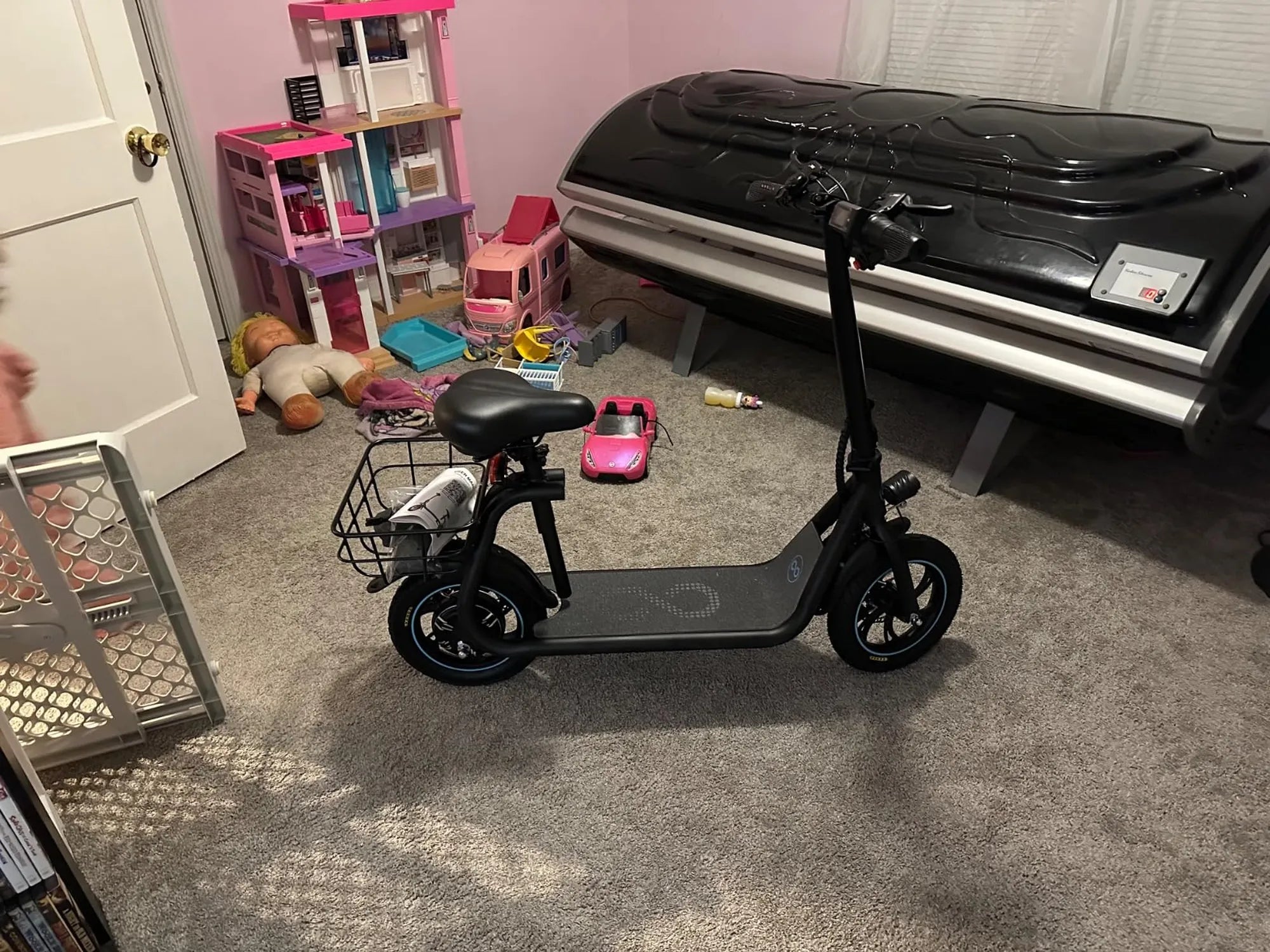
The Rise of the Electric Scooter
Urban mobility is at a breaking point. Cities worldwide are choked by traffic congestion, soaring transportation costs, and worsening air quality. The traditional commute—sitting in a car for hours or navigating crowded, unreliable public transit—is increasingly unsustainable. A quiet revolution is rolling through city streets, offering a practical and transformative solution: scooters electric scooters.
This article will analyze how electric scooters evolved from recreational toys into serious commuter vehicles. You will learn the data-driven advantages they offer, the critical features that define a reliable model, and how leading brands are engineering scooters for real-world urban challenges. We will also explore the future integration of this technology into smart city infrastructure.
Leading this shift is Gyroor, a brand trusted by over 100,000 riders across North America and Europe. Known for UL-certified batteries and robust designs, Gyroor exemplifies the engineering and safety standards making scooters electric scooters a viable long-term mobility choice.
Why Electric Scooters Are Dominating City Streets
The rapid adoption of electric scooters is not a fad; it's a rational response to systemic urban transport failures. Their dominance is built on a powerful combination of economic, practical, and environmental benefits that directly address modern pain points.
From students to professionals, riders are choosing electric scooters for their daily journeys. The appeal spans demographics, united by a common desire for efficiency, affordability, and freedom from the constraints of traditional transport modes.
Unbeatable Cost-Efficiency
The total cost of ownership for an electric scooter is dramatically lower than for a car or consistent use of ride-sharing services. Consider the math: the average new car payment in the US exceeds $700 per month, not including insurance, fuel, parking, and maintenance.
A quality commuter electric scooter represents a one-time investment often under $1,000. Charging costs are negligible—typically less than $0.50 for a full charge that provides 15-40 miles of range. With minimal mechanical parts, maintenance is often limited to tire care and occasional brake adjustments.
When compared to monthly public transit passes in major cities (which can range from $100-$300) or daily ride-share fares, the scooters electric scooters payback period is remarkably short, often within a few months of regular use.
The Ultimate Solution for the "Last-Mile" Problem
The "last-mile" problem describes the frustrating final leg of a commute between a public transit hub and one's final destination. Buses and trains cover the long distances, but that last half-mile to the office or home often requires an inefficient walk, a costly taxi, or a wait for another bus.
Electric scooters solve this elegantly. They are compact enough to carry on a train or bus, then deployed in seconds to cover that final gap quickly and effortlessly. This seamless integration makes multi-modal commuting not just possible but pleasant, effectively extending the reach and utility of existing public transit networks.
Effortless Commuting and Parking
In dense urban corridors, agility is king. Scooters electric scooters navigate through stalled traffic, utilize bike lanes, and take shortcuts inaccessible to cars. The average car commute in a major city involves significant time spent stationary or crawling.
Parking is perhaps the most compelling practical advantage. The search for a parking spot, coupled with high fees, adds significant time and cost to a car commute. An electric scooter can be folded and carried into an office, stored under a desk, or securely parked in a bike rack, eliminating parking stress and expense entirely.
A Cleaner, Greener Commute
Transportation is a leading source of urban greenhouse gas emissions. Electric scooters produce zero direct emissions. Switching even a short car trip to an e-scooter has a measurable environmental impact.
For example, replacing a 5-mile round-trip car commute just three times a week can reduce an individual's carbon footprint by approximately 300 pounds of CO2 annually. As urban grids incorporate more renewable energy, the lifecycle emissions of scooters electric scooters continue to decrease, making them a key component of sustainable city planning.
Key Features to Look for in a Commuter E-Scooter
Not all electric scooters are built for the rigors of daily commuting. Choosing the right model requires careful evaluation of key performance and safety features. This checklist separates recreational toys from reliable transportation tools.
Investing in a scooter with the right specifications ensures safety, durability, and a satisfactory riding experience over the long term. Compromising on core features often leads to higher costs and safety risks down the line.
Safety First: Brakes, Lights, and Stability
Safety is non-negotiable. A commuter scooter must have a reliable, multi-faceted braking system. A combination of electronic (regenerative) and mechanical (disc or drum) brakes provides redundancy and effective stopping power in all conditions, including wet streets.
Visibility is critical. Look for a bright front headlight, a solid rear brake light, and reflective side strips or ambient deck lighting. A wide, textured deck and handlebars with ergonomic grips enhance control. Tire choice matters: pneumatic (air-filled) tires offer better shock absorption and traction than solid tires, especially on uneven urban pavement.
Performance Specs That Matter: Range, Speed, & Motor
Manufacturer-stated range is typically a "best-case" figure. Real-world range is affected by rider weight, hills, temperature, and riding style. For a reliable commute, choose a scooter with a stated range at least 40% longer than your round-trip distance.
A motor between 350W and 500W provides adequate power for most urban hills while balancing efficiency. Speed should be practical and legal; most cities regulate e-scooters to 15-20 mph, which is sufficient for urban mobility while maintaining safety.
Built to Last: Durability and Weather Resistance
Daily commuting exposes a scooter to vibrations, curbs, and the elements. A robust frame made from aerospace-grade aluminum alloy is essential for longevity. The scooter's ingress protection (IP) rating indicates its resistance to dust and water.
An IPX5 rating, like those found on Gyroor models, means the scooter can withstand water jets from any direction. This is crucial for riding in rain or through urban puddles, protecting the sensitive electronic components inside and ensuring the scooter is a true all-weather vehicle.
Battery Safety and Reliability: The Non-Negotiable
The battery is the heart of the scooter and its most critical safety component. Never compromise on battery quality. UL certification is the gold standard, indicating the battery pack has undergone rigorous independent testing for electrical, mechanical, and environmental safety.
UL-certified batteries, like those used by Gyroor, are engineered to prevent overheating, short-circuiting, and fire hazards. They also ensure consistent performance and a longer lifespan, typically rated for 500+ charge cycles while maintaining significant capacity.
Gyroor's Engineering Edge: Designed for the Real World
While many brands compete on price, Gyroor focuses on engineering for reliability and safety. This philosophy is embedded in every model, creating scooters electric scooters built to handle daily commuting challenges year after year.
With a community of over 100,000 riders and a 4.5/5 average rating, Gyroor's approach validates the demand for well-built, safe personal electric vehicles. Their commitment extends beyond the initial sale to long-term rider support.
UL-Certified Battery Packs: Our Commitment to Safety
Gyroor's foundational commitment is to battery safety. Every scooter is powered by a UL-certified battery pack. This certification is not just a label; it represents a rigorous testing protocol that far exceeds basic manufacturer checks.
It ensures protection against over-charging, over-discharging, short circuits, and extreme temperatures. For the rider, this translates to profound peace of mind, knowing the most critical component of their vehicle meets the highest independent safety standards available.
IPX5 Water-Resistant Design: Ready for Urban Elements
Commuting shouldn't stop at the first sign of rain. Gyroor designs its scooters with full IPX5 water resistance. This means the entire electrical system is sealed against water jets, making the scooter resilient against downpours, street spray, and accidental splashes.
This engineering choice protects the motor controller, battery connections, and display, significantly reducing the risk of water damage and corrosion that can cripple lesser models. It's a feature that defines a true all-weather commuter vehicle.
The 1-Year Warranty & US-Based Support Promise
Gyroor backs its engineering confidence with a comprehensive 1-year warranty covering the frame, motor, battery, and controller. This contrasts sharply with the 30-90 day warranties often offered by discount brands.
More importantly, support is accessible and US-based, ensuring riders can get timely assistance with parts or questions. This warranty represents a long-term partnership, protecting the rider's investment and ensuring their scooters electric scooters remain a dependable part of their daily life.
Choosing Your Ride: A Commuter Scooter Comparison
Selecting the right model depends on your specific commute, terrain, and needs. The following table compares key considerations for different rider profiles, highlighting how Gyroor's lineup addresses these varied requirements.
| Rider Profile & Commute | Key Priorities | Recommended Specs | Gyroor Model Features |
|---|---|---|---|
|
Short Urban (2-5 mi) Flat terrain, need for portability |
Lightweight, foldable, easy to carry | Range: 10-15 mi real-world Motor: 250W-350W Weight: Under 30 lbs |
Compact folding mechanisms, sleek designs with UL batteries and core IPX5 protection. |
|
Standard Commuter (5-15 mi) Mixed terrain, some hills |
Balance of range, power, and comfort | Range: 20-30 mi real-world Motor: 350W-500W Tires: Pneumatic |
Enhanced battery capacity, dual braking systems, suspension options, and robust IPX5-rated frames for daily use. |
|
Long-Range / Hilly Terrain Extended commute, steep inclines |
Maximum range, powerful motor, durability | Range: 30+ mi real-world Motor: 500W+ Brakes: Dual hydraulic/disk |
High-capacity UL battery packs, powerful motors for hill climb, advanced suspension, and premium braking for safety. |
The Future is Electric: Integrating E-Scooters into Smart Cities
The future of urban mobility is networked, multi-modal, and electric. Scooters electric scooters are not just standalone devices; they are becoming integrated components of smart city ecosystems.
Forward-thinking cities are expanding protected bike and micro-mobility lanes, creating safer corridors for riders. Some are experimenting with dedicated public charging and secure parking hubs at transit stations to facilitate seamless intermodal travel.
Technology integration is accelerating. Future scooters may feature connectivity that allows them to communicate with traffic infrastructure, provide real-time navigation via dedicated apps, and even self-report maintenance needs. The responsible rider, equipped with a safe, durable vehicle, is at the center of this positive urban evolution.
Frequently Asked Questions (FAQs)
Q: How far can I really go on a single charge?
A: Real-world range is typically 70-80% of the manufacturer's maximum stated range, which is based on ideal conditions (light rider, flat terrain, slow speed). For accurate planning, assume 15 miles of real range from a "20-mile" scooter. Factors like rider weight, hills, headwinds, and frequent acceleration will decrease range.
Q: Are electric scooters legal to ride on roads and bike paths?
A: Laws vary significantly by city, state, and country. Generally, they are permitted in bicycle lanes and on roads with speed limits at or below 35 mph. Riding on sidewalks is often prohibited. Helmets are frequently required, and age restrictions may apply. It is the rider's critical responsibility to check and comply with all local regulations before riding.
Q: What maintenance does an e-scooter require?
A: Regular maintenance is simple but essential. For scooters with pneumatic tires, check tire pressure weekly. Periodically inspect brakes for wear and adjust tension as needed. Keep the scooter clean, especially the braking surfaces. For the battery, avoid draining it to 0% regularly; store it partially charged (40-80%) if not used for extended periods, and use only the manufacturer-provided charger.
Q: Why is a warranty so important for an e-scooter?
A: An electric scooter is a complex electromechanical device. A robust warranty (like Gyroor's 1-year coverage) protects your investment against defects in the motor, battery, controller, and frame—components that are expensive to replace. It is a strong indicator of the manufacturer's confidence in their product's durability and their commitment to customer support.
Q: Can I ride an e-scooter in the rain?
A: This depends entirely on the scooter's IP rating. Scooters with an IPX5 rating or higher (like Gyroor models) are designed to withstand rain and wet conditions. However, no consumer scooter is submersible. Avoid deep puddles, and always dry the scooter after a wet ride. Scooters without a stated water-resistance rating should not be ridden in the rain, as water damage to electronics is likely and is not covered by warranty.
Your Ticket to a Smarter, Freer Commute
Scooters electric scooters represent more than a new gadget; they are a catalyst for personal freedom, financial savings, and environmental responsibility. They offer a tangible escape from traffic gridlock, parking nightmares, and the high costs of traditional commuting.
The key to unlocking this future is choosing a vehicle engineered for the task. Prioritize verified safety through UL-certified batteries, proven durability with proper water resistance like IPX5, and the security of a comprehensive warranty and accessible support. These are the hallmarks of a scooter built not just to sell, but to last and serve as a reliable partner in your daily life.
The urban landscape is changing. Join over 100,000 riders who have already made the switch to a smarter commute. Explore the engineering, safety, and performance built into every model. Browse the full Gyroor collection at gyroorboard.com and discover the electric scooter designed for your journey.
Electric Scooters for 13 Year Olds: A Safe and Fun Way to Get Around
Cheap Electric Scooters for Kids: A Parent's Guide to Affordable Fun