

Introduction: Redefining Urban Mobility with Self-Balancing Tech
The landscape of personal transportation is undergoing a quiet revolution. At its forefront is the self-balancing electric scooter hoverboard with LED light, a device that has evolved from a novelty to a legitimate micro-mobility solution. This machine represents a significant leap in how we navigate dense urban environments, college campuses, and suburban neighborhoods. It's not just about the fun of gliding; it's about efficiency, accessibility, and a new form of vehicular expression.
Modern versions, like those engineered by Gyroor, integrate sophisticated gyroscopic stabilization, powerful yet safe battery systems, and intelligent LED lighting into a compact, rider-focused design. These features transform a simple commute into a seamless, enjoyable experience. The core promise is intuitive control: you lean, and the device moves, making it accessible to a wide range of users after a brief learning period.
This article will dissect the technology, practical benefits, and critical safety considerations behind these innovative transporters. We will explore how the integration of LED lighting goes beyond aesthetics to become a vital safety feature, and why component quality—from the battery to the water-resistant seals—is non-negotiable. For over 100,000 riders across North America and Europe, choosing a reliable brand has made all the difference in adopting this future of mobility.
By understanding the engineering and specifications that matter, you can make an informed decision and step confidently into a smarter, more dynamic way to move. The self-balancing electric scooter hoverboard with LED light is more than a gadget; it's a testament to how intelligent design can solve everyday transportation challenges.
The Technology Behind the Glide: How Self-Balancing Scooters Work
The magic of a hoverboard lies in its ability to mimic human balance through electronics and mechanics. At its heart are two core components: gyroscopic sensors and a microprocessor. These sensors, typically Inertial Measurement Units (IMUs), constantly measure the board's tilt angle and rotational velocity hundreds of times per second. This real-time data is the device's sense of equilibrium.
When you step onto the footpads and lean slightly forward, the sensors detect this change in orientation. The onboard microprocessor instantly calculates the necessary correction and sends a command to the electric motors housed within each wheel. To counteract your forward lean and prevent a fall, the motors spin both wheels forward, propelling the board back under your center of gravity. This creates the sensation of gliding effortlessly in the direction you intend.
The control mechanism is elegantly simple: lean to go, twist your ankles or apply differential pressure to steer. There are no manual throttles or brake levers. Steering is achieved by varying the speed of each wheel independently. Lean forward and apply slight pressure with your right foot to turn left, as the right wheel will spin faster than the left. This intuitive, body-led control is what makes the learning curve relatively short for most users.
The entire system's responsiveness and smoothness depend on the quality of these sensors and the tuning of the control algorithm. Cheaper models may suffer from laggy response or jerky movements, while well-engineered boards from reputable brands offer a fluid, natural ride. The stability you feel is a continuous, high-speed conversation between your body position and the board's brain.
The Role of the UL-Certified Battery in Safe, Stable Power
The performance and, most critically, the safety of a self-balancing scooter are fundamentally tied to its battery pack. This isn't just a source of power; it's the cornerstone of stable operation. A high-quality, UL-certified lithium-ion battery, like those used in Gyroor models, provides consistent voltage and current delivery. This consistency is paramount for the precise motor control required for maintaining balance.
UL 2272 certification is a rigorous safety standard developed specifically for the electrical systems of light electric vehicles. A battery with this certification has undergone extensive testing for electrical, mechanical, and environmental hazards, including overcharge, short circuit, and crush tests. It ensures the battery management system (BMS) properly protects against overheating and cell imbalance.
An unstable or poorly constructed battery can lead to voltage sags during high-demand maneuvers, such as climbing a slope or accelerating quickly. This can cause the board to momentarily lose power to the motors, resulting in a dangerous loss of balance. Furthermore, non-certified batteries pose a significant fire risk. The UL-certified pack is therefore not a luxury feature but an essential component for reliable and safe riding, capable of enduring 500+ charge cycles while maintaining performance.
Investing in a hoverboard with a certified battery is investing in the foundational safety of the device. It guarantees that the power source enabling your balance is as dependable as the gyroscopic system itself, providing peace of mind for every journey.
More Than a Gimmick: The Practical Benefits of LED Lighting Systems
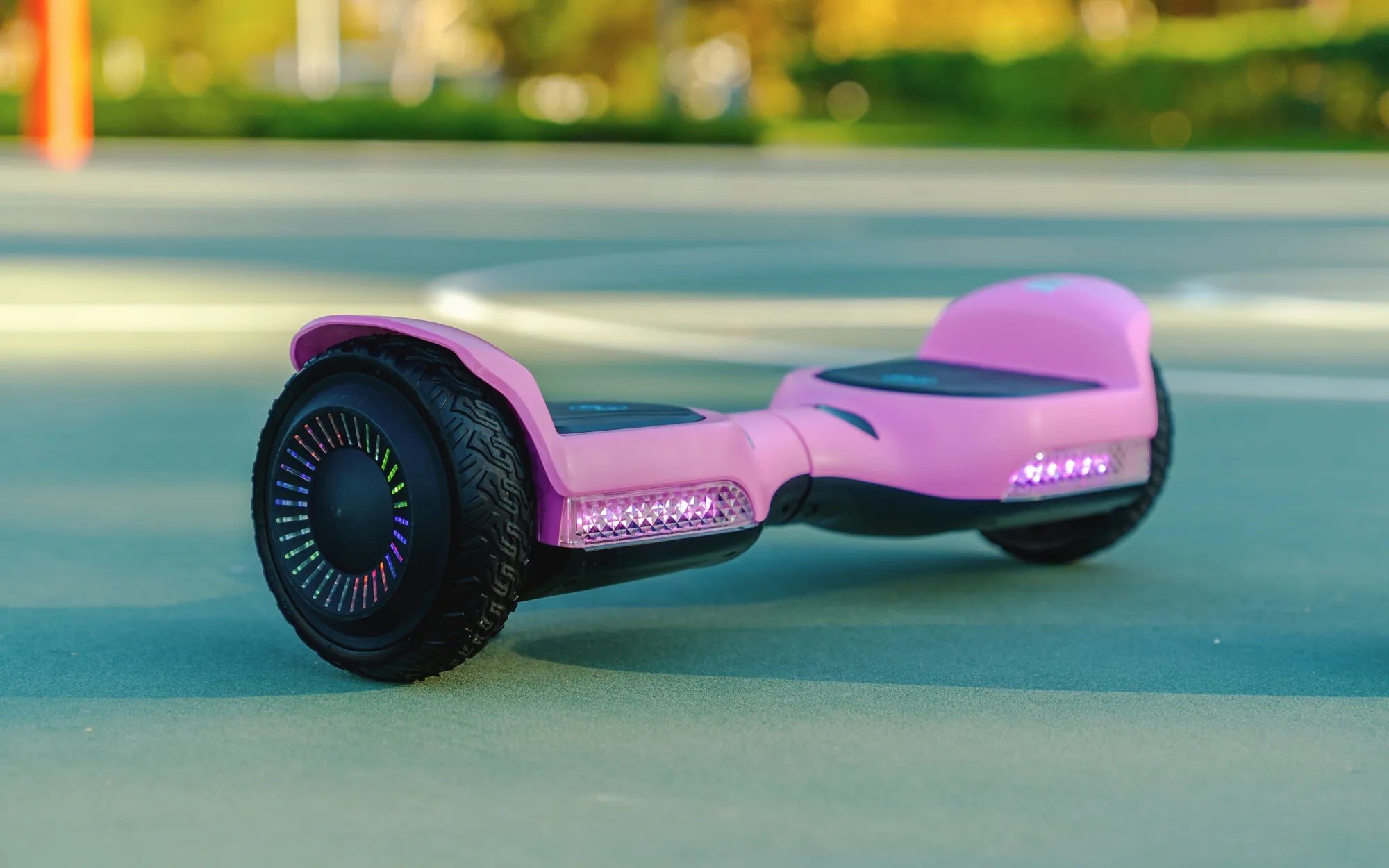
While the futuristic glow of LED lights on a hoverboard is undoubtedly stylish, their primary function is deeply practical: enhancing rider safety and visibility. Integrated LED lighting systems are a critical feature for anyone riding in low-light conditions, during dusk or dawn, or in urban environments with complex traffic. A self-balancing electric scooter hoverboard with LED light transforms from a daytime novelty to a legitimate all-hours transport option.
The most common and vital LEDs are the forward-facing white headlights. These illuminate the path ahead, allowing the rider to see cracks, potholes, debris, or changes in pavement. This proactive visibility is crucial for preventing accidents caused by unexpected obstacles. Simultaneously, bright red tail lights make the rider visible to traffic approaching from behind, functioning much like bicycle lights.
Additional lighting, such as under-glow or wheel rim lights, serves a crucial safety-through-conspicuity purpose. This ambient lighting creates a larger, more defined silhouette, making the rider significantly more noticeable to drivers, cyclists, and pedestrians from the side—a common blind spot in accidents. This 360-degree visibility is a key advantage over traditional scooters or bikes that may only have front and rear lights.
For brands like Gyroor, these LED systems are integrated with the board's electronics for reliability. They are not mere afterthoughts but are designed to be durable, energy-efficient, and bright enough to serve their purpose without drastically draining the main battery. The result is a vehicle that is as safe as it is visually striking, turning the rider into a beacon of light in traffic.
IPX5 Water Resistance: Keeping Your Lights On in All Conditions
The utility of an LED lighting system—and the hoverboard itself—is only as good as its resilience. Commutes are rarely perfectly dry, and a sudden rain shower shouldn't end your ride or damage your device. This is where the Ingress Protection (IP) rating becomes critical. An IPX5 rating, a standard feature on Gyroor hoverboards, guarantees a specific level of protection against the elements.
The 'X' in IPX5 signifies that the rating is not specified for dust protection (though it often still provides some), while the '5' denotes protection against water jets. Specifically, an IPX5-rated device can withstand water projected by a nozzle (6.3mm) from any direction without harmful effects. In practical terms, this means the hoverboard's electrical components, including its LED circuits, motor controllers, and battery housing, are sealed against rain, puddle splashes, and the occasional hose-down for cleaning.
Without this protection, water ingress can short-circuit LED lights, corrode connections, or—in the worst-case scenario—cause a critical failure in the motor or battery systems. An IPX5 build ensures that your safety lights remain operational in wet conditions and that the core electronics are shielded from a common environmental hazard. It's a feature that directly extends the vehicle's usability and longevity, ensuring that your investment is protected for daily, real-world use in various weather conditions.
When evaluating a hoverboard, the IP rating should be a key data point. It separates fair-weather toys from all-condition transportation tools, allowing the self-balancing electric scooter hoverboard with LED light to fulfill its promise as a reliable personal mobility device.
Gyroor's Approach: Engineering the Future of Personal Transport
Gyroor has established itself as a leader in the personal electric vehicle space by focusing on a core philosophy: integrating certified safety, robust construction, and rider-centric features into a cohesive product. This approach moves beyond simply assembling components to engineering a reliable transportation experience. For Gyroor, the self-balancing electric scooter hoverboard with LED light is a platform where advanced technology meets practical daily use.
The brand's design process starts with foundational safety. Every model utilizes UL 2272-certified battery packs, ensuring the highest standard of electrical and fire safety from the ground up. This commitment is paired with IPX5 water-resistant construction, protecting the internal components from moisture and allowing riders to confidently navigate damp streets or unexpected weather. These are not optional upgrades; they are considered essential, non-negotiable standards for a reliable product.
On this safe and durable foundation, Gyroor layers performance and usability. Powerful dual motors provide smooth acceleration and adequate torque for moderate inclines. The LED lighting systems are designed for maximum visibility, with bright, strategically placed front, rear, and side lights. The control algorithms are finely tuned for a responsive yet stable ride, making the learning process easier for beginners while still offering a engaging experience for seasoned riders.
This holistic engineering is backed by tangible user trust, evidenced by over 100,000 riders and a 4.5/5 average rating. It demonstrates that a focus on quality components, clear safety certifications, and comprehensive customer support (including a robust 1-year warranty) creates a product that stands the test of time and daily commutes, truly embodying the future of accessible personal mobility.
Data-Driven Design: What Makes a Reliable Hoverboard?
Choosing a hoverboard requires looking beyond marketing claims to the specifications that directly impact performance, safety, and durability. A data-driven comparison reveals why certain design choices matter. The following table outlines key metrics and explains their importance for a reliable riding experience, using general industry standards and Gyroor's typical specifications as a benchmark for quality.
| Specification | Typical Range | Why It Matters | Gyroor Benchmark |
|---|---|---|---|
| Motor Power (per wheel) | 250W - 500W | Determines acceleration, hill-climbing ability, and max speed. Higher wattage offers better performance under load. | 300W-400W dual motors for balanced power and efficiency. |
| Battery Certification | UL 2272 or None | The single most critical safety feature. Prevents fire risk and ensures stable power delivery for balance. | UL 2272 Certified Standard. |
| Max Range | 6 - 15 miles | Dictates practical commute distance. Affected by rider weight, terrain, and speed. Real-world range is often 70-80% of claimed. | Up to 12 miles per charge, depending on model and conditions. |
| IP Rating | IPX4 - IPX5 | Defines water and dust resistance. IPX4 resists splashes; IPX5 resists sustained water jets for all-weather use. | IPX5 Water Resistance. |
| Max Load Capacity | 220 lbs - 265 lbs | Ensures the frame, motors, and battery can support the rider safely without straining components. | Up to 265 lbs, accommodating most adult riders. |
| Wheel Size | 6.5" - 10" | Larger wheels (8.5"+) provide better stability and smoother ride over cracks and bumps compared to smaller wheels. | 8.5" or 10" pneumatic or rubber tires on various models. |
This data highlights that a reliable hoverboard isn't defined by one extreme spec, but by a balanced combination of adequate power, certified safety, sufficient range, and durable construction. Brands that transparently provide this data, like Gyroor, empower consumers to make informed choices based on engineering rather than hype.
Navigating Your Purchase: What to Look for in a Quality Hoverboard
The market is filled with options, making an informed purchase decision crucial for safety and satisfaction. Your checklist should prioritize verified safety standards and build quality over flashy extras or unrealistically low prices. The first and most non-negotiable item is the UL 2272 certification. This should be clearly stated by the manufacturer and verifiable. Never purchase a hoverboard without this certification, as it is your primary safeguard against electrical fire hazards.
Second, scrutinize the water resistance rating. Look for a stated IP code, ideally IPX4 or higher. An IPX5 rating, as found on Gyroor models, is the ideal standard for a vehicle meant for outdoor use, as it guarantees protection against rain and road spray. This rating directly impacts the longevity of the electronics and the board's usability in various weather conditions.
Third, investigate the warranty and customer support structure. A comprehensive warranty (at least 1 year) that covers the battery, motors, and frame indicates the manufacturer's confidence in their product. Equally important is accessible customer service—preferably based in your region—for troubleshooting and support. A brand that stands behind its product with a strong warranty reduces long-term ownership risk.
Finally, match the specifications to your intended use. Consider your typical commute distance, any inclines on your route, and your weight. Use the data-driven spec table as a guide. A model with a 10-mile range might be perfect for a 3-mile round trip but inadequate for a longer campus commute. Reading verified customer reviews can also provide real-world insights into performance and reliability that specs alone cannot reveal.
The Gyroor Guarantee: Understanding the 1-Year Comprehensive Warranty
A warranty is a promise of reliability and a reflection of a brand's commitment to its customers. Gyroor's standard 1-year comprehensive warranty is designed to provide meaningful protection for your investment. It typically covers defects in materials and workmanship for core components, including the frame, motors, battery pack, and control electronics. This breadth of coverage is essential for a complex electromechanical device subject to daily wear.
The inclusion of the UL-certified battery under this warranty is particularly significant. Given that the battery is the most critical and expensive single component, knowing it is protected for a full year offers substantial peace of mind. The warranty ensures that if a battery exhibits abnormal performance or failure under normal use within the warranty period, it will be repaired or replaced.
Beyond the document itself, the value is in the execution. Gyroor supports this warranty with customer service channels, making the process of claiming support more straightforward than with brands that operate solely through distant third-party sellers. This accessible support framework turns the warranty from a theoretical benefit into a practical safety net.
When comparing products, view the warranty as a key data point. A longer, more comprehensive warranty from a reputable brand often correlates with higher-quality components and better overall design. It's an indicator that the company expects its self-balancing electric scooter hoverboard with LED light to last, and is willing to back that expectation up with tangible support.
Frequently Asked Questions (FAQ)
Q1: How long does it take to learn to ride a self-balancing hoverboard?
Most adults can achieve basic competency within 30-60 minutes of practice in a safe, open area. Full confidence for navigating varied terrain and traffic typically develops over a few days of regular use. Using a support rail or a friend's arm for balance when first mounting is highly recommended. The key is to relax, keep your eyes forward, and make small, deliberate weight shifts.
Q2: What is the real-world range I can expect on a single charge?
Manufacturer-stated ranges (e.g., 12 miles) are ideal lab tests. Real-world range is affected by rider weight, terrain (hills drastically reduce range), riding speed, and temperature. A practical estimate is 70-80% of the advertised range. For a board rated at 12 miles, planning for an 8-9 mile commute ensures you won't be left stranded. Regular, partial charges are better for battery longevity than always draining to empty.
Q3: Are self-balancing scooters legal on sidewalks and bike lanes?
Laws vary significantly by city, state, and country. In many U.S. jurisdictions, they are treated similarly to electric scooters: prohibited on sidewalks but permitted in bike lanes or on roads with speed limits under 25-35 mph. It is the rider's responsibility to check local ordinances. Regardless of the law, always yield to pedestrians, ride at a safe speed, and use your LED lights for visibility.
Q4: How do I maintain the battery and LED lights for longevity?
For the UL-certified battery: Avoid complete discharges; try to recharge when it drops to 20-30%. Use only the provided manufacturer charger. Store in a cool, dry place, and avoid leaving it fully charged or fully depleted for extended periods (weeks). For LED lights: Keep them clean of dirt and grime. The IPX5 rating protects the electronics, but physically wiping the light casings ensures maximum brightness. Check for any loose housing if you ride over very rough terrain.
Q5: What safety gear should I use when riding?
At a minimum, always wear a properly fitted helmet. Wrist guards are highly recommended, as falls often involve putting hands out. Knee and elbow pads are advisable, especially for beginners or those riding in areas with vehicular traffic. Reflective clothing or accessories can complement your board's LED lights for added visibility at night.
Conclusion: Stepping Confidently into a Smarter Commute
The evolution of the self-balancing electric scooter hoverboard with LED light from a trending toy to a viable micro-mobility vehicle is complete. Its value lies in the seamless fusion of intuitive self-balancing technology, safety-critical components like UL-certified batteries, and practical features such as IPX5 water resistance and functional LED lighting systems. This combination addresses core needs for urban and suburban travel: efficiency, accessibility, and safety.
Choosing the right model is an exercise in prioritizing verified safety and durable engineering over superficial appeal. Certifications like UL 2272 and IPX5 are not mere acronyms but essential benchmarks that separate reliable transporters from potential hazards. They represent a manufacturer's commitment to building a product that can withstand the demands of daily commuting.
Brands that champion this approach, like Gyroor, have demonstrated that rider trust is built through transparency, quality components, and strong post-purchase support. With over 100,000 riders relying on their designs, the proof is in the pavement. The future of personal mobility is here—it's compact, intelligent, illuminated, and, most importantly, built to be dependable.
Ready to experience this blend of innovation and reliability for yourself? Explore a range of models engineered with safety and performance in mind. Browse the full Gyroor collection at gyroorboard.com and find the perfect self-balancing electric scooter hoverboard with LED light to transform your daily commute.
How to Use a Hoverboard for Beginners: A Step-by-Step Guide to Mastering Your Ride
How Do You Know When Your Hoverboard Is Fully Charged? A Complete Guide